Google for UNICEF
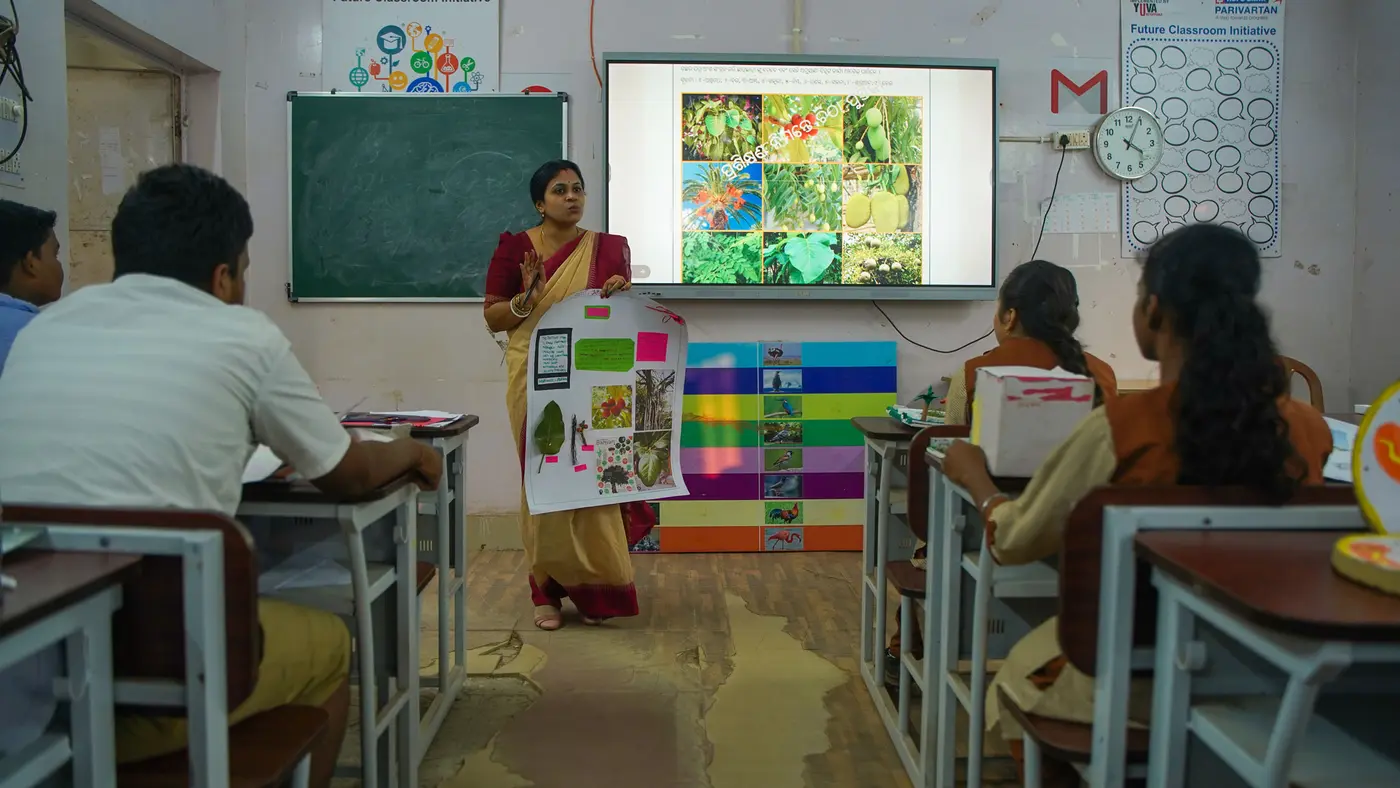
UNICEF and Google are working together to accelerate learning outcomes for millions of children and young people by leveraging technology to empower teachers and create safe, equitable and sustainable learning environments.

With support from Google.org, UNICEF and Google for Education are providing training, tools and expertise to support government-led digital learning transformation in Brazil, India, Kenya and Pakistan. The expanded partnership will leverage AI-powered tools for personalized instruction to support teachers and equip children and young people with the foundational learning and essential skills they need for the 21st century.
Addressing the Global Learning Crisis
Despite decades of progress, the global education system is still failing three-quarters of the world’s children. This is not just a gap in access or resources, but a systems failure requiring reform at scale, driven by three interconnected challenges. These failures reinforce one another and hit the most marginalized children the hardest.
- Learning denied: Children are excluded from school due to poverty, gender norms, disabilities and displacement.
- Learning disrupted: Crises like conflict and climate change are increasingly interrupting education.
- Learning delayed: Hundreds of millions of children who are in school are not learning, with 70% of 10-year-olds across the globe unable to read and understand a simple sentence.
Yet there is a path forward to addressing the global learning crisis. It requires education reform that is both systemic and human-driven, where education systems are designed around the needs of both children and teachers.
Driving Education Innovation Across the Globe
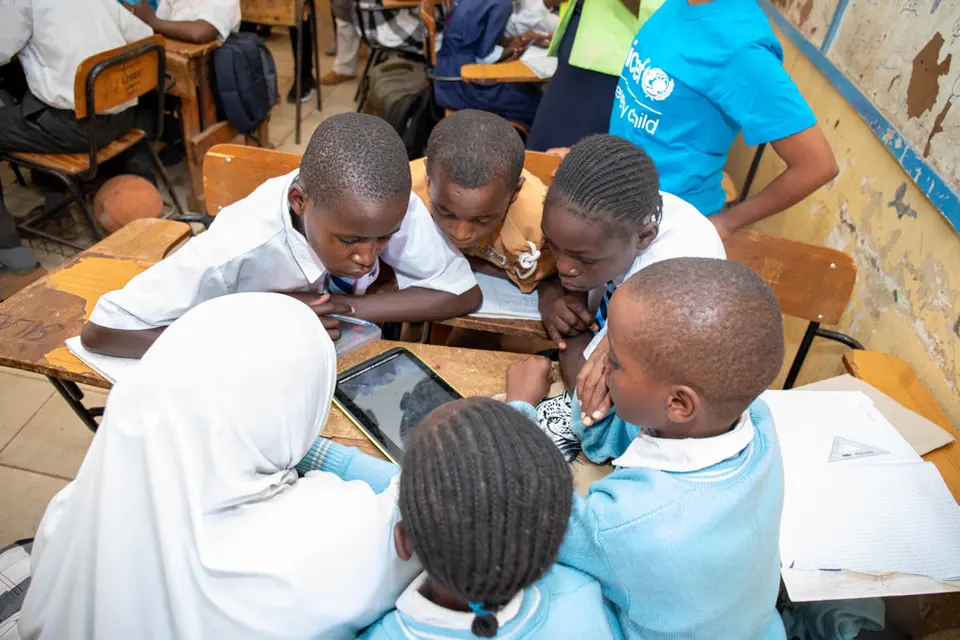
The shared vision of UNICEF, Google for Education and Google.org is that real progress is possible when children and young people are supported by empowered teachers, the right tools, and the opportunities to build future-ready skills.
Thanks to support from Google.org, UNICEF will work with educational leaders and national governments to develop and scale technology-enabled education programs focused on foundational learning, teacher professional development, and 21st-century skills building in Brazil, India, Kenya and Pakistan. The initiative will responsibly integrate Google’s AI-powered tools with UNICEF’s expertise to create localized, scalable solutions that meet the needs of every student. Efforts will include improving reading fluency and comprehension and training teachers to safely leverage AI to support personalized instruction.
The collaboration aims to reach millions of students and address the unique challenges educators and learners face in each country:
- In Brazil, millions of students progress through school without mastering essential literacy and numeracy skills, contributing to age-grade distortion and dropout. The partnership will support learning recovery by helping teachers and school leaders strengthen their digital and teaching practices through blended and responsible AI-enabled approaches; these upskilled teachers will then enable adolescents to build foundational, digital, and critical thinking skills.
- In India, many children and adolescents face low learning outcomes, outdated teaching methods and limited opportunities to develop the skills needed for learning, work and life. The partnership will support a comprehensive skills framework, helping young people strengthen foundational, digital, AI, transferable, and future-ready skills.
- In Kenya, limited access to equitable, inclusive and high-quality digital education continues to affect vulnerable learners, including those in underserved communities and alternative learning settings. The partnership will strengthen the national digital learning ecosystem by expanding access, supporting educators and youth TechChamps, and promoting safe and inclusive digital learning.
- In Pakistan, where an estimated 25 million children are out of school, the partnership will support remedial instruction, expand accelerated foundational learning pathways for out-of-school learners and strengthen teacher development to improve literacy and numeracy outcomes.
The initiative helps advance UNICEF’s Digital Education Strategy to move “beyond digital as usual” by putting teachers and learners at the center, especially those most in need, to advance learning for every child.
A History of Collective Impact
Since 2005, Google has supported UNICEF USA through strategic grants and collaborations, emergency response, workplace giving and ad grants to enable UNICEF’s work around the globe.
Google.org also supports UNICEF's Generation Unlimited’s (GenU) AI Ventures Accelerator, a global entrepreneurship initiative designed to transform how young women engage with AI. The initiative equips women aged 19–24 with advanced AI and applied technical skills while supporting them to build AI-powered ventures that address community challenges. It also provides incubation support, seed funding and structured pathways to help scale women-led AI enterprises and innovation globally.
Additionally, Google provided funding for UNICEF Office of Strategy and Evidence – Innocenti’s research project, Children's best interests in a digital world, developed in partnership with UNICEF USA. The project captures the views of a diverse group of children on how they understand their best interests in relation to the digital environment, what they believe is or is not in their best interests online, and how they envision a digital future that better supports their rights and well-being. The report launched in April 2026 with the aim to serve government policymakers who create child-focused policies, regulators that enforce them, and tech companies that develop digital platforms and services used by children. Read the full report here.
UNICEF does not endorse any company, brand, organization, product or service.