The Learning
Passport
Developed by UNICEF and Microsoft, this innovative mobile online/offline learning platform provides children with continuous access to quality education — no classroom required.
School can be a haven for children and young people growing up in poverty or areas torn apart by conflict, natural disasters and other emergencies. Going to school also empowers them to do the one best thing to secure their futures: learn. But when circumstances out of their control disrupt their education, vulnerable children lose significant ground and something else just as important — hope.
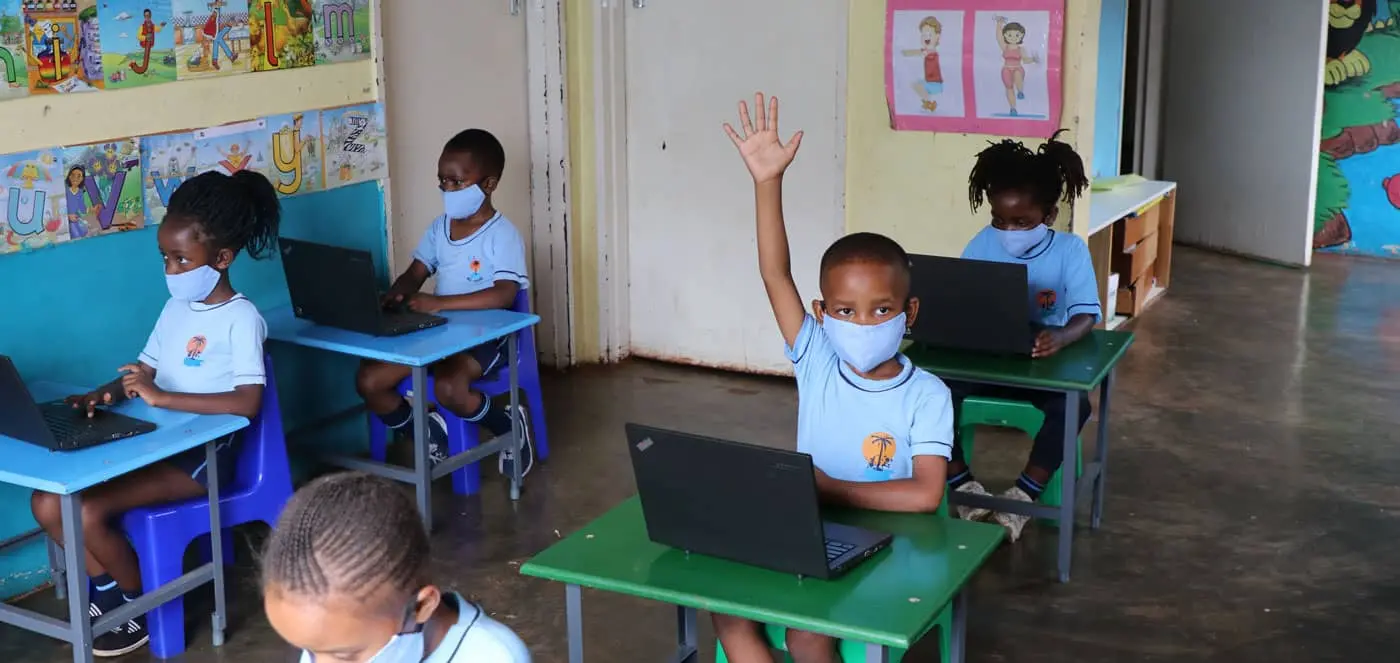
To help children keep up with their studies and hold fast to their dreams, UNICEF, Microsoft and partners developed the Learning Passport, a free online, mobile and offline platform that provides continuous access to quality education. It is also a highly flexible and adaptable e-learning platform that any country can adapt as part of their national learning management system or incorporate as a complement to existing platforms.
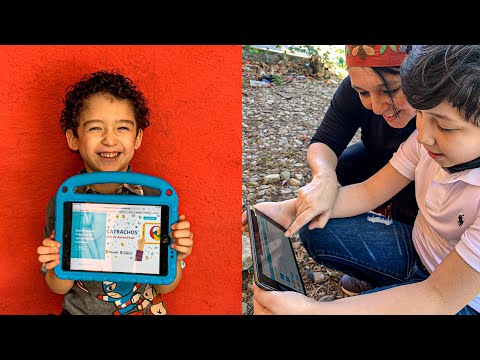
The Learning Passport offers both online and offline capabilities, making it a vital resource in regions with little or no internet connectivity, including in emergencies. Learners can connect any device with a web browser to an innovative hub device to access localized and global content.
In crisis-affected contexts, the Learning Passport supports children to continue learning despite conflict, displacement and disasters.
From refugee settings in Lebanon and Poland to conflict-affected regions in Myanmar and Sudan, the program provides vital access to learning for children who need it most.
A major expansion of the Learning Passport took place during the COVID-19 pandemic, when school closures disrupted the education of more than one billion children worldwide. Solutions had to work for all students — those able to continue learning online and the most vulnerable children with limited access to technology. The rapid scale-up demonstrated the platform's flexibility and its ability to support learning continuity during crises.
Today, the Learning Passport is reaching roughly 12.5 million users in 51 countries, from Timor-Leste and Kosovo to Zimbabwe and Honduras. Children and youth with internet connections and access to mobile phones, tablets, laptops or computers can now continue their studies — in their own languages — via a digitized curriculum with textbooks and a selection of supplemental content curated for their specific needs and their educators'. The Learning Passport also tracks progress for every student and guides them with little additional support required.
The hub devices can also be set up in classrooms or learning centers in areas with low-to-no connectivity to give students access to high-quality educational content. The hub devices, which serve as cloud applications offline, can also store learners' records to ensure a progressive learning journey.
UNICEF is partnering with several global content providers to offer high-quality, supplementary content to countries. For example, UNICEF has developed content and tools focused on gender equity to enhance the Learning Passport's ability to challenge local gender norms that prevent girls from reaching their full potential.
The digital era has unlocked extraordinary opportunities for tackling the education crisis. — Pia Rebello Britto, Global Director, Education and Adolescent Development at UNICEF
As UNICEF continues to expand digital learning opportunities, the Learning Passport also serves as part of a broader ecosystem designed to support young people throughout their education and employment journeys.
The Learning Passport complements UNICEF's Generation Unlimited initiative, which supplements adolescent learning with technical and vocational education to prepare young people as they transition into a digitally powered and rapidly changing world of work. Together with Passport to Earning, these initiatives help create pathways from learning to skills development, employment and entrepreneurship opportunities.
Read more about how the Learning Passport is supporting every child's right to education