Weather Disasters
How UNICEF helps children, families and communities impacted by extreme weather, one of the most devastating impacts of climate change.
Extreme weather events are more intense and more frequent because of climate change
Roughly 1 billion children worldwide are at extremely high risk due to the impacts of climate change, including climate-related disasters. These include extreme weather events, which have grown more intense and more frequent.
When a hurricane or cyclone strikes, children who are already vulnerable, including children whose families live in poverty, are disproportionately impacted — and those impacts can be devastating.
Monsoons can trigger flooding and landslides that wipe out entire towns. A typhoon's destructive winds can uproot trees and turn buildings and roads into rubble.
Those living in affected areas are often displaced — forced to flee to safety as homes, schools and other critical infrastructure are damaged or destroyed. Safe drinking water, health care and nutrition become even more difficult to access.
Children are cut off from schooling, and can lose critical social services and protection — and become separated from parents — all while finding themselves in hazardous environments. Risks of violence, exploitation and abuse increase. In some places, this is especially the case for girls and children with disabilities.
Learn more about natural disaster relief and UNICEF
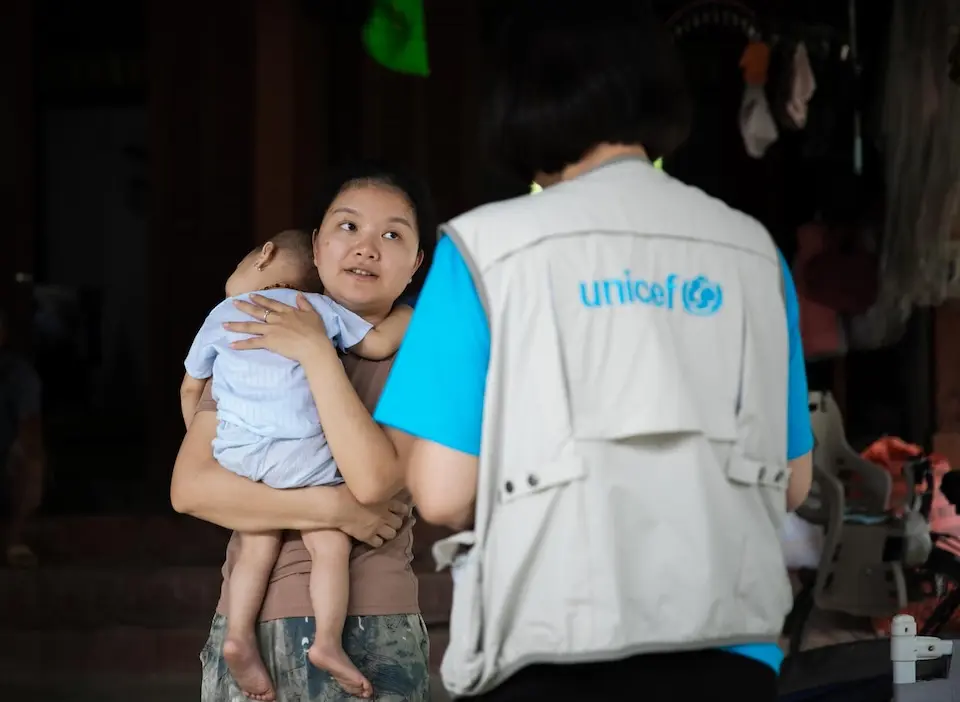
How UNICEF helps reduce weather disaster risks to children, families and communities
BEFORE a disaster strikes, UNICEF works with partners and communities to identify risks, develop contingency plans and preposition supplies so they are prepared to respond as fast and effectively as possible.
DURING a disaster, UNICEF supports government-led efforts to shelter the displaced and ensure access to essentials needed for survival.
AFTER a disaster, UNICEF stays to continue delivering relief, help restore services, assist the recovery and help build resilience to future shocks.
Extreme weather emergency response measures will often include:
- supporting displaced children and families at temporary shelters
- distributing safe water and hygiene supplies to prevent spread of disease
- providing emergency health care including essential vaccines
- providing treatment for malnutrition
- distributing educational materials and creating safe spaces where displaced children can learn and play
- connecting children and families with protective services and mental health and psychosocial support
- identifying children who have become separated and reuniting them with their families or caregivers
- providing cash assistance to vulnerable families to help them meet their most urgent needs
- repairing damaged water systems, schools, health facilities and other critical infrastructure — and building them back better
- advocating for greater investment in climate adaptation so communities can better withstand extreme weather events
- supporting early warning systems that help protect children and families before disasters strike
Discover more about hurricane, cyclone, monsoon and typhoon relief
How UNICEF is responding to the climate crisis
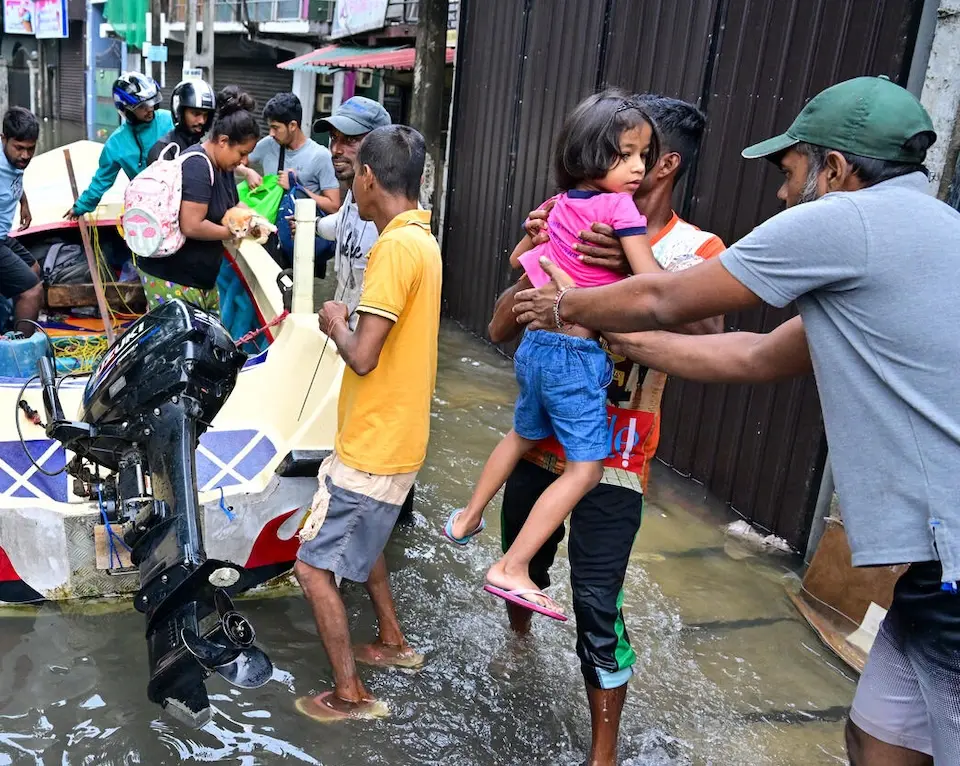
TOP PHOTO: In Wellampitiya, a town on the outskirts of Colombo, Sri Lanka, residents evacuate to escape flooding caused by Cyclone Ditwah, which struck the country on Nov. 28, 2025. Over 1.2 million people, including 527,000 children, needed humanitarian assistance in the wake of the storm. UNICEF responded by providing critical water, sanitation and hygiene supplies, nutrition support and services, child protection services and education support for children whose schools had to close. © UNICEF/UNI908501/UNICEF Sri Lanka