Help UNICEF Deliver Warmth and Safety This Winter
As temperatures plunge in Afghanistan, Gaza, Ukraine and other places where children are already at great risk due to ongoing crises, UNICEF has activated its emergency winter response to help the most vulnerable children and families survive the cold.
Updated February 2, 2026
Cold can kill
For children caught in conflict and crisis, winter is an especially dangerous time. Already facing increased risks to their health, safety and well-being, children displaced by violence or disaster or living in extreme poverty become even more vulnerable in the bitter cold.
This is where UNICEF comes in. UNICEF works with governments, local organizations and other partners in some of the world's most challenging settings to provide winter aid where it is needed most.

This year, UNICEF is focused on delivering lifesaving winter supplies and/or cash assistance to children and families in Afghanistan, Gaza, Lebanon, Syria and Ukraine — aid that not only promises protection against harsh weather, but also brings stability and hope.
Distribution efforts are already reaching many of those in need, but more donor support is needed to sustain efforts and help UNICEF meet its goals for each priority country.
Learn more about UNICEF humanitarian cash transfers — a lifeline for families in a crisis

Delivering winter aid that is desperately needed in Afghanistan
In Afghanistan, it's not uncommon for temperatures to drop to -33 degrees Celsius (-27.4 Fahrenheit) — driving a surge in acute respiratory illnesses among children.
As the country endures another brutal winter — while still recovering from the effects of a major earthquake — UNICEF is delivering lifesaving winter support to hundreds of thousands of children and their families, distributing early to ensure those in need are reached before roads close due to snow.
As of Dec. 31, 2025, one-third of the households UNICEF intends to reach with cash assistance to help cover the costs of heating and other essentials had received their one-time payments of $290 per family. Providing aid as cash allows families to choose what to purchase while supporting the local economy.
For families living in remote areas that are cut off from markets and aid, UNICEF is providing warm clothing and blankets.
More donor support is needed to close funding gaps and enable UNICEF to meet targets for the current season.
Read the 2025 year-end situation report for more on how UNICEF is supporting Afghanistan's children
In Gaza, distributing winter clothing kits to every child under 10
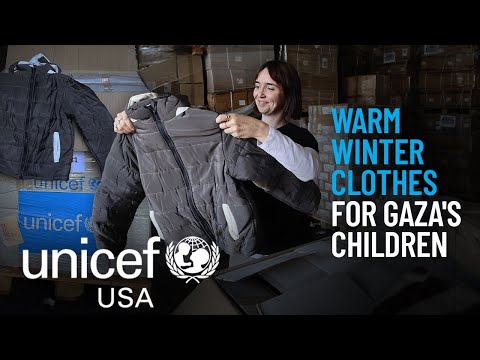
As winter approached in the Gaza Strip, bringing freezing temperatures, flooding and further displacement, UNICEF launched efforts to distribute winter clothing kits to 600,000 children under age 10; high-thermal blankets for 900,000 children under 18; plastic tarpaulins for 195,000 families to reinforce damaged shelters; family tents for 5,000 extremely vulnerable households; digital cash payments of $140 each to 100,000 families and water and sanitation equipment.
UNICEF fast-tracked procurement of these items while advocating for supply entry into Gaza. By Dec. 31, 2025, UNICEF had successfully delivered almost 1 million thermal blankets and more than 290,000 winter kits, including insulated footwear, to keep children warm and safe.
Learn more about how UNICEF Provides Critical Support for Children in Gaza
Helping vulnerable families endure another punishing winter in Lebanon
UNICEF's winter assistance for children and families in Lebanon includes a mix of cash assistance, in-kind support and school support.
The cash assistance comes in the form of a one-time transfer of $150 to each of 40,000 households, reaching 200,000 people, including 66,000 children. Other aid includes winter clothing kits for 100,000 children. Families staying in inadequate shelters are being given thermal blankets and plastic tarpaulins for added protection.
The response also includes providing heating fuel to over 500 public schools — critical support that keeps kids learning in a safe, warm environment.
Learn more about how UNICEF is supporting children in Lebanon

Cash support is linked to services for recovering families in Syria
In Syria, where a recent escalation of hostilities in Ar-Raqqa, Deir-ez-Zor and Al-Hassakeh has caused new displacements, adding to existing economic strain and intensifying child protection risks, the onset of winter brings additional hardship.
An ongoing UNICEF-supported program called Cash++ provides vulnerable families the support they need to stay warm, healthy and safe. An innovative approach, Cash++ combines unconditional cash support with referrals to essential education, health, nutrition and protection services, as well as livelihood opportunities for female-headed households.
Child protection teams have been delivering blankets and warm clothing to displaced children and their families while also supporting resilience and safety.
Learn more: How UNICEF Is Rebuilding Sanitation, Protecting Children's Health in Syria
Helping households in Ukraine weather a fourth winter amid full-scale war
Winter is unforgiving in Ukraine, a country that remains gripped by active conflict for going on four years. Millions of families face freezing temperatures without reliable heat, shelter or support.
For the 2025-2026 winter season, UNICEF has been working to provide families in frontline areas and other vulnerable households with direct cash transfers, empowering them to buy heating fuel, warm clothing and other essentials on their own terms. UNICEF is also funding necessary repairs to heating services in municipalities hardest hit by energy disruptions due to bombing.
To support schools, UNICEF is providing cash grants to fund heating repairs, access to alternative power sources and shelter upgrades to ensure a safe, warm learning environment for students.
UNICEF is currently scaling up emergency winter assistance efforts across Ukraine with the goal of reaching 1.65 million people, including 470,000 children, through various interventions.
To learn more, read: Under Fire and Freezing: Children in Ukraine Need Help

How winter support contributes to long-term resilience
UNICEF's winter response is about more than providing warmth and safety during the coldest months. It is also about reducing illness. Keeping kids healthy eases pressure on already overstretched health systems. It keeps them in school, protecting their education — and future. Fuel support for municipal heating systems helps keep critical facilities running, benefiting entire communities.
Cash assistance preserves family autonomy and dignity, allowing recipients to prioritize their own needs — and avoid resorting to child marriage, child labor and other negative coping mechanisms. Helping families survive winter helps communities recover, rebuild and prepare for future shocks.
Right now, the lives of the most vulnerable children hang in the balance as conflicts and crises jeopardize the care and protection that they deserve. Dependable, uninterrupted and effective foreign aid is critical to the well-being of millions of children. Please contact your members of Congress and urge them to support ongoing U.S. investments in foreign assistance.
HOW TO HELP
There are many ways to make a difference
War, famine, poverty, natural disasters — threats to the world's children keep coming. But UNICEF won't stop working to keep children healthy and safe.
UNICEF works in over 190 countries and territories — more places than any other children's organization. UNICEF has the world's largest humanitarian warehouse and, when disaster strikes, can get supplies almost anywhere within 72 hours. Constantly innovating, always advocating for a better world for children, UNICEF works to ensure that every child can grow up healthy, educated, protected and respected.
Would you like to help give all children the opportunity to reach their full potential? There are many ways to get involved.