The Lifesaving Impact of Solar Power
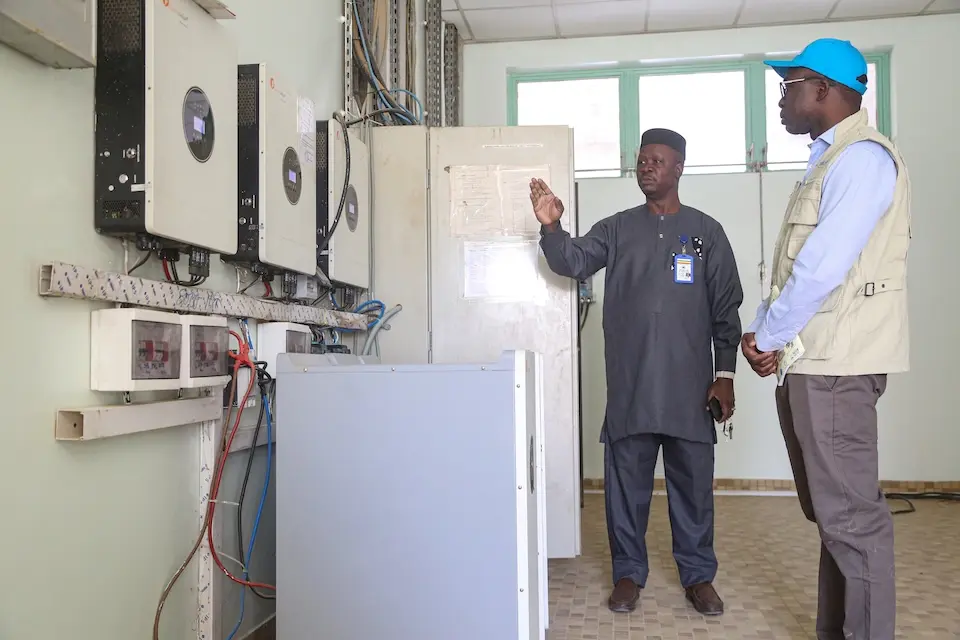
A solar power upgrade supported by UNICEF keeps vital equipment running at a Mali health clinic.
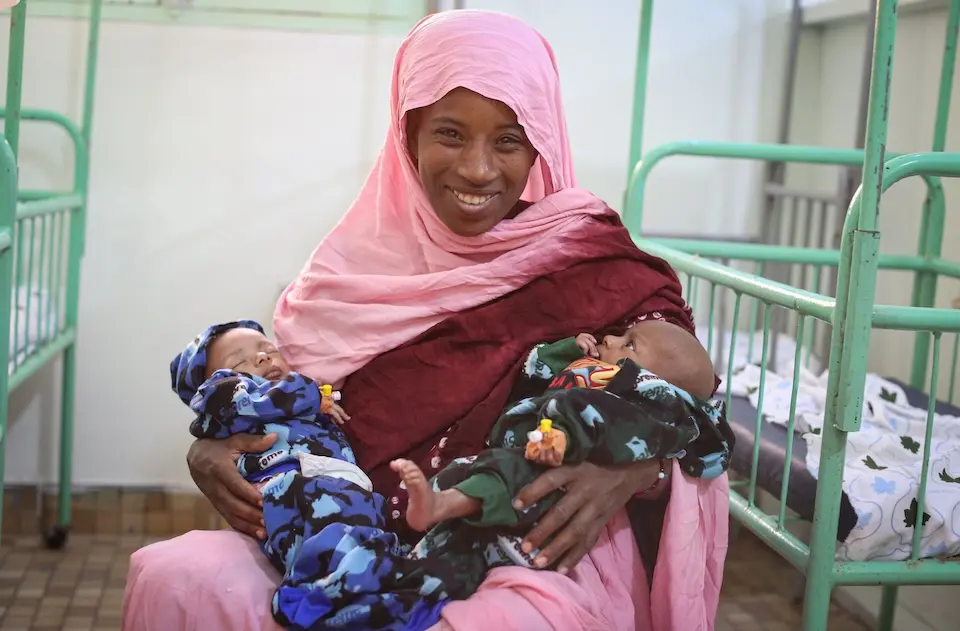
For two fragile newborns, solar power meant continuous care — and survival
Improving health outcomes in countries like Mali requires improving health infrastructure — in particular, ensuring that health facilities have a steady source of power.
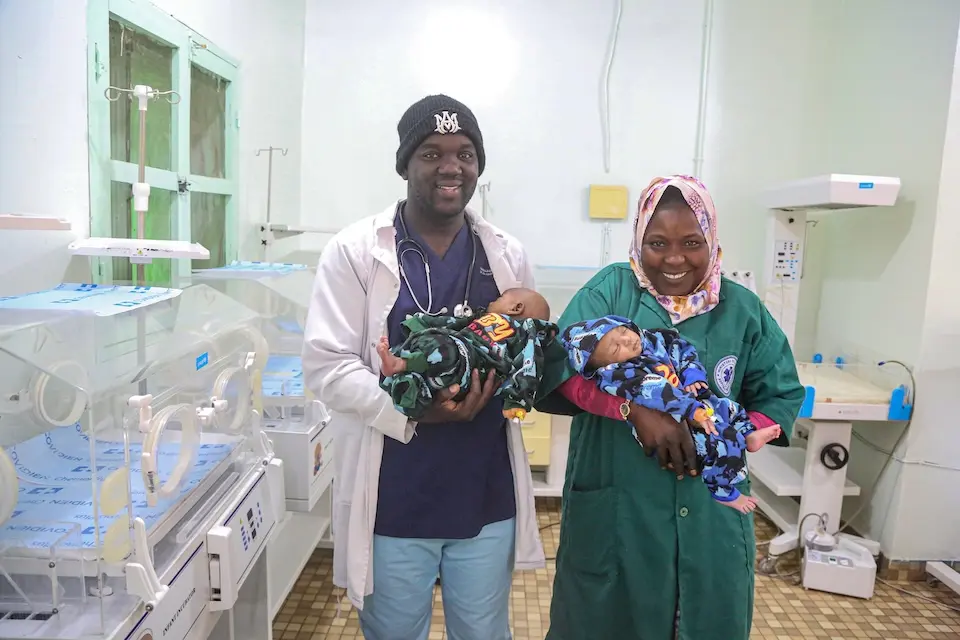
This is where solar energy comes in. At Timbuktu Hospital, a solar system keeps vital equipment operating around the clock, ensuring continuous care for patients in the pediatrics, maternity and neonatal care units.
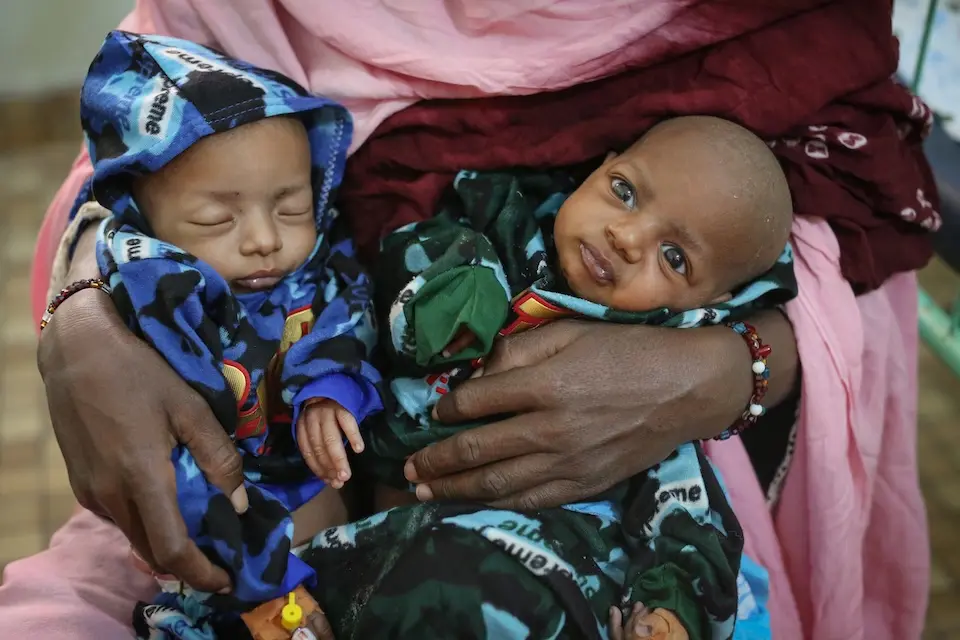
Continuous care is exactly what newborns Abdoulaye and Oumou needed. Fragile at birth, the twins were immediately hospitalized. With solar power keeping everything running, the babies were able to remain under care until they were strong enough to be discharged.
Harnessing solar power to drive progress across many UNICEF programs
Solar solutions play a role in many UNICEF programs and interventions around the world, as a way to build resilience of critical services and infrastructure, from hospitals to schools to water systems.
Solar-powered water systems are particularly impactful; they improve the quality of a community's water supply in the face of declining water levels and extreme weather events — even in drought, as shallow wells go dry — by enabling pumping from deeper levels underground. They keep kids learning by improving safe water access in schools.
UNICEF has also embraced solar power as a way to help spur recovery in places like Ukraine, where conflict has decimated critical energy infrastructure.
While UNICEF has supported solarization and other off-grid energy projects in over 80 countries, solar's potential as a global game changer, helping to address some of the world's most glaring inequities, has yet to be fully realized. Through its Office of Innovation, UNICEF is actively seeking to accelerate investment in sustainable solar solutions worldwide, while also addressing implementation and other challenges, through Project Alpha.
Mali health facility upgrades part of broader initiative to build community resilience in the Sahel
The solar upgrade at Timbuktu Hospital was completed as part of a UNICEF-led initiative called Building Resilience in the Sahel. BRS focuses on strengthening health and other critical systems in Mali and neighboring nations in a region that is prone to recurrent crises.
Taking a two-pronged and multi-sectoral approach, the BRS program looks to improve the planning and delivery of essential social services while also equipping and empowering communities, households and individuals to withstand shocks and stresses — unreliable or disrupted access to electricity being a common one.
From 2019 to 2023, the BRS program's first phase, more than 3.5 million vulnerable people in Mali, Mauritania and Niger, including 2.7 million children, were directly supported through one or more resilience-focused interventions. For its second phase, 2023-2027, the BRS program has added two more focus countries, Chad and Burkina Faso, and aims to benefit 14 million people, including over 8 million children.
BRS is funded by Germany's Federal Ministry for Economic Cooperation and Development. Partners include UNICEF, the World Food Program and the German Corporation for International Cooperation.
Ensuring health workers can provide uninterrupted care services for children and women — postnatal care as well as prenatal care, immunization services, HIV care and gender-based violence response care — remains a priority for the partnership.
Read more about how UNICEF is building resilience in the Sahel
HOW TO HELP
There are many ways to make a difference
War, famine, poverty, natural disasters — threats to the world's children keep coming. But UNICEF won't stop working to keep children healthy and safe.
UNICEF works in over 190 countries and territories — more places than any other children's organization. UNICEF has the world's largest humanitarian warehouse and, when disaster strikes, can get supplies almost anywhere within 72 hours. Constantly innovating, always advocating for a better world for children, UNICEF works to ensure that every child can grow up healthy, educated, protected and respected.
Would you like to help give all children the opportunity to reach their full potential? There are many ways to get involved.