Cost-Effective, Accountable, Strategic: U.S. Investment in Guatemala's Children
Highlights
- U.S. Government support is helping UNICEF and partners strengthen systems that help children survive and thrive in rural Guatemala
- The rehabilitation and strengthening of community water systems improves child health outcomes
- Mobile health brigades help reduce malnutrition among mothers and children under 5
- Early childhood development programs build strong foundations for economic prosperity
Targeted foreign assistance improves outcomes for children, their communities and longterm regional stability. A look at UNICEF programs for children in Guatemala, with support from the U.S. Government.
Six out of ten children in Guatemala are growing up in multidimensional poverty, without access to the essentials every child needs to thrive: nutritious food, safe water, education, health care. To help children reach their full potential, UNICEF works with partners worldwide to advance solutions that meet children's needs. On a recent program visit to Guatemala, UNICEF USA’s Global Policy and Public Affairs team led a bipartisan delegation of D.C. policy leaders to see firsthand the measurable results of UNICEF's lifesaving work — much of it accomplished with support from the U.S. Government.
The visit underscored how targeted foreign assistance advances lifesaving child and community interventions along with long-term regional stability, with direct impact on U.S. interests and national security.
With U.S. Government support, UNICEF is strengthening systems to meet critical needs of children in Guatemala
The programs visited were in Alta Verapaz, Guatemala’s north-central highlands region. With a population that is 93 percent Indigenous and largely rural, communities in Alta Verapaz face significant barriers to accessing basic services. Guatemala has one of the highest rates of chronic child malnutrition in the world: 42 percent of children under 5 are affected. More than half of the population consumes water contaminated with E coli.
UNICEF, in partnership with the Government of Guatemala, other UN agencies, local implementers and the private sector, is rising to the challenge with support from the U.S. Government. These investments have led to stronger national systems for early childhood development, health and nutrition, resulting in 10 million children’s lives saved and 500 million children healthy and developmentally on track.
The group observed three complementary and coordinated U.S.-supported programs that address the critical needs of vulnerable children and families around water, sanitation and hygiene (WASH), health and nutrition, and early childhood development (ECD) efforts. Each program is designed for sustainability through local ownership. Increasing government support and local integration mean these efforts are not just short-term aid, but self-sustaining systems that reduce long-term dependency on U.S. funding.
Learn more about UNICEF's work for children in Guatemala
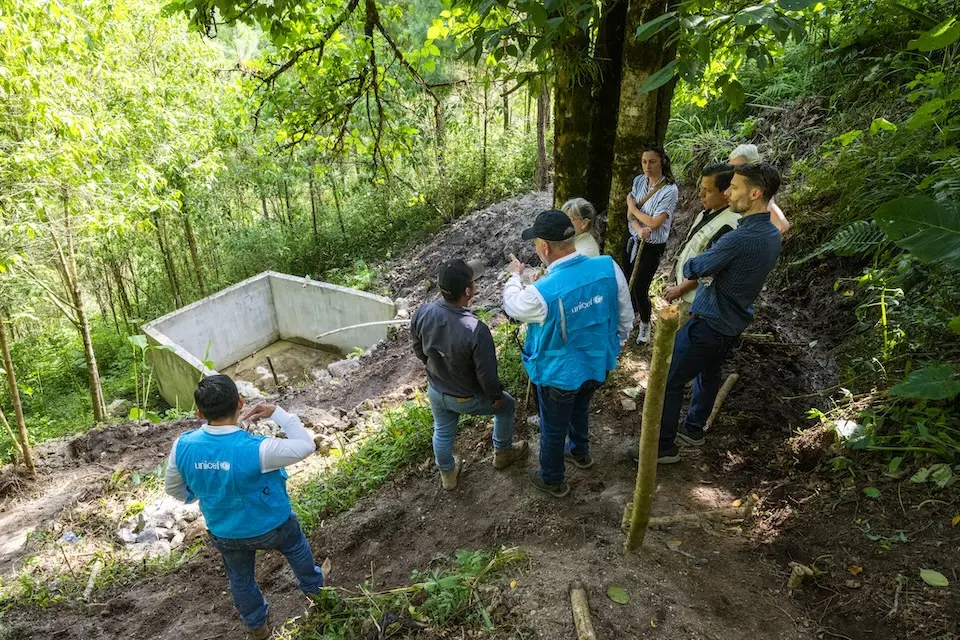
Water, sanitation and hygiene (WASH)
San Cristóbal Verapaz, a rural Indigenous municipality in Alta Verapaz, is home to approximately 700 people living in 126 households with limited access to safe water and sanitation, contributing to recurring illnesses, particularly diarrheal diseases among children. The municipality has one of the highest rates of chronic child malnutrition in Alta Verapaz, affecting 60 percent of children.
In partnership with HELVETAS and the municipality, UNICEF is supporting the rehabilitation and strengthening of the community water system. This program is supported by U.S. Government funding for the UN Office for the Coordination of Humanitarian Affairs (OCHA). Access to the community is challenging; the group traveled for miles on winding, unpaved roads to meet with community leaders, who led their guests into the dense cloud forest where the men of the community were hard at work rehabilitating two water catchment structures. The construction of flow collection chambers will improve water distribution for the village and strengthen local capacity for operation and maintenance.
After a day’s work, machetes slung over their shoulders, the men led the way back to the village for a meeting with the women’s committee. They oversee household construction, use and maintenance of latrines. The vice president of the municipality proudly held up a map of all the households, showing that the community has achieved significant progress in sanitation and hygiene and eliminating open defecation through community-led behavior change and self-improvement processes in every household. Outcomes include early detection and treatment of malnutrition to ensure children receive timely care and lifesaving services, and stronger frontline health infrastructure.
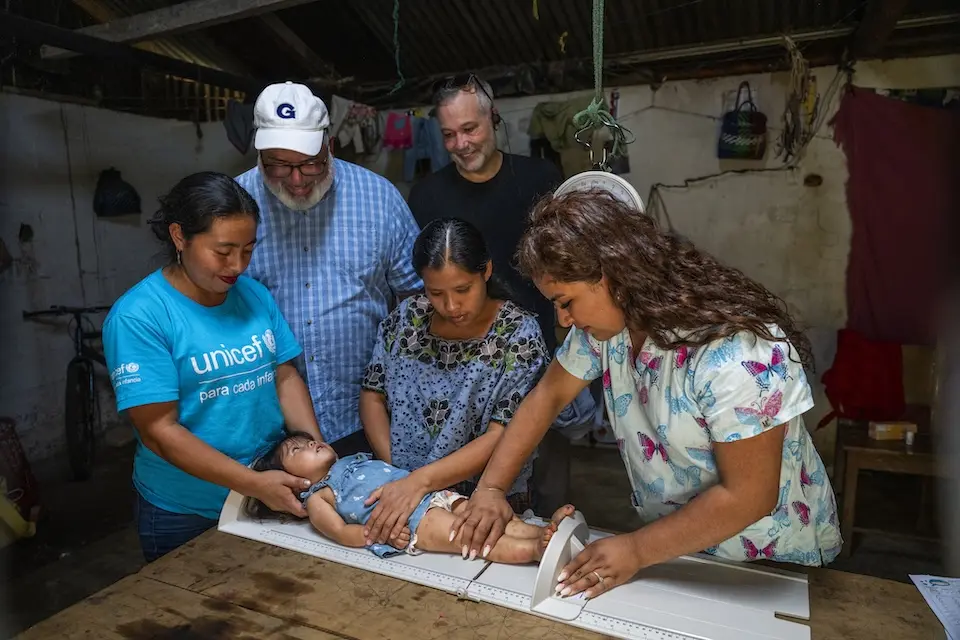
Health and nutrition
San Pablo Tamahú is a small, predominantly rural municipality in Alta Verapaz with a noticeably young population. Hard-to-reach communities like this one face significant barriers to accessing services, socioeconomic constraints and limited infrastructure that contribute to public health challenges and highlight the need for coordinated multi-sectoral efforts to improve living conditions and service delivery.
For UNICEF, both the challenge and the opportunity lie in strengthening care during pregnancy, childbirth and the newborn period; expanding nutrition interventions across the first 1,000 days; and enhancing community capacity. U.S. Government funding for OCHA also supported and strengthened Guatemala's health and nutrition program.
The group walked up a steep road to join the women and children of the community for a locally led handwashing and breastfeeding demonstration. Afterwards, they navigated narrow paths through lush mountainous terrain, following a mobile health brigade led by a doctor and nurse, who go door to door providing nutrition screenings, supplements and education to pregnant women and children. Integrated with community and government health services, this initiative is aimed at reducing malnutrition among mothers and children under 5. Outcomes include early detection and treatment of malnutrition to ensure that children receive timely care and lifesaving services, and stronger frontline health infrastructure.
Learn more about UNICEF children's health programs and initiatives
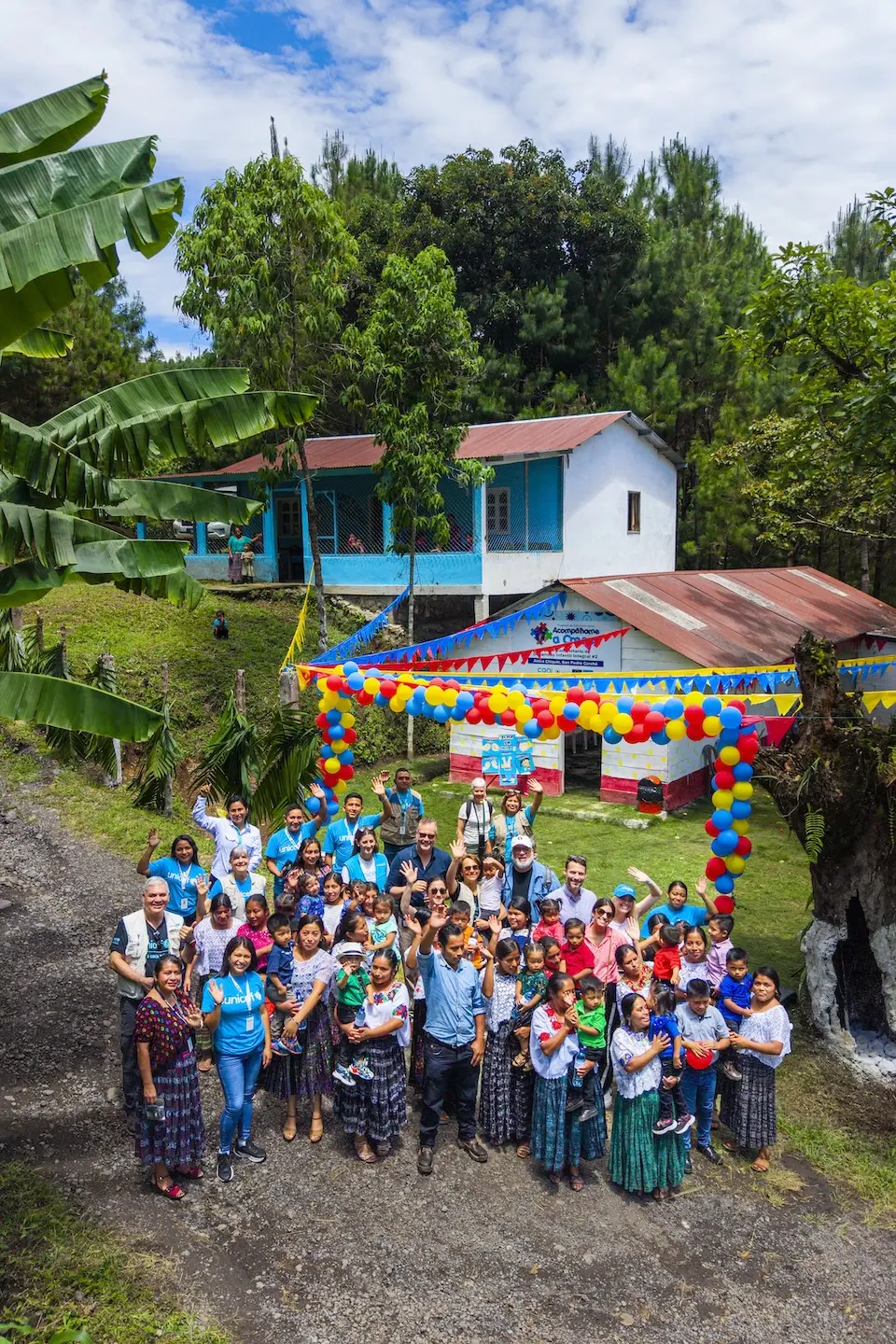
Early childhood development
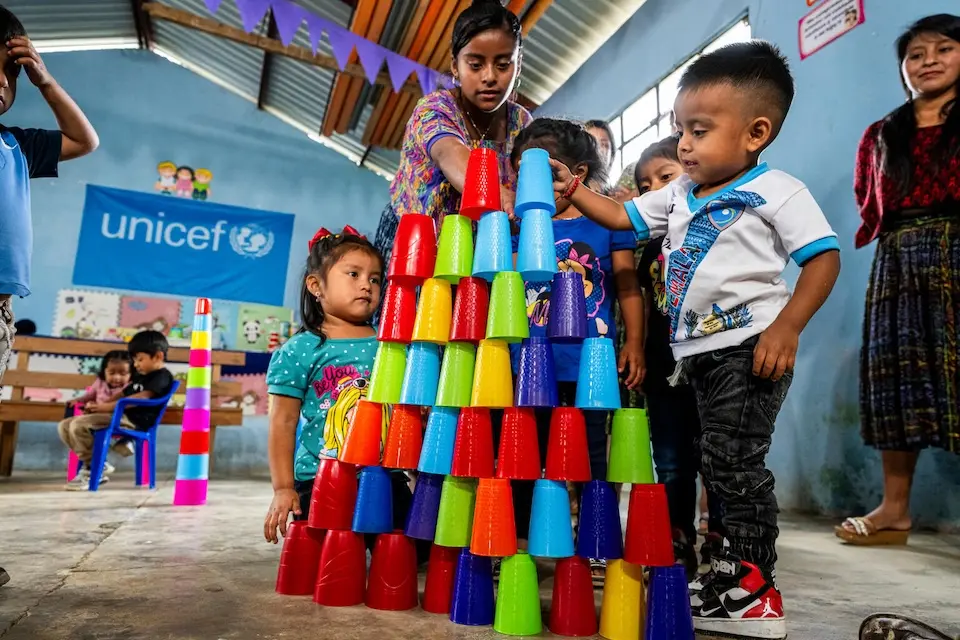
Aimed at ensuring the holistic development of young children during the crucial early childhood years, Community Centers for Comprehensive Child Development (CECODII) operate in rural communities and territories. Supported by UNICEF and WHO, these centers provide integrated services including early stimulation, language development, and health and nutrition promotion, along with socio-emotional strengthening through play-based and child-centered methodologies.
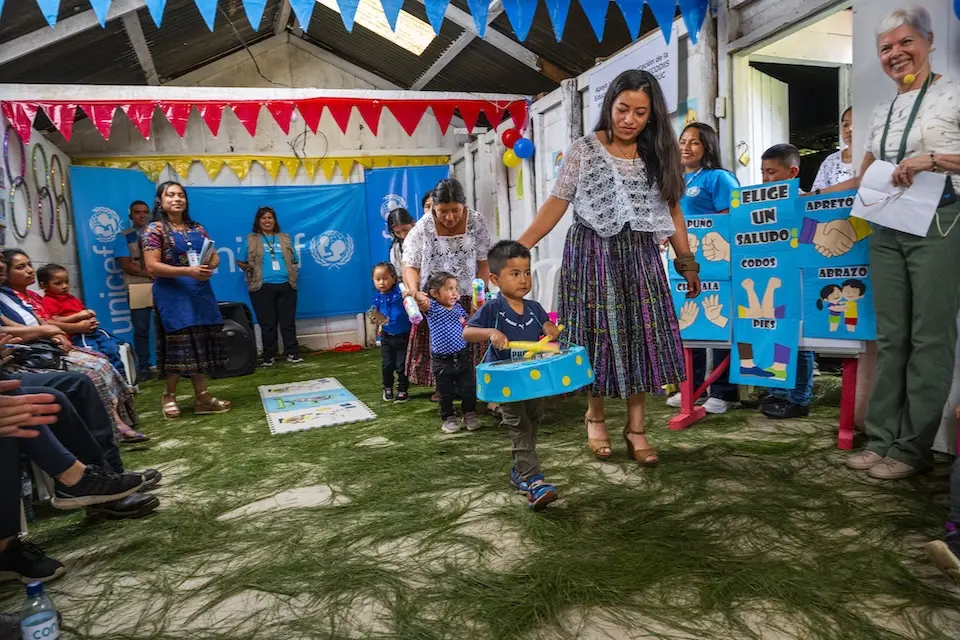
Led by the Ministry of Education of Guatemala, UNICEF supports "Acompáñame a Crecer" programs, which are designed to strengthen the role of families, caregivers and education agents in early childhood development from conception to age 4. Women travel on foot with their young children through the pine forest to reach the CECODII in the center of San Pedro Carchá, a populous municipality in Alta Verapaz. The community-led program, now run by the Guatemalan Government, encourages the interaction of mothers and children through play, music, social cues and healthy foods, supporting early learning, parenting education and cognitive development.
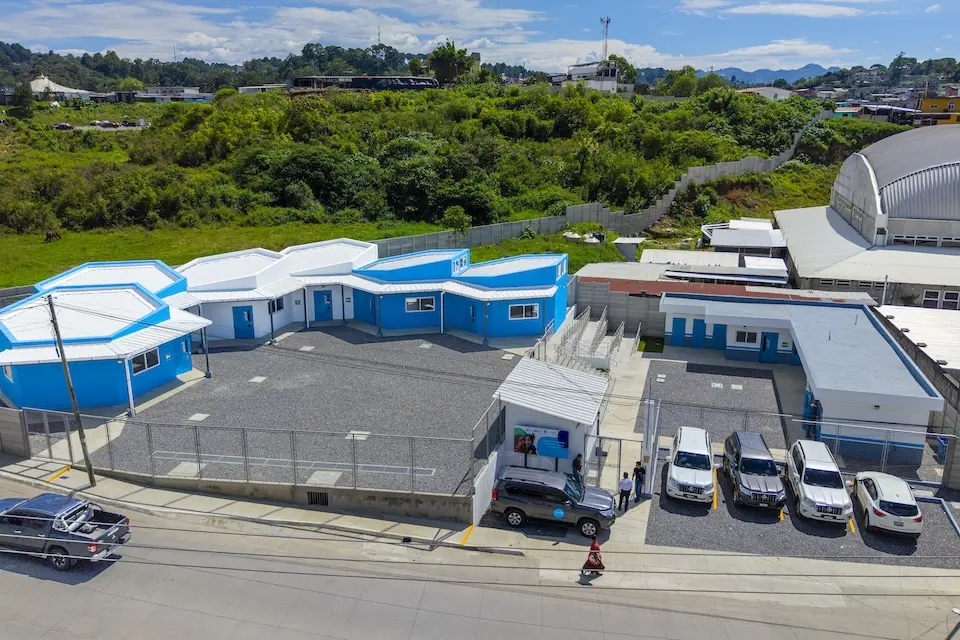
Next stop: a UNICEF-built ECD teacher training center in Cobán, the capital of Alta Verapaz. The center, opening soon, will be the first of its kind in Guatemala, focusing on teacher training and the provision of early childhood stimulation activities for young children. Outcomes from these programs include improved long-term child development and stronger foundations for economic prosperity.
All three programs emphasize community ownership and partnership with local governments.
Related: How Affection Impacts Early Childhood Development in Guatemala
Delivering results through partnership
Implemented with UNICEF, other UN agencies, local authorities and the private sector, these programs are strengthening health systems, advancing U.S. interests, countering instability and building regional resilience. U.S. Government support provides continuity and adaptability that sustain momentum in key program areas, strengthen local government ownership and generate evidence to support long-term policy and program development.
This is a model of cost-effective, accountable foreign assistance. Modest funding levels are producing high-impact, verifiable outcomes, reinforcing the case that targeted U.S. Government investment is both fiscally responsible and strategically sound.
Your contribution to UNICEF is more important than ever.Please Donate
HOW TO HELP
There are many ways to make a difference
War, famine, poverty, natural disasters — threats to the world's children keep coming. But UNICEF won't stop working to keep children healthy and safe.
UNICEF works in over 190 countries and territories — more places than any other children's organization. UNICEF has the world's largest humanitarian warehouse and, when disaster strikes, can get supplies almost anywhere within 72 hours. Constantly innovating, always advocating for a better world for children, UNICEF works to ensure that every child can grow up healthy, educated, protected and respected.
Would you like to help give all children the opportunity to reach their full potential? There are many ways to get involved.