Help Children in Côte d'Ivoire
A look at how UNICEF is making a difference for children in Côte d'Ivoire, by improving health, nutrition and access to quality education, strengthening systems that protect them from violence, and more.
Why UNICEF works in Côte d'Ivoire
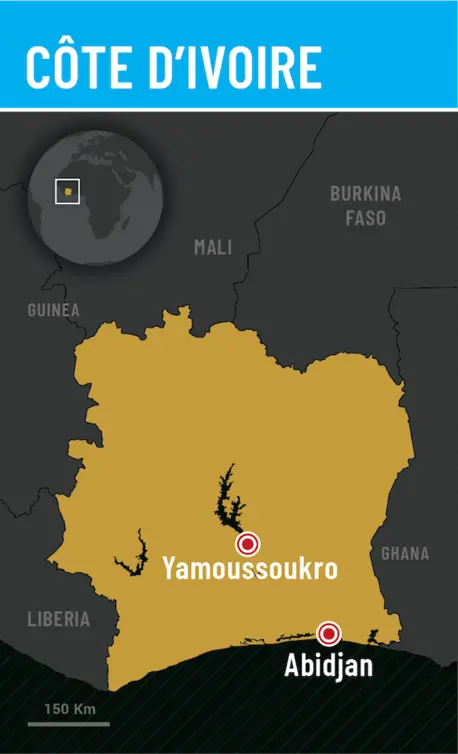
Côte d’Ivoire is at an inflection point. Since emerging from a prolonged economic crisis, a 1999 coup d’etat and two civil wars, the last of which ended in 2011, the West African coastal nation of 30 million is experiencing relative political stability and robust economic growth. Government spending on social programs is among the highest in the region.
Yet challenges remain. Nearly half of all children in Côte d’Ivoire live in impoverished households; 63 percent experience at least three of the seven deprivations signaling multidimensional child poverty. Child labor, violence against children remain widespread. Malnutrition is scourge.
Child Labor Robs Children of their Futures
Growing insecurity in border areas related to conflict and chronic food crises in the Central Sahel is another major threat to the well-being of children in Côte d’Ivoire, threatening the ability of households to fulfill their basic needs and rights and exacerbating vulnerabilities — particularly the risk of radicalization of youth.
While national maternal and child mortality rates are way down, they remain stubbornly high in the country's northern regions.
Challenges facing children in Côte d'Ivoire
Malnutrition is a major problem among children, with 23 percent of the under-five population stunted and 8 percent wasted. Over three-quarters of children aged 6–23 months lack access to minimally diverse diets.
Improving child survival remains a matter of urgent concern. In 2023 alone, roughly 13,100 under-five deaths occurred every day in Côte d’Ivoire, an intolerably high number of largely preventable child deaths.
Every child has the right to be safe and protected from harm. But in Côte d’Ivoire, an estimated 75 percent of children aged 1–14 years have experienced violence, 13 percent in its most severe forms. Despite economic strides achieved between 2011 and 2021, during that time sexual violence against girls actually increased.
Nearly 1.5 million school-age children in Côte d’Ivoire are out of school; many of those attending primary school emerge with low learning outcomes, with almost 17 percent reporting poor reading and writing skills and 40 percent deficient in math.
Challenges children face in West Africa
How UNICEF is making a difference
Health and nutrition programs
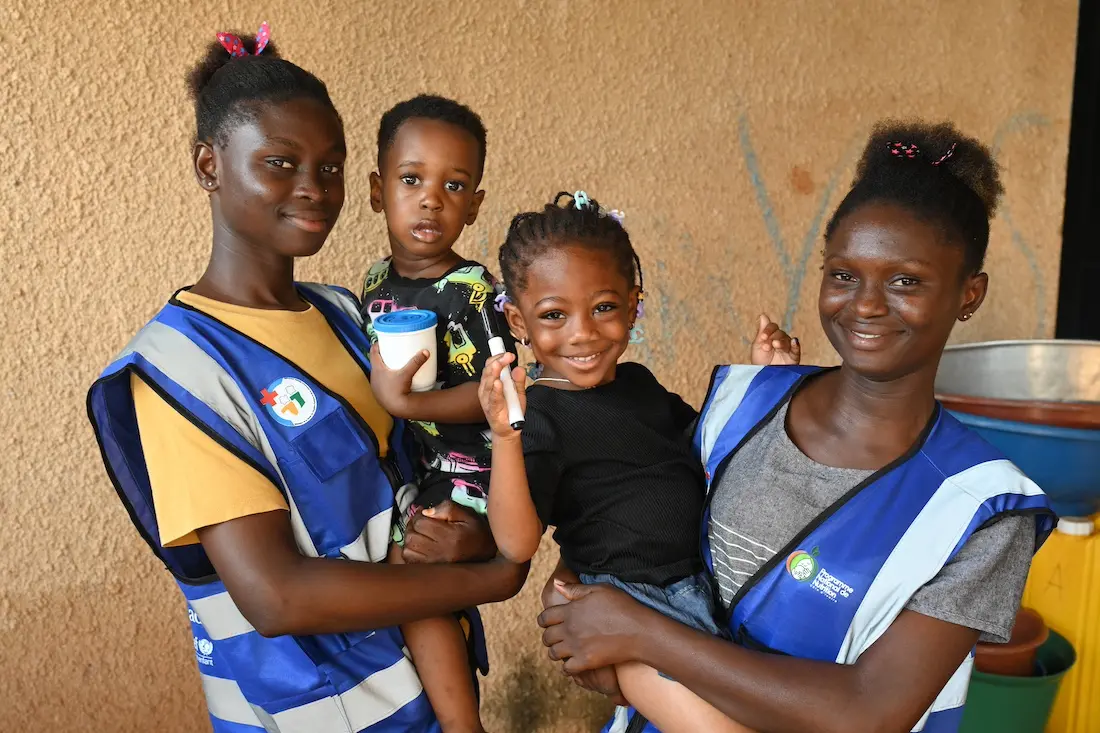
UNICEF continues to expand efforts in Côte d’Ivoire to reach malnourished children in and promote a national strategy aimed at tackling the problem.
These efforts include building new information infrastructure and administrative systems that provide real-time data to those on the ground, allowing them to better identify children and families in need and intervene early. As a result of these improvements, the number of children reached with lifesaving treatment for severe acute malnutrition (SAM) has been steadily increasing.
With partners, UNICEF has also:
- launched an innovative door-to-door monitoring program that supported the distribution of millions doses of vitamin A to children under 5
- established scores of new ‘baby-friendly’ maternity hubs, where breastfeeding is encouraged and supported
- facilitated hundreds of thousands of home visits by community health workers trained to detect early signs of malnutrition and health and nutrition
UNICEF’s health and nutrition programs
Protecting children from violence and abuse
To better protect children from violence, exploitation and abuse, UNICEF has worked closely with the national government to develop and validate a national child protection policy. It has supported the development of systems and tools to facilitate better national data collection on child rights violations and to build local capacities to respond to them.
Thousands of children have received care and assistance through UNICEF-supported social and justice investments, including survivors of sexual violence.
UNICEF has also been working to increase birth registration. Without documentation, children are more vulnerable to child labor, human trafficking and other forms of exploitation. Yet almost one-third of children in Côte d’Ivoire lack birth registration and a legal identity.
In addition, UNICEF has supported the launch of new programs that aim to eliminate child labor. Côte d’Ivoire is the largest producer of cocoa in the world, with more than 40 percent of global production. For the 3 million children living in cocoa growing communities, persistent child labor is a symptom and self-reinforcing cause of poverty. By some estimates nearly one-fifth of children aged 5–17 (and 1 in 4 children aged 12–17) are involved in some type of hazardous labor.
UNICEF played a key role in the enactment of a federal Youth Protection Act and an ambitious youth development program aimed at promoting youth socio-professional integration and employability. These initiatives helped birth registration of children under 1 year to rise from 76 percent in 2016 to 95 percent in 2021, and the prevalence of child labor to decline from 31 percent to 22 percent respectively. But there remains much more work to be done.
Improving access to education
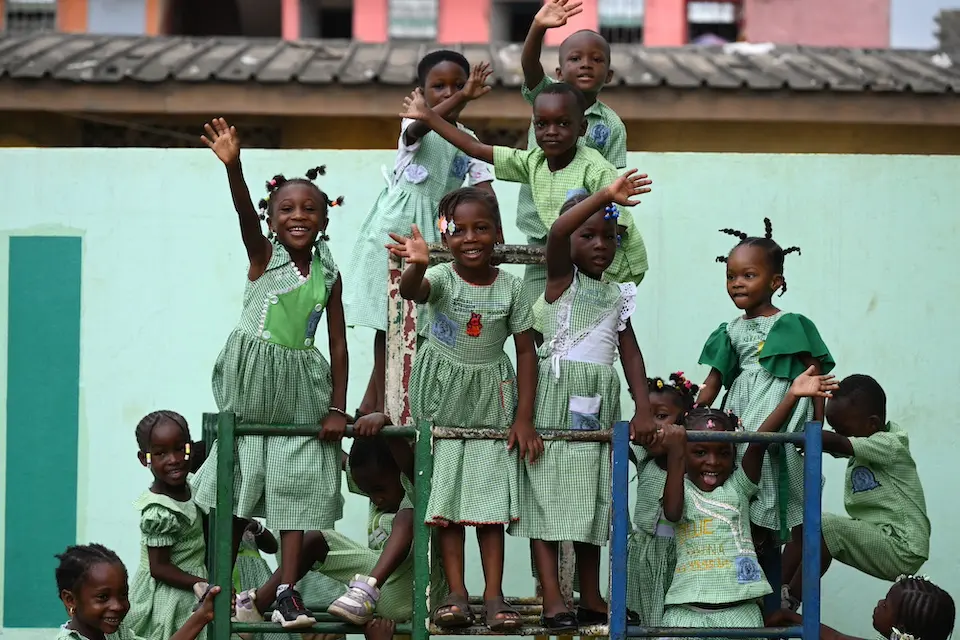
Improving educational outcomes remains one of the most potent tools available to reduce child labor and improve economic mobility. UNCEF works with partners to call attention to Côte d’Ivoire's learning crisis and to build the political will in the highest levels of government to intervene, sponsoring major conferences and otherwise helping to return education to the heart of social dialogue.
Meanwhile, UNICEF is working with NGO partners to help transform the education system by advocating for a pre-primary strategy, training educators and building and equipping more schools. UNICEF also supports efforts to equip those unable to complete traditional primary education by building new classrooms, helping develop technical and vocational opportunities and distributing school kits and self-learning tools to tens of thousands of children and adolescents.
Traoré, 8, a 1st grader in Abidjan’s Yopougon district (known locally as Yop City), is one of thousands of students who is benefiting from one of the brand-new classrooms built through an innovative program involving plastic bricks. The program is helping to ease overcrowding in classrooms — some have had to accommodate as many as 100 students — while creating employment and income-generating opportunities for community members.
UNICEF's partner in the plastic bricks program is Conceptos Plásticos, a social enterprise from Colombia focused on recycling plastic waste and turning it into usable building material. The raw materials were easy to find; some of Abidjan’s neighborhoods are littered with plastic bags, bottles and other plastic waste.
The Benefits of Building Classrooms out of Recycled Bricks
Traoré likes math. “Classrooms used to be overcrowded,” he says. “Now that we have this new school, more children from our neighborhood will be able to go to school and classrooms will be less crowded."
Local construction workers like Djèbi and Digbei, were trained by aid workers on how to assemble plastic bricks and build classrooms. They, in turn, trained several community members who assisted them in the construction of these new classrooms. As a result, the community has a feeling of pride and ownership towards these sustainable classrooms that transform lives.
“Building schools with plastic bricks is much faster,” says Djèbi. “Plastic bricks are lighter than other traditional materials, which makes them easy to carry. It’s also really easy to assemble them.”
By strengthening basic numeracy and literacy skills, and by providing vocational training on good agriculture practices and business management, UNICEF and partners are also helping youth make cocoa farming a viable career while increasing their general employability.
Responding to the refugee crisis in Côte D’Ivoire
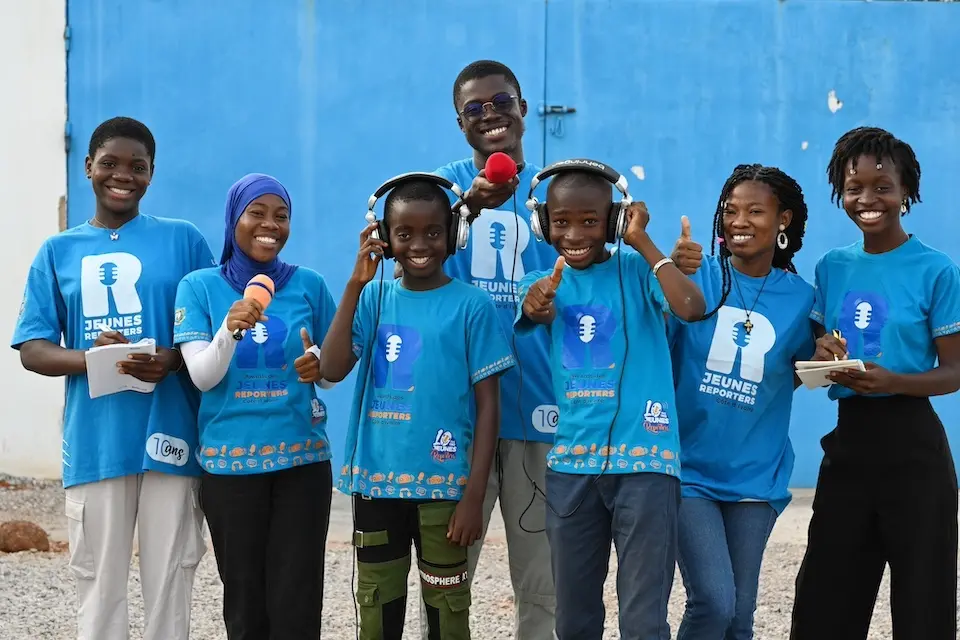
UNICEF continues to help Côte d’Ivoire respond to an influx of refugees from neighboring countries and to manage the spillover effects caused by the wider Central Sahel crisis.
The fast-spreading instability in the Sahel catalyzed an 11-fold increase in refugees/asylum seekers from Burkina Faso in 2023. In 2024, there were multiple incursions involving armed groups in areas bordering Burkino Faso and Mali. By 2025, the number of refugees in the northern part of country from the two countries topped 70,000, more than 40,000 children.
The influx has strained resources in host communities, most notably In the Bounkani and Tchologo regions, where more than 700,000 people are facing food insecurity. Despite humanitarian assistance, in some areas more than 80 percent of households cannot meet basic needs.
UNCEF is responding to urgent needs by:
- supporting mass malnutrition screening at health centers to identify and treat children in need of emergency intervention
- providing vitamin A supplementation to at-risk children
- working with partners to install more water points, which remain in short supply
- setting up temporary classrooms, providing learning supplies and teacher training and otherwise supporting schools to help accommodate refugee children
- supporting efforts to promote dialogue and joint development efforts to mitigate tensions and support cohesion in host communities
Inside look at how UNICEF supports refugees in Côte D’Ivoire
How you can help
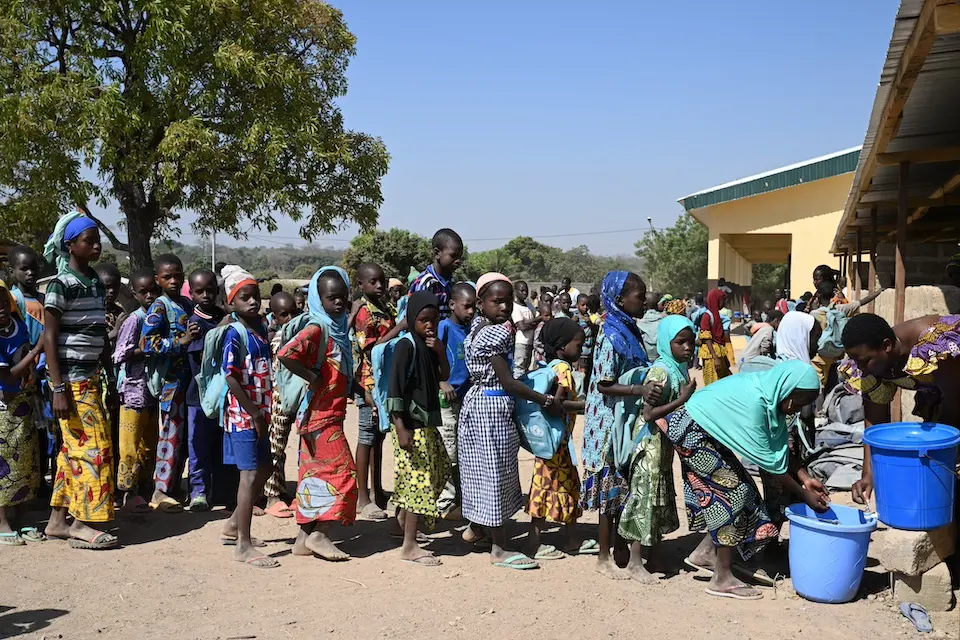
Supporters can help UNICEF reach more children in Côte d'Ivoire and around the world with a one-time tax-deductible donation or monthly gift, by starting a fundraiser or by helping to advocate for children on social media. A contribution to UNICEF USA directly supports children's health, safety and empowerment.
Learn more about child rights and advocacy opportunities
Explore other ways to give and support UNICEF’s mission
Frequently Asked Questions
How does my donation help children in Côte d'Ivoire?
Donations support programs providing healthcare, education, nutrition and protection to vulnerable children in Côte d'Ivoire and worldwide.
Is my donation to UNICEF tax-deductible?
Yes, UNICEF is a registered 501(c)(3) organization and donations are tax-deductible to the extent allowed by law.
Can I set up a recurring donation?
Absolutely. Monthly contributions provide sustained support for ongoing programs.
How else can I support UNICEF's work?
In addition to donating, you can fundraise, advocate for children's rights, start a UNICEF Club and donate an Inspired Gift of supplies in honor of a friend or loved one.
A campaign called Nutrition Intensification Days helps ensure that thousands of children in Côte d'Ivoire are protected every year through this intervention. © UNICEF/UNI822113/Dejongh