Climate Change and Children's Education
UNICEF is deeply involved in mitigating the effects of climate change on children’s education, working closely with Ministries of Education and communities to build climate-resilient schools and to support children and young people as effective climate champions. The Green Schools Initiative in West and Central Africa embodies this commitment to accelerating climate action for children in and through education in one of the most climate-affected regions of the world. Learn more, including how to support this important work.
Making schools more resilient to climate shocks, leveraging education to accelerate climate action: the Green Schools Initiative
Like every other important aspect of life, education is highly vulnerable to the impacts of climate change. Extreme weather, disease outbreaks, water scarcity, food insecurity — all threats to children's health and well-being that are either directly caused by or aggravated by climate change — damage educational facilities, shutter schools, disrupt educational services and hamper student capacities to learn and thrive.
Climate landscape analyses conducted in several countries where UNICEF works indicate these impacts are only escalating.
UNICEF's Sustainability and Climate Action Plan for 2023-2030 prioritizes making schools more resilient to climate shocks as a way to mitigate these impacts and safeguard every child's basic right to an education.
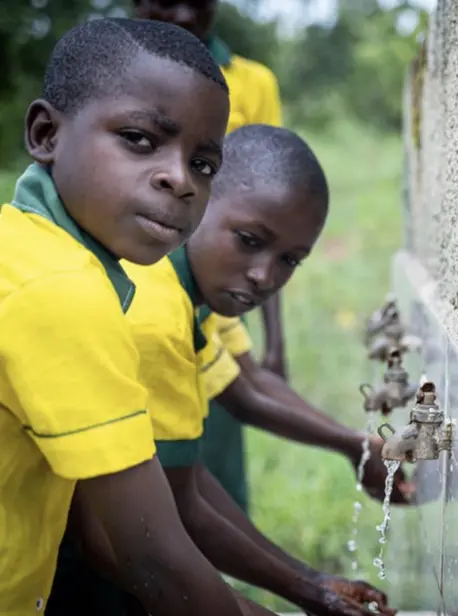
The Green Schools Initiative (GSI) in West and Central Africa provides a strategy for doing just that across several high-risk countries in one of the most climate-affected regions of the world. Significant strides have already been made across all pillars of the initiative. Stand-out efforts include solarizing climate-resilient WASH services in schools, among other projects.
In addition to climate-proofing schools, the GSI is also a call to action for partners to join UNICEF in leveraging education, educators and entire school communities as a vehicle for accelerating climate action, by ensuring that the next generation of leaders have the knowledge and skills to shape and advance climate solutions.
Related: How to Build a Sustainable Future? Educate Children about the Environment
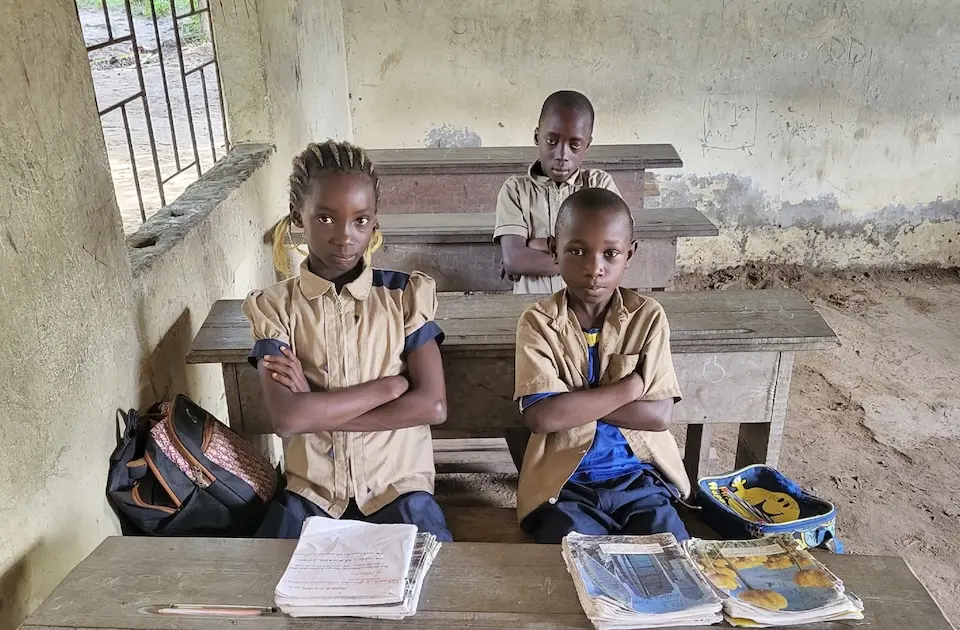
Reorienting education programs to respond to the climate crisis
UNICEF has been addressing the impacts of emergencies, disasters and conflict on children and their education in West and Central Africa for decades. There are UNICEF country offices in 24 countries in the region: Benin, Burkina Faso, Cameroon, Cabo Verde, Central African Republic, Chad, Democratic Republic of the Congo, Côte d'Ivoire, Equatorial Guinea, Gabon, Gambia, Ghana, Guinea, Guinea-Bissau, Liberia, Mali, Mauritania, Niger, Nigeria, Sao Tome and Principe, Senegal, Sierra Leone and Togo.
Many are ranked high on UNICEF's Children’s Climate Risk Index. As the climate crisis has intensified in recent years, these country offices have been reorienting their education programming accordingly.
Learn more about UNICEF's programs in Africa
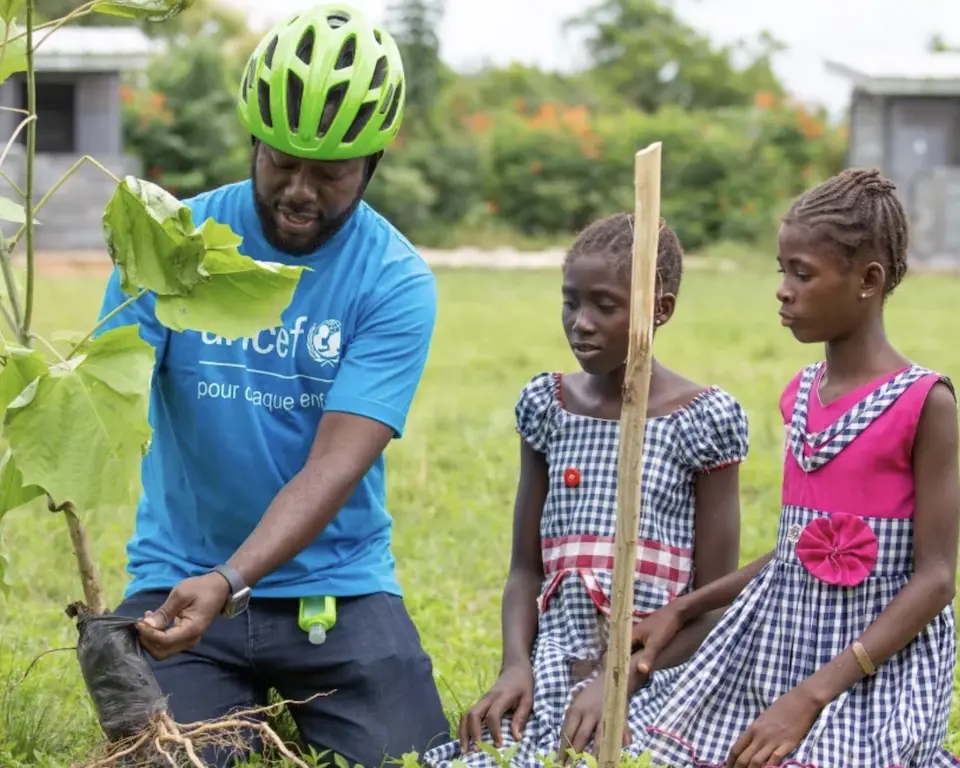
Integrating sustainability into education strategies
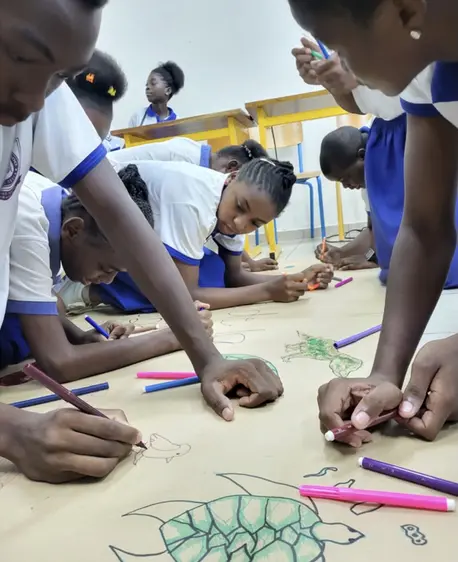
A central tenet of the Green Schools Initiative for West and Central Africa is that insuring children know how to survive and respond to increasing climate risks and hazards is not only essential, it is their right.
An over-arching goal is to integrate sustainability and climate action into education strategies, policies and plans, including risk-informed analysis and budgeting. Other pillars of the GSI approach include:
- building climate resilient and greener school facilities
- strengthening school safety and protecting educational continuity
- promoting disaster risk reduction and climate education
- empowering children and young people as agents of change
Priorities include ensuring that children are able to participate in all aspects of comprehensive school safety, school and community disaster management; that they learn safety rules for specific hazards; that teachers are trained in inclusive risk reduction methods, materials and curricula.
It is also a priority under the GSI for both formal and informal education to provide children with climate change knowledge, green skills and resilience techniques so that they are able to participate — and be proactive in — climate action, adaptation and resilience activities.
As envisioned by UNICEF, climate education enables youth to be part of the solution and to influence household behavior. It also ultimately drives greater national action and commitment to promote sustainable development and address the climate crisis.
Tens of millions of children in West and Central Africa are not enrolled in formal schooling due to displacement fueled by conflict and other disasters. For these students, access to informal and non-formal education is critical for resilience building.
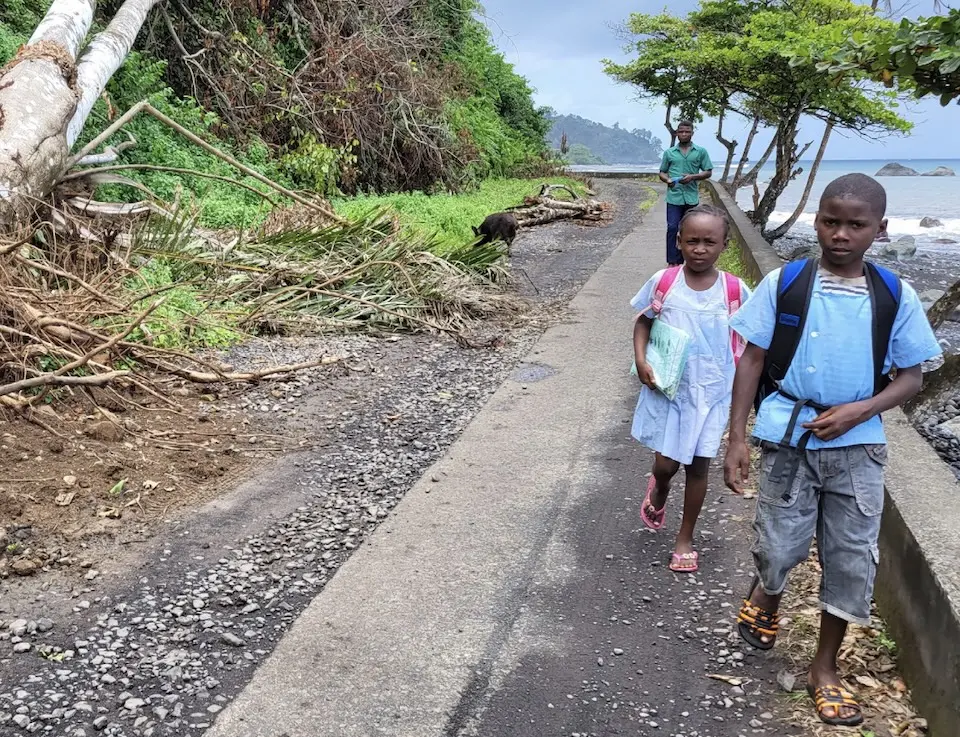
A strategy of inclusion, across communities and sectors
The Green Schools Initiative also leans into a strategy of inclusion. For UNICEF, climate action needs to include vulnerable groups, reach the last mile and every young person, especially girls and adolescent girls. Engaging young people living with disabilities is also paramount.
And because addressing climate change means taking into account other intersecting crises and challenges, the initiative espouses a multi-stakeholder, integrated and holistic approach to country level action, striving to get other critical sectors, not just the education sector, working together.
This includes social protection. Climate shocks like a devastating flood or prolonged drought destroys rural livelihoods, resulting in financial stress on vulnerable families and making basic expenses like school fees and related costs unaffordable. Dire circumstances can force families to put children to work to generate income or do household chores in the face of rising food insecurity or water scarcity, leaving little time for learning. Humanitarian cash assistance can offset those pressures and help keep kids in the classroom.
GSI case study: Nigeria's CRIBs project for greening schools
Nigeria launched its Climate-Resilient Infrastructure for Basic Services (CRIBS) project in 2024, a collaboration between UNICEF and the nation's Foreign, Commonwealth & Development Office and UNICEF.
Through the project, UNICEF is working with state governments to develop a scalable model of climate-resilient and sustainable health and education facilities — placing community ownership at the center.
CRIBS goals include:
- upgrading schools as accessible shelters for children and community members by repairing, rehabilitating and/or upgrading classrooms and related facilities and infrastructure
- making schools and community centers climate and disaster resilient — particularly against floods and heat waves — by strengthening foundations, improving stormwater management, installing waterproof windows, improving ventilation and other measures
- increasing schools' environmental sustainability by improving water-energy-food ecosystems through rainwater harvesting, school gardens, recycling, composting and other approaches
- rehabilitating water, sanitation and hygiene facilities to better withstand climate shocks
- enhancing school and community center safety with early warning systems, disaster awareness materials
- enabling continuity of learning during emergencies by equipping schools with solar-powered radios and other systems for remote learning
Learn more about ongoing UNICEF-supported activities in Nigeria and several other countries in West and Central Africa region in this Green Schools Initiative guidance document.
UNICEF won’t stop until every child is healthy, protected, educated and respected. This means educating and supporting young people to become change agents driving the climate action needed to secure a livable, sustainable future for all.