Delivering Health Services to Mothers and Children in Gaza
Highlights
- Intense bombardment has damaged or destroyed more than 80 percent of health facilities in Gaza
- UNICEF is working to re-establish essential health services closer to where children and their families live
-
Trained health workers provide breastfeeding mothers with both nutritional and emotional support
With the systems families rely on for survival decimated by war in the Gaza Strip, UNICEF is supporting clinics where mothers and their children can receive urgently needed health care.
Every child has the right to a safe and healthy childhood
Humanitarian conditions remain dire in the Gaza Strip — intense bombardment and the widespread destruction of medical infrastructure have left many children without access to even the most basic health care. Routine immunization services have been interrupted and maternal and newborn care severely disrupted. Parents displaced multiple times are struggling to keep their children healthy and safe in conditions no child should ever experience.
To prevent further deaths and to lay the foundation for recovery, UNICEF is working with partners to re-establish essential health services across the Gaza Strip, restore immunization coverage and ensure access to lifesaving neonatal and pediatric care. In the first six months of 2026, 487,000 children and women in Gaza accessed primary health care services with support from UNICEF.
Video:
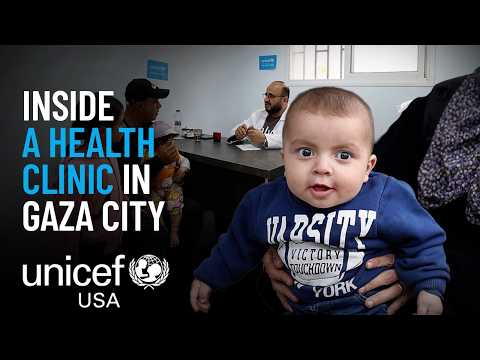
UNICEF clinics bring health services closer to children and their families across Gaza
Dr. Nour Al-Hattab, a family medicine specialist at UNICEF-supported Al-Fallahi Primary Health Care Center in Gaza City, says by bringing essential health services closer to where people live, the center has significantly improved health care for the community.
"Before the establishment of this clinic, there were no nearby health facilities available to serve the community," Dr. Al-Hattab said. "Residents were forced to walk long distances to access health care, often facing transportation challenges and financial hardship."
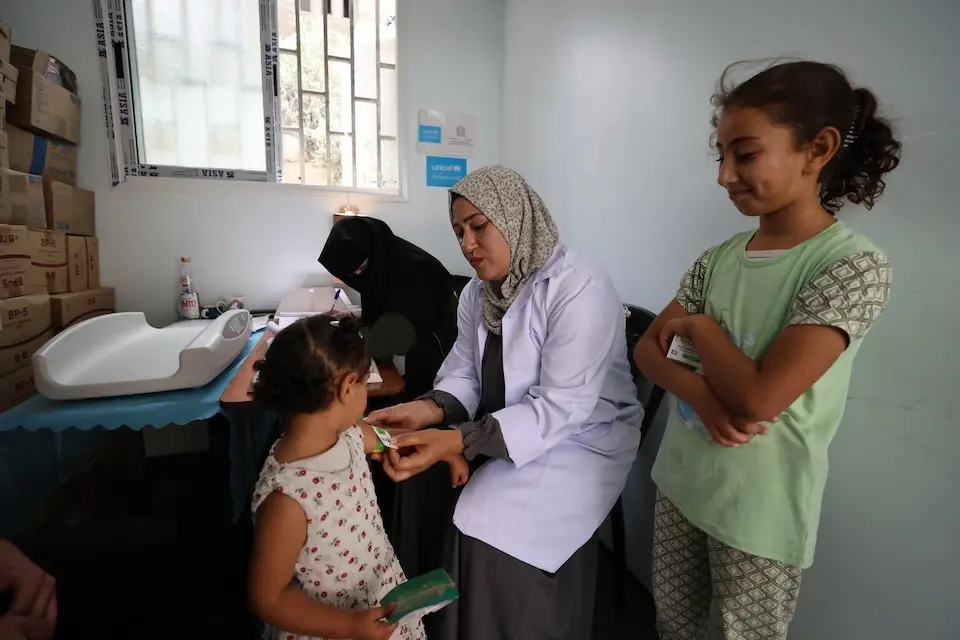
Children who come to the clinic can access a comprehensive range of services, including general medical consultations, primary health care services, disease diagnosis and follow-up care for various health conditions. The center also offers malnutrition screening and treatment for children between the ages of 6 months and 5 years, along with routine immunizations.
Walaa Hamdi Marouf arrived at the health center carrying her baby son. Displaced 13 times since 2023, she and her children are currently living in a tent in Tal Al-Hawa, in southwestern Gaza City. "I suffer from malnutrition, and this is my first time receiving services here," she said. "My child also receives the necessary care here. The medical team regularly monitors his weight and provides the treatment he needs."
Learn more: Children in Gaza Are Still Waiting for an End to the Violence
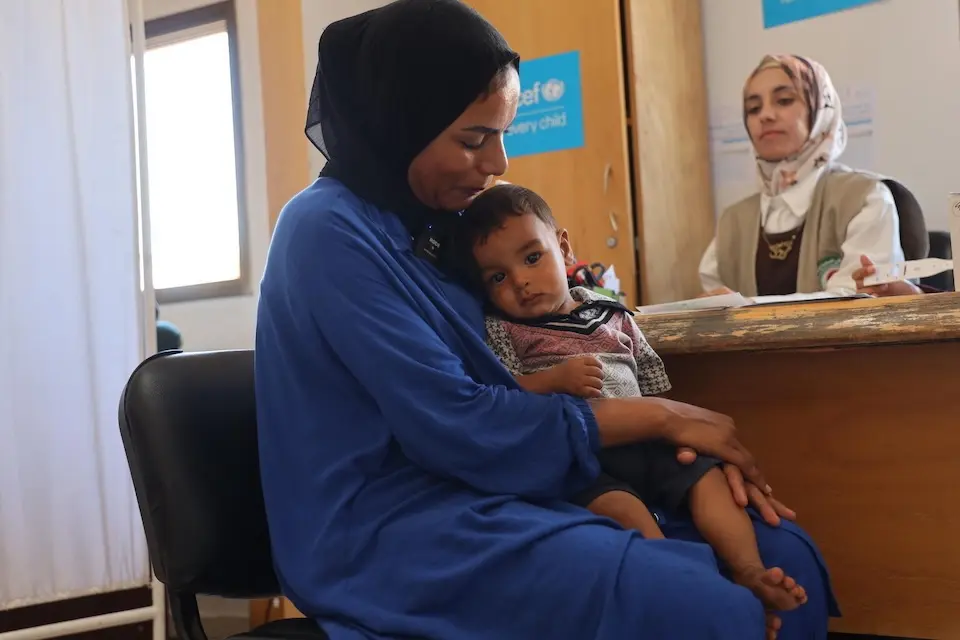
Specialized support for breastfeeding mothers and their babies
UNICEF also supports 118 mother-and-baby areas across Gaza, where mothers can receive nutrition services and essential support. One-to-one breastfeeding counseling provides mothers with the guidance they need to successfully nurse their babies under extremely difficult conditions. In the first seven months of 2026, UNICEF reached more than 163,000 caregivers with individual support, while over 210,000 participated in group sessions. With specialized care, 569 mothers were able to resume breastfeeding.
Trained counselors help mothers like Reda, who gave birth to her son Qusay and his twin two months before her expected due date. Qusay weighed just 3.3 pounds; the twin did not survive. At the time, Reda was severely malnourished and grieving the loss of her older son, who died from head injuries he sustained when the building next door was hit by bombardment.
“I lost my first son, Malak, when he was 4 years old," she said. "He died in my arms. He was injured while we were under siege. We could not save him, and no one was able to reach us to provide help. After everything I had experienced, my mental health was severely affected. I was unable to breastfeed Qusay, and he became malnourished.”
Learn more about how UNICEF supports children in Gaza
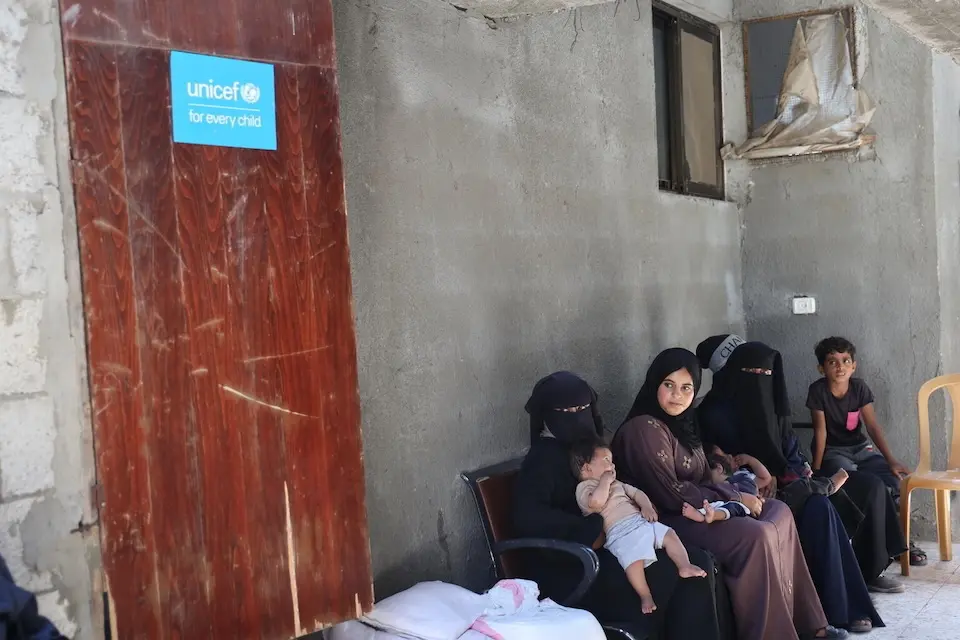
Individualized care plans address both the nutritional and emotional needs of breastfeeding mothers
Reda sought help at a UNICEF-supported clinic, where health workers created an individualized care plan for her, addressing both her nutritional and emotional needs. She also received nutritional supplements, vitamins and essential minerals to support her recovery and help improve her breast milk production.
“With regular follow-up and support, I gradually began breastfeeding him," she said. "It took time, but the team guided me and taught me the correct breastfeeding techniques. Slowly, my milk supply improved, and Qusay began breastfeeding ... My advice to every mother who is struggling to breastfeed is to visit a UNICEF-supported clinic and seek counseling and support. Nothing is better for your child than breastfeeding.”
Nursing Qusay has become an important source of strength, connection and hope for Reda during an exceptionally painful part of her life. “It was never only about milk or nutritional supplements," she said. "Being able to breastfeed my baby despite everything I experienced is my personal victory over this war."
Give now to support UNICEF's lifesaving and life-changing work for children Help now
HOW TO HELP
There are many ways to make a difference
War, famine, poverty, natural disasters — threats to the world's children keep coming. But UNICEF won't stop working to keep children healthy and safe.
UNICEF works in over 190 countries and territories — more places than any other children's organization. UNICEF has the world's largest humanitarian warehouse and, when disaster strikes, can get supplies almost anywhere within 72 hours. Constantly innovating, always advocating for a better world for children, UNICEF works to ensure that every child can grow up healthy, educated, protected and respected.
Would you like to help give all children the opportunity to reach their full potential? There are many ways to get involved.