Why Are Children Still Suffering in Gaza?
Highlights
- Attacks on children are ongoing in Gaza, despite a ceasefire; more than 200 children have been killed since October 2025
- Living conditions continue to deteriorate —rat infestations, skin diseases and water shortages are putting children's health at risk
- UNICEF is providing emergency water, sanitation and hygiene services in Gaza
- UNICEF's unconditional cash transfer program helps parents afford to buy food for their children
Eight months after the start of a ceasefire, deadly air strikes continue across the Gaza Strip. Mountains of waste, rats and a growing outbreak of skin diseases are a daily threat to children's health and safety. UNICEF is working with partners to shore up essential services and calling on the authorities to take decisive action to protect Palestinian children. More support is urgently needed.
Every ceasefire violation puts children's lives at risk in Gaza
Eight months after the announcement of a ceasefire in the Gaza Strip, children remain trapped in an endless cycle of suffering. More than 200 children have been killed since October 2025; many more have been injured.
On the first weekend in June 2026, eight children were reported killed and a further 18 injured in five different locations across Gaza. In the West Bank, a baby boy was shot while sitting on his mother’s lap in the backseat of a car.
“Yet again, children have had their lives cut short. In one of the areas hit in Gaza, a group of children playing a game of football were injured by a nearby strike," said Edouard Beigbeder, UNICEF Regional Director for the Middle East and North Africa. “We cannot let this become the new normal — children losing their lives to violence should cause global outrage and must be condemned at every level."
We cannot let this become the new normal — children losing their lives to violence should cause global outrage and must be condemned at every level. — Edouard Beigbeder, UNICEF Regional Director for the Middle East and North Africa
At a hospital in Gaza City in May, UNICEF Communications Coordinator Salim Oweis sat at the bedside of 3-year-old Jamalat, who is recovering from the loss of her foot after being hit by an air strike that also injured her mother.
"I was talking to the family and the question remains: Why? Why would children still suffer?" Oweis said. "Especially since there is a ceasefire."
Video: Children are not targets
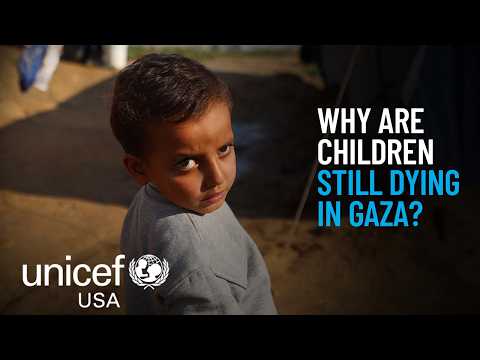
Mountains of waste attract rats, skin diseases are rampant
Gaza was already one of the most densely populated places in the world. Now, people have been crammed into around 40 percent of the space left to them — sheltering among broken buildings, rubble and mounting solid waste.
Health partners report widespread proliferation of rats, cockroaches, flies, lice and bedbugs, further increasing the risks of communicable disease transmission. A growing outbreak of skin diseases is surging across the camps, including scabies, chickenpox and dermatitis. More recently, cases of rodent bites have also risen sharply — more than 70,000 cases of rodent and ectoparasitic infestations have been reported in 2026 alone. Limited access to essential medications makes it difficult to respond to all cases.
Water shortages, limited hygiene and extreme heat and humidity continue to accelerate the spread of these diseases.
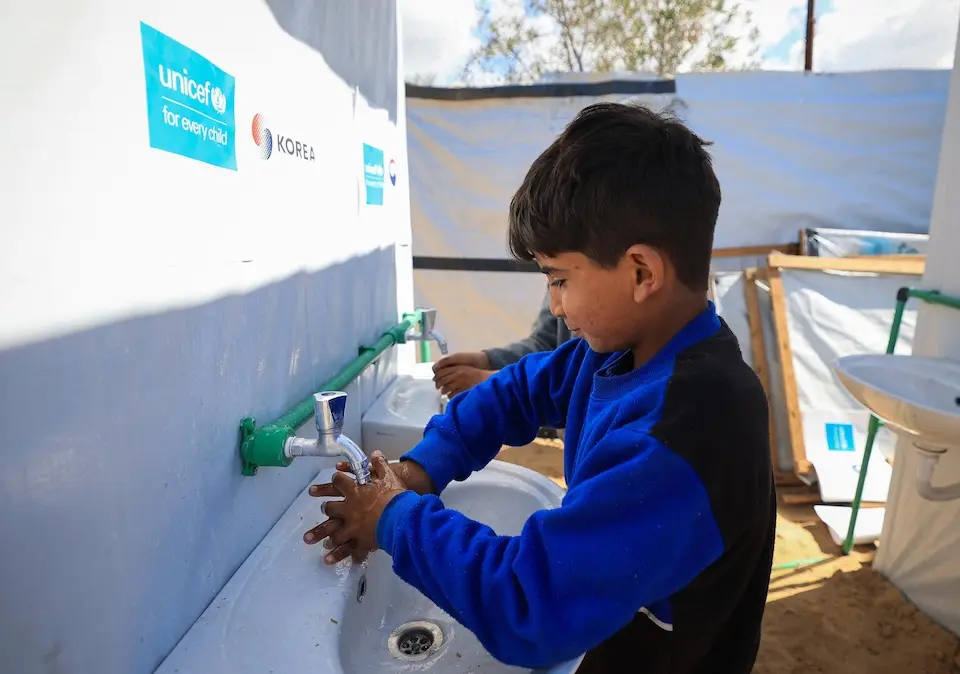
For 1.1 million children in Gaza, water remains a daily uncertainty
UNICEF and partners continue to sustain emergency WASH services in Gaza. Drinking water distributions are reaching up to 1.5 million people, often through water trucking. Despite these efforts, most families (82 percent) remain water insecure and up to 70 percent are unable to collect the minimum six liters per day for drinking and cooking.
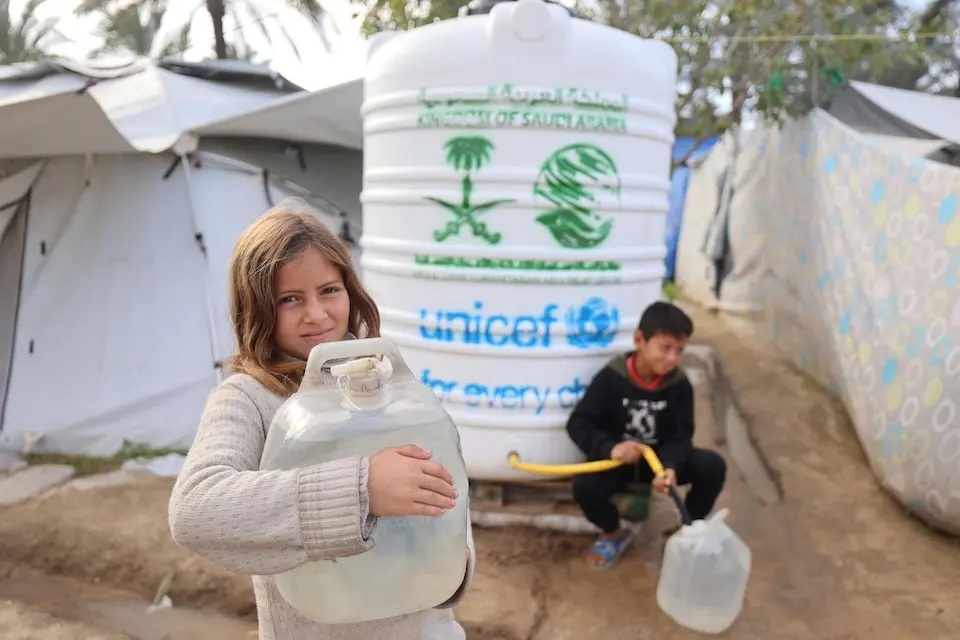
At a water point in a displacement site in Deir Al-Balah, central Gaza, 12-year-old Fatima filled a plastic jug with safe water from a UNICEF water tank. “After we were displaced, the hardest thing was finding safe water,” she said. “My father used to walk far to bring water. Sometimes we had no choice but to use water that wasn’t safe. When the water tank was installed near our tents, it became much easier to collect clean water.”
After we were displaced, the hardest thing was finding safe water. — Fatima, 12, Deir Al-Balah
UNICEF continues to call for safe, sustained and predictable humanitarian access for water, sanitation and hygiene (WASH) operations to run consistently and safely. Unrestricted access to spare parts, water pipes, fuel, water treatment chemicals, and generators for wells and desalination plants is needed to fix systems, save money and help even more children reach safe water and sanitation.
Learn more in UNICEF's latest Gaza Strip situation update and humanitarian response
Food prices remain out of reach for most Palestinian families
The ceasefire has led to an increase in the amount of food available in the marketplace, but prices have skyrocketed to as much as 10 times the original price. Basic items including vegetables, fruit, flour and meat are far out of reach for most families.
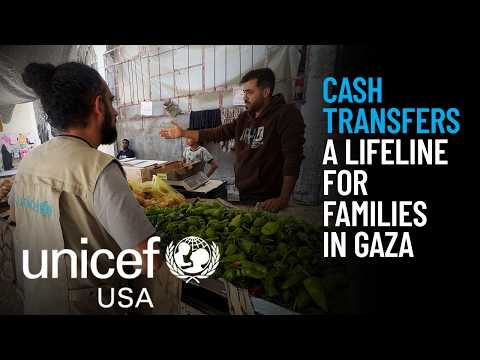
To help parents afford food and other essentials for their children, UNICEF operates a digitally based unconditional cash assistance program. More and sustained entry of aid and commercial goods is needed, along with the opening of all border crossings, to allow people to access the basic items they need at reasonable prices.
Video: Humanitarian cash transfers help families feed their children
UNICEF’s Humanitarian Action for Children (HAC) appeal for 2026 requires $707.8 million to meet the urgent needs of children and their families in Gaza and the West Bank. As of now, only 36 percent of the appeal is funded. UNICEF urgently requires an additional $451.8 million in 2026 to scale up lifesaving assistance.
For parents and caregivers: How to Talk to Your Children About Conflict and War
HOW TO HELP
There are many ways to make a difference
War, famine, poverty, natural disasters — threats to the world's children keep coming. But UNICEF won't stop working to keep children healthy and safe.
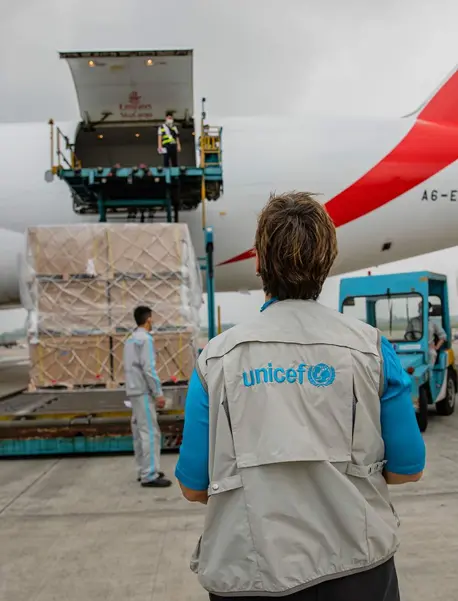
UNICEF works in over 190 countries and territories — more places than any other children's organization. UNICEF has the world's largest humanitarian warehouse and, when disaster strikes, can get supplies almost anywhere within 72 hours. Constantly innovating, always advocating for a better world for children, UNICEF works to ensure that every child can grow up healthy, educated, protected and respected.
Would you like to help give all children the opportunity to reach their full potential? There are many ways to get involved.