Palestinian Children Face Escalating Violence in the West Bank
Highlights
- In March 2026, the number of Palestinians injured by attacks in the West Bank reached a historic 20-year high
- Ongoing exposure to militarized operations, conflict-related violence, displacement and intimidation are driving high levels of psychological distress among children
- UNICEF maintains a continuous humanitarian response in the West Bank, adapting to reach Palestinian children and families in high-risk and hard-to-access areas
Intensifying attacks, displacement and access restrictions are steadily dismantling the conditions every child needs to survive and grow. UNICEF and partners are working to deliver for children. Much more support is urgently needed.
A demolition of homes, schools and childhoods
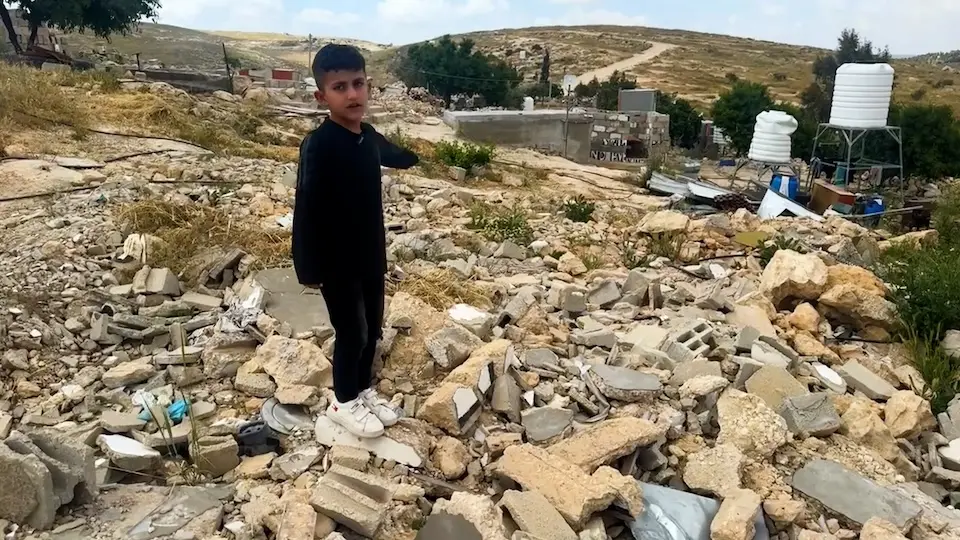
Eight-year-old Izz remembers vividly the night the attackers appeared in his herding community in the Hebron Hills in the southern West Bank. His family was beaten, their home flattened by bulldozers. The entire community was displaced, cut off from basic services and livelihoods.
"They started beating us," he recalled. "They hit me in the head. And then an ambulance came and took me to the hospital."
What Izz misses most is sleeping in his own bed, he told UNICEF Spokesperson James Elder during a recent visit to the site where his home once stood. "I used to sleep there," Izz said, shrugging his shoulders and pointing at a pile of rubble.
Learn more: Emergency Support for Children and Families in the West Bank
Attacks on Palestinians in the West Bank have reached historic levels
Last month, OCHA, the United Nations Office for the Coordination of Humanitarian Affairs, reported that in March 2026, the number of Palestinians injured by attacks in the West Bank reached a 20-year high. Between Jan. 1 and April 30, 2026, 13 Palestinian children (13 boys) were killed and over 139 injured (126 boys, 13 girls) in the West Bank including East Jerusalem, with over one-third of injuries due to live ammunition during militarized operations and related violence.
More than 2,500 Palestinians in the West Bank, including 1,100 children, were forced out of their homes in the first four months of this year, surpassing the total displacement recorded in all of 2025. So far in 2026, two-thirds of displacement incidents linked to attacks and access restrictions have occurred in the Jordan Valley, disproportionately affecting herding and rural communities. Documented incidents include children shot, stabbed, beaten and pepper sprayed.
These are not isolated incidents — they point to a sustained pattern of the worst kinds of violations of children’s rights, as well as attacks on children’s homes, on their schools and on the water they rely on. — UNICEF Spokesperson James Elder
Over the past 30 months, more than 900 additional barriers and restrictions have been imposed across the West Bank. As a result, children are routinely cut off from schools, hospitals and other essential services, as movement becomes increasingly restricted or denied altogether.
"These are not isolated incidents — they point to a sustained pattern of the worst kinds of violations of children’s rights, as well as attacks on children’s homes, on their schools and on the water they rely on," Elder said in a press briefing on May 12. 'What is unfolding is not only an escalation in violence against Palestinian children; it is the steady dismantling of the conditions children need to survive and grow."
UNICEF and partners are working to meet the urgent humanitarian needs of Palestinian children and families in the West Bank
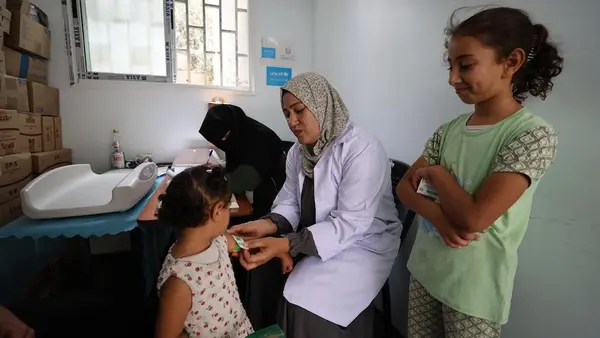
UNICEF has maintained a continuous response in the West Bank, adapting to reach children and families in high-risk and hard-to-access areas. Building on long-standing partnerships with national authorities and local actors, UNICEF’s response focuses on protecting children at risk and affected by violence and grave violations, sustaining access to essential services, and strengthening family and community resilience.
Mental health and psychosocial support is a key component: Ongoing exposure to militarized operations, conflict-related violence, displacement and intimidation is driving high levels of psychological distress among children, including extreme fear, sleep disturbances, behavior changes and other symptoms associated with anxiety and forms of traumatic stress.
Learn more about UNICEF's ongoing support for children in Gaza

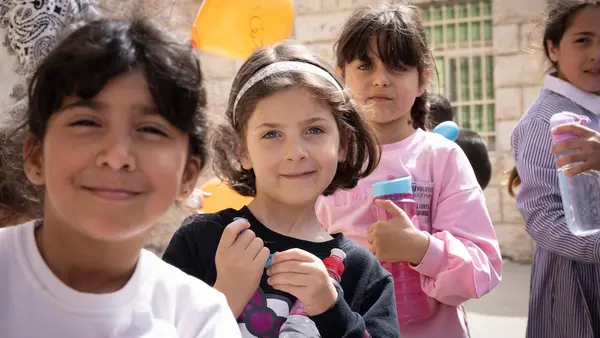
Every child has the right to a safe and healthy childhood
In the first four months of 2026, UNICEF and partners provided essential humanitarian aid to children and families in the West Bank. Key results include:
- almost 15,000 children and over 10,000 adults reached with child protection support
- 5 primary health care facilities under renovation, serving 21,000 people
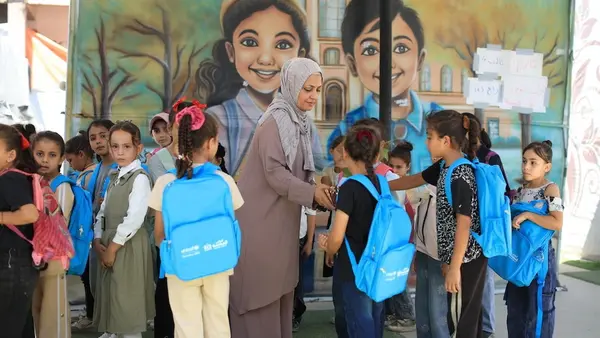
- more than 37,000 sets of education supplies distributed
- 23,000 people, including 13,400 children, reached with humanitarian cash assistance across 4,200 households
- over 5,000 people accessed sanitation services through wastewater network rehabilitation and extension in Jenin, reducing public health risks
Support UNICEF's work to protect children and their rights
All this occurs alongside a sharp rise in the arrest and detention of children. The latest data indicates 347 Palestinian children from the West Bank are being held in Israeli military detention for alleged security-related offenses — the highest number in eight years. Alarmingly, more than half of these children — 180 — are held under administrative detention and without the required procedural safeguards, including detention without regular access to legal counsel and the right to challenge the detention.
“UNICEF calls on the Israeli authorities — who have legal obligations to uphold child rights in all areas within its jurisdiction or effective control, including occupied territories — to take immediate and decisive action to prevent further killing and maiming of Palestinian children and to protect their homes, schools and access to water in line with international law," Elder said. "UNICEF also calls on Member States with influence, to use their leverage to ensure that international law is respected.”
Learn more about UNICEF's humanitarian response in the West Bank
UNICEF USA complies with U.S. sanctions restrictions, and, as such, we do not accept funds specifically designated for programs in Iran. We do, however, raise funds for UNICEF programming in the Middle East and North Africa region.
For parents and caregivers: How to Talk to Your Children About Conflict and War
HOW TO HELP
There are many ways to make a difference
War, famine, poverty, natural disasters — threats to the world's children keep coming. But UNICEF won't stop working to keep children healthy and safe.
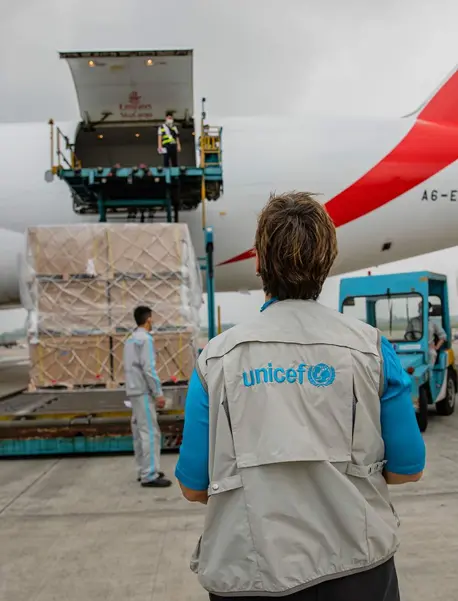
UNICEF works in over 190 countries and territories — more places than any other children's organization. UNICEF has the world's largest humanitarian warehouse and, when disaster strikes, can get supplies almost anywhere within 72 hours. Constantly innovating, always advocating for a better world for children, UNICEF works to ensure that every child can grow up healthy, educated, protected and respected.
Would you like to help give all children the opportunity to reach their full potential? There are many ways to get involved.