UNICEF Delivers Lifesaving Supplies and Cash Transfers to Families in Gaza
The ceasefire offers a critical window to deliver more aid to as many children as possible. A robust digital cash assistance program is a key part of UNICEF's ongoing humanitarian response.
Palestinian families urgently need humanitarian aid at scale
After two years of intense fighting in Gaza, "the destruction is mind-bending, it's unlike anything myself or our colleagues have seen in other conflicts," Tess Ingram, UNICEF spokesperson and communications manager for the Middle East and North Africa, told NBC News on Oct. 15. Nine out of ten homes have been damaged or destroyed, hospitals and water infrastructure lie in ruins. Nearly every child in Gaza has been displaced repeatedly. All have experienced traumatic events.
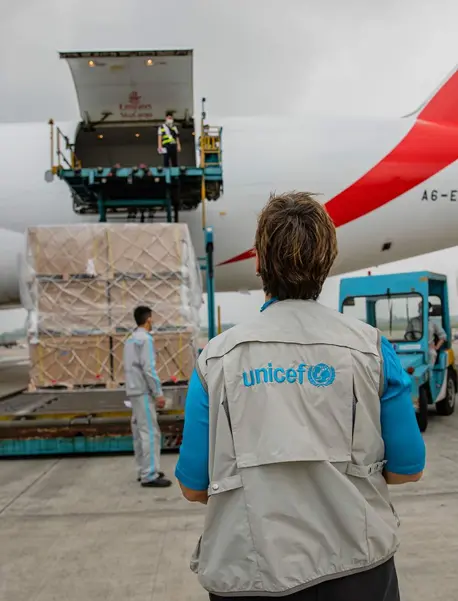
In the first week after the ceasefire was announced, UNICEF was able to collect 2,145 pallets of emergency supplies pre-positioned on the Gaza side of the crossings, and distribute over 520,000 jars of baby food, 3 million baby diapers and more than 6,000 hygiene kits. That's an improvement over the 10 weeks prior, when UNICEF retrieved an average of just 1,100 pallets of supplies per week.
The destruction is mind-bending, it's unlike anything myself or our colleagues have seen in other conflicts. — Tess Ingram, UNICEF spokesperson in Gaza
Now the volume of aid needs to increase even further. UNICEF has hundreds of truckloads of lifesaving supplies ready to cross into Gaza — tents, warm clothes, diapers, nutrition, medical supplies and much more. Immediate focus areas include nutritional support, shelter and winterization, WASH (water, sanitation and hygiene), medical and vaccine delivery, and educational/psychosocial kits.
With winter on the way and famine still taking hold, UNICEF continues to call for the opening of all possible supply routes into Gaza and improved and faster clearance processes to surge aid delivery, along with safe access both for civilians to move and for humanitarians to meet people in need, wherever they are.
Related: Ceasefire in Gaza: Children Need Surge in Humanitarian Aid Now

Humanitarian cash assistance gives families dignity and flexibility
As the flow of goods and commodities from the private sector increases, UNICEF is scaling up its digitally channeled humanitarian cash transfer program — currently 100,000 people (18,500 families) in the Gaza Strip are assisted every month. Cash transfers will continue to provide families maximum flexibility to purchase food, medications and other essentials during these extremely harsh months.
In a crowded tent camp for the displaced in Al-Mawasi, Rania, a mother of two young children, describes how cash support distributed by UNICEF has become the family's lifeline. "If the help doesn't arrive, we have no idea what to do next," Rania says. "When we arrived, we managed for a while. But famine came and the suffering started — everyone was affected."
Payments are transferred directly to digital e-wallets as part of a holistic package of support. "When we receive the UNICEF cash transfer of 1,000 shekels, I feel so happy," says Rania. "I buy diapers, fruits and vegetables ... I no longer think about myself or what I eat as long as they have enough for a while."
Watch the video:
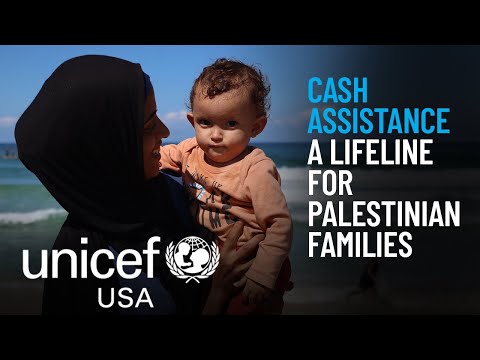
UNICEF's cash transfer program puts funds directly into the hands of families
To date, UNICEF has provided cash assistance to over 1.2 million people across the Gaza Strip. Families in the program must have children, and most have received multiple rounds of assistance over the past two years. Recipients are selected using national databases and data collected by UNICEF's implementing partners. The most vulnerable receive priority, including children who are severely malnourished, pregnant and breastfeeding mothers, children with disabilities and orphans.
UNICEF follows up to verify recipients have received their cash payments, and to monitor families' needs and what they were able to purchase. Most report spending their cash assistance on food, hygiene, health-related costs and transport.
Communal mobile phone-charging points powered by solar panels have become a common site in Gaza; for the month of September, almost 70 percent of the program's beneficiaries reported using only digital payments to purchase their commodities.
"What the ceasefire offers us is renewed hope and an opportunity to scale up our support," Hashim Zaidi, UNICEF Social Protection and Cash-Based Transfer Specialist, said in an emergency briefing on Oct. 22. "What is important to understand is that cash is transparent, quick and cost-effective. But most importantly, it offers our recipients a dignified, flexible and respectful way to meet their own needs and restart their lives."
Donate today to help UNICEF deliver hope to families.
Right now, the lives of the most vulnerable children hang in the balance as conflicts and crises jeopardize the care and protection that they deserve. Dependable, uninterrupted and effective foreign aid is critical to the well-being of millions of children. Please contact your members of Congress and urge them to support ongoing U.S. investments in foreign assistance.
HOW TO HELP
There are many ways to make a difference
War, famine, poverty, natural disasters — threats to the world's children keep coming. But UNICEF won't stop working to keep children healthy and safe.
UNICEF works in over 190 countries and territories — more places than any other children's organization. UNICEF has the world's largest humanitarian warehouse and, when disaster strikes, can get supplies almost anywhere within 72 hours. Constantly innovating, always advocating for a better world for children, UNICEF works to ensure that every child can grow up healthy, educated, protected and respected.
Would you like to help give all children the opportunity to reach their full potential? There are many ways to get involved.