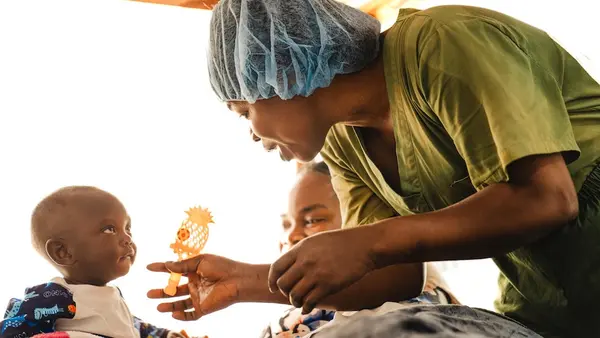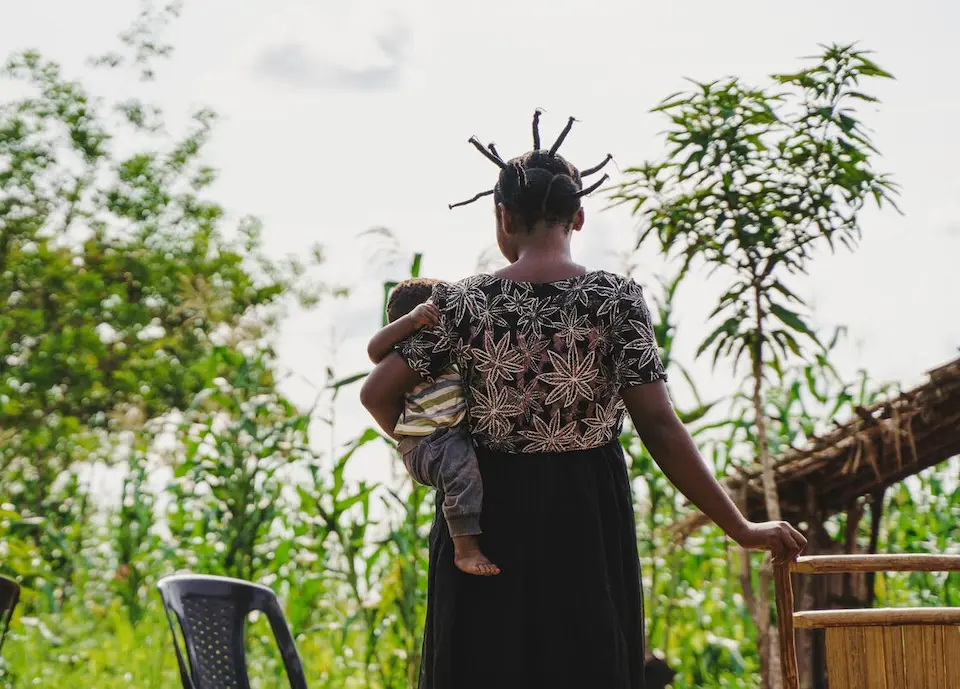
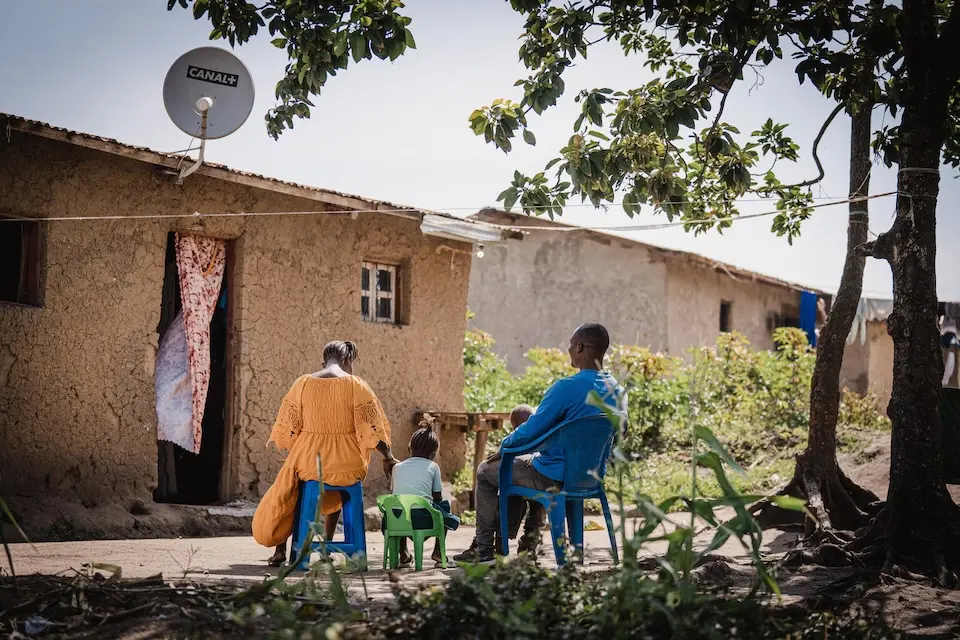
A mother of two holds her six-month-old baby outside their home in a village a village near Kananga, Kasai-Oriental province, DR Congo.
Child Protection

Tackling the Crisis of Sexual Violence in DRC

In the Democratic Republic of the Congo, sexual violence against children remains pervasive — and not just in conflict zones. A new UNICEF report brings together previously fragmented data and analysis and firsthand accounts from survivors and frontline workers to provide a comprehensive look at the crisis: who's most affected, the barriers survivors face in accessing care and justice, the consequences for children's health, safety and development, and what needs to be done to strengthen response and prevention and protect future generations. 

Support children in need now


Updated February 18, 2026

New data show sharp increase in child rape and sexual assault cases

Sexual violence against children is endemic, systemic and worsening across the Democratic Republic of the Congo, according to a new UNICEF report released Dec. 30, 2025.

While conflict remains a major driver, the report, a comprehensive analysis of data from 2022 to 2025, indicates a nationwide crisis impacting every province, with cases rising sharply year over year. 

“In some provinces, every week we document new cases of children being violated on their way to school or when fetching water," a protection monitor in eastern DRC told researchers in February 2025. "It never stops."

In some provinces, every week we document new cases of children being violated on their way to school or when fetching water. It never stops. — protection monitor in eastern DRC 

More than 35,000 cases of child rape and sexual assault were recorded in DRC in the first nine months of 2025, putting the year on track to surpass 2024, when nearly 45,000 cases against children were recorded. 

The true toll, however, is likely far higher. Many cases go unreported due to fear of stigma and retaliation; limited access to services also prevent many survivors from ever reporting their assault or seeking help. 
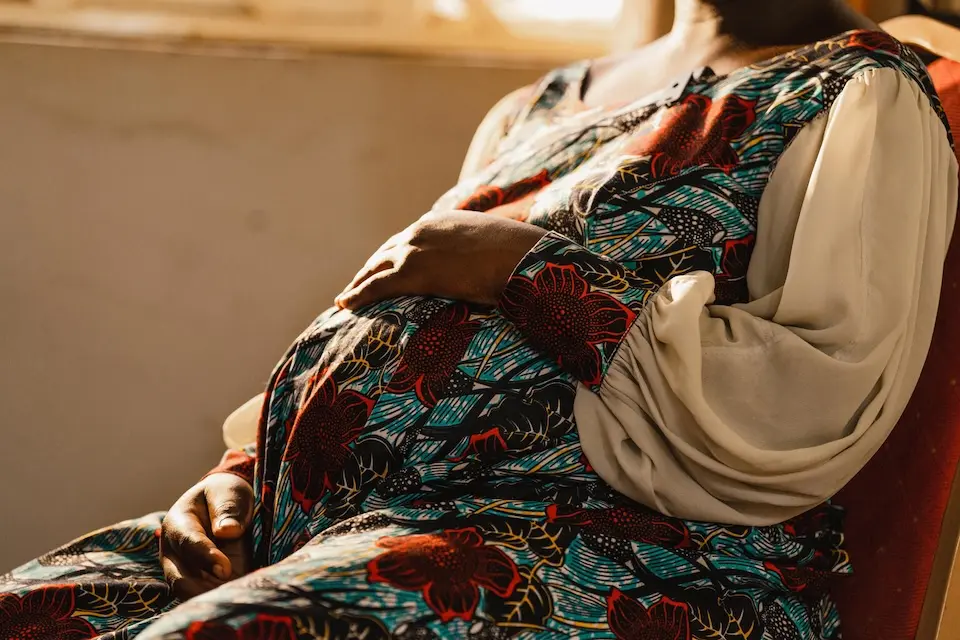
A 17-year-old pregnant survivor of sexual violence in South Kivu, DR Congo, sits in a UNICEF-supported hospital where she is receiving care.
La Reine, 17, who became pregnant after being raped when she was 16 years old, rests at UNICEF-supported Panzi Hospital in Bukavu, in DRC's South Kivu province on Nov. 19, 2025. La Reine — “The Queen” in French — is a pseudonym she chose for herself. "I was coming back from choir around 5 p.m. when a man pulled me into the forest and raped me," she says. "There was blood everywhere, and I could barely walk. When I arrived home, I was beaten by my parents, who said I had dishonored the family." After receiving care at Panzi, which provides medical as well as psychological, legal and other support services, La Reine says her hope for the future has been restored. "Going back to school will help me bring order back into my life and rebuild myself even more," she says. "I want to encourage girls not to give up: I had already lost the desire to live, but today I am a new person full of ambitions and dreams. After my studies, I would like to become a social worker.” © UNICEF/UNI913616/Benekire

"Some families come to report sexual violence but withdraw their complaint the next day because they fear being identified," said one social worker in Kasai Central who is quoted in the report. "They say, ‘better to keep quiet than be humiliated.’” 

One 15-year-old female survivor said, "My family told me not to speak about it. They said if people know, nobody will marry me.” 

The report, entitled "The Hidden Scars of Conflict and Silence: Sexual violence against children in the Democratic Republic of the Congo 2022-2025," brings together national administrative data compiled by protection and gender-based violence service providers, UN-verified conflict-related data and testimonies from survivors and frontline workers to provide the most comprehensive picture currently available. 
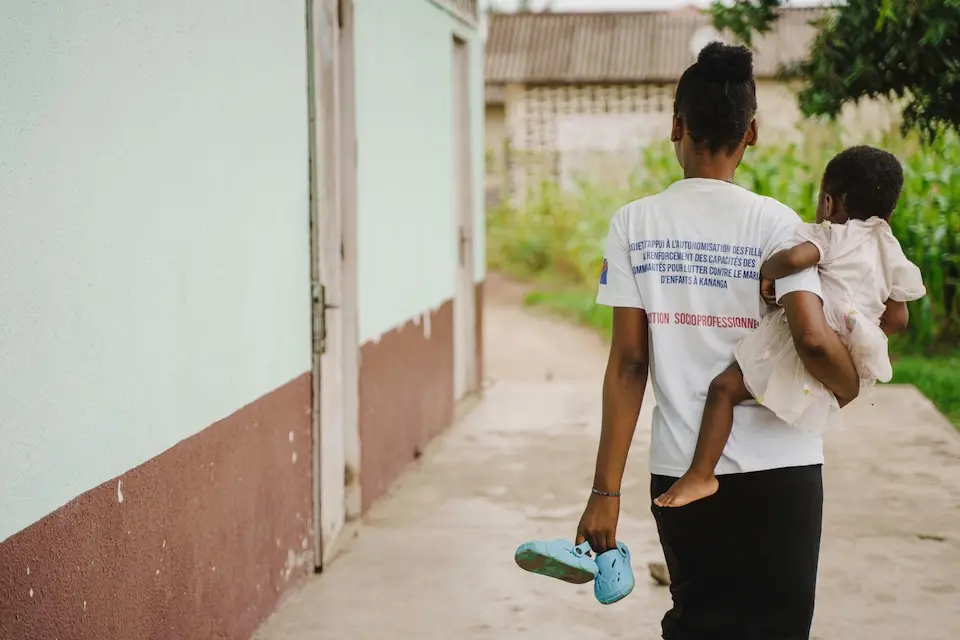
In Kananga, Kasai Central province, DR Congo, an 18-year-old old mother carries her child outside the UNICEF-supported safe space where she is enrolled in a sewing course
In Kananga, Kasai Central province, DR Congo, 18-year-old old Passy (name changed) carries her child outside a UNICEF-supported safe space where she is enrolled in a sewing course.  “When my father and mother passed away, I first stayed with my grandmother and then my father’s aunt," Passy recalls. "At some point, she could no longer afford to pay for my schooling, so I started fetching water for families in the neighborhood to cover my school fees. One day, a young man came to me while I was fetching water and offered to pay for my studies in exchange for sleeping with him. I got pregnant and was kicked out of the house.” Unable to find the boy again, Passy was taken in by her grandmother and had to stop school while she was in still in 8th grade. Two months after giving birth, a friend told her about the Safe Space run by Amour Plus, a UNICEF partner. © © UNICEF/UNI920360/Benekire

The report examines how sexual violence affects children in different contexts, and who is most affected; the barriers survivors face in accessing care and justice; and the consequences for children’s health, safety and development. It assesses response efforts to date, and what recovery looks like when survivor-centered services are available. And it outlines priorities for accelerating progress toward prevention, improved access to services and accountability. 

"Behind every statistic is a child whose life has been profoundly altered by violence," the report states. "Survivors speak of shame, isolation and a loss of identity, yet they also describe a continued search for dignity and hope."

Access the full report: The Hidden Scars of Conflict and Silence: Sexual violence against children in the Democratic Republic of the Congo 2022-2025
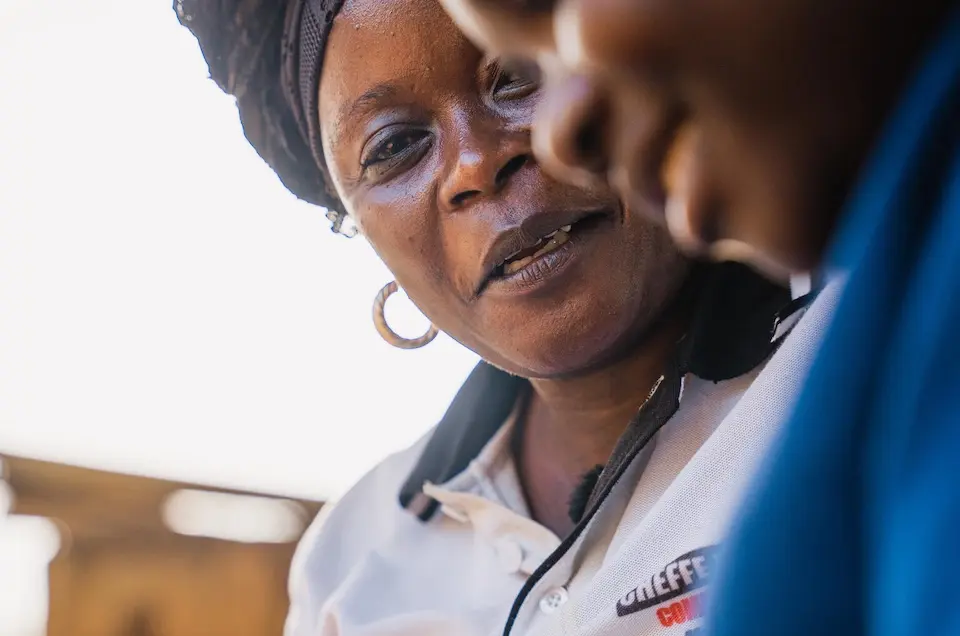
Nathalie Uyera-Malosi, mother of seven and head of a temporary foster family, sits with 15-year-old survivor of sexual violence outside their home in Bunia, Ituri province, DR Congo.
Nathalie Uyera-Malosi, mother of seven and head of a temporary foster family, sits with 15-year-old Jaelle (name changed) outside their home in Bunia, Ituri province, DRC, on Nov. 25, 2025. For the past four years, Uyera-Malosi has been looking after children like Jaelle, who is a survivor of sexual violence; she was raped at age 12 after violent conflict escalated in her village and she became separated from her parents. With the help of psychologists, Jaelle's mental health has improved, Uyera-Malosi said, and she continues to show signs of recovery. "I check her grades and make sure everything is going well at school. She really likes French class. All I want is for her to continue studying because she told me she would like to become a doctor.” Jaelle has also fully integrated into family life, Uyera-Malosi added. "We are a family." © UNICEF/UNI916118/Mirindi Johnson

Risk factors include conflict, displacement, poverty — and a climate of impunity

Most cases of sexual violence against children in DRC are concentrated in North Kivu, South Kivu and Ituri, the "Hidden Scars" report states. 

In these eastern provinces, conflict-related sexual violence has risen steadily since 2022, with a sharp increase in cases involving girls — who represented 47 percent of documented conflict-related sexual violence survivors in 2024, up from 27 percent in 2022. 

Armed non-state actors remain the primary perpetrators, operating in an environment where accountability mechanisms are weak and impunity prevails. 

But sexual violence outside DRC's conflict zones is also widespread. 
A 6-year-old survivor of sexual violence sits with her parents in front of in front of their house in Bunia, Ituri Province, DR Congo.
Six-year-old Grace (name changed) sits with her parents in front of their home in Bunia, Ituri province, DRC, on Nov. 27, 2025. UNICEF Education Officer Wyvine Lufungulo first met Grace three months earlier while supervising educational activities in Mahagi and immediately referred her to care services. The little girl was living with her grandmother and had not spoken since she was sexually abused at the age of 4. "She was a severely traumatized child and did not speak and could not walk," Lufungulo says. Two months later, Grace was reunited with her parents in Bunia and continues to receive care from members of the local women-led organization SOFEPADI, a UNICEF partner. © UNICEF/UNI916129/Mirindi Johnson

Many children are abused within their own homes or communities, often by relatives, neighbors or acquaintances, the report states. Girls aged 12 to 17 remain the most affected, while boys, children with disabilities and displaced children face distinct vulnerabilities and severe barriers to reporting.

Some families come to report sexual violence but withdraw their complaint the next day because they fear being identified. They say, ‘better to keep quiet than be humiliated.' — social worker in Kasai Central province, DRC

A significant number of cases have been documented in Kinshasa and the Kasai, where poverty, food insecurity and school dropout heighten girls’ vulnerability to exploitation and early marriage. Other contributing factors include entrenched gender inequality and other harmful social norms and weak protection and justice systems. 

"Case workers describe mothers walking for hours to reach clinics with daughters who can no longer walk after being assaulted," UNICEF Executive Director Catherine Russell said in a statement accompanying the report's release. "Families say that fear of stigma and retaliation often keeps them from reporting the abuse. Stories like these are repeated across provinces, exposing an entrenched crisis driven by insecurity, inequality and weak support systems.”

Related: What It Takes to Support Children Fleeing Violence in the DRC
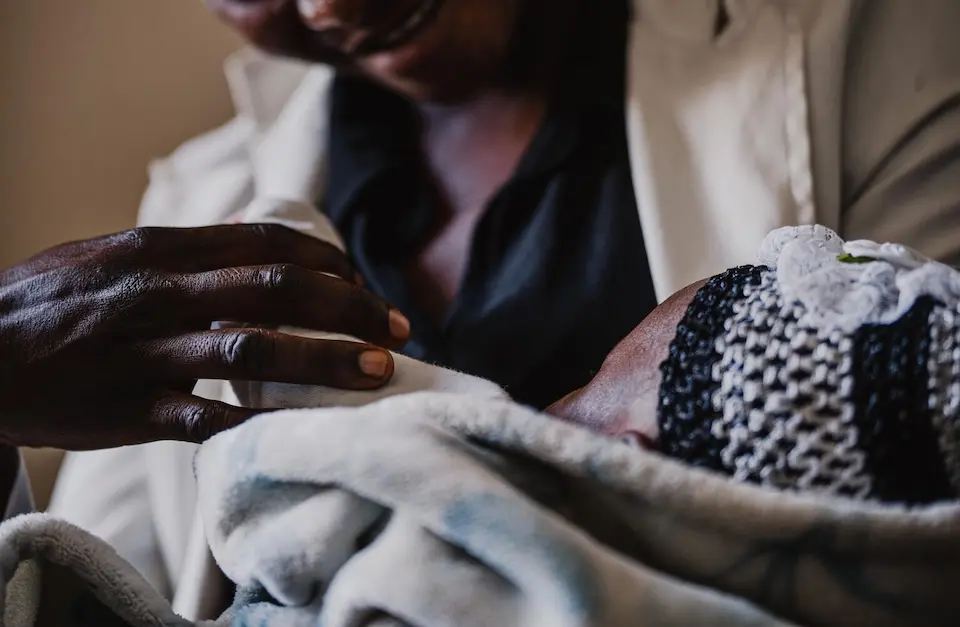
An 18-year-old mother of two cradles her infant daughter at a UNICEF-supported hospital in Bunia, Ituri province, DR Congo, on Nov. 25, 2025.
Sephora (name changed), an 18-year-old mother of two, cradles her baby girl at the Karibuni wa Mama Clinic in Bunia, Ituri province, DRC, on Nov. 25, 2025. Originally from a remote village, Sephora fled when armed clashes erupted in 2023.. While running with some other girls from her school, she recalls, "we crossed paths with bandits in the forest, and they raped us. They left us there, and we had no other choice but to keep walking. We could barely move because of the pain." Eventually Sephora made it to a health center and received care; teams working for SOFEPADI, a partner organization of UNICEF that defends the rights of girls and women, helped locate an aunt who lives in the city. She gradually recovered and was able to resume “a normal life" — then met a man, started a relationship and became pregnant, and had a second child shortly before turning 18. Referred for vocational training at a UNICEF-supported Safe Space, Sephora learned basket weaving and is now studying sewing and tailoring — skills she hopes she will be able to use to help support her family. © UNICEF/UNI915863/Mirindi Johnson

UNICEF support services are reaching survivors, but more funding is needed to improve access and mitigate risks

Survivors of sexual violence often suffer both physical and psychological damage, with lifelong consequences. They often face severe physical injuries, unwanted pregnancies and heightened risks of HIV and other sexually transmitted infections; deep emotional harm, including fear, anxiety and depression, social rejection and isolation. For many children, education is interrupted.

"Community attitudes often deepen the trauma," the UNICEF report states. "Survivors are blamed, rejected or silenced, while the perpetrators frequently go unpunished." 

With timely, survivor-centered care, recovery is possible. But too many children still cannot access the support they need. Survivors face multiple barriers, including long distances to services, insecurity, shortages of essential supplies and limited trained staff, according to the report.
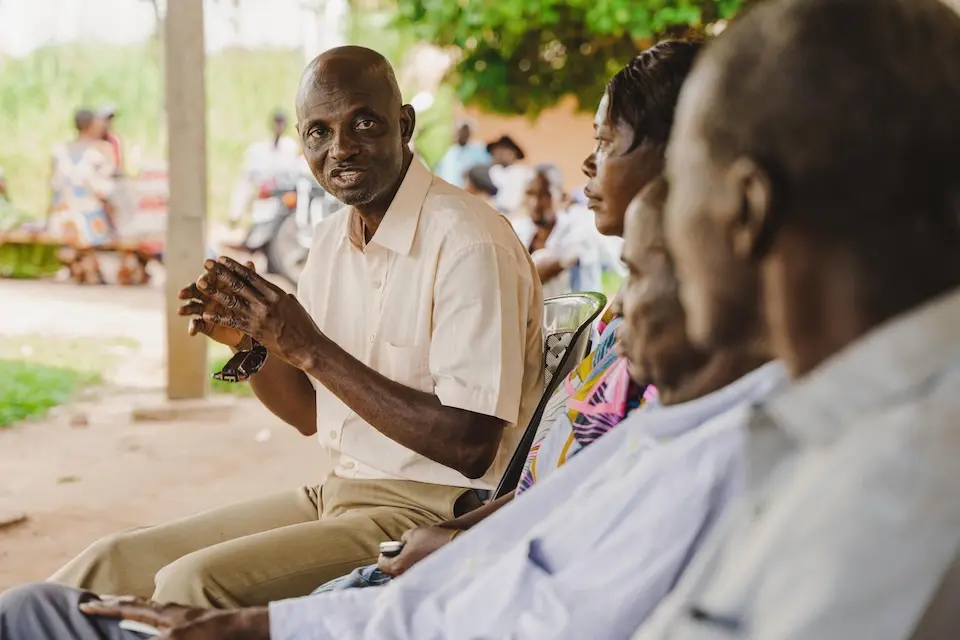
A traditional chief in Luandanda, near Kananga city in Kasai-Oriental province, DR Congo, speaks with villagers about the dangers of child marriage.
Traditional chief Kalombo Luandanda speaks with villagers in Luandanda, a village located about 18 miles outside the city of Kananga in Kasai Oriental province, DRC, on Dec. 5, 2025. The chief was trained by the NGO Amour Plus, a UNICEF partner, on preventing gender-based violence and now mobilizes against child marriage in his community. "Some parents will push their child to get married to get money," he explains. "Here, girls are seen as a way to get money and are considered like merchandise. When you have two or three daughters and you are in need, people may seek a marriage arrangement even if the child is 10 or 12 years old. You see another family coming and saying: ‘your daughter will be my son’s wife.’ But this child may have difficulties giving birth, the child has not finished studies and is not mature. People have begun to understand this, and we, the chiefs, agreed that children should not be married before they turn 18.” For him, addressing child marriage begins with girls can access education, and he leads by example in his own family. © UNICEF/UNI916626/Benekire

UNICEF works with partners in DRC to provide clinical care, psychosocial support, safe spaces and case management services. UNICEF has trained medical and social service staff, and has supported community campaigns aimed at prevention. UNICEF also works with national authorities and other partners to strengthen child-sensitive justice systems, expand access to legal aid and support survivors throughout the judicial process. 

“We cannot change what they have endured but we can help them heal," said a psychosocial worker in Kinshasa who is quoted in the "Hidden Scars" report. "Each time a girl smiles again, it gives us the strength to continue.” 

We cannot change what they have endured but we can help them heal. Each time a girl smiles again, it gives us the strength to continue. — psychosocial worker in Kinshasa 

Between 2022 and 2024, the number of child survivors assisted by UNICEF rose by 143 percent, reaching more than 24,200 children across the most affected provinces in 2024 with medical care, psychosocial support, legal assistance and cash aid. 

But needs continue to outpace available resources. And with recent funding cuts, UNICEF-supported safe spaces, mobile clinics and community-based protection programs have been forced to scale back or close. 
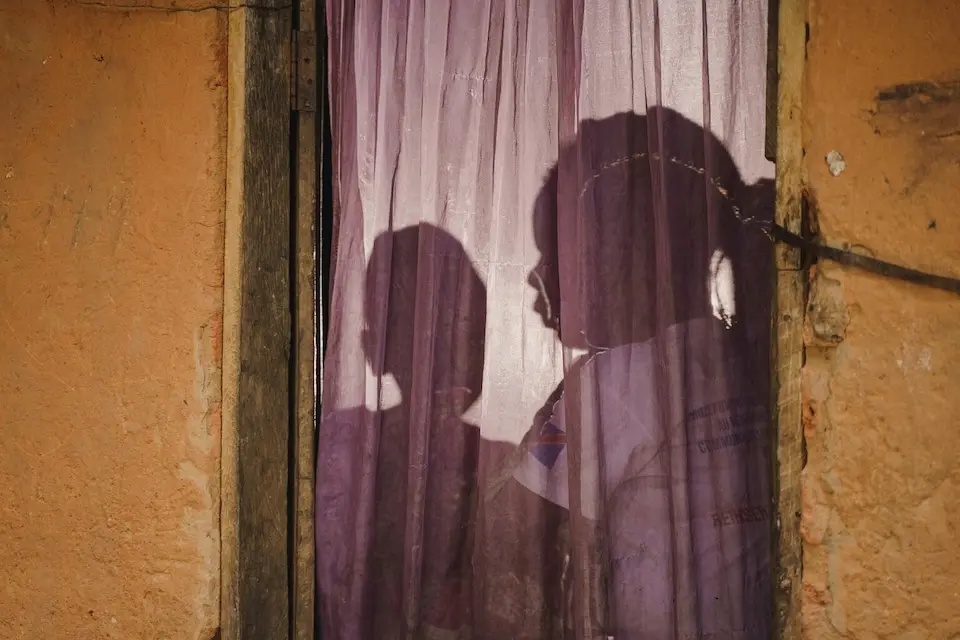
A 23-year-old mother of four and daughter sit inside their home in Kananga, Kasai Central province, DR Congo.
Agnès (name changed), 23, sits with one of her children inside their home in Kananga, Kasai Central province, DRC, on Dec. 5, 2025. Married at 15, Agnès stopped her studies in sixth grade and became a mother soon after. As the 11th of 12 children, and the youngest of the girls, she recalls, "When my father passed away, it became very difficult for my mother to take care of us... Family members began saying that I should be married because school was not useful, and I was old enough. Seeing my mother struggle, I felt I had no choice." For years, Agnès endured economic hardship, with her husband working small jobs. "I also tried to find work," she says. "I fetched water for people so I could buy food and pay my children’s school fees.” At a UNICEF-supported safe space, Agnès recently completed a sewing and tailoring training program and has started earning money as a seamstress. "My children will not suffer like I did," she says. "I will not let them marry early; they must finish school and become independent. I ask all parents to send their daughters to school instead of marrying them off.” UNICEF advocates for more funding for safe spaces for survivors of sexual violence, so that more women and girls like Agnès can access counseling, life-skills sessions and other critical services. © UNICEF/UNI916646/Benekire

Some tangible progress 

According to UNICEF, the DRC government has demonstrated a growing commitment to preventing and responding to sexual violence against children and women, and the "Hidden Scars" report notes there has been some tangible progress in both policy and practice. 

The DRC Girls Forum, convened in 2022 with help from UNICEF, produced some concrete action, including the launch of the Toyokana initiative, named for a Lingala word meaning “Let’s listen to one another.” 

Co-designed with adolescent girls, the initiative set up hundreds of safe spaces for girls affected by or at risk of sexual violence. The centers provide a range of support services, including basic medical check-ups and referrals, psychosocial counseling and opportunities to learn income-generating skills.

UNICEF points to the Toyokana safe spaces as an example of efforts that are working and need to be scaled and sustained. "It would be better if our work were widespread," Georgette Uma, a Toyokana center supervisor, told NPR.

Related: A safe space for girls who've faced sexual violence
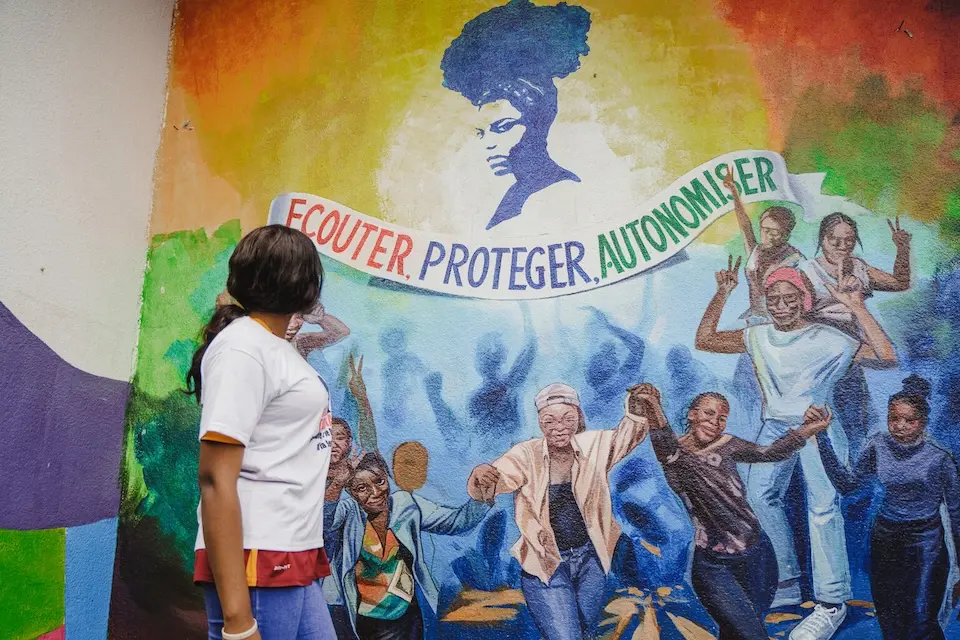
An 18-year-old survivor of sexual violence looks at a mural at a UNICEF-supported Toyokana safe space in Kalamu, Kinshasa, DR Congo.
Teraline (name changed), 18, walks by a mural adorning one of the walls of the UNICEF-supported Toyokana safe space in Kalamu, a popular neighborhood in Kinshasa, DRC, on Dec. 10, 2025. Born from rape, Teraline faced rejection, neglect and mistreatment when her mother married a few years later. Sent to live with an aunt in Kinshasa, her situation did not improve. "She treated me as if I had no value," Teraline says. Her cousins "went to school, studied and did everything a child should be able to do, while I stayed behind doing the dishes, the laundry, everything.” When she was 15, her aunt told her that she had found a husband for her; when Teraline refused, she was forced to leave the house. She spent time living on the streets, a "miserable" life that exposed her to exploitation and abuse. One day, Teraline met social workers who told her about the Toyokana safe space. She went the next day. “I felt safe. I shared my story, and the social workers listened." Training sessions taught her pastry making and she started earning money selling doughnuts. Teraline has since returned to school, completing her secondary school degree and is now at university studying law. Her goal is to become a magistrate. "What motivated me is the injustice faced by children," Terline says. "The State says it protects children, but when I was a child, I was not protected. I hope to help change that.” © UNICEF/UNI919074/Benekire

A call to action to end sexual violence against children in DRC

To tackle the crisis of sexual violence against children in DRC — one that UNICEF stresses cannot be solved through humanitarian assistance alone — UNICEF is urging the DRC government, all parties to the conflict there, civil society and international partners to work together to advance what works with increased and sustained investment and commitment. Priorities include:

  • scaling up gender-based violence response services equipped to meet the specific needs of child survivors, including safe spaces, clinical care and mental health support
  • facilitating survivors’ safe and confidential referrals to services
  • increasing support for local women- and youth-led organizations on the front lines of response
  • strengthening accountability by supporting investigations, prosecuting perpetrators, protecting survivors and witnesses and strengthening data collection and reporting
  • expanding protection services and community-based prevention efforts
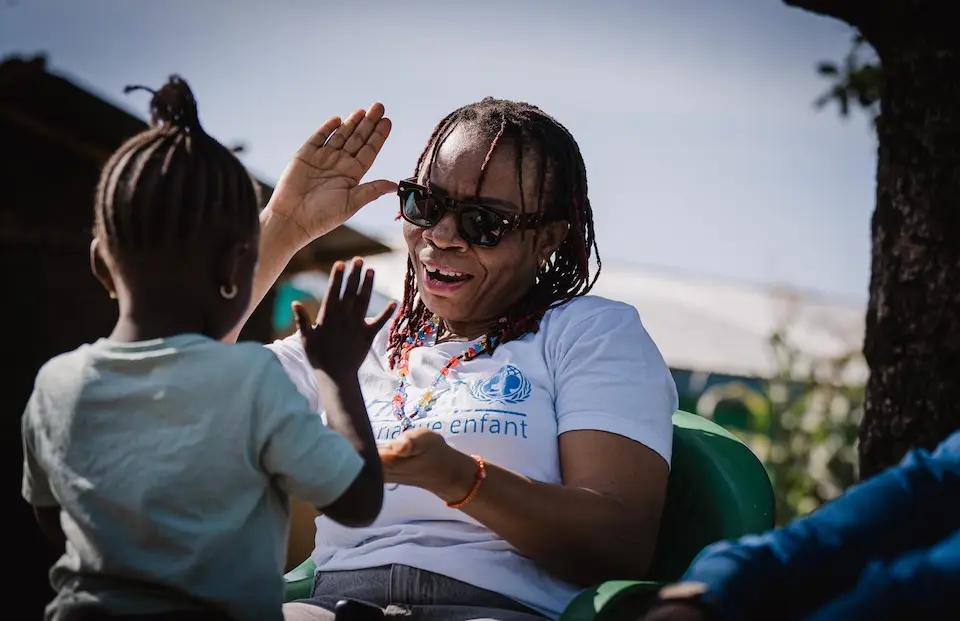
UNICEF Education Officer Wyvine Lufungulo plays with a 6-year-old survivor of sexual violence outside the girl's home in Bunia, Ituri Province, DR Congo.
UNICEF Education Officer Wyvine Lufungulo visits with Grace (name changed), a 6-year-old survivor of sexual violence, outside the girl's home in Bunia, Ituri province, DRC, on Nov. 27, 2025. The girl has made much progress since receiving care services from a UNICEF partner. “Today, I am very happy because I learned that Grace has been able to join her parents in Bunia and smile again," Lufungulo said. "I hope that she will start school soon.” © UNICEF/UNI916124/Mirindi Johnson

“Addressing this crisis of sexual violence requires an immediate response and adherence to international law in conflict settings," Russell said. "Perpetrators must be held accountable, and women and children must have access to protection and support."

Efforts to prevent, mitigate and respond to sexual violence against children in the DRC are critically underfunded.

Right now, the lives of the most vulnerable children hang in the balance as conflicts and crises jeopardize the care and protection that they deserve. Dependable, uninterrupted and effective foreign aid is critical to the well-being of millions of children. Please contact your members of Congress and urge them to support ongoing U.S. investments in foreign assistance.


TOP PHOTO: Clémence (name changed), 21, a mother of two, holds her 6-month-old baby outside their home in a village near the city of Kananga in the Democratic Republic of the Congo's Kasai-Oriental province on Dec. 5, 2025. At 16, Clémence's teacher pressured her into having a relationship. She became pregnant with her first child at 17. "I stayed with him, gave birth and managed to sit my exams and pass," she recalls. "Later, at 20, I became pregnant again, even though life with him was very difficult. It was hard to find enough food or even clothes." © UNICEF/UNI916635/Benekire

HOW TO HELP

There are many ways to make a difference

War, famine, poverty, natural disasters — threats to the world's children keep coming. But UNICEF won't stop working to keep children healthy and safe.

UNICEF works in over 190 countries and territories — more places than any other children's organization. UNICEF has the world's largest humanitarian warehouse and, when disaster strikes, can get supplies almost anywhere within 72 hours. Constantly innovating, always advocating for a better world for children, UNICEF works to ensure that every child can grow up healthy, educated, protected and respected.

Would you like to help give all children the opportunity to reach their full potential? There are many ways to get involved.
Donate to UNICEF USA to help kids survive and thrive

Invest in children and their futures

DONATE
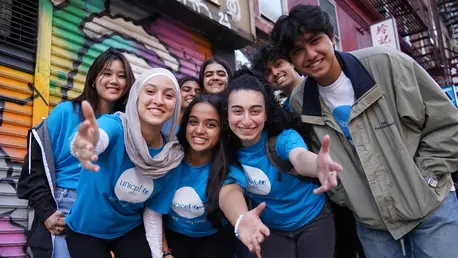
A group of smiling UNICEF club members, wearing UNICEF USA t-shirts, stand on a city street and reach their arms out to signify welcoming others.

Tell U.S. Congress supporting kids is critical!

Act Now
UNICEF delivers supplies wherever kids need them most

Help UNICEF get lifesaving aid to children in crisis

SEND SUPPLIES