Rebuilding Childhoods: Three Ways UNICEF Supports Children in Sudan
UNICEF is aiding children and families returning to Khartoum State, more than two years after heavy fighting broke out in the capital in April 2023, displacing millions and pushing Sudan into an ongoing civil war.
Families returning home in Khartoum face destruction and a severe lack of basic services — UNICEF is there to help
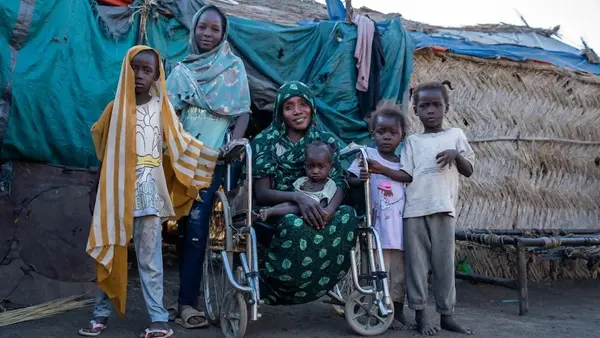
After more than two years of conflict and displacement in Sudan, families are gradually returning to Khartoum — to destroyed homes, damaged schools, broken water systems and a severe lack of basic services.
The places children once enjoyed are now in ruins. Streets where they once played are unsafe.
At the same time, disease outbreaks — including dengue, malaria, cholera and diarrhea — continue to threaten children’s lives every day.
As families return to Khartoum, UNICEF is on the ground, working with partners to support the restoration of essential services so children and their families can settle back safely.
Here are some of the ways UNICEF is helping children in Khartoum get their childhoods back.
1. Safe spaces for children
Almost every child in Sudan has experienced violence — directly or indirectly. Ongoing conflict threatens the health and well-being of Sudan’s 24 million children, pushing already vulnerable families deeper into hardship.
For many returning families, the psychological impact of the war remains deeply visible.
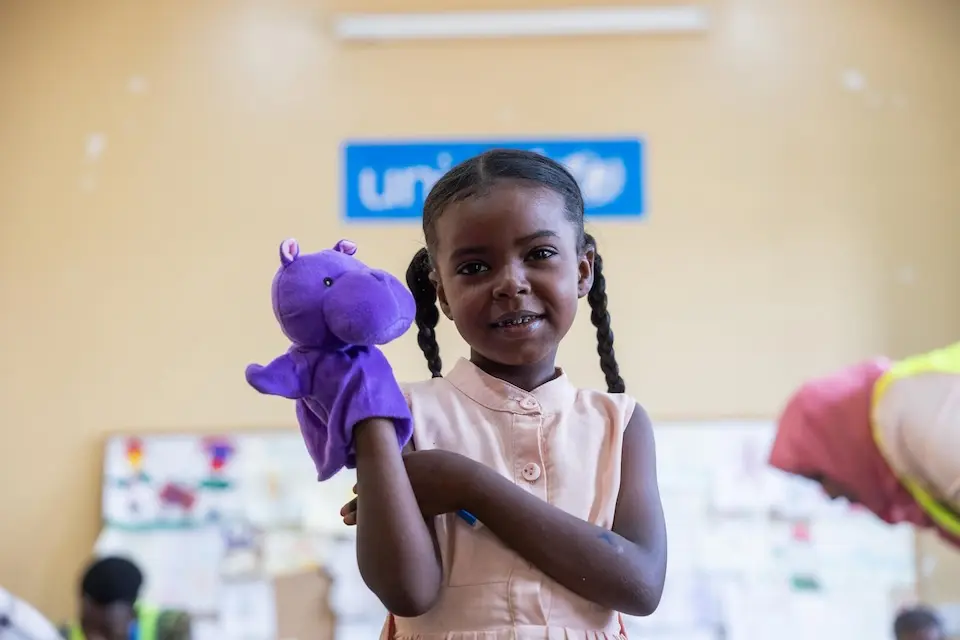
“I wish the bombing never returns,” said Rabab, 5. At the Saleh Jameel child-friendly space, she can play, draw and paint — and feel like a child again. She hasn't missed a day since the center opened.
“I love playing and drawing,” Rabab said. “Every day, I come here to draw and skip rope.”
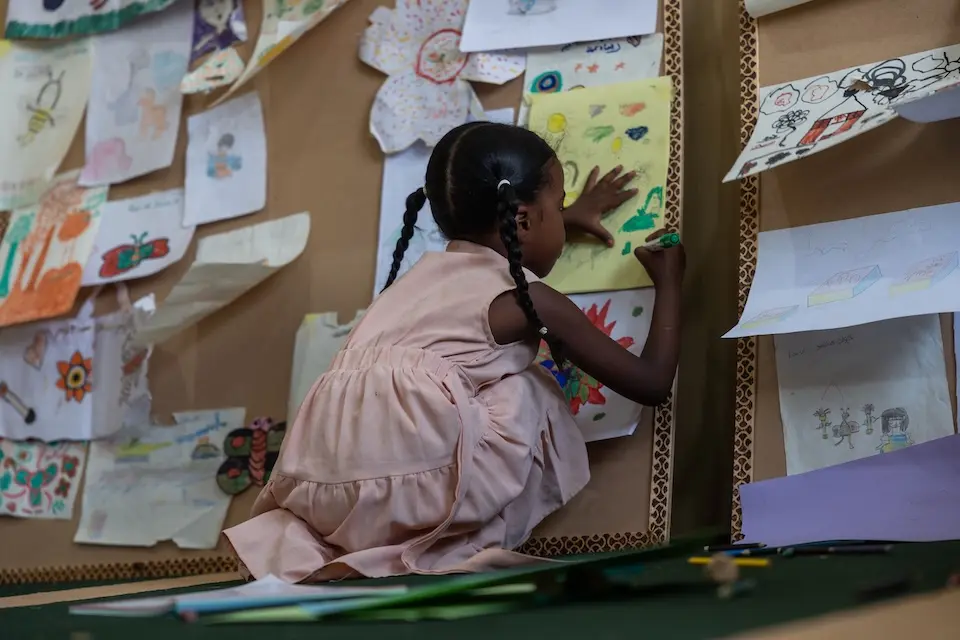
In Khartoum, UNICEF-supported child-friendly spaces serve as integrated hubs for child protection. They provide psychosocial support, learning and recreation, as well as access to specialized services such as gender-based violence prevention and explosive ordnance risk education. To date, more than 900 children have been reached.
2. Digital learning
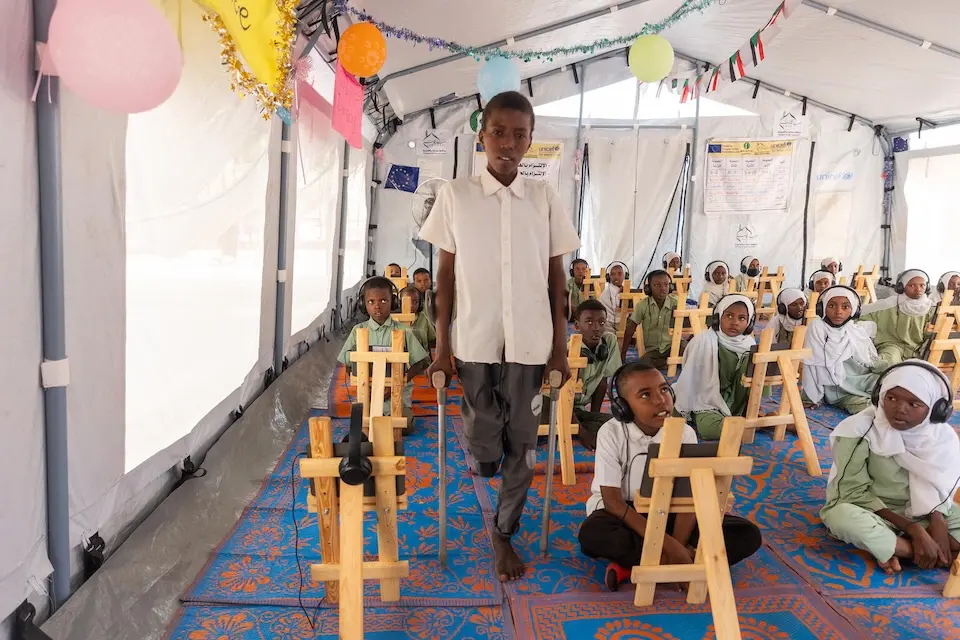
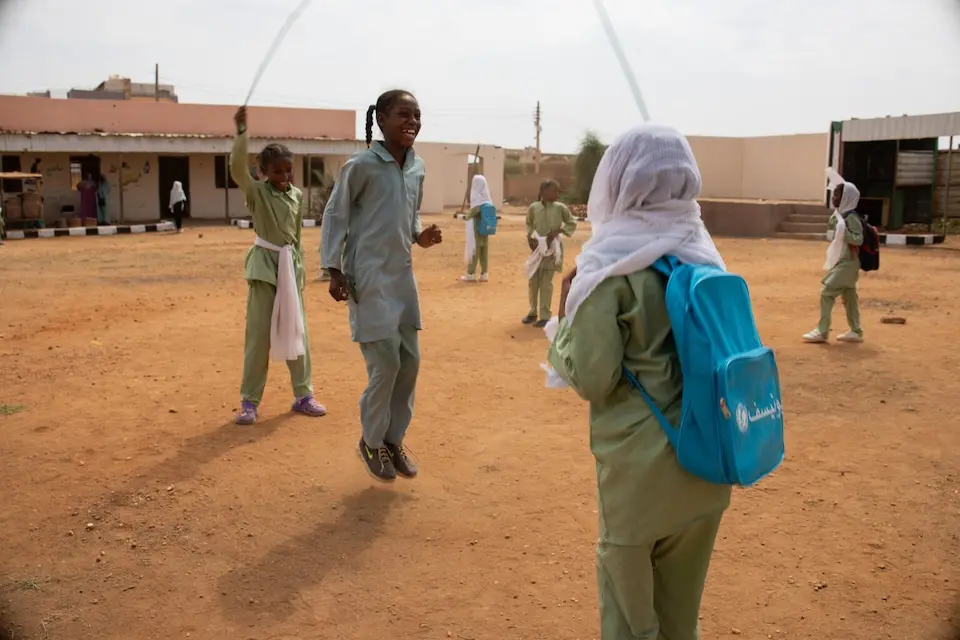
Eleven-year-old Hussein lost his leg during the war. He did not lose his love for learning — or football.
At the digital learning center in Khawla Bint Alazwar School, Hussein joins his peers to catch up after years of disrupted education, while dreaming of a brighter future.
“Despite what happened to me, life has not stopped,” he said.
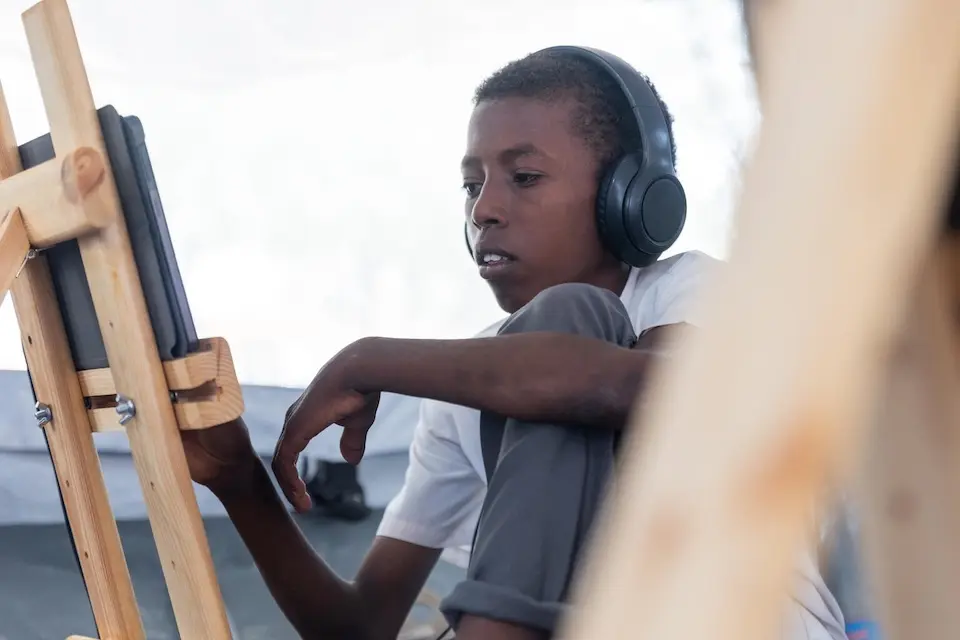
As millions of children across Sudan remain out of school, UNICEF — with support from the European Commission Humanitarian Aid (ECHO) — is establishing digital learning centers in Khartoum to help children and young people continue their education. So far, 49 centers have been set up, reaching more than 5,000 children across the state.
3. Restoring health and nutrition services
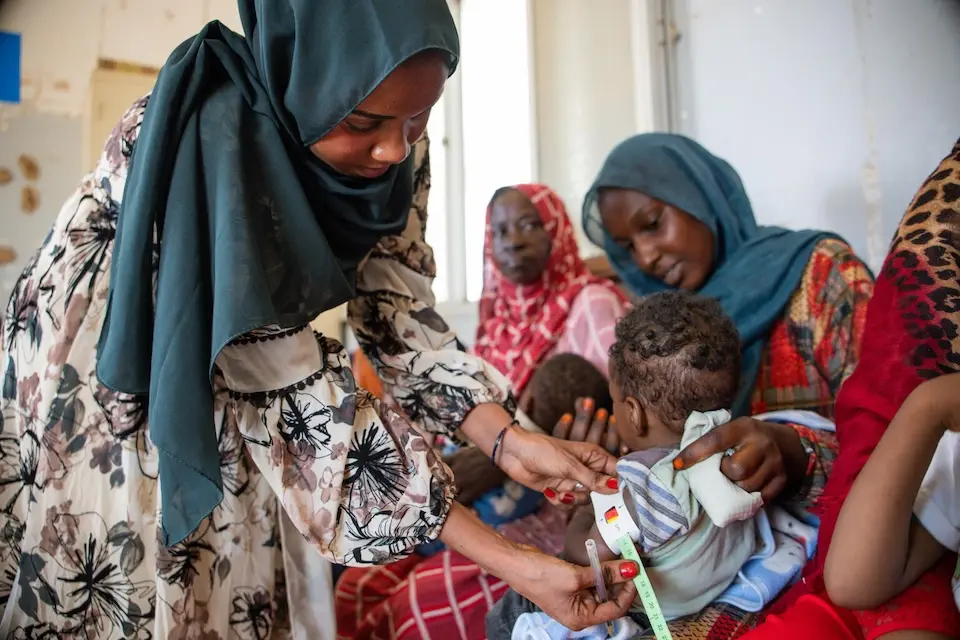
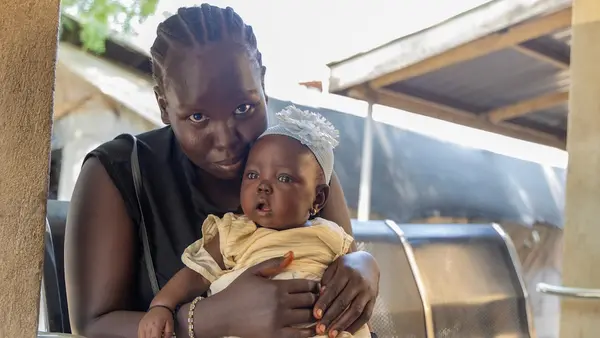
Naba brings her 7-month-old son, Adnan, to Eid Hussein nutrition site in Jebel Aulia. He is severely malnourished. “My son eats and drinks very little. He has no appetite,” Naba said. “The war has affected us and our children.”
Jebel Aulia is one of the localities in Khartoum State reporting high numbers of severely malnourished children.
As access to much of Khartoum improves, UNICEF has reactivated and expanded nutrition services across the state. Through 141 nutrition sites — including Eid Hussein — more than 460,000 vulnerable children have been reached with lifesaving care, including ready-to-use therapeutic food (RUTF).
Adnan is now enrolled in the nutrition program.
“The health workers have taken good care of my child,” Naba said.
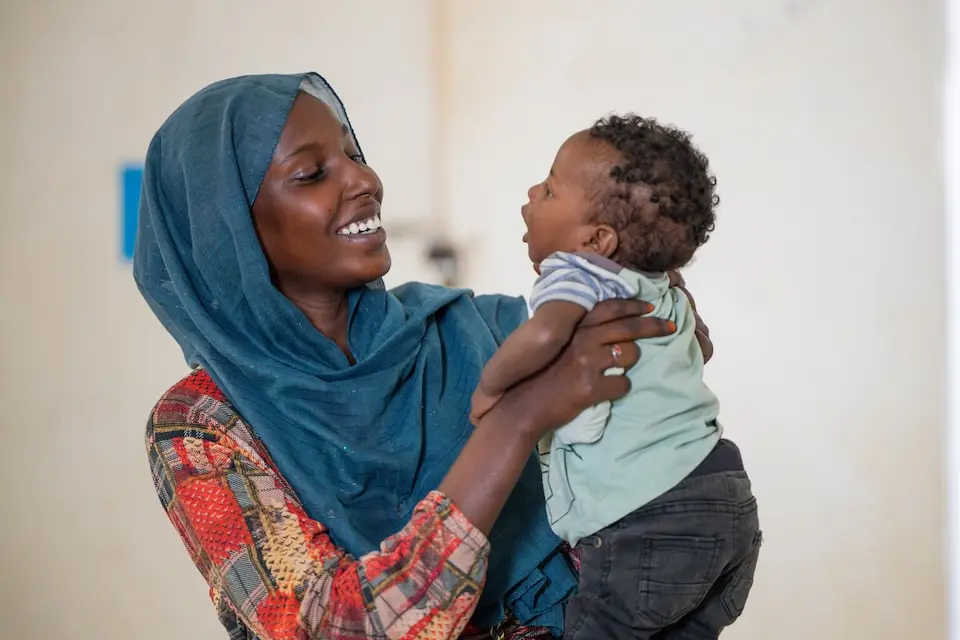
With more than 1 million people returning to Khartoum, UNICEF — with support from the European Commission Humanitarian Aid (ECHO), the Government of the United States of America and the United Kingdom Government through FCDO — is restoring critical health, nutrition, protection and education services for children and families.
Rebuilding Khartoum also means rebuilding childhood — safely, with dignity, and with hope.
Learn more about UNICEF's work for children in Sudan.
Right now, the lives of the most vulnerable children hang in the balance as conflicts and crises jeopardize the care and protection that they deserve. Dependable, uninterrupted and effective foreign aid is critical to the well-being of millions of children. Please contact your members of Congress and urge them to support ongoing U.S. investments in foreign assistance.
HOW TO HELP
There are many ways to make a difference
War, famine, poverty, natural disasters — threats to the world's children keep coming. But UNICEF won't stop working to keep children healthy and safe.
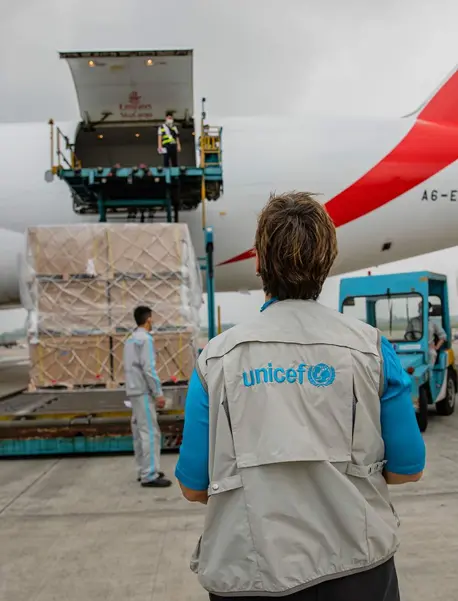
UNICEF works in over 190 countries and territories — more places than any other children's organization. UNICEF has the world's largest humanitarian warehouse and, when disaster strikes, can get supplies almost anywhere within 72 hours. Constantly innovating, always advocating for a better world for children, UNICEF works to ensure that every child can grow up healthy, educated, protected and respected.
Would you like to help give all children the opportunity to reach their full potential? There are many ways to get involved.