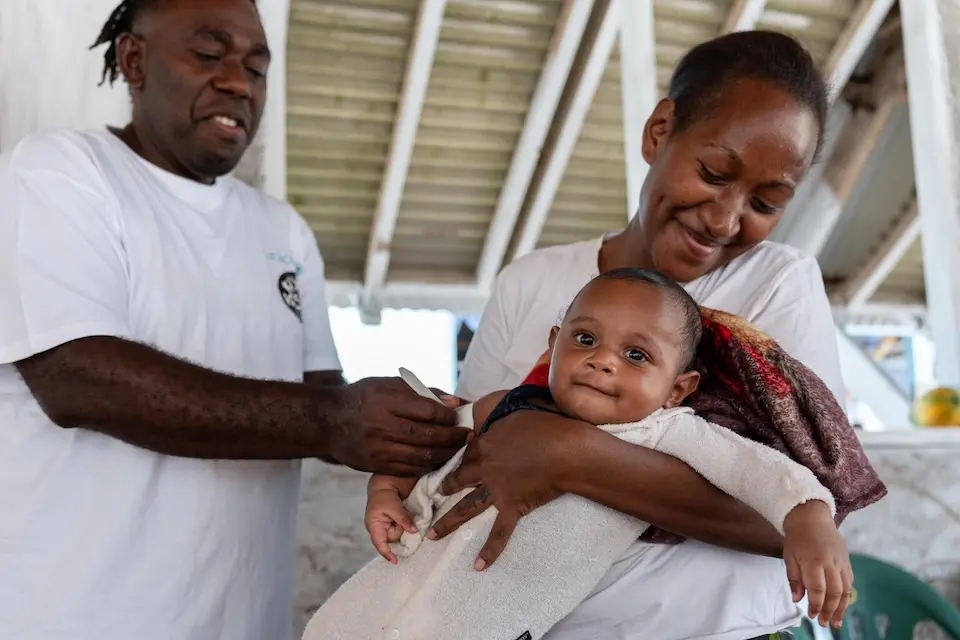
New UNICEF Tool Screens Infants and Moms for Malnutrition
Simple, innovative solutions like UNICEF's Mother-Infant MUAC tape can save countless lives and build healthier futures.
Successful treatment for malnutrition begins with accurate assessment
UNICEF works around the world to improve children's access to nutritious, sustainable and affordable diets, and to prevent malnutrition in all its forms. When prevention fails, UNICEF also works to screen children for malnutrition and provide lifesaving treatment.
For decades, health workers have relied on a simple tool, the mid-upper arm circumference (MUAC) tape, to quickly diagnose a child's nutritional health using color-coded measurements.
Green indicates a child is unlikely to have acute malnutrition. Yellow means that the child is moderately malnourished; although not in immediate danger, they still need nutritional support and follow-up. Red warns that a child is severely malnourished with a high risk of death and needs immediate treatment.
Learn more about how UNICEF helps malnourished children
The original MUAC tape screens children between 6 months and 5 years for malnutrition
Growing evidence suggests that wasting — the most severe form of malnutrition — occurs very early in life and disproportionally affects children under 2 years of age. The MUAC tape is designed for children between 6 months and 5 years old, but until recently, the only way to screen infants younger than 6 months has been by measuring their weight and height, which isn’t always possible in emergency contexts or remote areas far away from health centers.
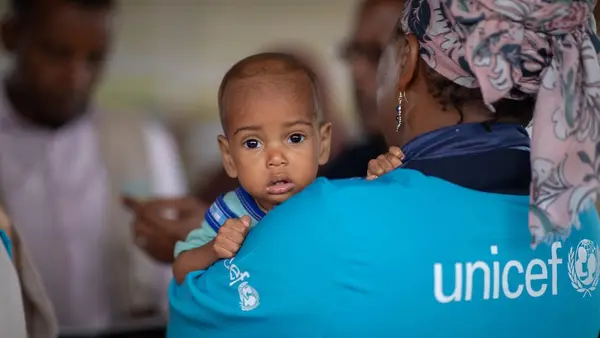
Based on guidance from the World Health Organization, UNICEF has developed a new MUAC tape, designed specifically for infants from 6 weeks to 6 months old — and their moms. Made of tear-resistant polypropylene, the reusable tapes are printed in graduated millimeters with text in Arabic, English, French or Spanish.
UNICEF's new MUAC tapes are designed specifically for infants up to 6 months
The Mother-Infant MUAC tape allows for three critical checks: an infant’s nutritional status, an infant’s brain development and a mother’s nutritional status, because the well-being of mothers and infants are closely intertwined. To date, the new MUAC tape has been piloted in 14 countries across Africa, Asia, and Latin America.
Related: 5 Ways UNICEF Delivers Nutrition to Children
Watch the video:
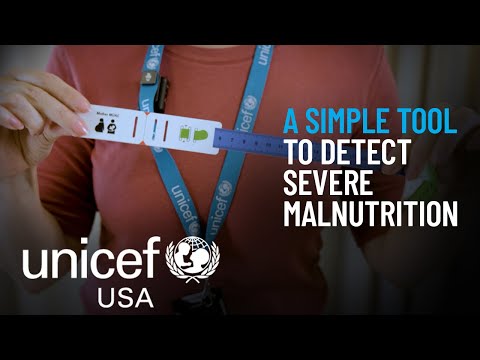
Like the MUAC tape for older babies and children up to age 5, the new infant tape uses colors, but they mean slightly different things. Green means an infant is unlikely to be at risk of poor growth and development. Violet means the infant is at risk of poor growth and development, and needs referral to a health facility to assess if they have acute malnutrition, are underweight or have other medical or feeding problems.
The mother-infant MUAC tape also tracks healthy brain development by measuring an infant's head circumference. Flipped over, the tape can measure a mother's arm to gauge her nutritional status as well. If she's undernourished, her baby is highly likely to be at greater risk of malnutrition.
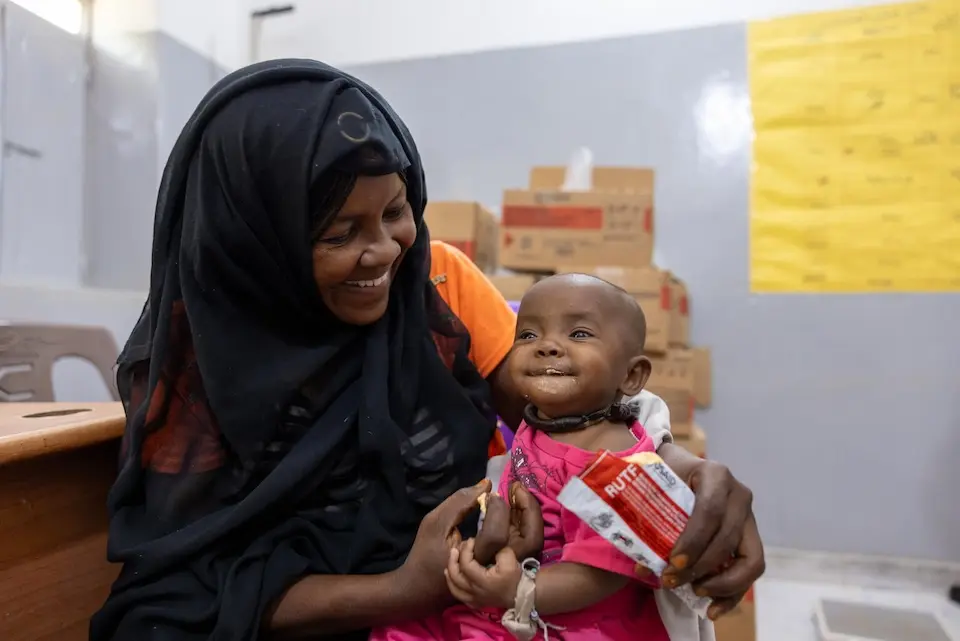
Early detection and prompt treatment can save lives
Every child has the right to healthy food and the best health care possible. In 2026, UNICEF plans to screen 33 million children for wasting and other forms of malnutrition. With early diagnosis, thorough treatment and family support, malnourished children can make a full recovery.
Right now, the lives of the most vulnerable children hang in the balance as conflicts and crises jeopardize the care and protection that they deserve. Dependable, uninterrupted and effective foreign aid is critical to the well-being of millions of children. Please contact your members of Congress and urge them to support ongoing U.S. investments in foreign assistance.
HOW TO HELP
There are many ways to make a difference
War, famine, poverty, natural disasters — threats to the world's children keep coming. But UNICEF won't stop working to keep children healthy and safe.
UNICEF works in over 190 countries and territories — more places than any other children's organization. UNICEF has the world's largest humanitarian warehouse and, when disaster strikes, can get supplies almost anywhere within 72 hours. Constantly innovating, always advocating for a better world for children, UNICEF works to ensure that every child can grow up healthy, educated, protected and respected.
Would you like to help give all children the opportunity to reach their full potential? There are many ways to get involved.