International Day of Peace: What Peace Means for Children Today
Highlights
- International Day of Peace is observed annually on Sept. 21.
- The 2026 theme emphasizes everyday actions that help build peace.
- Conflict threatens children’s safety and present and future well-being. But peace is not just the absence of war.
- UNICEF supports peacebuilding through emergency response, improving equitable access to services and other programs that strengthen communities.
- Families can promote peace by modeling empathy, respect and inclusion.
The annual observance on Sept. 21 recognizes that peace is more than the absence of war, especially for children. It means living in safety, with dignity, equitable access to services and opportunities to thrive and reach one's full potential. Learn how UNICEF's humanitarian work for children around the world helps lay the foundation for safer, more peaceful communities.
Peace means more than the absence of war
International Day of Peace, observed on Sept. 21, is an annual reminder of the horrors of war and the tremendous damage they do to civilians caught in the crossfire. But it is also a reminder that peace means more than the absence of war; that it means living in safety, with dignity, in an inclusive society where human rights are valued and respected.
Much of what UNICEF does for children around the world — from education programs to child protection to emergency response — is foundational to peacebuilding. With a presence in over 190 countries and territories, UNICEF delivers support and helps strengthen systems in ways that foster equity and inclusion and increase resilience and trust, helping to build safer, more peaceful communities.
For children, peace is essential to living safely, staying with family and accessing the services they need to thrive.
What is the International Day of Peace?
In 1981, the United Nations General Assembly established an International Day of Peace with a unanimous resolution that called for a day “devoted to commemorating and strengthening the ideals of peace both within and among all nations and people.”
Also called World Peace Day, the day is an opportunity for the international community to redouble efforts at ending war at both the governmental and the grassroots level, to recommit to non-violence and to call for ceasefires in conflict-stricken regions.
In 2001, the General Assembly designated Sept. 21 as its permanent annual date and declared it a period of non-violence and ceasefire. The fixed-date observance began in 2002.
International Day of Peace 2026
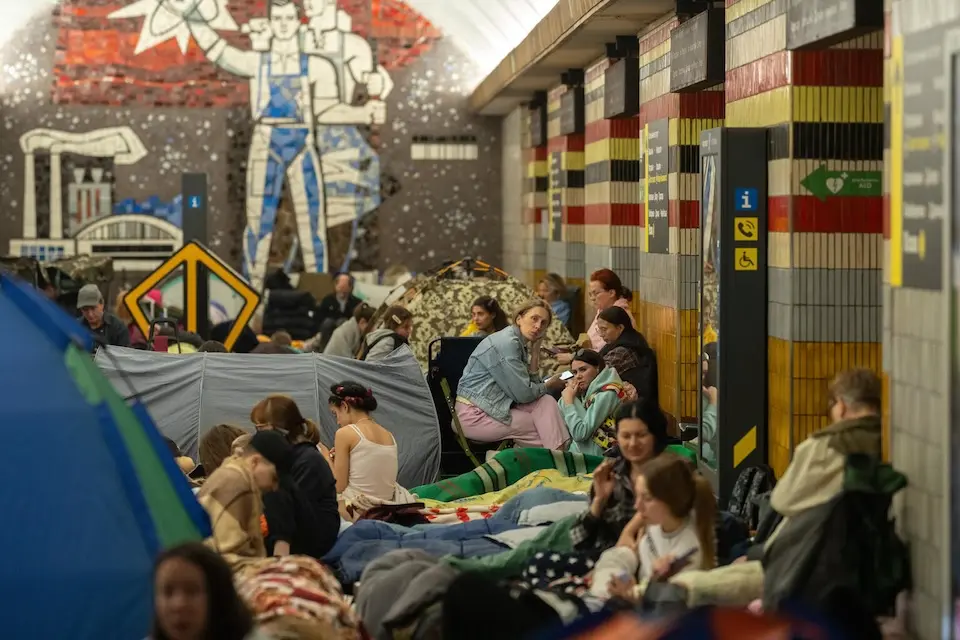
International Day of Peace 2026 comes at a time of escalating conflict and displacement — with children continuing to pay the highest price. The United Nations verified 38,558 grave violations against children in 2025, reflecting unprecedented levels of harm to children in conflict.
As regional conflict escalated in the Middle East in 2026, more than 4,000 children were reportedly killed or injured across six countries in five months, including more than 2,500 in Iran. More than 64,000 children have reportedly been killed or injured in Gaza since October 2023 — including at least 300 children reportedly killed in the first 300 days after the October 2025 ceasefire was announced.
The UN's theme for International Day of Peace 2026 is Invest in Peace — For Everyone, Everywhere, Every Day. The campaign honors everyday architects of peace — from volunteers and campaigners to civil society leaders — who are driving local action to strengthen their communities and effect change. The message: even small, local actions can make a difference.
“Peace is not just made at conference tables, but in classrooms, neighborhoods and everywhere people meet with open minds and open hearts,” UN Secretary-General António Guterres said. “Together, day by day, we can build a more just world, with compassion, equality and dignity for all.”
Some suggestions for how to support the day's goals:
- host a Peace Circle – an intergenerational, youth-led dialogue on ending war
- educate yourself and share information with others about what peacebuilding looks like
- use social media platforms to promote the cause using the hashtag #InvestinPeace
Why peace matters for children
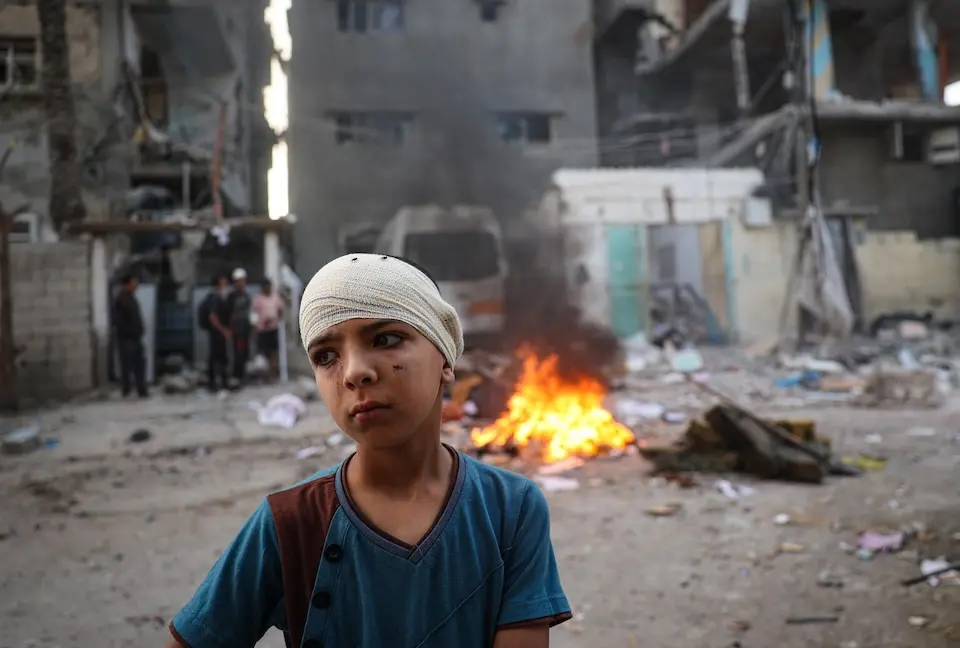
War is devastating for children. Children in war zones are often forced to flee their homes, becoming separated from their families and loved ones. In some conflicts, children are recruited and used by armed forces or armed groups. Essential services – including water, sanitation, and health – are often disrupted. Supply lines for food can be cut off, leading to hunger and malnutrition.
Attacks on schools and insecurity can disrupt children’s education for months or years. Unexploded ordnance poses a continued threat even after the fighting stops. The psychological toll on children can be as scarring as the physical damage.
Peace gives children the safety and stability they need to learn, play, grow and reach their full potential.
How UNICEF supports peace
UNICEF supports peace by working with partners to advance:
- equitable access to essential services
- meaningful participation by children and young people in society
- stronger social cohesion, inclusion and relationships between communities and governments
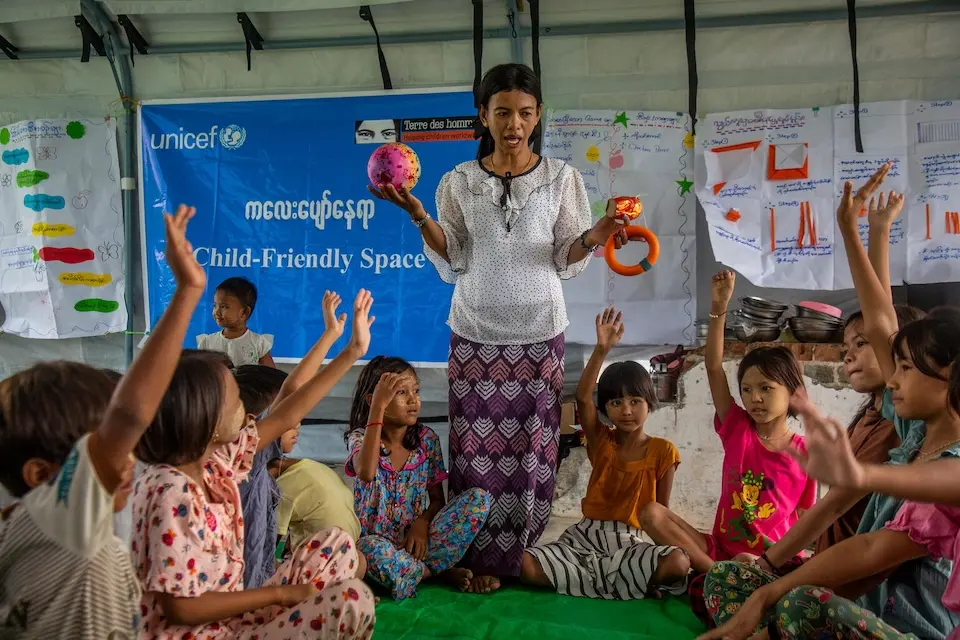
At the international and national level, UNICEF works with governments and NGOs to help strengthen laws protecting children from armed conflict and its impacts. UNICEF provides further protection with child-friendly spaces and mental health and psychosocial services.
In conflict and disaster zones and other fragile settings, UNICEF works to address grievances linked to exclusion and inequitable access to services — factors that can contribute to social unrest.
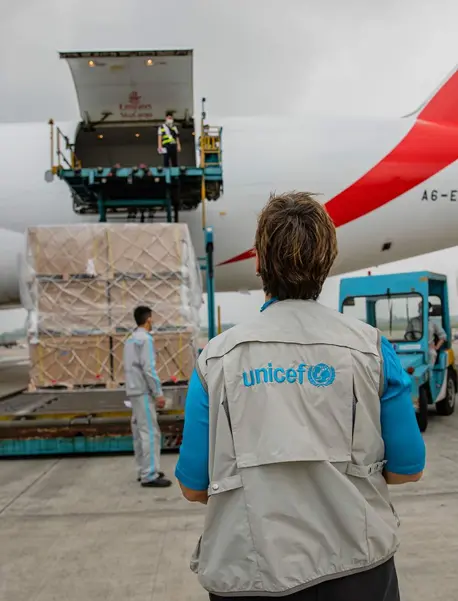
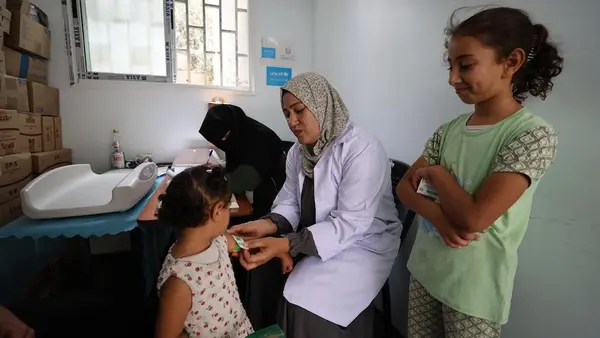
In humanitarian emergencies, UNICEF delivers lifesaving assistance and works to restore services that children and families rely on, helping communities recover and rebuild.
Ensuring access to education — a pillar of UNICEF's global mission — is considered essential for building social cohesion and plays an important role in building and sustaining peace.
Community-based efforts to address harmful social norms help build safer environments.
UNICEF also helps amplify young people's voices and supports their safe, age-appropriate and meaningful participation in peacebuilding and development.
UNICEF's work is guided by the Convention on the Rights of the Child — the most widely ratified human rights treaty in history, which sets out the rights of every child, including rights to life, development, education, health and protection from violence and exploitation.
Related: UNICEF Peacebuilding: Protecting Children in Conflict Zones
How families can mark International Day of Peace
To mark International Day of Peace, consider discussing with family members what peace, safety and inclusion mean to them. Parents and caregivers can:
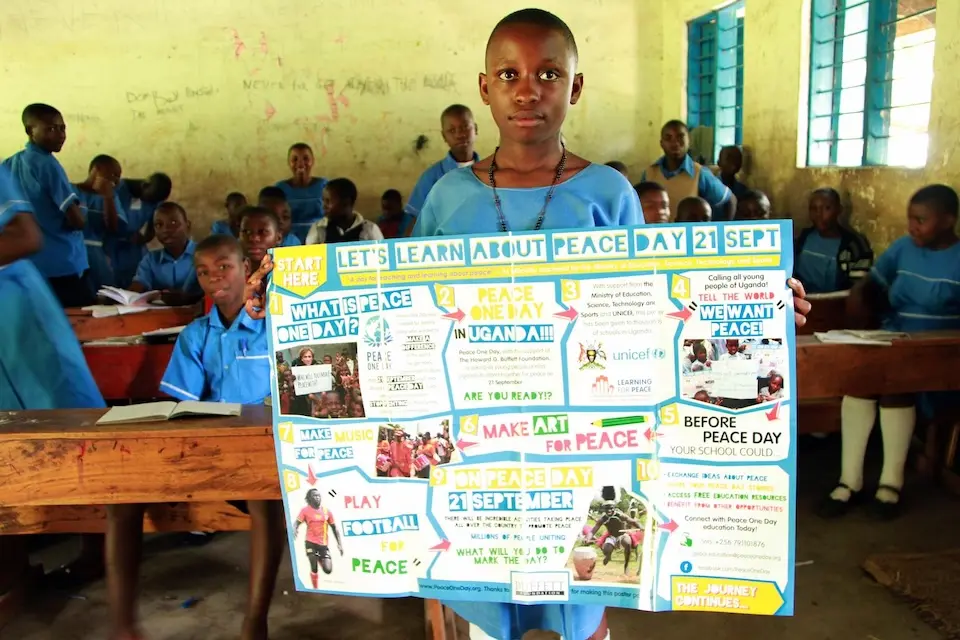
- invite children to create a message, drawing, quote or short poem about peace
- use age-appropriate quotes, stories or passages about peace as conversation starters about empathy, dignity and inclusion
- practice listening, empathy and constructive conflict resolution
- encourage children of all ages to take action to help another person feel welcomed or included, reminding them that everyone has the power to make a difference
Related: How to Talk to Your Children About Conflict and War
Take action for children
International Day of Peace is observed once a year, but protecting children and building safer communities require ongoing action.
There are many ways to take action for children:
- Become a monthly donor to UNICEF USA — and support ongoing efforts to provide children around the world with the safety and stability they need to thrive.
- Send an inspired gift that gives to children in need: shop the UNICEF market.
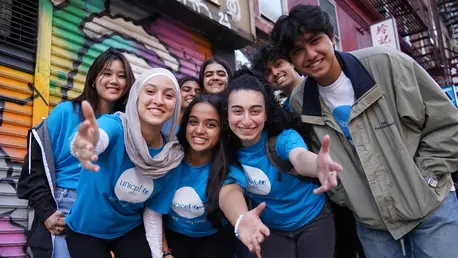
- Volunteer: share your time and expertise as a young professional and future leader and help drive impact by joining UNICEF Next Generation.
- Raise awareness and inspire others: start a UNICEF Club at your high school or college.
Frequently asked questions about International Day of Peace
When is International Day of Peace?
The International Day of Peace is observed every year on Sept. 21. The United Nations General Assembly established the observance in 1981. In 2001, it designated Sept. 21 as its permanent annual date and declared the day a period of non-violence and ceasefire. The day is an opportunity for the international community to commit to ending devastating armed conflicts and creating a world of safety, equity and inclusion for all.
What is the theme for International Day of Peace 2026?
The theme for International Day of Peace 2026 is "Invest in Peace — For Everyone, Everywhere, Every Day" — a nod to the small actions people take in their own communities that make a positive difference toward building lasting peace.
What does peace mean for children?
Peace means more than the absence of conflict. Living in peace is essential for healthy growth and long-term well-being. It means living safely, with dignity, with equitable access to services and opportunities to thrive and reach one's full potential. For children, peace allows kids to be kids — to learn, play and grow.
How does UNICEF help children affected by conflict?
UNICEF works with governments and local partners to deliver emergency aid during conflicts and other crises. UNICEF also advocates for stronger child protection at the national and international level. Other priorities include restoring and sustaining access to essential services including health care, safe water, sanitation and education. UNICEF also establishes and supports child-friendly spaces where children affected by conflict can feel safe, play, learn and recover.
How can families teach children about peace?
In the spirit of International Day of Peace — and every day — parents and caregivers can teach kids about peace by modeling empathy, respectful communication, inclusion and constructive conflict resolution.
Rowan's poem:
Peace means the war is over
Peace means people can go back home and children go to school
Peace means children can go home and get some rest
Peace means children can go to play with their friends
Peace means children are happy
HOW TO HELP
There are many ways to make a difference
War, famine, poverty, natural disasters — threats to the world's children keep coming. But UNICEF won't stop working to keep children healthy and safe.
UNICEF works in over 190 countries and territories — more places than any other children's organization. UNICEF has the world's largest humanitarian warehouse and, when disaster strikes, can get supplies almost anywhere within 72 hours. Constantly innovating, always advocating for a better world for children, UNICEF works to ensure that every child can grow up healthy, educated, protected and respected.
Would you like to help give all children the opportunity to reach their full potential? There are many ways to get involved.