Youth Bring Warmth to Children Displaced by War in Lebanon
Highlights
- Over the past month, military attacks on Lebanon have forced more than a million people out of of their homes
- 136,000 internally displaced people are staying in 663 collective shelters, mostly in public school buildings
- Through a UNICEF program, youth in Lebanon are making warm clothes, blankets and sleeping bags for newly displaced children
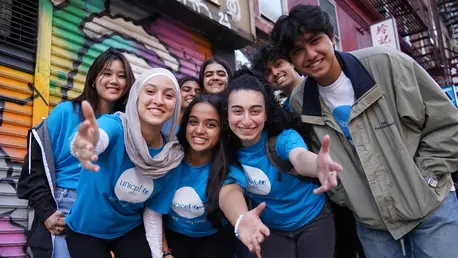
Young people in Lebanon are supporting emergency response efforts by producing warm clothing, blankets and sleeping bags for children in displacement shelters, turning their skills into hope.
Children in Lebanon are under assault
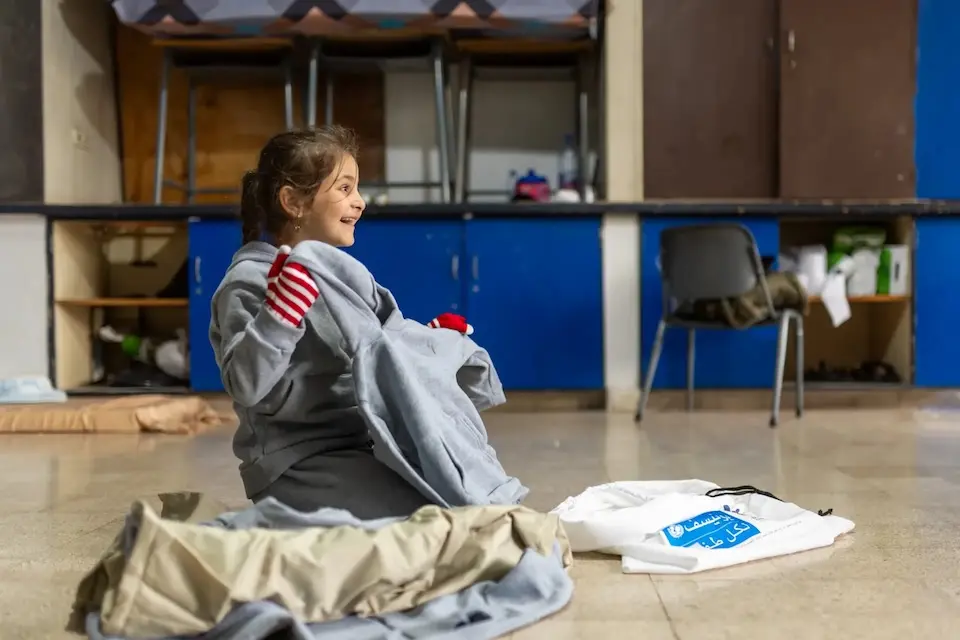
Ongoing military strikes in Lebanon have forced more than a million people out of their homes since March 2. Many arrive at shelters with little more than the clothes they were wearing. For children trying to sleep in unfamiliar places, terrified by sonic booms and falling bombs, even a blanket or a warm sweater can make a difference.
Across the country, young people are stepping up to help.
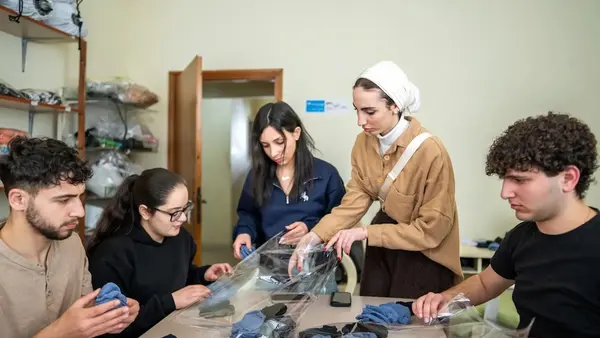
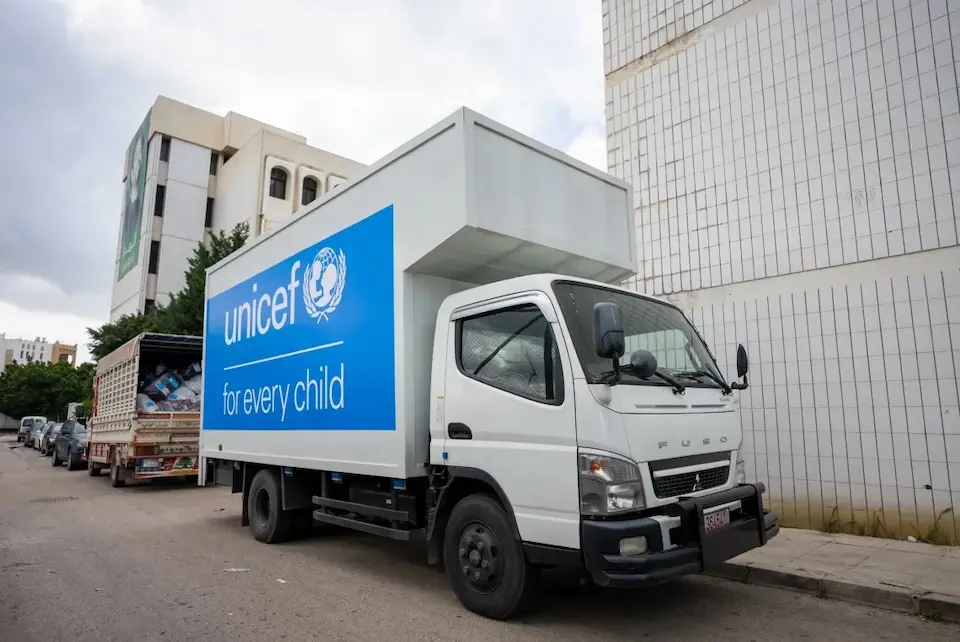
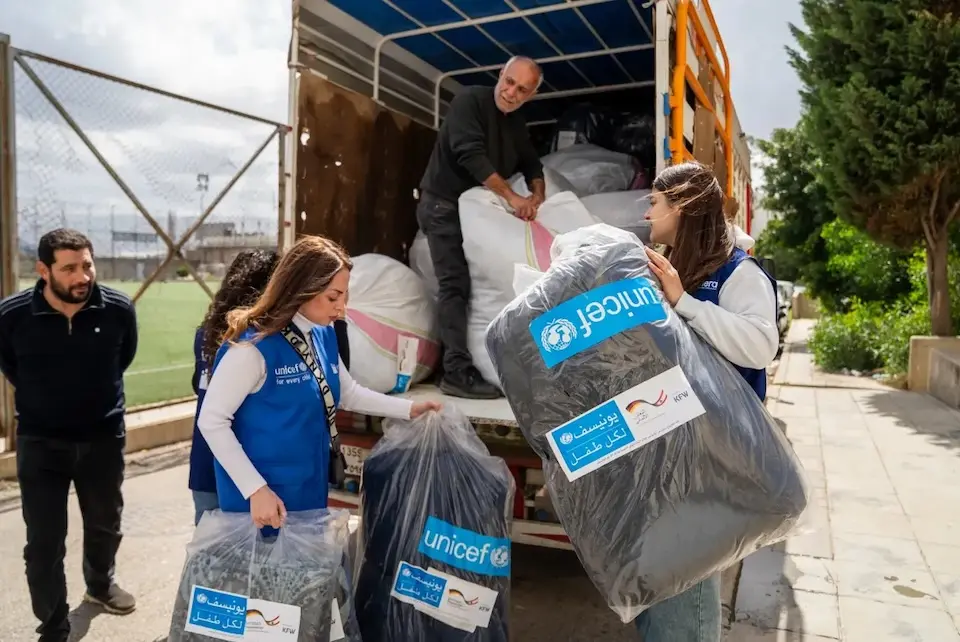
To support the newly displaced, UNICEF is distributing winter clothing kits, blankets and sleeping bags to children and families staying in collective shelters. The kits, produced by youth in Lebanon as part of the Learning to Earning program funded by the German Government through KfW Development Bank, were mobilized at the onset of the conflict.
Within the first 24 hours of the emergency, 2,380 winter clothing kits and 825 sleeping bags and blankets were distributed to families sheltering in 10 public Technical and Vocational Education and Training (TVET) schools. These shelters are currently hosting more than 4,800 internally displaced people.
Learn more about what UNICEF is doing to protect children's health and well-being in Lebanon
Through UNICEF's Learning to Earning program, young people in Lebanon are using their skills to support families caught in a devastating war
Behind these essential supplies is a powerful story of youth turning skills into solidarity.
Young people ages 15 to 24 enrolled in UNICEF's Learning to Earning program gain practical skills while contributing directly to the emergency response. The initiative combines competency-based training in sewing and production with cash-for-work opportunities, enabling youth to earn an income while producing items that support families affected by the crisis.
Currently, 50 youth are continuing the production of up to 5,350 blankets and sleeping bags, helping expand support to more families as displacement continues to rise, transforming training into meaningful work that directly supports displaced families.
Learn more about UNICEF's emergency response to conflict in the Middle East
For many of the youth involved, the work carries deep emotional meaning.
“When we hear about families forced to leave their homes and children sleeping in shelters, we feel we have to do something,” said Shaaban, one of the young people participating in the production of the kits.
“Every sweater or blanket we make is our way of telling those children: You are not alone.”
Every sweater or blanket we make is our way of telling those children: You are not alone.
For Nada, another participant, the program has also restored a sense of purpose.
“For the first time, I feel I have a role in society. I can help; I can work, produce and support myself financially,” she said.
5 Ways Conflict in the Middle East Impacts Children
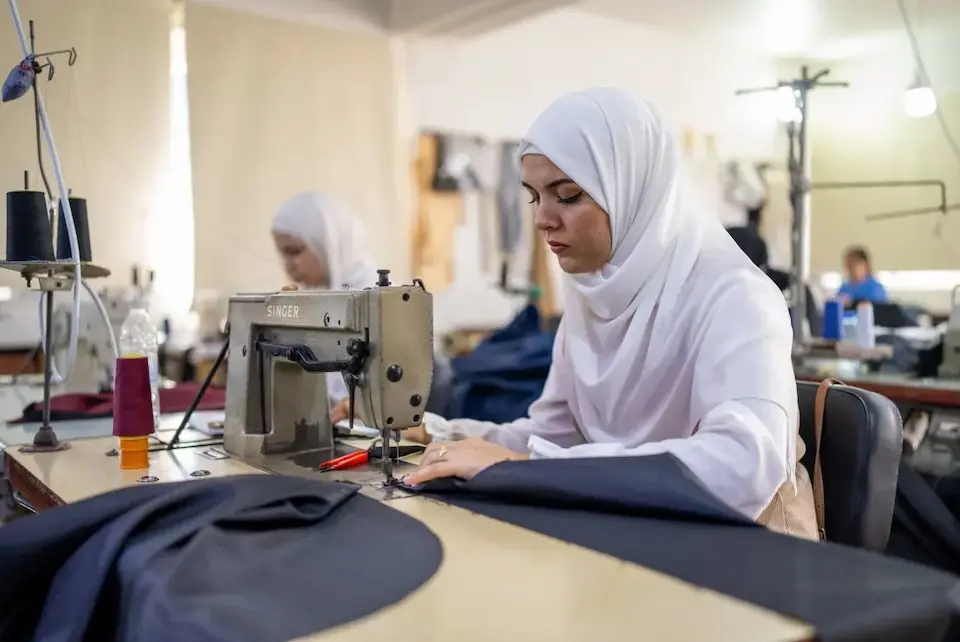
Young people in Lebanon are showing up for the most vulnerable, delivering warmth and hope in a time of crisis
The Learning to Earning program supports pathways from training to employment, enabling youth to participate economically and socially in their communities. In 2024, the program supported more than 38,500 adolescents and youth in Lebanon with learning, skilling, digital training, entrepreneurship, innovation and sustainable livelihoods opportunities, in partnership with 200 employers.
At a time when many families are facing loss and uncertainty, young people across Lebanon are showing that solidarity, compassion and action can still bring warmth and hope to those who need it most.
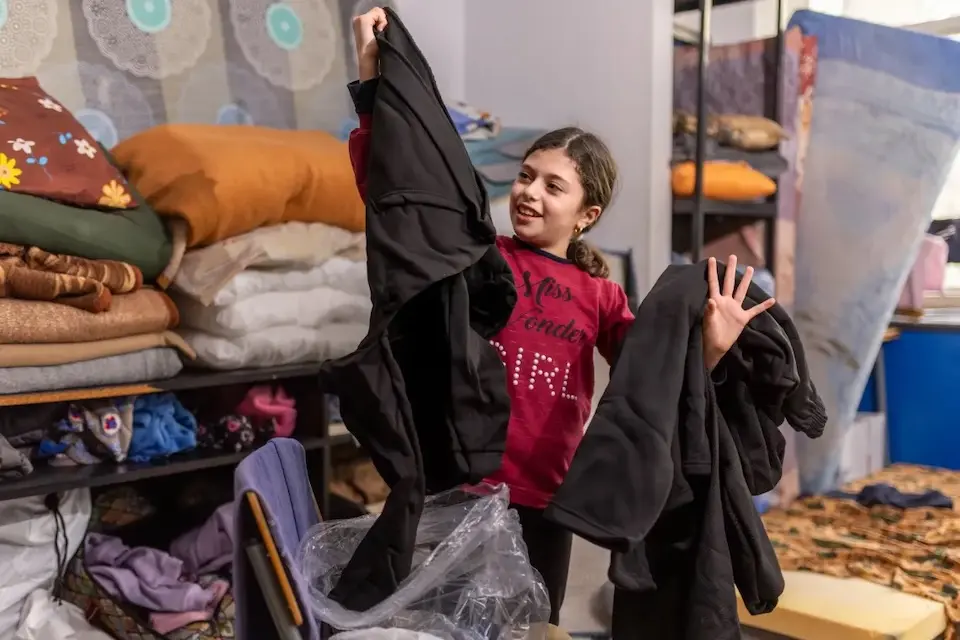
Children in Lebanon cannot be left behind
Children and families in Lebanon are facing a wave of bombardments tearing through communities with devastating impact. UNICEF continues to call for the protection of all civilians, including children, and unimpeded humanitarian access in accordance with international law.
To reach 1 million people in need in Lebanon over the next three months, UNICEF requires $48.3 million, but faces a 77 percent funding gap with only $10.9 million available. Without urgent additional funding, lifesaving services for children and families will be disrupted.
Help UNICEF rush aid to children now
UNICEF USA complies with U.S. sanctions restrictions, and, as such, we do not accept funds specifically designated for programs in Iran. We do, however, raise funds for UNICEF programming in the Middle East and North Africa region.
For parents and caregivers: How to Talk to Your Children About Conflict and War
This story was adapted from UNICEF Lebanon
HOW TO HELP
There are many ways to make a difference
War, famine, poverty, natural disasters — threats to the world's children keep coming. But UNICEF won't stop working to keep children healthy and safe.
UNICEF works in over 190 countries and territories — more places than any other children's organization. UNICEF has the world's largest humanitarian warehouse and, when disaster strikes, can get supplies almost anywhere within 72 hours. Constantly innovating, always advocating for a better world for children, UNICEF works to ensure that every child can grow up healthy, educated, protected and respected.
Would you like to help give all children the opportunity to reach their full potential? There are many ways to get involved.