Over 1,800 Children Killed or Injured as Middle East Conflict Deepens
UNICEF is working with partners to meet the rising needs of children and families as military conflict surges across the Middle East. Here's how to help.
Children in the Middle East urgently need support and protection
After three weeks of escalating conflict in the Middle East, missiles, air strikes and drone strikes have become a terrifying fact of daily life for children across the region. Millions of people have been forced out of their homes by violence; the total number of the newly displaced increases by the hour.
Reports indicate more than 1,800 children have been killed or injured since Feb. 28; 214 children have been reported killed in Iran, 116 in Lebanon, 4 in Israel and 1 in Kuwait. The number of children injured includes more than 1,190 in Iran, 331 in Lebanon, 4 in Israel and 4 in Bahrain. These numbers will likely climb as the conflict intensifies and spreads.
Military conflict disrupts the essential services children rely on for survival and well-being
Beyond the death toll, the escalation is exposing children to traumatic events, causing widespread psychological distress among kids and caregivers. Repeated alerts, bombardments and uncertainty are disrupting daily routines, increasing the need for mental health and psychosocial support services.
Civilian infrastructure including homes, hospitals, schools, and water and sanitation systems have been attacked, damaged or destroyed by parties to the conflict, disrupting services that children rely on for survival and well-being. In some areas, health facilities have been forced to suspend operations, while airspace closures and disrupted transport routes threaten access to essential medicines and routine immunization services. Millions of children are out of school, cut off from safe learning environments and support systems.
Read UNICEF's latest Humanitarian Flash Update on the escalation of military conflict in the Middle East
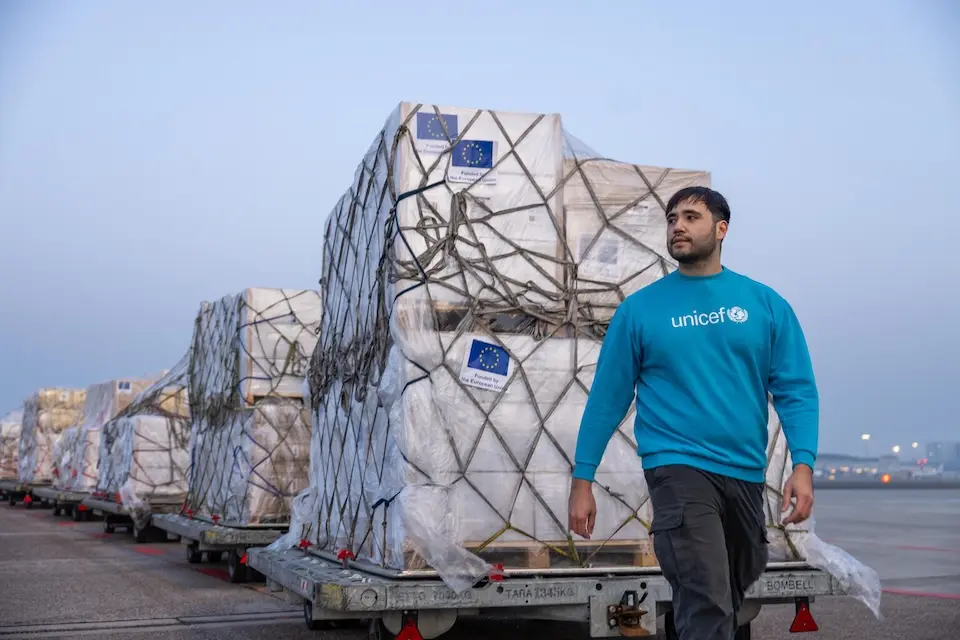
Despite these disruptions, UNICEF continues to reach children with essential services including health, nutrition, water and sanitation, education and child protection, while adapting programs to the evolving operational constraints.
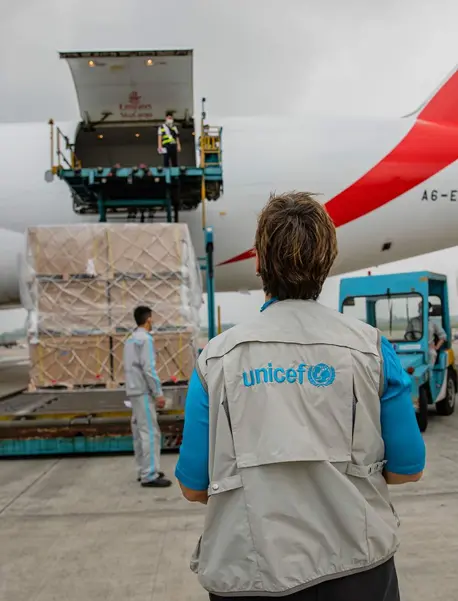
UNICEF’s global and regional supply and logistics network, including pre-positioned stocks and diversified procurement channels, continues to support the delivery of critical supplies to affected countries. Contingency logistics arrangements, including rerouting shipments and activating emergency procurement procedures, are helping mitigate disruptions and maintain the flow of lifesaving assistance.
UNICEF is ramping up support for children in a region where humanitarian needs were already acute
These developments come in a region where humanitarian needs were already acute. Nearly 110 million children live in a country already affected by conflict prior to the current escalation. Around 77 million children are in the subregion affected by recent military attacks.
Between Sept. 2023 and June 2025, at least 12.2 million children were reportedly killed, injured or displaced by conflict in the Middle East — the equivalent of a child's life being ended or upended every five seconds.
Learn more: UNICEF in the Middle East
UNICEF in Iran
According to UNHCR, the UN Refugee Agency, up to 3.2 million people are displaced in Iran — an estimated 864,000 are children. UNICEF is closely coordinating with national authorities and partners to monitor the situation and support children in need.
In response to requests from the Ministry of Health, UNICEF is deploying pre-positioned health supplies, including mobile health units, primary health care tents and emergency health kits, to help restore access to essential services for an estimated 226,000 people in affected areas.
Support also includes vaccines, primary health care supplies and mental health and psychosocial support for children, adolescents and communities.
5 Ways Conflict in the Middle East Impacts Children
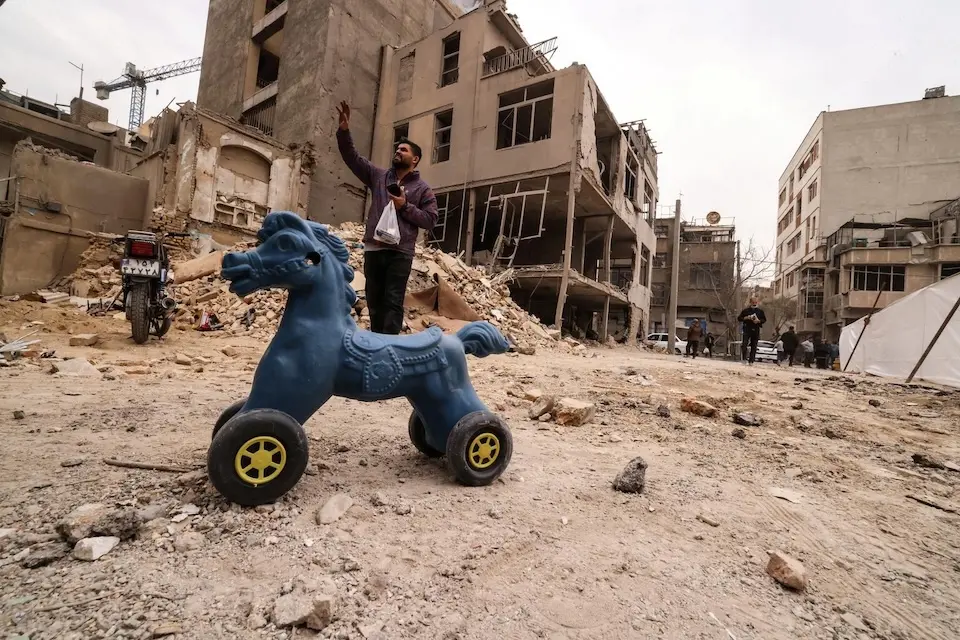
UNICEF in Lebanon
More than 1 million, including over 350,000 children, in Lebanon have been forced out of their homes by the conflict. Many families are seeking shelter in public buildings, including schools. Others are sleeping in cars or on the streets. Urgent shortages of water, mattresses, blankets and diesel have been reported.
Across Lebanon, UNICEF is working with partners to:
- provide child protection and mental health and psychosocial support for children in shelters and affected communities
- support water, sanitation and hygiene (WASH) services across multiple shelters, including repairs and upgrades to critical water and wastewater facilities
- equip health facilities with essential medical supplies and expanding mobile health services to reach displaced populations
- preposition nutrition supplies
- support online learning platforms, distribute educational materials to children in collective shelters and establish temporary learning spaces
Learn more: UNICEF Aids Children in Lebanon as Conflict Intensifies
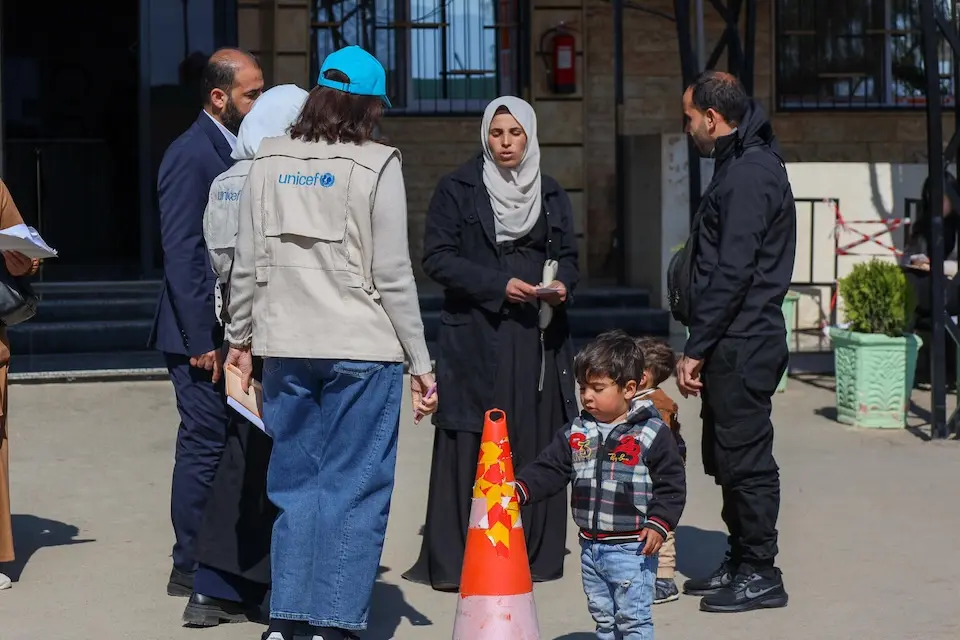
UNICEF in Syria
In Syria, UNICEF is coordinating with humanitarian partners and national and local authorities to respond to a rapid influx of returnees from Lebanon. Between March 3 and March 11, approximately 118,590 people fled across the border from Lebanon into Syria. Many left their belongings behind and arrived in urgent need of support.
UNICEF is accelerating its emergency response to create conditions for safe return. Priority needs include food assistance, transportation from the border, non-food items, particularly for cold weather, and WASH services. Through its mobile clinics, UNICEF is reaching children with nutrition screening, vaccinations and health awareness sessions.
UNICEF in the State of Palestine
Working with UN agencies and humanitarian partners, UNICEF continues to deliver critical assistance for children across the State of Palestine. But the escalating situation is severely affecting children and undermining the scale-up of lifesaving support.
Children in the West Bank, including East Jerusalem, are facing heightened threats of violence and insecurity. On March 14, two brothers, ages 5 and 7, were shot and killed with their parents in the family car in the town of Tammun. Between Jan. 25 and March 17, 65 Palestinian children were killed in the West Bank, including East Jerusalem — roughly one child every week — with more than 760 injured. Most of these deaths were caused by live ammunition.
Intermittent closures and movement restrictions triggered by the escalation are disrupting access to basic services, forcing some schools to close. All crossings into the Gaza Strip were closed between Feb. 28 and March 2, preventing humanitarian aid and commercial goods from entering. Gaza’s full dependence on external supply pipelines means disruptions are immediately affecting food, water services, hospitals, fuel and critical medical supplies — fuel and cooking gas shortages are being reported as supplies decline and families begin stockpiling.
Related: Building a Child-Centered Recovery in Gaza
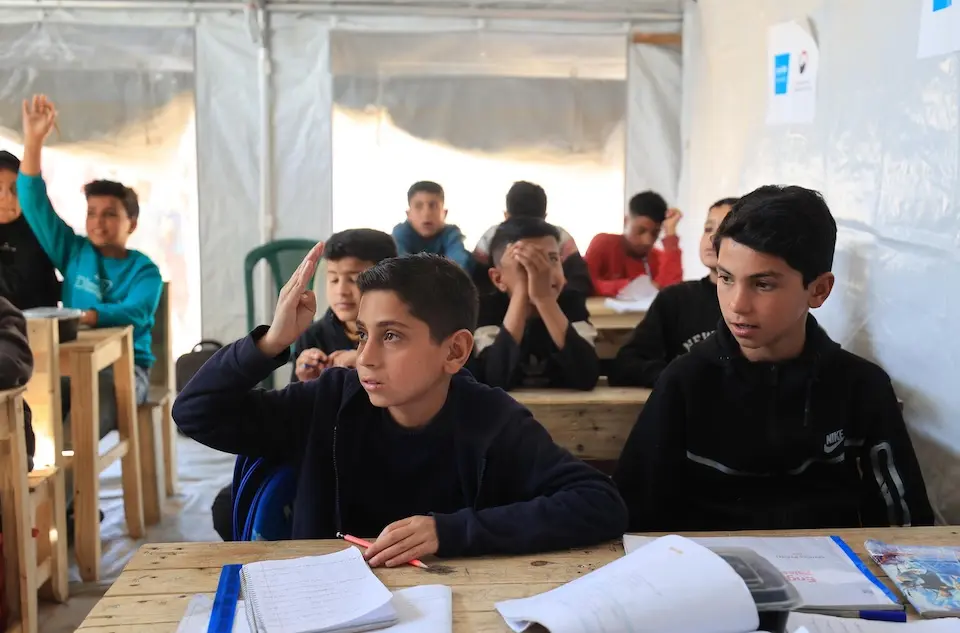
Children are not targets
The language of conflict relies on terms like "escalation," "regions" and "borders," but behind those words are homes where children live, laugh and grow. Nothing justifies the killing and maiming of children or the destruction of civilian homes, schools and hospitals.
UNICEF continues to call for immediate deescalation and cessation of hostilities, and urges all parties to exercise maximum restraint and uphold their obligations under international law, including the protection of civilians and the essential services children rely on to survive.
* UNICEF USA complies with U.S. sanctions restrictions, and, as such, we do not accept funds specifically designated for programs in Iran. We do, however, raise funds for UNICEF programming in the Middle East and North Africa region.
For parents and caregivers: How to Talk to Your Children About Conflict and War
HOW TO HELP
There are many ways to make a difference
War, famine, poverty, natural disasters — threats to the world's children keep coming. But UNICEF won't stop working to keep children healthy and safe.
UNICEF works in over 190 countries and territories — more places than any other children's organization. UNICEF has the world's largest humanitarian warehouse and, when disaster strikes, can get supplies almost anywhere within 72 hours. Constantly innovating, always advocating for a better world for children, UNICEF works to ensure that every child can grow up healthy, educated, protected and respected.
Would you like to help give all children the opportunity to reach their full potential? There are many ways to get involved.