What Is RUTF? The Therapeutic Food Saving Children's Lives
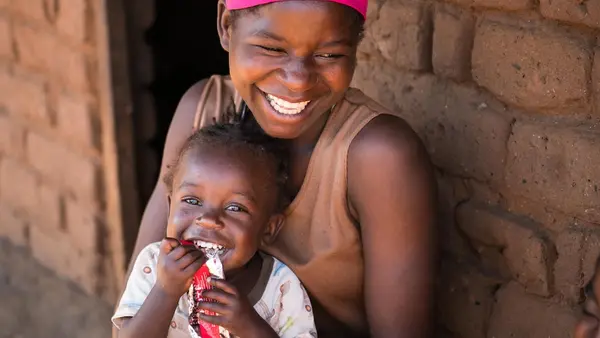
Ready-to-use therapeutic food is a nutrient-rich, peanut-based paste used to treat millions of children suffering from severe malnutrition every year. UNICEF is the global leader in RUTF procurement, purchasing around 80 percent of the world's supply. The innovation has achieved impact at scale — helping to save millions of lives since its introduction in 1996. Collective action is needed to ensure that every child in need can access RUTF without delay. Learn more.
Malnutrition is a silent threat to millions of children. The damage it does can be irreversible, preventing children from reaching their full potential — mentally and physically. In its worst form, severe malnutrition can be deadly.
Severe acute malnutrition (SAM), often referred to as severe child wasting, is the most extreme and visible form of undernutrition — and fatal if untreated. Children who survive often suffer long-term effects.
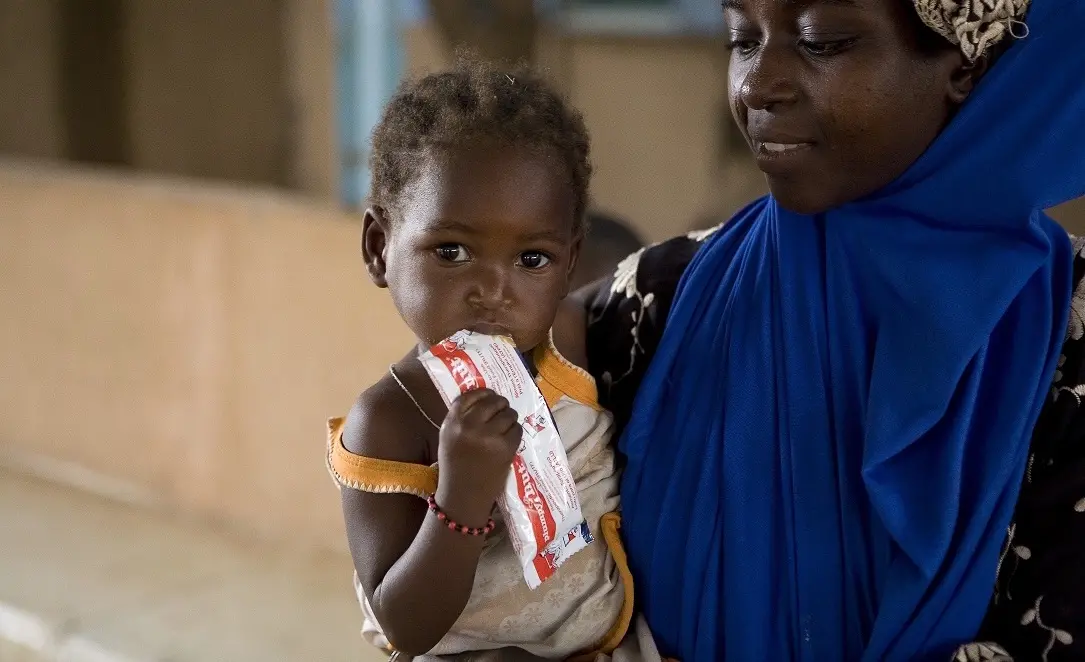
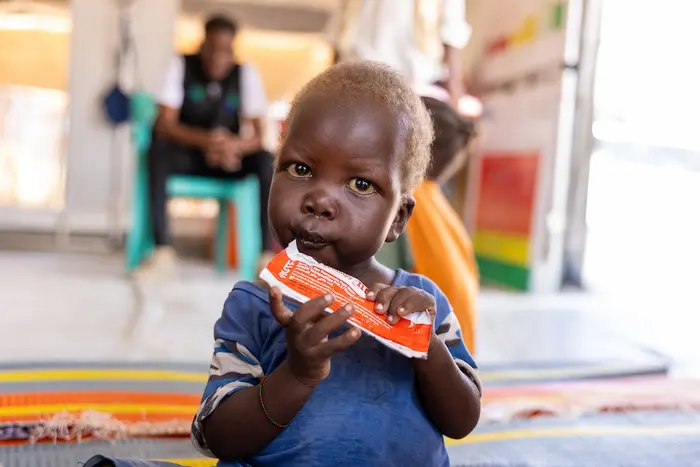
UNICEF and partners use ready-to-use therapeutic food (RUTF), a nutrient-packed peanut paste, to treat children with SAM, delivering it to millions of children in dozens of countries every year.
Without sustained funding, however, millions of children risk missing this lifesaving treatment.
“I have seen how children suffering from wasting come alive when they’re treated with RUTF," UNICEF Executive Director Catherine Russell said. "It has empowered families by putting lifesaving treatment into their hands. No child should die from malnutrition in a world of plenty.”
Fast Facts: 30 Years of Lifesaving Therapeutic Food for Children, Yet Millions More Still Need it
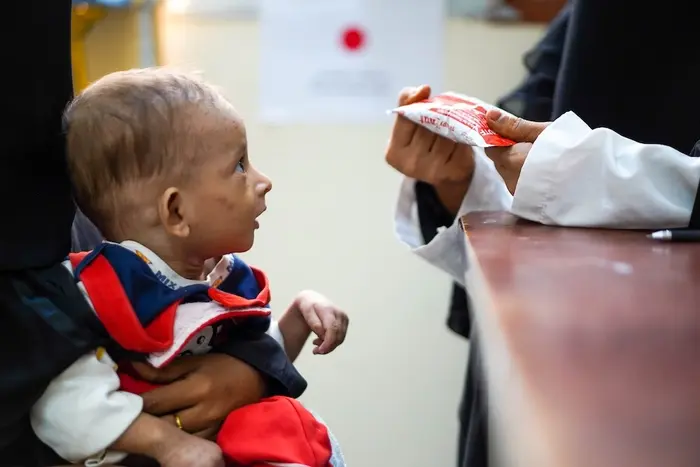
Nine in 10 children treated with RUTF make a full recovery — often within weeks
First introduced in 1996, RUTF revolutionized treatment for child wasting, helping to drive one of the greatest public health achievements in human history. Nine in 10 children treated with RUTF make a full recovery — often within weeks.
Since 2000, the number of children who die from preventable causes before their fifth birthday has dropped by half, from nearly 10 million deaths a year to fewer than 5 million — with RUTF an important contributor.
Before RUTF was developed and approved, treating children with severe malnutrition often meant weeks of hospitalization. For families in remote areas, conflict zones or communities without health facilities, that often meant no treatment at all.
Then RUTF changed everything. For the first time, families could treat their children at home, in their own communities, while visiting medical centers just once a week for check-ups. Treatment programs became much more scalable. Recovery rates improved and mortality dropped significantly in many settings.
Read about what it takes to bounce back from severe malnutrition: Albatou's story
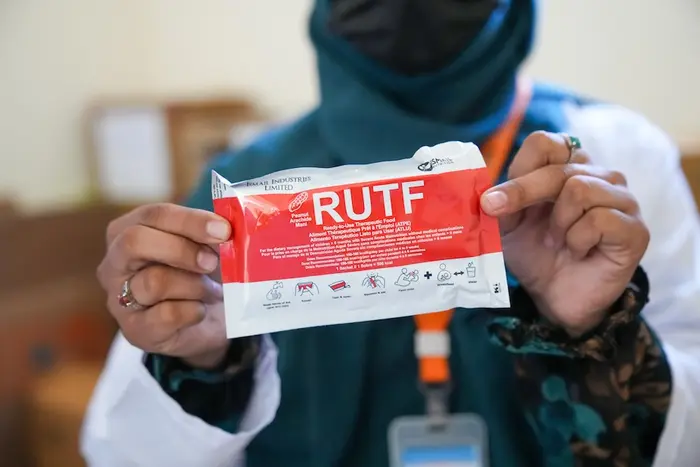
Shelf-stable, easy to administer: what's inside RUTF?
Each packet of RUTF comes ready to use and is easy for a parent or other caregiver to administer, no training required. A blend of peanuts, sugar, milk powder, oil, vitamins and minerals, RUTF doesn't require refrigeration or preparation — no mixing with potentially contaminated water — and stays fresh for up to two years.
One carton of ready-to-use therapeutic food contains 150 packets, or sachets — enough for one six- to eight-week course of treatment to restore the health of a severely malnourished child.
In addition to providing the lifesaving treatment for children with SAM, UNICEF also provides counseling to caregivers on best feeding practices for infants and young children and works with partners to improve access to safe water and primary health care services.
Learn more about how UNICEF supports malnourished children and helps fight child hunger
See how RUTF is made:
UNICEF: procures 80 percent of the world's supply of RUTF
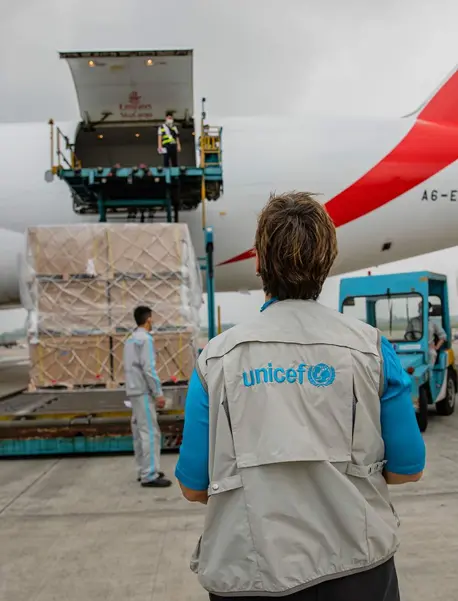
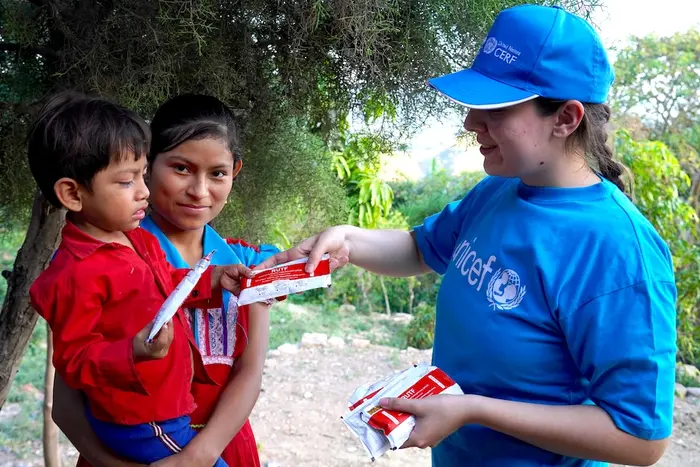
As the global leader in RUTF procurement, UNICEF purchases and distributes an estimated 75 to 80 percent of the world's supply — reaching roughly 9 million children annually. UNICEF works with manufacturers to ensure the product's ready availability and to keep prices down.
UNICEF also works within health systems to support community-based implementation of malnutrition treatment programs that incorporate RUTF.
RUTF's success as a lifesaving treatment exemplifies the power of public-private collaboration. Of the 21 suppliers UNICEF procures it from, 18 are either in or near countries with high levels of child wasting. Local manufacturing is essential for a rapid response to malnutrition crises, especially in the face of global supply chain disruptions.
An emphasis on screening to support early detection and timely treatment
Mujahid was severely malnourished when he arrived with his mother at a UNICEF-supported site for displaced families by the Sudan war. in White Nile State, Sudan. The child had suffered bouts of vomiting and diarrhea during the family's flight from Kordofan, where fighting had intensified.
Community mobilizers going door to door in the camp to screen children and connect them with services identified Mujahid's serious condition and immediately referred him for treatment through the camp's nutrition program, supported by UNICEF. Within a few weeks of receiving RUTF, Mujahid was showing signs of recovery.
“He didn’t eat much when we arrived,” Aziza said. “He would just cry, but his appetite is increasing.”
Early detection and timely treatment with RUTF is key to recovery in acute, severe cases like Mujahid's. UNICEF supports screenings via door-to-door outreach and promotes the use of the mid-upper arm circumference (MUAC) tape, a simple, color-coded, low-cost tool that can be used on the spot to quickly identify malnutrition.
The MUAC tape has been a game changer, especially in remote and emergency settings.
Conflict, poverty and other drivers of child malnutrition
UNICEF estimates that 43 million children worldwide face wasting at any point in time, especially those living in conditions where food and health systems are weak, access to clean water and sanitation is limited and social safety nets are inadequate.
Child malnutrition is linked to household poverty, food insecurity and disruptions in essential services in already vulnerable communities. Armed conflicts, severe droughts, disease outbreaks and other crises continue to fuel high rates of child malnutrition around the world.
Other contributing factors include:
- Globalization and urbanization — trends that have changed food availability, food environments and food practices. Millions of families have left the countryside and moved to cities, leaving behind traditional diets for processed foods that are frequently high in salt, sugar and fat, and low in essential nutrients and fiber.
- More women in the formal workforce — with many receiving little or no support from families, employers or society to help balance work responsibilities with their persistent role as primary caregivers in charge of feeding the children.
- Socio-economic inequities — forcing many families to change the way they eat or feed their children due to poverty and the rising cost of balanced, nutritious diets.
- Climate change — with the loss of biodiversity and damage to water, air and soil causing more and increasingly complex health epidemics and humanitarian crises that pose critical challenges to feeding children sustainably today and for generations to come.
Child Nutrition Fund: reshaping global financial support for malnutrition prevention and treatment
In 2026, UNICEF reported that an estimated 12.2 million children globally suffer from severe wasting and require immediate treatment.
Ensuring that RUTF can reach every child in need without delay requires accelerated action. It requires sustained commitment from governments and donors to prioritize and support child nutrition — and malnutrition prevention — through key system strengthening and immediate, rapid responses to humanitarian crises.
To mobilize more financing for child malnutrition prevention and treatment, and to increase RUTF reach and impact, UNICEF created the Child Nutrition Fund — a joint effort backed by many partners committed to scaling up sustainable nutrition policies, programs and supplies, including RUTF.
Aligned with the Global Action Plan on Child Wasting, the CNF aims to forge new collaborations among countries, donors, partners and civil society organizations to further empower national governments to lead the charge. Catalyzing collective action is crucial as child wasting continues to threaten the lives of millions of children around the world.
Frequently asked questions about RUTF
How long does it take to treat severe malnutrition with RUTF?
Treatment for severe acute malnutrition with ready-to-use therapeutic food (RUTF) typically lasts four to six weeks, depending on a child’s age and condition. A full course usually includes about 150 sachets, for a regimen of two to four per day, to restore essential nutrients and help a child gain weight.
How is RUTF supplied and produced around the world?
To meet global demand, ready-to-use therapeutic foods are produced by a growing network of international and local suppliers. UNICEF works to strengthen RUTF supply chains by supporting local manufacturing, which helps reduce costs, improve delivery times and ensure reliable access in high-need regions.
What are the disadvantages of RUTF?
While RUTF is a highly effective treatment for severe malnutrition, it is not a complete solution. Therapeutic food can be costly to produce and distribute, and it does not address the underlying causes of malnutrition, such as poverty and food insecurity. However, expanding access to RUTF remains a critical step in helping children survive and begin recovery.
How can I help provide RUTF to children in need?
Donate to UNICEF. Contributions support global programs for children in need, including the delivery of ready-to-use therapeutic food and related programs that improve long-term child nutrition and survival.
HOW TO HELP
There are many ways to make a difference
War, famine, poverty, natural disasters — threats to the world's children keep coming. But UNICEF won't stop working to keep children healthy and safe.
UNICEF works in over 190 countries and territories — more places than any other children's organization. UNICEF has the world's largest humanitarian warehouse and, when disaster strikes, can get supplies almost anywhere within 72 hours. Constantly innovating, always advocating for a better world for children, UNICEF works to ensure that every child can grow up healthy, educated, protected and respected.
Would you like to help give all children the opportunity to reach their full potential? There are many ways to get involved.