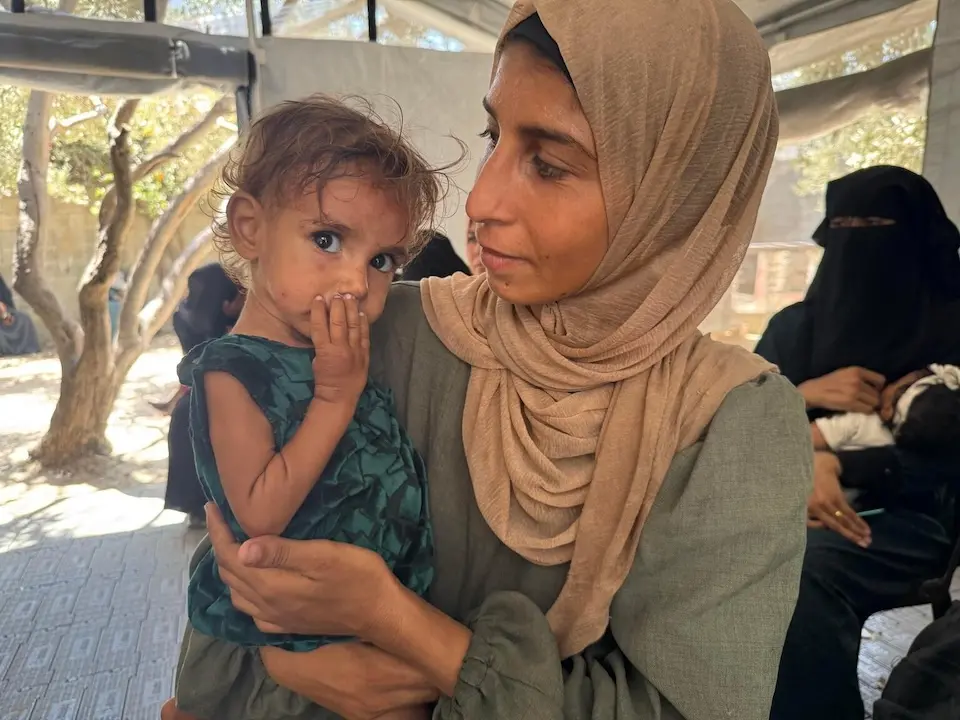
'This Is What Famine in a War Zone Looks Like'
UNICEF is on the ground in the Gaza Strip, delivering services from north to south. UNICEF spokesperson Tess Ingram reports from Gaza City, the last refuge for families in the north.
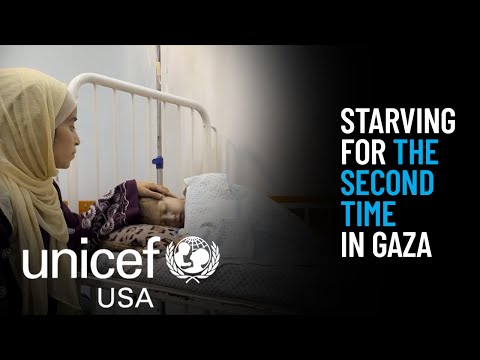
In an intensive care unit in a hospital in Gaza City, a 9-year-old girl named Jana is wasting away from severe acute malnutrition — for the second time. Fifteen months ago, UNICEF spokesperson Tess Ingram met Jana the day UNICEF managed to medically evacuate her to the south, where she recovered after eight months of treatment at a field hospital.
During the ceasefire, Jana and her family returned to the north. Then came the supply blockade, empty shelves and confirmation of famine. Now Jana is starving again. Her sister, Jouri, died of acute malnutrition a few weeks ago. The girls' mother, Nesma Ayed, is facing the loss of another child. "Every day I see my daughter fading before my eyes," Ayed said. "The pain is indescribable, especially when she had no illnesses before."
Watch the video: 'How is it that we are in a position where a child like Jana has to suffer twice?'
UNICEF is working around the clock to aid children caught in crisis
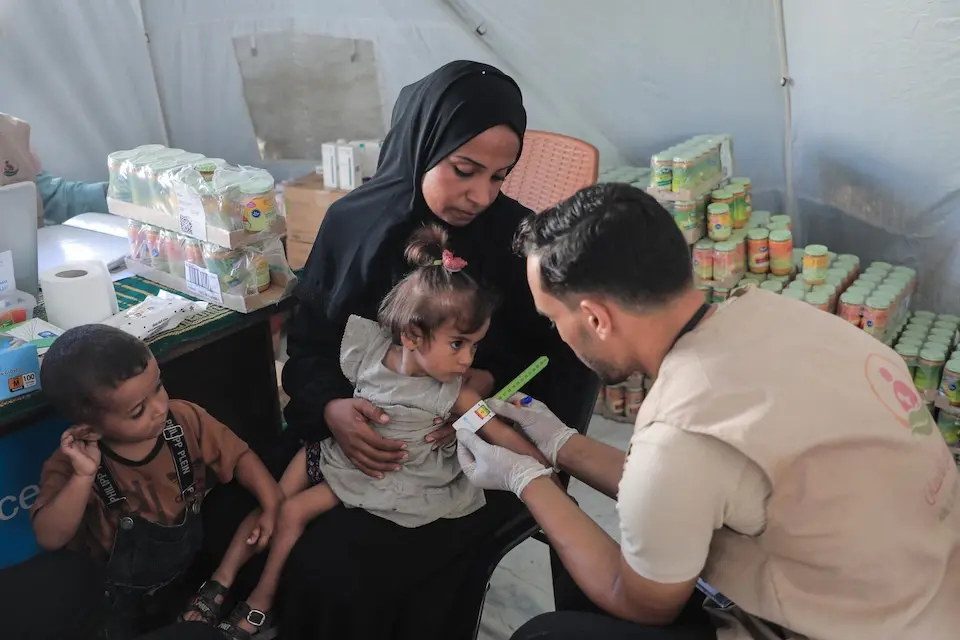
The rate of famine continues to rise at an unprecedented pace. In the first two weeks of August, more than 7,200 children were admitted for treatment of acute malnutrition, following over 13,000 admitted in July, the highest monthly figure ever recorded in Gaza.
Families no longer have reliable access to food, safe water or basic health services. This is all taking place against the backdrop of ongoing military operations in northern Gaza, which in recent days have displaced thousands more children and their families.
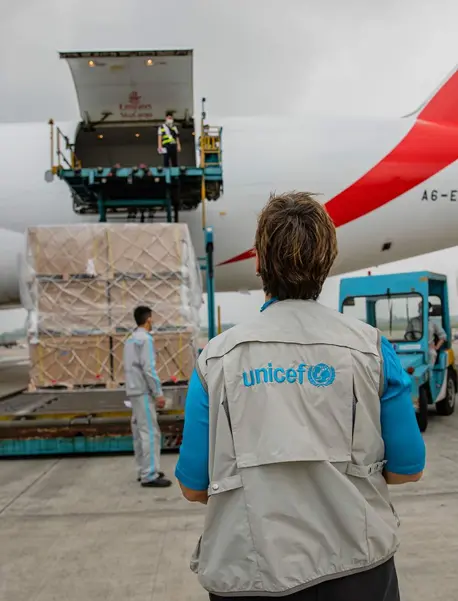
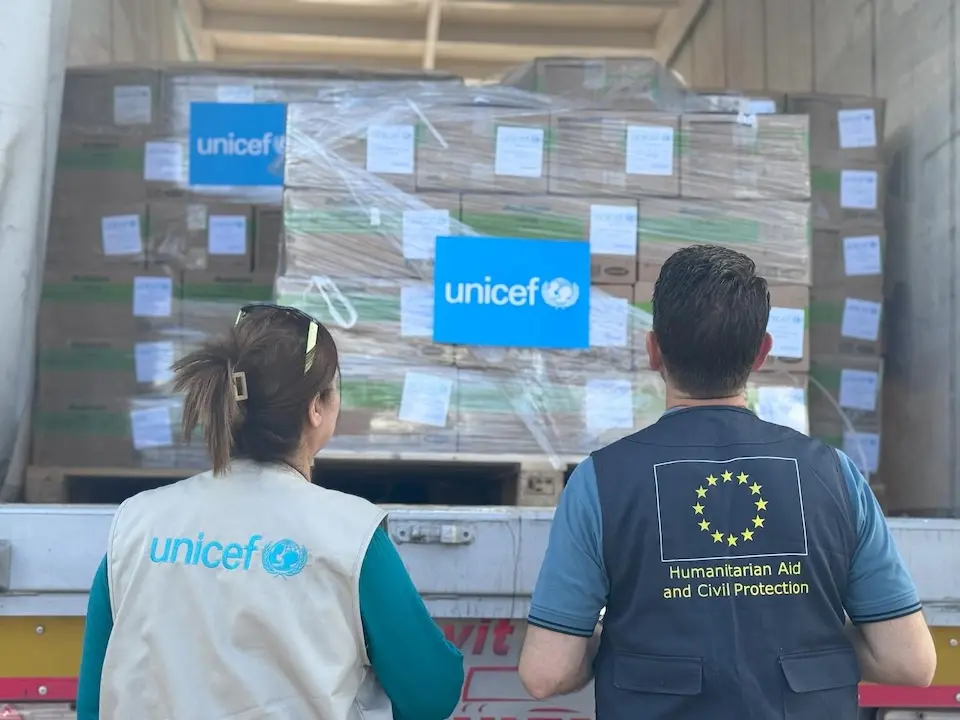
With intense coordination alongside local communities, UNICEF managed to bring in 340 truckloads of critical nutrition, health and WASH (water, sanitation and health) supplies in July and August. UNICEF also delivered vaccines for routine immunizations — important for protecting children who are already weakened by malnutrition and lack of access to safe water — and is scaling up vaccination activities using mobile teams and fixed health facilities to reach as many children as quickly and safely as possible.
UNICEF's multi-sectoral famine response plan: key updates
Deteriorating conditions in Gaza require an urgent scale-up of services. UNICEF has developed a multi-sectoral famine response plan, placing nutrition at the core. Below, some key updates in the areas of nutrition and health.
Nutrition
In the past week, UNICEF has:
- dispatched more than 1,400 packets of ready-to-use complementary foods to implementing partners, supporting over 1,400 infants and young children for a minimum of two weeks
- provided over 2,271 cartons of ready-to-use therapeutic food (RUTF) , enough to treat more than 3,000 children suffering from acute malnutrition
- delivered 4,600 high-energy biscuits for pregnant and breastfeeding women for the next two weeks
- prioritized moving nutrition supplies north, enabling RUTF, complementary foods, hygiene kits and vaccines to reach Gaza City
This effort is designed to prepare for and respond to potential and increased displacement in the North, with direct distribution through partners.
Health
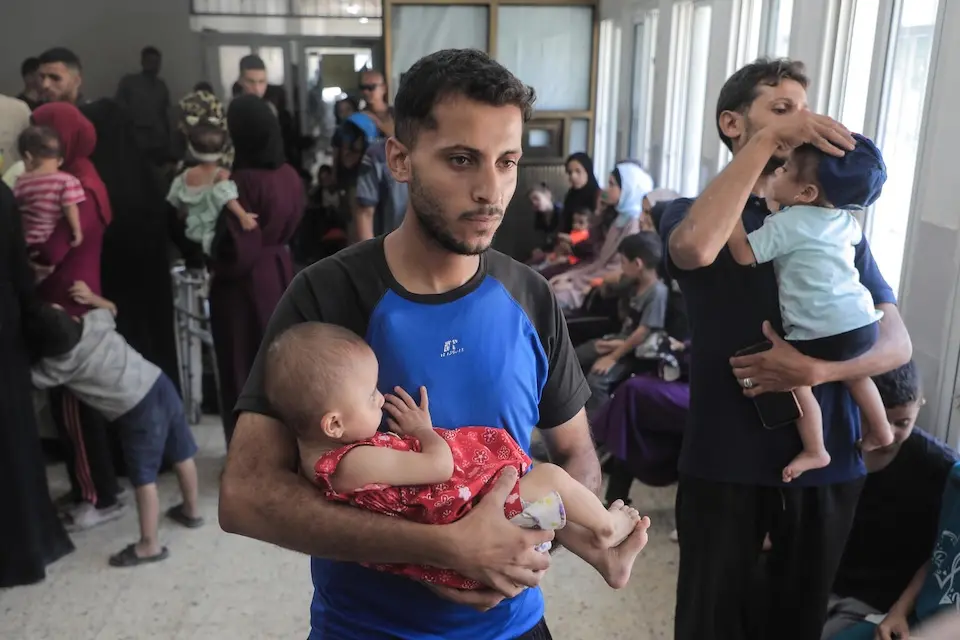
More than 60 percent of primary health care facilities are nonoperational due to destruction, evacuation or lack of fuel. An estimated 2,500 babies lack access to critical newborn care. To address urgent needs, UNICEF has:
- added 8 health facilities and medical points, with 10 more planned in the coming days
- expanded the number of mobile health teams from 10 to 40, offering an integrated package of services for both health and nutrition across Gaza
- installed 10 large tents at Nasser Medical Complex to expand triage and emergency capacity
- delivered essential newborn supplies to five neonatal intensive care units (NICUs) — a vital step, with only three ventilators available for premature infants across all of Gaza
- distributed 16,000 packs of diapers to NICUs, hospitals and primary health care facilities, with 20,000 more planned for distribution
- expanded fuel support for mobile health teams from three to five days a week, enabling better and more intensive outreach to shelters and communities
'The unthinkable in Gaza City has already begun'
At a UN briefing on Sept. 4, 2025, Tess Ingram reported on the nine days she recently spent in Gaza City, meeting with families who had fled their homes in fear, already displaced, now displaced again.
“The collapse of essential services is leaving the youngest and most vulnerable fighting for survival," Ingram said. “Malnutrition and famine are weakening children’s bodies as displacement strips them of shelter and care, and bombardments threaten their every move. This is what famine in a war zone looks like and it was everywhere I looked in Gaza City."
An hour in a nutrition clinic is enough to erase any questions of whether there is a famine, said Ingram. “Crowded waiting rooms, parents in tears, children fighting the double-punch of disease and malnutrition, mothers who cannot breastfeed, babies losing their vision, their hair and their strength to walk."
The world is sounding the alarm about what an intensified military offensive could bring — a catastrophe for the almost 1 million people who remain there. — Tess Ingram, UNICEF spokesperson
"The world is sounding the alarm about what an intensified military offensive could bring — a catastrophe for the almost 1 million people who remain there," Ingram continued. "But we cannot wait until the unthinkable has happened to act ... This unthinkable is not looming — it is already here. The escalation is underway."
UNICEF continues to call on Israel to review its rules of engagement to ensure children are protected, as is required under International Humanitarian Law, on Hamas and other armed groups to release all the remaining hostages, and on Israel to allow sufficient aid to enter Gaza and safe and consistent access for humanitarian personnel to deliver lifesaving assistance to families, wherever they are.
HOW TO HELP
There are many ways to make a difference
War, famine, poverty, natural disasters — threats to the world's children keep coming. But UNICEF won't stop working to keep children healthy and safe.
UNICEF works in over 190 countries and territories — more places than any other children's organization. UNICEF has the world's largest humanitarian warehouse and, when disaster strikes, can get supplies almost anywhere within 72 hours. Constantly innovating, always advocating for a better world for children, UNICEF works to ensure that every child can grow up healthy, educated, protected and respected.
Would you like to help give all children the opportunity to reach their full potential? There are many ways to get involved.