From Scarcity to Security: Safe Water Solutions for Colombia and Egypt
Highlights
UNICEF and the Baxter Foundation are partnering to advance sustainable, climate-resilient water, sanitation and hygiene access in Colombia and Egypt.
In an atlas, Colombia and Egypt might seem to have little in common: nearly 7,000 miles apart, on different continents, in different hemispheres. Yet they share something fundamental — something that connects us all: the need for clean water.
Rural, often remote, areas of Colombia and Egypt lack access to safe water because of weather, climate change and natural disasters. Through an innovative partnership, UNICEF and the Baxter Foundation are investing in access to safe water, sanitation and hygiene (WASH) services in both countries by providing technology, education and training. The initiative empowers governments and communities to build and maintain resilient, climate-smart and dignified WASH infrastructure.
As climate-driven water challenges rapidly intensify, affected regions require long-term, sustainable solutions that support communities and governments in developing new water systems for homes and schools and rehabilitating vital WASH facilities in public health centers.
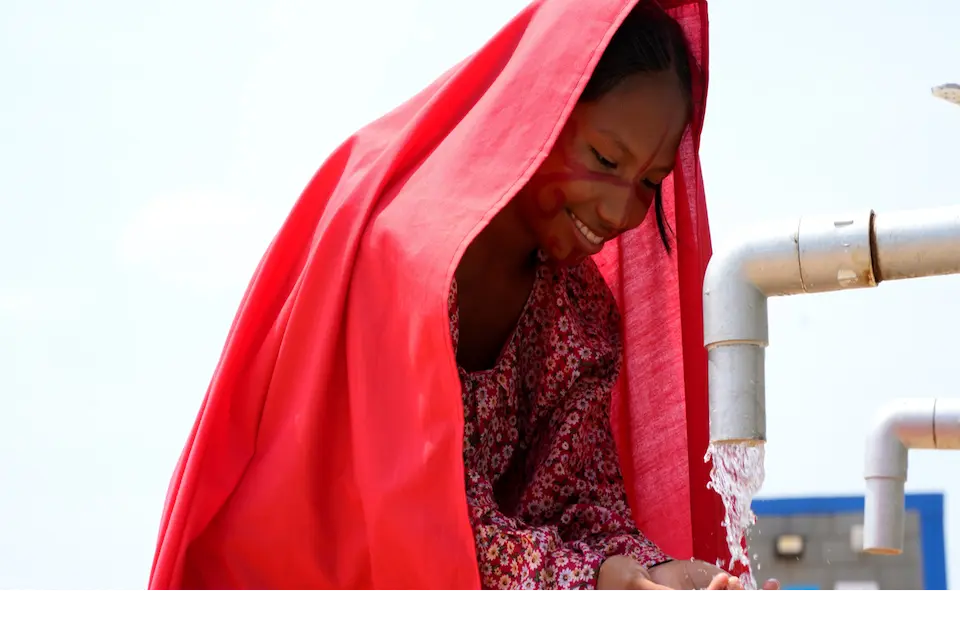
Closing the water gap in La Guajira and Chocó
For far too long, more than 1 million people living in the rural, remote areas of La Guajira and Chocó in Colombia have lacked regular access to safe water and dignified sanitation services. The arid landscape of La Guajira receives insufficient rainfall. Existing natural resources and reservoirs are often far away and non-potable. In some areas, water can be brought in by the truckload, but that costs more money than most households can afford.
To address these challenges, UNICEF and partners like the Baxter Foundation have worked to rehabilitate water systems, promote basic sanitation and monitor water quality, among other initiatives. The Baxter Foundation has committed a total of $4 million in Colombia to support this crucial work through 2027.
These efforts are already delivering measurable results. Equally important, the partnership’s success in Colombia has created a blueprint for implementing climate-smart water projects in other parts of the world.
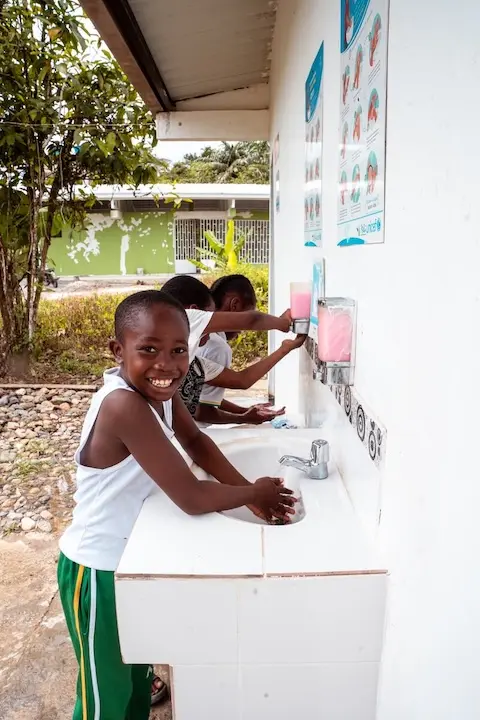
Improved WASH infrastructure in Colombia has benefited more than 20,000 people, including more than 7,500 children and adolescents. Sixteen community water systems were built across six areas, giving more than 4,000 families access to clean water.
To achieve these results, the program assessed WASH systems in communities and schools and implemented key findings — upgrading water collection, installing pipes and solar panels, testing water quality, maintaining wells and pumps, setting up a control room and repairing damaged infrastructure.
Technical studies and engineering designs for sustainable water access solutions have been completed, laying the groundwork to benefit 26 rural communities — about 3,100 people. Efforts will focus on alternative water systems like rainwater harvesting and low-cost, nonelectric water filters, with community involvement and a market-based approach to create livelihoods.
As in many underserved, remote communities, in La Guajira, women and girls take on the work of fetching water for the household. Risking injury and danger, they navigate challenging terrain just to reach sources of unsafe, contaminated water. For girls, this work often comes at the cost of school attendance and personal safety, limiting their access to equitable education and greater economic participation.
UNICEF and a local community partner set up and strengthened three community-led WASH committees, led largely by women and girls who are trained to operate and sustain the rehabilitated systems. These local committees manage every facet of their water systems, from fee collection and administration to complex hydraulic and electrical repairs. Because of these actions, thousands of families now have clean water and the tools to keep it that way.
Egypt’s water crisis: Stress on the Nile amid climate change
Climate change poses major risks for Egypt. Rising sea levels threaten the Nile Delta, one of the world’s most vulnerable regions, while extreme weather is becoming more frequent. The country also faces serious water scarcity, relying on the Nile and water sources outside its borders for about 97 percent of its supply. Most of the country lies in the Sahara Desert, and rainfall is too scarce to adequately replenish the water supply. Climate change is putting the Nile under growing pressure, bringing more droughts, irregular rainfall and higher evaporation in Egypt’s extreme heat, especially in its southern cities.
For a population of 105 million that is expected to surge in coming decades, dependence on the Nile River for domestic, industrial and agricultural use is increasingly unsustainable. In 2023, UNICEF, supported by $2.5 million from the Baxter Foundation, introduced WASH programming into four key governorates — Assiut, Aswan, Luxor and Qena — in Upper Egypt. This region has far less industry and infrastructure than northern Egypt, making targeted intervention critical.
The impact has been remarkable. More than 187,000 children in 300 schools across Upper Egypt are learning healthier water and hygiene habits from 600 trained teachers. At the same time, 20,600 people from 4,120 families — including 12,360 children — have gained access to safe water or improved sanitation, and 660,000 people have benefited from greener health services, such as facilities that use solar-powered water pumps.
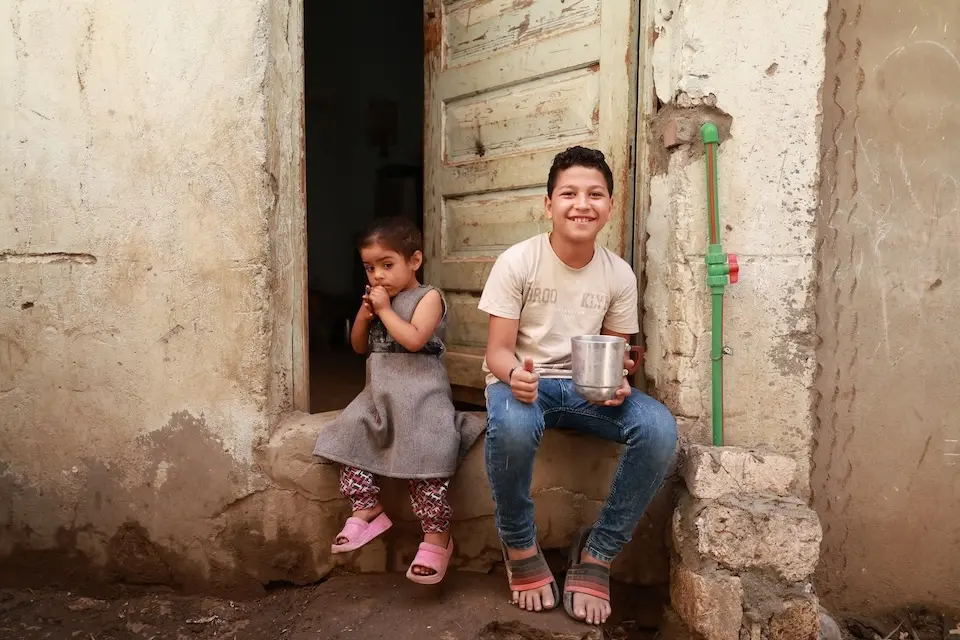
As the work continues, UNICEF will support 150 schools and 40 nurseries to create and implement plans to address climate change and mitigation strategies to help them better adapt to water shortages and climate impacts. This includes training teachers, caregivers and children through workshops and awareness activities on safe water, clean environments and good hygiene.
UNICEF is also teaming up with local water companies to help vulnerable families get connected to water and sewage systems. They use a special “revolving fund” that makes interest-free loans to households. Families pay back the loans in monthly installments. As the money is repaid, it goes back into the fund to help other families that rank among the 4,000 most vulnerable households in these governorates.
Video: Families in Egypt gain access to water utilities through an innovative finance tool
Empowering communities through resilient, sustainable, climate-smart water solutions
UNICEF’s approach to WASH programming shows that resilient, sustainable systems are achievable even in regions hardest hit by climate-driven water scarcity and poor sanitation. By partnering with governments, communities, and private-sector partners like the Baxter Foundation, UNICEF builds and maintains climate-smart water systems that also create social and economic opportunities, especially for women and girls. The impact goes far beyond numbers: safe water, improved hygiene, stronger education, expanded employment and resilient infrastructure all combine to give communities the tools to thrive despite ongoing climate challenges. Through sustainable, community-led solutions, UNICEF demonstrates that lasting change is possible when clean water and empowerment go hand in hand.
UNICEF works around the world to ensure all children have access to the safe water and sanitation they need to survive and thrive. Your contribution can make a difference. Please donate.
HOW TO HELP
There are many ways to make a difference
War, famine, poverty, natural disasters — threats to the world's children keep coming. But UNICEF won't stop working to keep children healthy and safe.
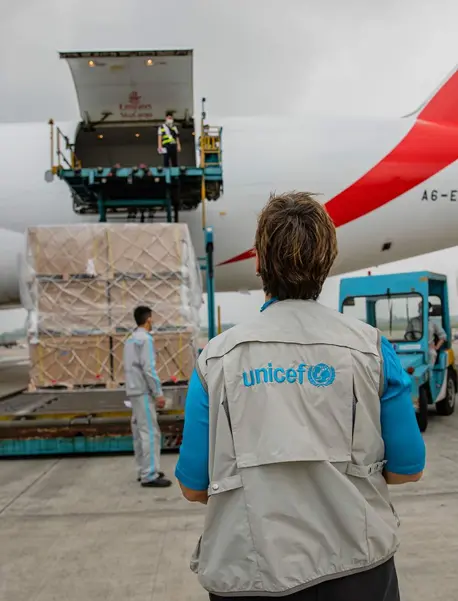
UNICEF works in over 190 countries and territories — more places than any other children's organization. UNICEF has the world's largest humanitarian warehouse and, when disaster strikes, can get supplies almost anywhere within 72 hours. Constantly innovating, always advocating for a better world for children, UNICEF works to ensure that every child can grow up healthy, educated, protected and respected.
Would you like to help give all children the opportunity to reach their full potential? There are many ways to get involved.