'I Didn't Know Where My Parents Were': A 13-Year-Old's Escape From Flash Flood in Nepal
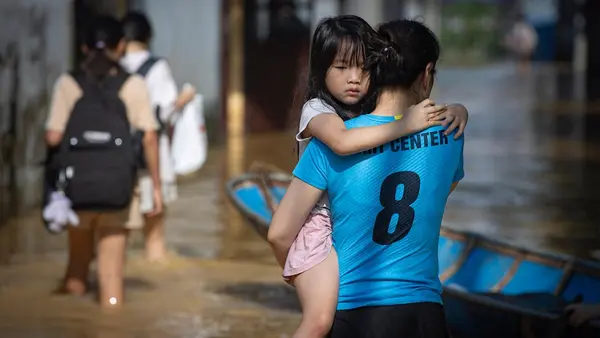
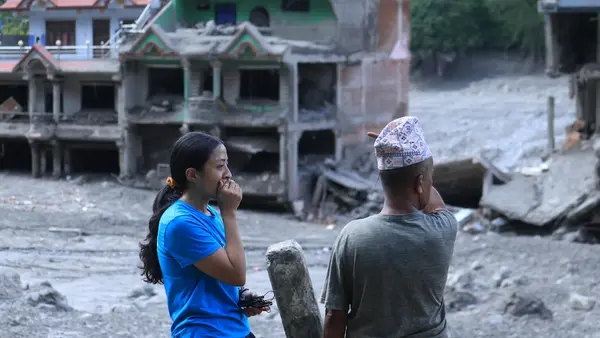
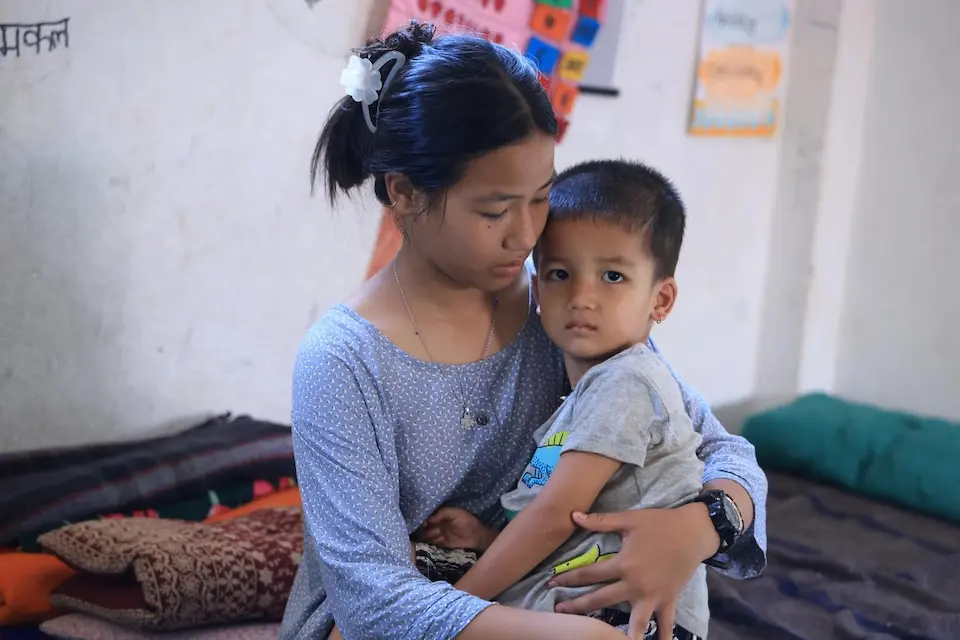
As the flood swept into the village of Bhaise in Nepal's Nuwakot district, Sonika, 13, ran uphill carrying her little brother. Behind her, the home where her family had lived for generations was swept away.
Nuwakot, Nepal: Thirteen-year-old Sonika was at home with her family in the village of Bhaise in Nepal's Nuwakot district on Aug. 26, 2026 when they got word that a massive flash flood was heading their way. Fast.
Her parents were in the middle of rituals marking the death anniversary of their eldest son. Sonika had stayed home from school that day with her 9-year-old sister, Monika, and 3-year-old brother, Sajan.
Her mother handed Sajan to Sonika and told her to run as quickly as she could. “I ran with him up the slope," Sonika says. "When I turned back, my house was swept away.” She kept running, carrying her brother through the jungle as people around them shouted for everyone to get to higher ground.
I didn’t know where I was, where my parents were. I couldn’t reach them on the phone. — Sonika, 13
What frightened her most was not knowing whether her family was safe. “When I was running with my brother, I was very scared. Mainly because I was separated from my family.”
Video:
A village disappears in an instant
Sonika's father, Som Bahadur Nagarkoti, was at home when the flood came. A call from his brother, who worked at a hydropower plant in Rasuwa, gave the family only minutes to escape.
“Not even five minutes after we hung up, the waters had reached our village and flattened it completely right in front of our eyes,” he says.
Som, 50, has lived in Bhaise all his life. His father and grandfather lived there before him. The family has been in the settlement for around six generations.
When we looked up, there were huge clouds of dust, and when you looked down, you could see the water taking down buildings in its wake.
There had been floods before. But nothing like this. “When we looked up, there were huge clouds of dust, and when you looked down, you could see the water taking down buildings in its wake,” he says.
The road was swept away. Vehicles and buses disappeared underwater. Homes, possessions and family property were gone within minutes. “At that point, I couldn't process what was happening,” Som says. “It was only later, when we had reached safety up high, that's when it hit me, and that's when I started to cry.”
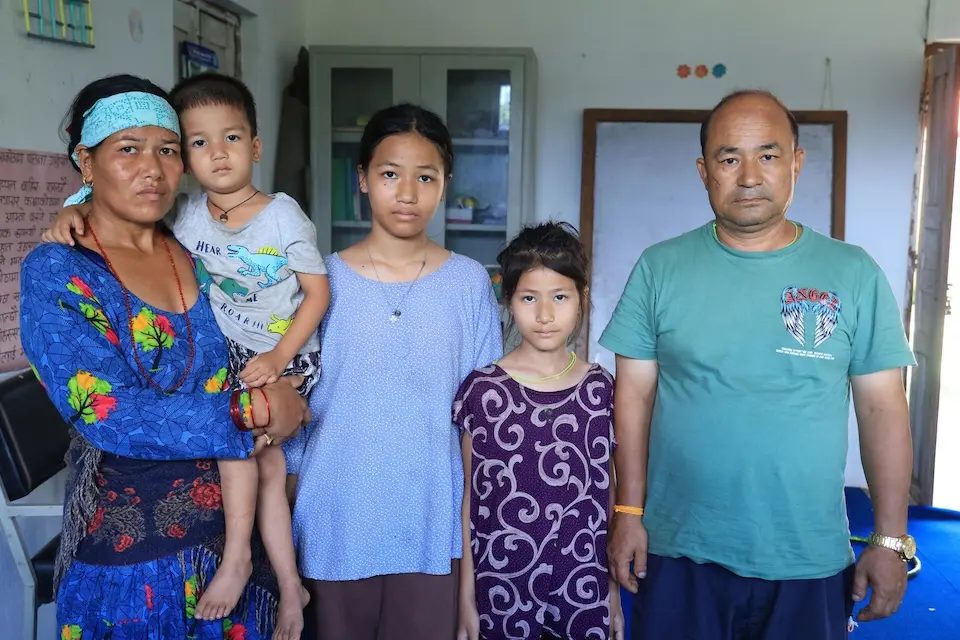
For Sonika's mother, Bhagawati, the same moment is difficult to describe. She had gone to check on the family's chicken coop when she saw the flood coming. She called her husband and ran. “I only had time to call my husband and take a few steps, when I saw my house fall," she says.
Bhagawati ran without shoes, not knowing where her children were. “I kept yelling for my children.”
About an hour later, the family was reunited. “My brother-in-law brought my son to me, placed him on my lap,” Bhagawati says. “In an hour's time I was finally reunited with my family. I was weeping. It was from the relief, I think.”
Nowhere to go back to
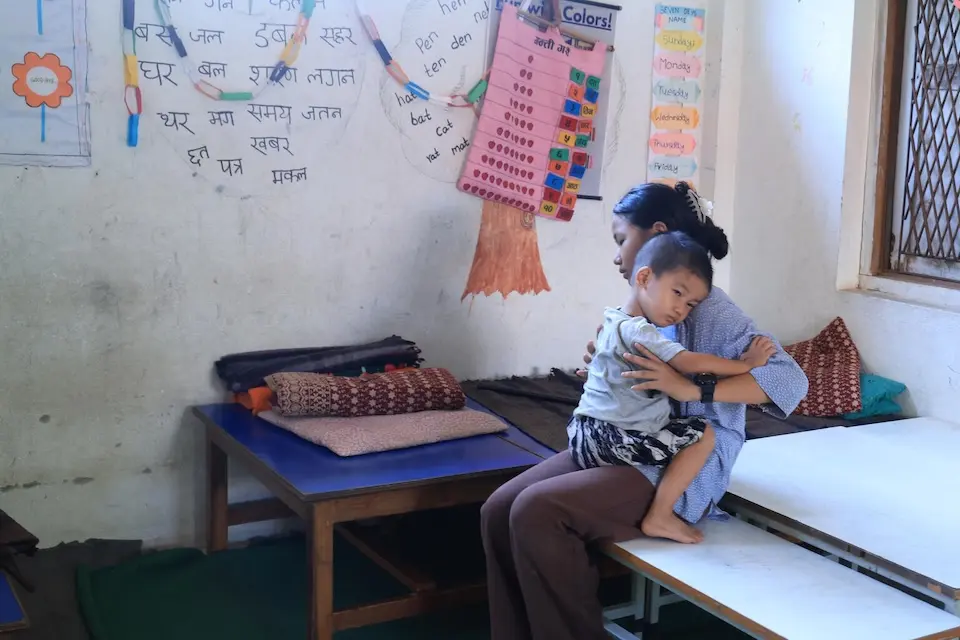
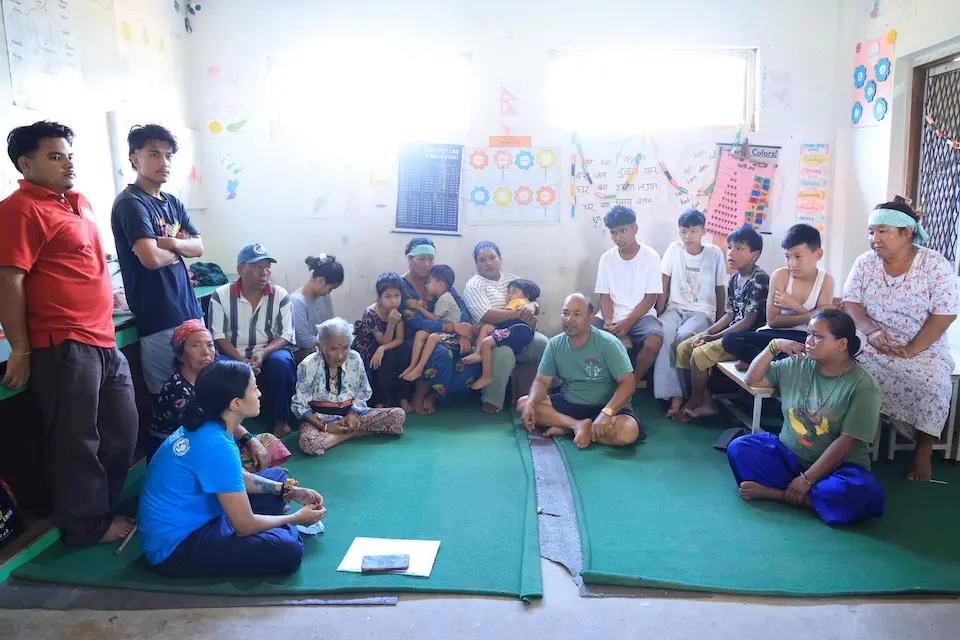
The family is now sheltering at a school in a settlement higher up from Bhaise, along with other families who fled the floods. They have little more than what they were able to carry. “We just have the clothes on our back,” Bhagawati says.
Sajan has scratches on his foot and no shoes. The family needs basic items including clothes, underwear, toothbrushes and sanitary pads. With shops closed and roads and bridges damaged, buying these things is difficult even for families who have money.
For the children, the shock of what happened has not gone away. Bhagawati says her younger daughter has been crying and waking during the night, afraid that the flood will come again. Her young son has been in shock.
During the journey through the jungle to the neighboring community, the children repeatedly asked for food and water. When they finally reached safety, they were given beaten rice and lentil snacks, but there was initially no water.
We can't go back, there's nothing left of our homes. Where do we go? What do we do?
Now, the family is trying to work out what comes next.
“We can't go back, there's nothing left of our homes,” Bhagawati says. “Where do we go? What do we do?”
For Sonika, one of the immediate questions is school. She is in Grade 7. Her school, like so many things in the area, has been disrupted by the disaster. One of her friends has already gone to Kathmandu.
The ordinary things of a 13-year-old's life — school, friends, home — have suddenly become uncertain.
UNICEF is working with partners to keep children safe
The floods that swept through Rasuwa, Nuwakot and Dhading districts on Aug. 26 have left an estimated 17,000 children in need of humanitarian aid. At least 19 schools have been destroyed or damaged, leaving 10,000 school-age children in need of urgent support to continue their education.
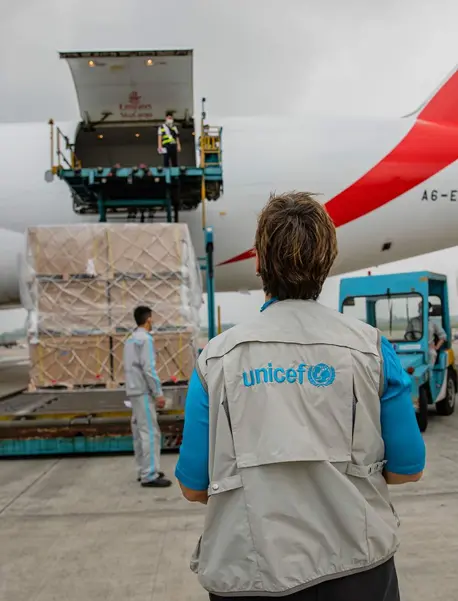
UNICEF is working with the Government of Nepal and humanitarian partners to support children and families affected by the floods. Emergency supplies, including hygiene kits, are being sent to the hardest-hit communities, alongside support for health, nutrition, water and sanitation, education and child protection.
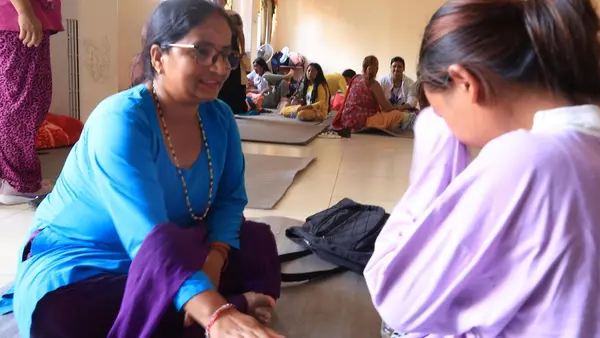
Psychosocial support teams have also been mobilized to help children and families cope with what they have experienced. UNICEF is working with the Government to identify, register and reunite children who may have been separated from their families, and to provide emergency cash assistance to affected households.
Learn more about Nepal's flash floods and UNICEF response
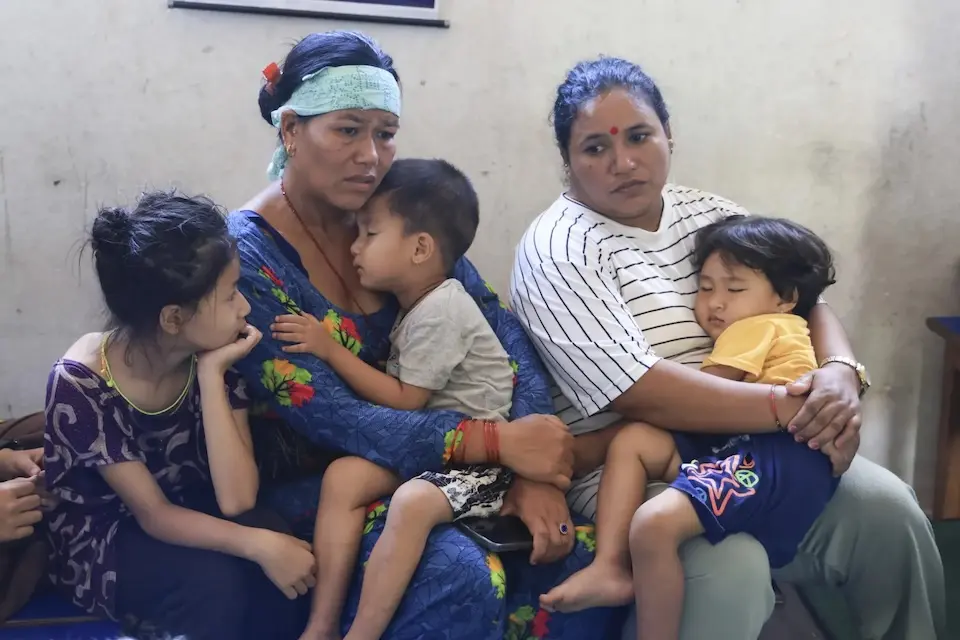
For families like Sonika's, the first priority is still much more basic: a safe place to sleep, food and water, clean clothes and the chance for their children to return to some sense of normality.
Her father is thinking about how the family will rebuild when there is no home to return to. “All my ancestral property and everything I owned myself, it's all gone,” he says. “My family is safe, so at least I'm happy about that.”
Support UNICEF's lifesaving work for children
This story was adapted from unicef.org
HOW TO HELP
There are many ways to make a difference
War, famine, poverty, natural disasters — threats to the world's children keep coming. But UNICEF won't stop working to keep children healthy and safe.
UNICEF works in over 190 countries and territories — more places than any other children's organization. UNICEF has the world's largest humanitarian warehouse and, when disaster strikes, can get supplies almost anywhere within 72 hours. Constantly innovating, always advocating for a better world for children, UNICEF works to ensure that every child can grow up healthy, educated, protected and respected.
Would you like to help give all children the opportunity to reach their full potential? There are many ways to get involved.