Restrictions Alone Won't Keep Kids Safe Online. Here's What Research Says Might
Restrictions play an important role in the protection of children online, but research suggests that habit may do more for a child’s safety than any rule can. The case for parent-led digital literacy.
Social media and AI pose serious risks to children
I find myself cheering when I hear a parent say they have put tough limits on their children’s screen time, or when policymakers push social media companies to strengthen parental controls on their platforms.
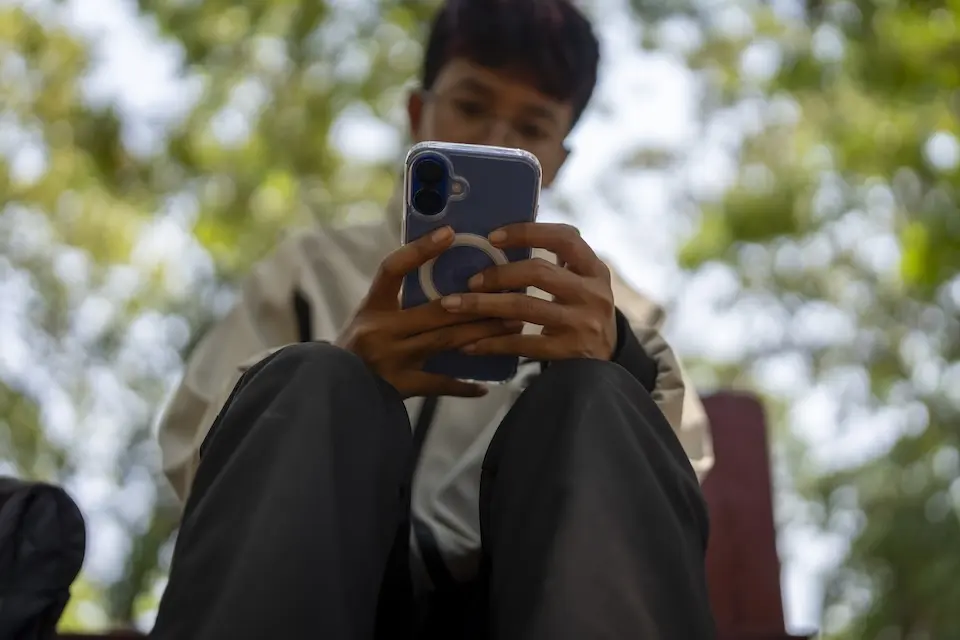
They are responding to real evidence that social media and AI, for all the good they do, pose serious risks to children. States are banning phones in classrooms. Age-verification laws are moving through legislatures. Parents are installing monitoring apps and negotiating screen-time contracts at the kitchen table.
As part of Meta’s recent $18 billion settlement for failing to fully reckon with what its social media platforms were doing to the teenagers using them, it agreed to new set time limits, age checks and more. In its just-released report detailing online harm to children in multiple countries, UNICEF has called for strengthened laws, regulations and safer digital platforms.
Restrictions, clearly, are having their moment.
I don’t doubt this instinct or its importance. I doubt it is enough.
I've been looking at some of the research behind this current wave of bans and controls, and the evidence points in an additional direction, to something harder to legislate and perhaps more impactful.
A tolerant, supportive parenting style helps build judgment
Research has found that restrictions tend to follow problems rather than prevent them. One multi-year study of Dutch adolescents found that when a teenager's problematic social media use worsened, parents responded by tightening in-the-moment restrictions. Those restrictions, though, didn't provide any later improvement.
To be clear, this isn't to say rules don't matter. There's real evidence, for instance, that specific, narrow rules around bedtime device use show real benefit for adolescents, particularly before problematic use has set in. But add it all up, and while restriction can reduce exposure, it cannot build judgment. And judgment must be a central part of the solution.
A kid who believes a parent is genuinely paying attention to their life, not just their screen time, develops better capacity for judgment.
What builds judgment? The most consistent theme in this research is the quality of the relationship between the parent and child. A kid who believes a parent is genuinely paying attention to their life, not just their screen time, develops better capacity for judgment.
One study of social media influence identified three parenting styles and found that a "tolerant and supportive" approach predicted better outcomes over time than either of two more restriction-heavy profiles. The theory researchers offer is almost tender: Kids take a rule to heart when it arrives wrapped in warmth and trust, not when it's handed down as a boundary from outside.
And that's where parent-led digital literacy comes in, not as a separate fix, but as what relationship-based parenting looks like when the subject is a feed or an AI chatbot. It teaches kids to question an algorithm, to spot a deepfake, to pause before believing a dramatic clip. Rules and relationships both play a role, but are doing different work. One can reduce a child's exposure to harm. Only the other builds the judgment to navigate it when the exposure comes anyway.
Imagine parents or caregivers sitting down with their children to talk about what showed up in their feeds that day, sharing what delighted, surprised, scared and concerned them.
Imagine parents or caregivers sitting down with their children to talk about what showed up in their feeds that day, sharing what delighted, surprised, scared and concerned them. Perhaps they watch a social media video together and discuss their learnings — while also enforcing a screen time limit. This would give a parent something concrete to do with a child in a way that can help build judgment.
Critical to this, according to some of the research, is that the conversation should run in both directions. Parents and caregivers can monitor what their kids are seeing while also admitting what they don't understand, letting their kids teach them something in return. A mutual conversation treats the young person as someone with something to offer, not only someone to be supervised. Having spent time with young people through our own UNICEF USA networks, I can attest that such mutual conversations — on any topic — have benefits going in both directions. Our website has useful advice for parents on how to protect their child's online privacy.
Keeping children safe online is a shared responsibility
Of course, the burden of keeping children safe online cannot fall on children themselves. And while parents and caregivers have a critical role to play, they can’t do it alone either. Tech companies, governments, regulators and law enforcement have to step up in new ways. Other key stakeholders include teachers and schools — where commitments to digital literacy, like financial literacy before it, is gaining steam. Half the states now have some media literacy law on the books, and AI-specific guidance is spreading even faster.
That’s good. But the importance of household habits cannot be ignored. The family that’s practiced in talking honestly about what each of them is finding online will keep adapting as technology shifts, in a way no fixed lesson plan can.
The family that’s practiced in talking honestly about what each of them is finding online will keep adapting as technology shifts, in a way no fixed lesson plan can.
If this signal in this research is true, the decision it points to goes beyond which platform to ban or which bill to pass. The decision that also matters starts at home tonight: whether a parent and child have the habit of talking, honestly and often, about what they're each finding out there and whether either one is willing to learn something from the other.
When my children were young in the pre-smartphone days, we worried most about the influence of television, so we turned the television off in our home for two years. Were my children better off because of it? I don’t know. But I do know they were better off because we talked regularly about what was happening in the world, our community and among their friends.
Today, kids need some distance from platforms and algorithms built to hold their attention hostage. No doubt. But perhaps even more, they need the adults in their lives to help them build the judgment capable of withstanding the onslaught of information that will continue to pour into their lives regardless of any rule we write.
HOW TO HELP
There are many ways to make a difference
War, famine, poverty, natural disasters — threats to the world's children keep coming. But UNICEF won't stop working to keep children healthy and safe.
UNICEF works in over 190 countries and territories — more places than any other children's organization. UNICEF has the world's largest humanitarian warehouse and, when disaster strikes, can get supplies almost anywhere within 72 hours. Constantly innovating, always advocating for a better world for children, UNICEF works to ensure that every child can grow up healthy, educated, protected and respected.
Would you like to help give all children the opportunity to reach their full potential? There are many ways to get involved.