Faith, Trust and Child Well-Being in Nigeria
Highlights
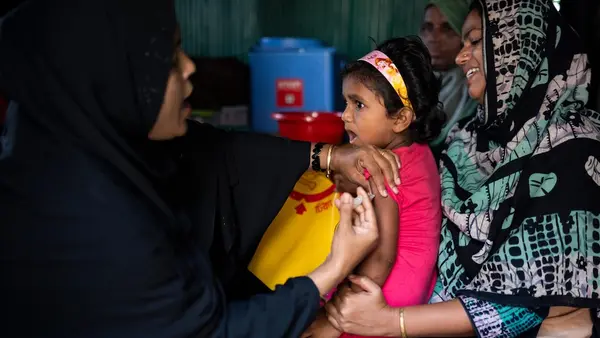
- Religious and community leaders in Nigeria are helping to counter vaccine hesitancy and increase trust to reach children with immunization
- Nigeria's government-led, UNICEF-supported 2025-2026 national vaccination campaign reached 120 million children with protection from measles, rubella and polio, all preventable diseases
With support from UNICEF, religious leaders are helping to improve immunization coverage in their communities, including among the hardest-to-reach children. How one of these champions assisted a massive campaign in Nigeria to protect kids from measles, rubella and polio.
Strengthening childhood vaccination and community health in Nigeria
When Goni Mai Hula's voice carries across his Tsangaya, children pause and neighbors listen. It is a call rooted in faith, urging reflection and togetherness.
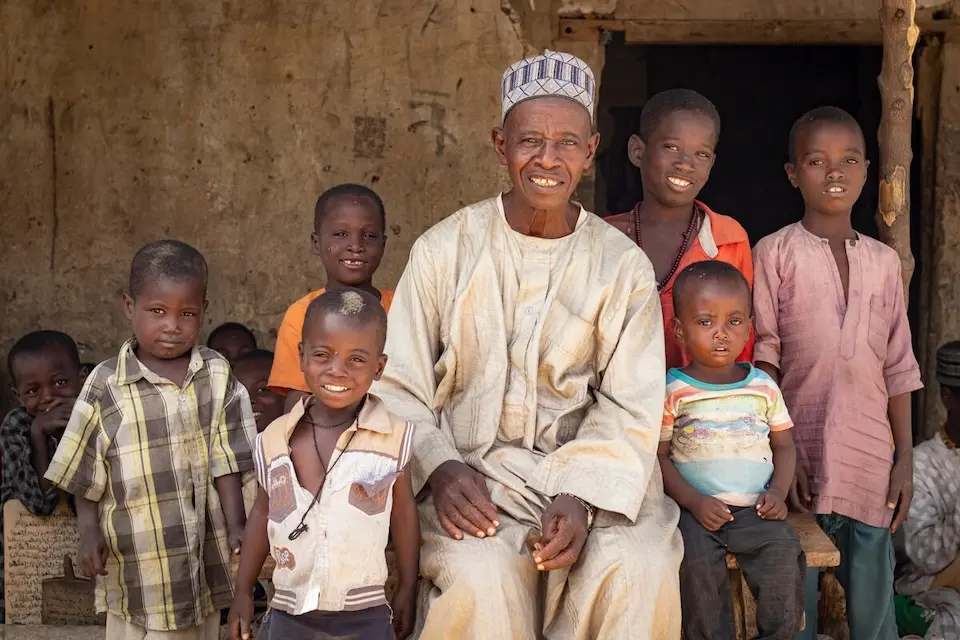
The 60-year-old grandfather and religious teacher in Dala, Borno state, northeast Nigeria, founded his Tsangaya — a religious seminary — more than four decades ago on the belief that learning should nurture both faith and well-being.
Over the years, his seminary has welcomed children from as far as neighboring Niger, shaping generations in moral and spiritual discipline. It has since become one of the most respected Qur’anic education centers in the region.
He carries the calm authority of a teacher who has guided generations. His weathered face softens when children gather around him. Learning here has always been as much about compassion as it is about scripture.
"I have lost count of the number of children who have graduated from this center," Hula says. "I maintain regular contact with my students through social media platforms like WhatsApp, and they keep me updated on their lives. Many have gone on to establish their own Tsangayas, while others have pursued formal education and are now employed. Some have even started their own businesses."
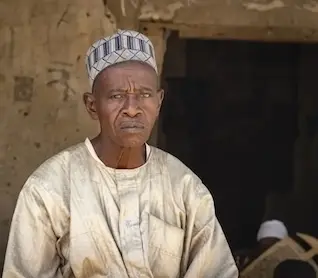
On a day in mid February 2026, seated in the shade of his Tsangaya's clay walls, dressed in a pale kaftan and patterned cap, Hula welcomed a visit from health workers. It was a pivotal moment for Dala, part of the second phase of an integrated national vaccination campaign to bring measles, rubella and polio immunization to children in the village and all across Nigeria. Hula had opened his seminary doors for health workers to vaccinate 23 eligible children, including his own grandchildren and many of his students.
Explore UNICEF's immunization programs
Despite the availability of vaccines, measles remains one of the leading causes of child death and debilitation in the country, and worldwide.
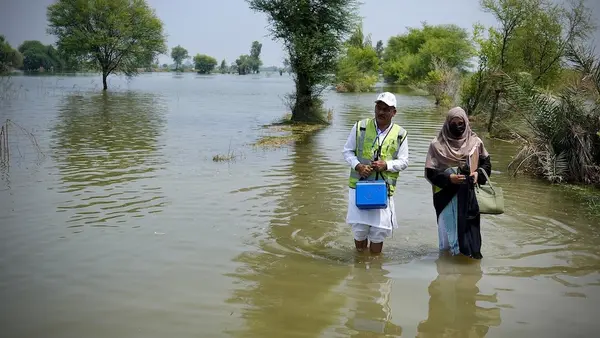
Led by the Government of Nigeria with support from UNICEF and other partners*, the campaign goal was to increase immunization coverage including among children living in remote and underserved communities. UNICEF supports these campaigns by managing vaccine supply and quality control, providing technical guidance and helping with social mobilization activities.
This is where influential community members like Hula are especially vital to campaign success.
With support from partners, UNICEF enlists the help of local leaders like Hula to counter vaccine hesitancy and improve child survival.
Enlisting local leaders to help ensure that every child, no matter where they live, has access to lifesaving vaccines
In several communities across northeast Nigeria, religious leaders are shaping attitudes about vaccination services. The goal is to vaccinate children who might otherwise be left behind, improving overall health and reducing child mortality in a region still reeling from the impacts of conflict.
Learn more about what fuels humanitarian needs among children in Nigeria — and UNICEF's response
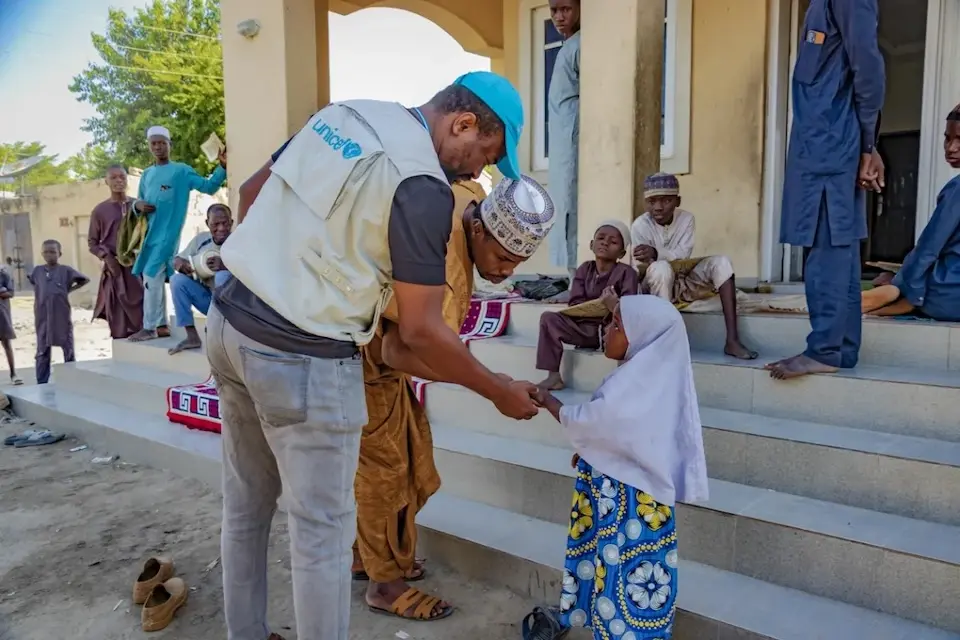
By championing child vaccination, leaders like Hula can help overcome hesitancy and outright refusal, which are often driven by misconceptions and misinformation about how vaccines are developed and how vaccines work. For children who miss out, the consequences can be severe.
For Hula, leveraging his authority within the community to help change attitudes is how he puts his faith into action. It is a way to protect both the physical and spiritual well-being of the children in his care, and a way to protect children's rights.
He attributes his resolve to mobilize community acceptance of vaccination to both personal experience — as a young boy, years before a vaccine was available, his brother became gravely ill after contracting measles — as well as his deep knowledge of Islamic teachings.
“People in my community became convinced when they observed that my students were being vaccinated with my full support," Hula says. "As a religious leader, they trust my decisions and believe that I wouldn’t endorse anything harmful. I reassured them that Islamically, vaccination is permissible.”
I reassured them that Islamically, vaccination is permissible.
Beyond engaging faith leaders, UNICEF and partners are also reaching families through radio programs, school-based sessions and community dialogues led by women and youth groups, with volunteer community mobilizers going house-to-house to raise awareness and encourage vaccination. These activities help dispel rumors, share accurate information and ensure that messages about vaccination reach every household, even in the most remote areas.
As of mid-February 2026, the nationwide push had reached some 120 million children across nearly two dozen states.
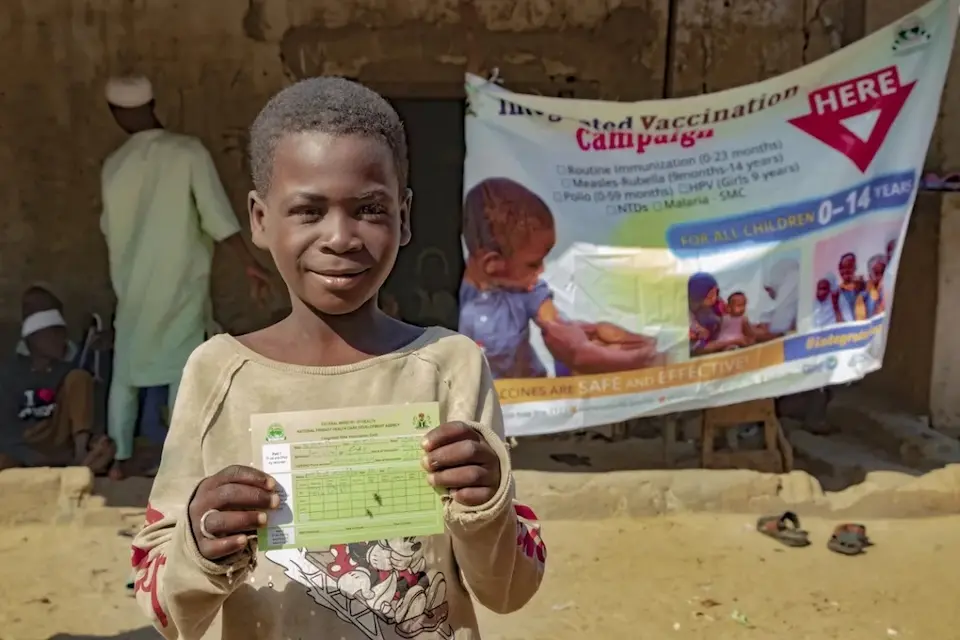
Assisting national vaccination campaigns is just one way UNICEF works with governments and communities to ensure children grow up healthy and safe.
Learn more about how UNICEF works to improve children's health globally
This story was originally published by unicef.org
* Supporting partners include Gavi, the Vaccine Alliance, the United Nations Central Emergency Response Fund (CERF), the Gates Foundation, the U.S. Centers for Disease Control and Prevention, the Global Polio Eradication Initiative (GPEI), Rotary International and the Government of Canada.
UNICEF does not endorse any brand, company, organization, product or service.
HOW TO HELP
There are many ways to make a difference
War, famine, poverty, natural disasters — threats to the world's children keep coming. But UNICEF won't stop working to keep children healthy and safe.
UNICEF works in over 190 countries and territories — more places than any other children's organization. UNICEF has the world's largest humanitarian warehouse and, when disaster strikes, can get supplies almost anywhere within 72 hours. Constantly innovating, always advocating for a better world for children, UNICEF works to ensure that every child can grow up healthy, educated, protected and respected.
Would you like to help give all children the opportunity to reach their full potential? There are many ways to get involved.