Inside Look: How UNICEF USA Supports UNICEF Emergency Response
Andrés Kragelund, UNICEF USA Senior Director of Global Programs, describes what goes on behind the scenes to mobilize support for UNICEF emergency humanitarian action for children in crisis.
Helping UNICEF meet urgent needs of children caught in crises around the world
UNICEF USA's Global Programs division is a propelling force behind organizational efforts to support UNICEF crisis response. In this Q&A, Senior Director Andrés Kragelund, who has been with UNICEF USA* since 2016, describes a typical day on the job, the impact of funding cuts and other challenges, and what he finds personally rewarding. "A lot of what UNICEF emergency response does is related to preparedness and anticipatory action," Kragelund says. "Planning ahead saves lives."
Please give us an overview of what your job entails.
ANDRÉS KRAGELUND: My role involves emergency coordination — keeping an ear to the ground to stay informed on what is happening in different places all around the world pertinent to UNICEF’s mission supporting and protecting children and families in need.
This means engaging with UNICEF’s country offices — we have programs in over 150 countries! — and making sure that our colleagues here at UNICEF USA have whatever they need to generate support for response efforts. I work with many different teams, such as the email team, supporting their outreach efforts, making sure they have the latest on a situation. I work with the website team to help develop stories for the website...
...and we appreciate it!
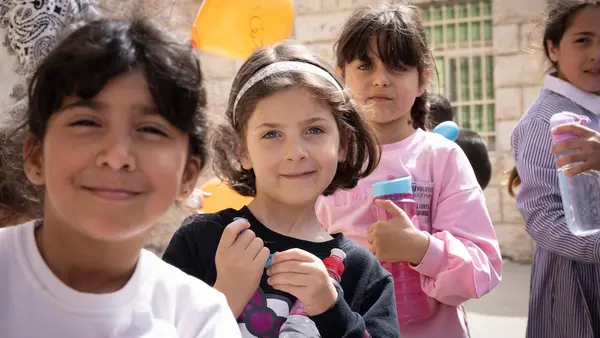
ANDRÉS KRAGELUND: It's all part of the job. I think stories like how UNICEF is supporting children caught in crisis in the Middle East are great examples of cross-team collaboration. We're all serving the same shared goal, which is to inform people, to move them and inspire them.
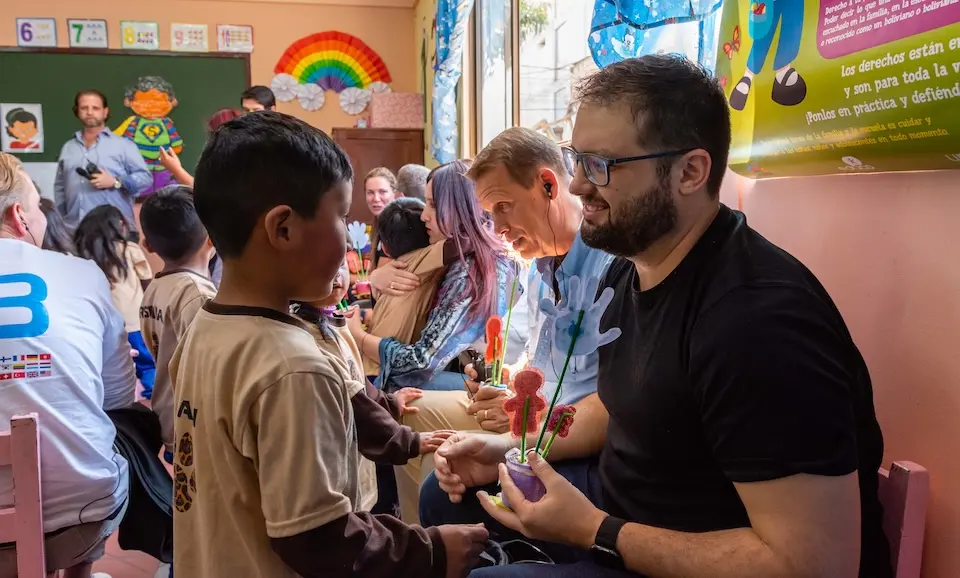
I also work on identifying opportunities for partners to meet with UNICEF experts at various events such as the UN General Assembly, which meets every year right here in New York City, our backyard. I help prepare visits for members of leadership and public affairs teams, institutional partners and donors to see UNICEF programming firsthand. I do all of these things in close collaboration with members of my team. I have a great team.
Please describe a typical work day. You wake up in the morning and a typhoon is threatening the Philippines, or conflict is suddenly escalating in DR Congo. What do you do?
ANDRÉS KRAGELUND: Understanding the gravity of a situation is very much a part of it. If it’s a sudden onset emergency, like an earthquake, what we do will differ quite significantly from how we proceed in a protracted crisis.
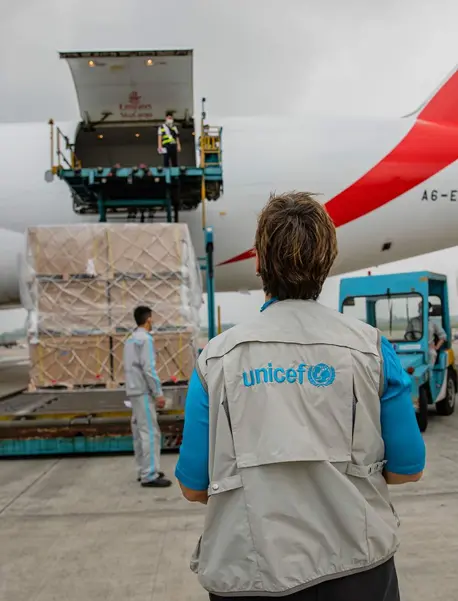
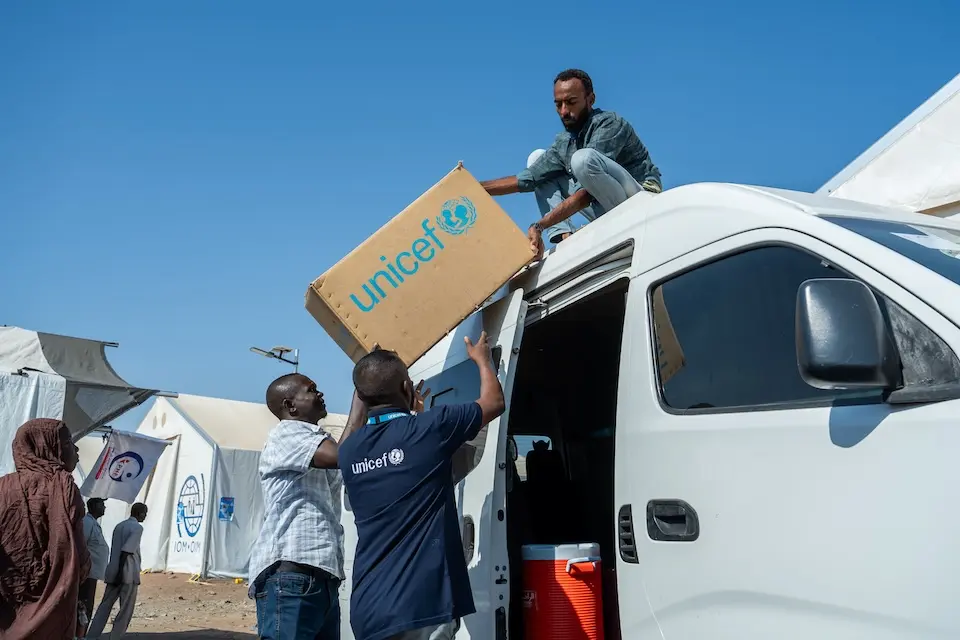
One of the first things we do is to assess access to emergency supplies. When it's a hurricane, we know it's on its way, so we can support the pre-positioning of supplies before the storm hits.
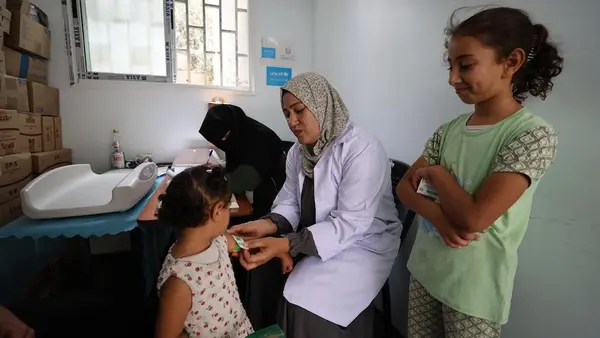
So first, we find out what’s happening on the ground. We get the numbers — how many children are at risk or already being impacted, what are the funding requirements, how many children are we hoping to reach, and with what kind of support, whether it’s safe water and sanitation and hygiene supplies, nutrition, health care, education, protection. Sometimes the situation calls for initiating a whole new humanitarian response in a country.
After gathering all the important information, we work on relaying it to our colleagues here at UNICEF USA. It might take a few hours, or it might take a few days, and of course there is follow-up. There are a lot of emergency activations to track — often going on at the same time. So we strive to be concise while keeping the information flowing in a timely manner — sharing without over-sharing, yet having additional details readily available for those who need to drill down into specifics.
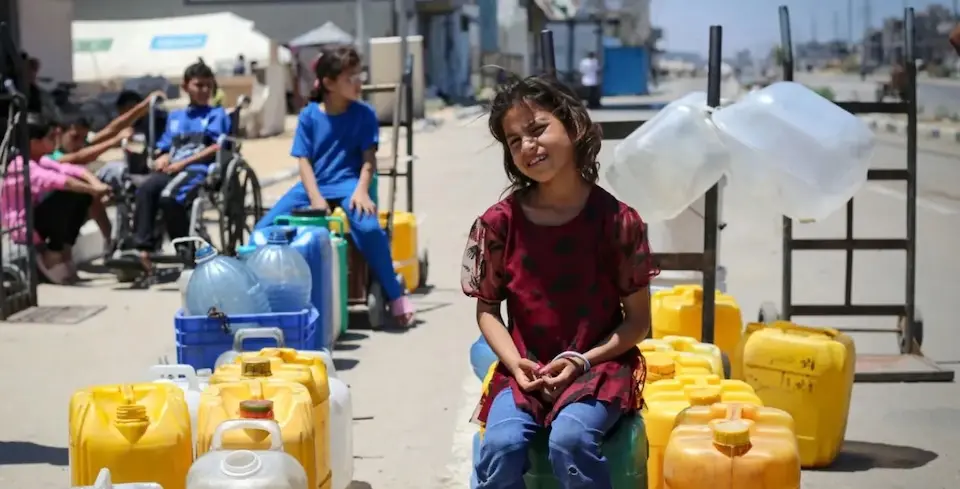
Based on all that information that we're gathering and sharing, we'll write proposals to present to potential donors, we'll write talking points — materials our colleagues across all divisions of our organization can leverage in their engagements, whether it’s communicating to the public on our social media channels or launching a digital fundraising campaign. We also help with fact-checking to make sure all messaging that UNICEF USA is putting out there is accurate and on point.
I'll also work with our finance team to make sure that the money coming in to support the response is being routed properly, and quickly. We might discuss the matter with the Bridge Fund team, to determine whether it's an opportunity for UNICEF USA to transfer a lump sum to UNICEF right away to support an initial deployment, to bridge that gap between the time donations are pledged, and when the funds actually come in. So it’s really working with different teams to connect the dots.
What about your job do you find the most satisfying?
ANDRÉS KRAGELUND: The best part of the job — and I imagine most everybody who works at UNICEF USA, whatever they do, would agree with me on this — is that moment you realize that what you’re doing is having a real impact.
Country offices will often tell us about how they were able to do this or that for children because of the funds they received from UNICEF USA. And that is very gratifying.
UNICEF: Global Leader in Emergency Response
What's the most challenging part of your job?
ANDRÉS KRAGELUND: The flip side of that, of course, is when we’re not getting the response we were hoping for. There are many emergencies that are chronically underfunded. Children and families in countries like Burkina Faso and Haiti have been forced to endure enormous suffering, for a very long time.
We work hard to bring attention to the needs of children everywhere where UNICEF works, but it can be challenging to connect folks with what they’re not seeing on the news or hearing about from friends or in their social circles.
We work hard to bring attention to the needs of children everywhere where UNICEF works, but it can be challenging to connect folks with what they’re not seeing on the news.
This is where flexible funding comes in. Flexible funding allows UNICEF to deploy resources where they are needed, to deploy them more equitably. We often hear how the bulk of UNICEF funding goes to four or five emergencies, and by encouraging unrestricted donations, we are helping to balance that out.
How have steep cuts in government foreign aid affected fundraising?
ANDRÉS KRAGELUND: In the last year we've had many conversations with private-sector donors about how essential private sector fundraising is now, and the need to invest in children. But this is not about just one sector. While the private sector plays a key role in supporting what we do, UNICEF first and foremost works with governments to get the job done, from both the programming side and from the funding side.
We just learned that UNICEF's work in the Middle East and North Africa is facing a 20 percent reduction in overall funding this year — so we're looking at a potential loss of up to $285 million. This will jeopardize lifesaving programs across the region: programs like treatment for severe malnutrition, improving access to safe water in conflict zones, vaccinations to protect children from deadly diseases.
Learn more: UNICEF Humanitarian Action for Children 2026 and the growing gap between the scale of suffering and available resources
It’s been a tumultuous year from that standpoint to be sure. What keeps you going, what keeps you hopeful?
ANDRÉS KRAGELUND: Adaptability is important. Knowing what is resonating in our own market, the U.S. market, and being able to highlight crises in specific countries that we know people are interested in, and showing how UNICEF is responding to those, while at the same time, pointing to the chronically underfunded emergencies, making sure we speak to those as well.
There was a lot of interest in Ukraine in the lead-up to the four-year anniversary of the escalation of war on Feb. 24, so of course we spent a lot of time communicating the status of UNICEF’s ongoing response in the country, and emphasizing how the funding support we’ve received is reaching children there. But while talking about how UNICEF is helping children in Ukraine, we’re also saying: Remember children in Sudan, remember children in Ethiopia. Our approach is always “Yes, and…”
While talking about how UNICEF is helping children in Ukraine, we’re also saying: Remember children in Sudan, remember children in Ethiopia.
We also take care to point out how interconnected some of these crises are. The Ukraine crisis had a big impact on grain prices, and that had a direct impact on food insecurity in the Horn of Africa. It’s important to point to these threads that tie us all together.
With so much going on at any one time, how do you keep up with it all?
ANDRÉS KRAGELUND: We get a lot of our information from UNICEF’s global operations center (OPSCEN), which conducts 24/7 monitoring, working with country offices to help them anticipate things like droughts and floods. They do analysis and help decide on anticipatory action. We also get a lot of our information from our country office colleagues, and we network with colleagues from the different national committees as well.
There are days when it feels a little like one step forward, two or even three steps back, but you know what? We have to keep going. We are helping children in a very real way, every day.
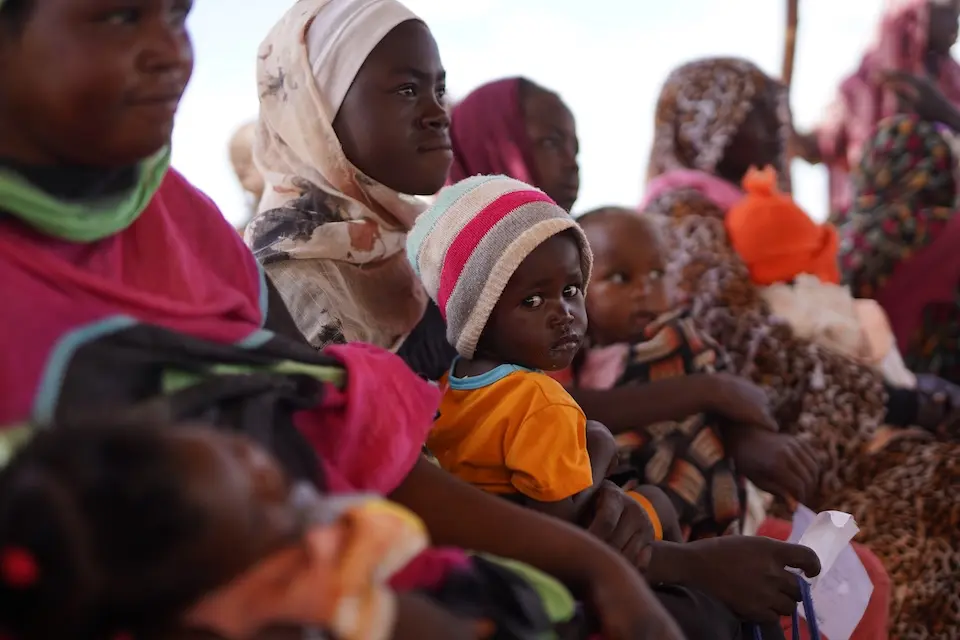
Consider this: In Sudan, UNICEF reached 13 million people with safe water between January and November last year. And 6.5 million children were screened for malnutrition, which led to more than half a million children being treated. That is impressive impact.
Related: 5 Ways UNICEF Is Supporting Sudan's Children
It must be important to share results like that with donors.
ANDRÉS KRAGELUND: Absolutely. We like to share results as widely as we can. It can be difficult to draw a direct line but we can report things like, UNICEF is the largest provider of humanitarian cash transfers to families in the Gaza Strip. They use the cellular network to make the transfers; beneficiaries receive the funds on their mobile phones, and then they can buy food and other essentials. How cool is that? It’s a highly effective, highly efficient form of humanitarian assistance.
What’s also cool is that this point of contact enables UNICEF to conduct surveys, to better understand people’s needs as they evolve, to keep tabs on prices as they fluctuate — how much for a kilo of flour, how much for a kilo of meat — and adjust programs as needed.
Related: UNICEF Provides Critical Support for Children in Gaza
What would you say to a donor who gets excited about a specific program and wants to support it directly?
ANDRÉS KRAGELUND: Ah. Well, whenever we showcase the efficacy of one particular program, we will usually pivot to a general ask for support that is not restricted to any one country or program area. We explain that a lot of what UNICEF emergency response does is related to preparedness and anticipatory action.
Planning ahead saves lives. It also saves time and money. UNICEF has actually studied this. And what they found was that every $1 invested early in high-risk humanitarian contexts saves an average of over $4 on the next emergency and speeds up operations by more than 12 days.
Every $1 invested early in high-risk humanitarian contexts saves an average of over $4 on the next emergency.
So predictability in fundraising is important. Consistency is important. If someone asks me what’s the best way to support UNICEF, I’d say donating monthly versus making a one-time contribution. Of course, people react to the news, and so when a war breaks out, or there’s a disaster and it’s getting a lot of news coverage, donations tend to spike. That’s understandable, of course. That’s a very human reaction.
Related: The Power of Unrestricted Giving
* UNICEF USA is one of 32 UNICEF National Committees, each established as an independent local non-governmental organization. Learn more about UNICEF USA
HOW TO HELP
There are many ways to make a difference
War, famine, poverty, natural disasters — threats to the world's children keep coming. But UNICEF won't stop working to keep children healthy and safe.
UNICEF works in over 190 countries and territories — more places than any other children's organization. UNICEF has the world's largest humanitarian warehouse and, when disaster strikes, can get supplies almost anywhere within 72 hours. Constantly innovating, always advocating for a better world for children, UNICEF works to ensure that every child can grow up healthy, educated, protected and respected.
Would you like to help give all children the opportunity to reach their full potential? There are many ways to get involved.