UNICEF Is Reaching Children in Gaza With Lifesaving Therapeutic Food
In the Gaza Strip and around the world, ready-to-use therapeutic food supplied by UNICEF can mean the difference between life and death for acutely malnourished children. Your support helps UNICEF deliver emergency aid to children in need.
Children in Gaza need urgent nutrition support
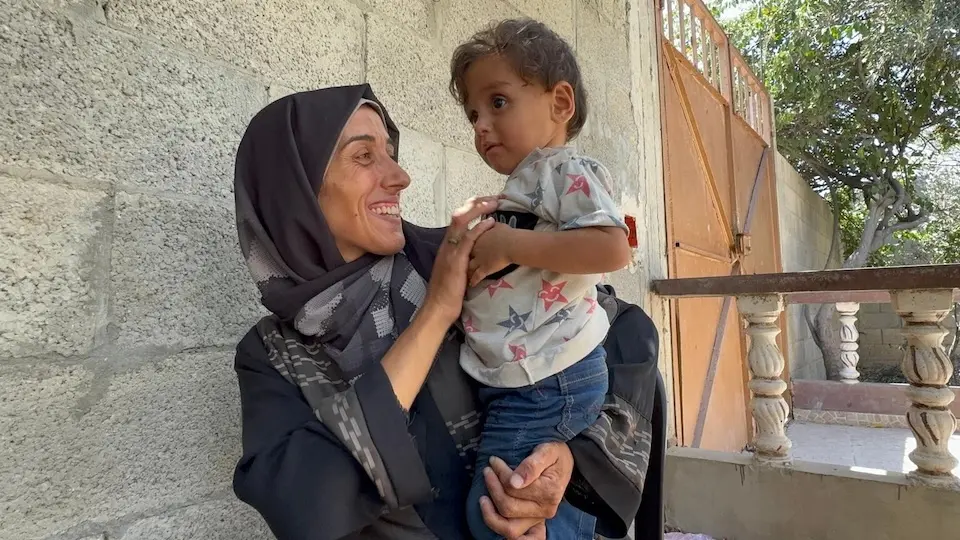
Mothers and babies fill a nutrition clinic in the Gaza Strip, one of many where UNICEF is providing lifesaving ready-to-use therapeutic food (RUTF) for the treatment of severely malnourished children.
After two years of war, deteriorating conditions reached famine thresholds in August 2025. Conflict, mass displacement and restrictions on the delivery of food into Gaza have left tens of thousands of Palestinian children suffering from acute malnutrition, which can be fatal if left untreated.
"In places like the Gaza Strip, when I see so many children suffering from extreme hunger and struggling to survive, it's sometimes easy to lose hope," says UNICEF spokesperson Tess Ingram. "But when I see the UNICEF response, that's when I begin to feel hopeful again."
Now news of a ceasefire brings hope that lifesaving humanitarian aid will soon be flowing into Gaza at scale.
Related: Ceasefire in Gaza: Children Need Surge in Humanitarian Aid Now
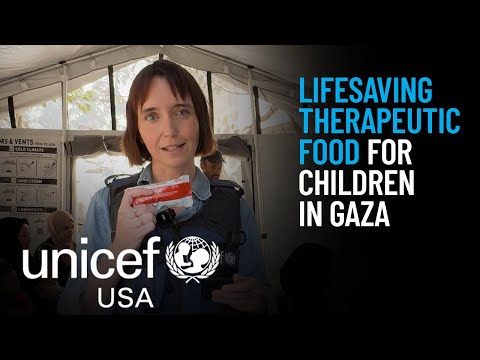
Watch the video: 'This packet holds hope'
Since 2000, the lives of millions of severely malnourished children have been saved with support from UNICEF
UNICEF is the largest supplier of RUTF for children around the world. A shelf-stable, energy-dense peanut paste, RUTF contains all the vitamins, minerals and essential nutrients that a severely malnourished child needs to recover in a matter of weeks.
Since 2000, the number of children under 5 who are stunted — too short for their age due to chronic undernutrition, a sign of poor physical and cognitive development — has fallen by 55 million, and the lives of millions of severely malnourished children have been saved.
Learn more about ready-to-use therapeutic food (RUTF)
Steep funding cuts put children's nutrition and survival at risk
Recent cuts to international aid budgets threaten to dramatically reverse these gains, putting the lives of millions more children at risk. The global funding crisis comes at a time of unprecedented need for children who continue to face displacement, new and protracted conflicts, disease outbreaks and the daily consequences of climate change, all of which are undermining their access to adequate nutrition.
"This isn't just a packet of therapeutic food, it's a packet of hope," says Ingram. "It is a lifeline for so many families, not just in the Gaza Strip but around the world."
Support UNICEF's work to deliver hope to families, wherever they are.
Right now, the lives of the most vulnerable children hang in the balance as conflicts and crises jeopardize the care and protection that they deserve. Dependable, uninterrupted and effective foreign aid is critical to the well-being of millions of children. Please contact your members of Congress and urge them to support ongoing U.S. investments in foreign assistance.
HOW TO HELP
There are many ways to make a difference
War, famine, poverty, natural disasters — threats to the world's children keep coming. But UNICEF won't stop working to keep children healthy and safe.
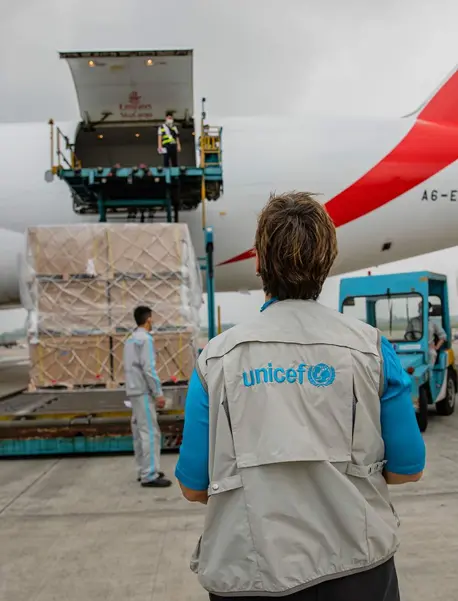
UNICEF works in over 190 countries and territories — more places than any other children's organization. UNICEF has the world's largest humanitarian warehouse and, when disaster strikes, can get supplies almost anywhere within 72 hours. Constantly innovating, always advocating for a better world for children, UNICEF works to ensure that every child can grow up healthy, educated, protected and respected.
Would you like to help give all children the opportunity to reach their full potential? There are many ways to get involved.