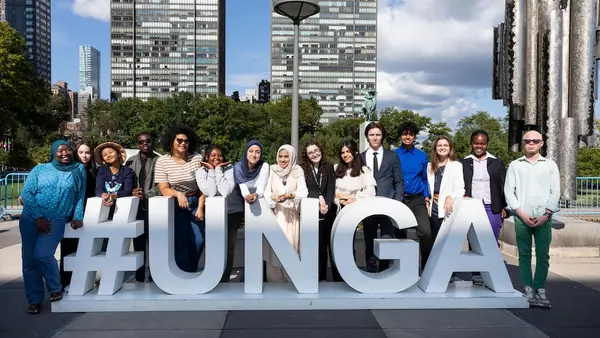
UNICEF Won't Stop Helping the World's Children
After almost 80 years of U.S. support for UNICEF, Congress voted to cut aid for children in dire need around the world, zeroing out Fiscal Year 2025 funding for critical humanitarian programs, including UNICEF's core resources. Despite this deeply disappointing outcome, UNICEF will continue to deliver for children — and your support is more important than ever.
In a predawn vote on July 17, 2025, the Senate approved by a narrow margin the rescissions package submitted by the White House, clawing back Fiscal Year 2025 funding for critical humanitarian programs, including $142 million in core resources for UNICEF. The next day, the House followed suit.
The result? A profound setback for millions of children and communities around the world.
Aid cuts put the most vulnerable children at even greater risk and weaken U.S. interests
For nearly 80 years, UNICEF has partnered with the people of the United States to improve outcomes for children everywhere. The U.S. Government has consistently rallied behind UNICEF's mission to advocate for the protection of children's rights, to help meet their basic needs and to expand their opportunities to reach their full potential.
"The decision to eliminate core U.S. funding for UNICEF is deeply disappointing," says Michael J. Nyenhuis, UNICEF USA President and CEO. "This funding has long enjoyed bipartisan support because it delivers tangible, proven results: protecting children from deadly disease and malnutrition, strengthening health systems and advancing stability in regions critical to global security — outcomes that make America safer, stronger and more prosperous.
"Cutting it puts the most vulnerable children at even greater risk," Nyenhuis continued. "It also weakens the United States’ ability to lead with compassion and credibility on the global stage at a time when that leadership is needed most."
Related: 5 Ways Global Humanitarian Aid Benefits the U.S.
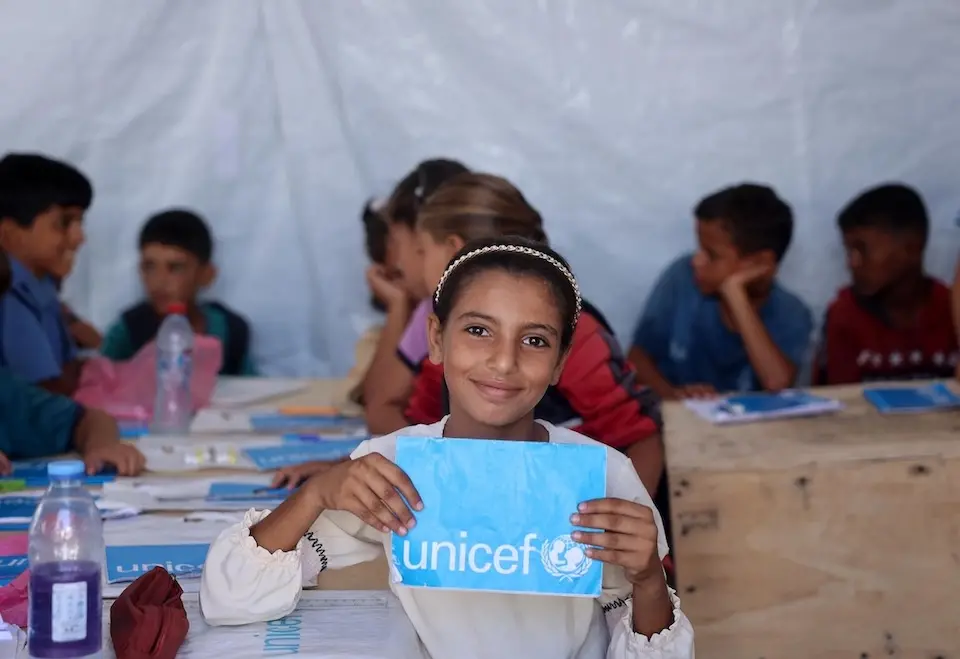
With almost 80 years of experience, UNICEF knows how to allocate resources to achieve the greatest impact for children
UNICEF is the world's largest children's organization, mandated by the United Nations to protect the rights of children and ensure they are healthy, educated, protected and respected. Working from offices in 190 countries and territories, UNICEF staff are mostly local and in program countries. With their deep program expertise and networks, UNICEF's staff are the lifeblood of the impact UNICEF delivers for children.
As a UN agency, UNICEF is uniquely positioned to drive national accountability while building the capacity of local civil society, NGOs and other stakeholders. UNICEF contributes to 12 of the 17 Sustainable Development Goals, more than any other organization, and aligns all its development work with those goals through five-year cooperation agreements with national governments called Country Program Documents.
Related: The Power of Unrestricted Giving
Reversing hard-won progress
The aid cut will have a huge impact on children's lives and their education. It also threatens to reverse hard-won progress achieved by UNICEF and partners. Since 2000, global under-5 mortality has dropped by 50 percent. Millions of children are alive today thanks to UNICEF's time-tested, cost-effective work. Millions more have been protected with improved health and brighter futures.
“We project that cuts will disrupt UNICEF health services for up to 13 million children across West and Central Africa,” Patrick Quirk, UNICEF USA Vice President, Global Policy and Public Affairs, told Politico before the Senate vote. “An infectious disease outbreak in that area is one flight away from infecting families here in the U.S.”

UNICEF delivers for children when they need it most
In 2024, in the face of relentless conflict, climate emergencies and natural disasters, an estimated 183.5 million children required humanitarian assistance. And UNICEF teams around the world responded. As children were forcibly displaced; as they were killed or injured or suffered other grave violations of their rights; as they were left malnourished or without health care, their education disrupted — UNICEF delivered:
- clean water and sanitation for 41 million people
- measles vaccinations for 24.7 million children
- early detection and treatment of wasting and other forms of malnutrition, benefiting more than 109 million children under age 5
- access to education for 9.2 million children and adolescents
- community-based mental health and psychosocial support services for 22.3 million children
- interventions to prevent gender-based violence and support survivors for 17.7 million children and women
- humanitarian cash assistance for 3.6 million households
- $1.234 billion worth of supplies to support emergency response
Learn more: Impact of UNICEF Humanitarian Action in 2024 — Annual Report
Myth vs fact
UNICEF's core funding is not used for overhead expenses. It goes directly where it is needed most. Core funding enables UNICEF to respond to emergencies and implement long-term systems change, helping save lives, scale solutions and strengthen national systems.
UNICEF is not funded by the United Nations. It relies entirely on voluntary contributions from governments, intergovernmental organizations, foundations, the private sector and individuals.
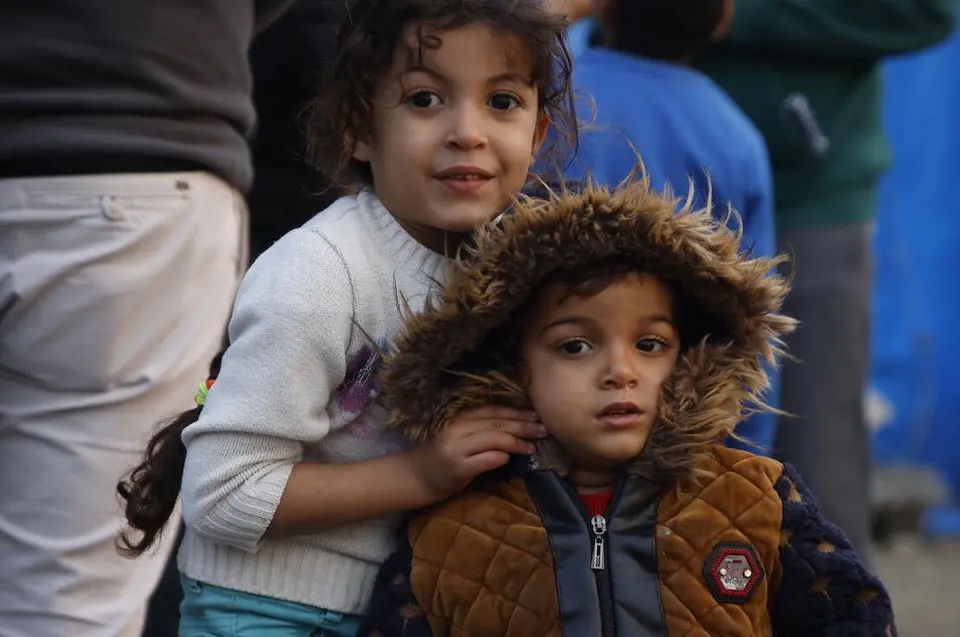
The world's children need our support now more than ever
Despite this enormous setback, UNICEF's work for children does not stop now — especially given this time of unprecedented need. Every dollar invested in humanitarian aid and development creates long-term benefits and a more stable and secure world.
"UNICEF will continue to deliver," said Nyenhuis. "I remain hopeful that champions across the country — and across the political spectrum — will continue to stand with us. Children deserve nothing less."
Now more than ever, we need your voice. #ForEveryChild
HOW TO HELP
There are many ways to make a difference
War, famine, poverty, natural disasters — threats to the world's children keep coming. But UNICEF won't stop working to keep children healthy and safe.
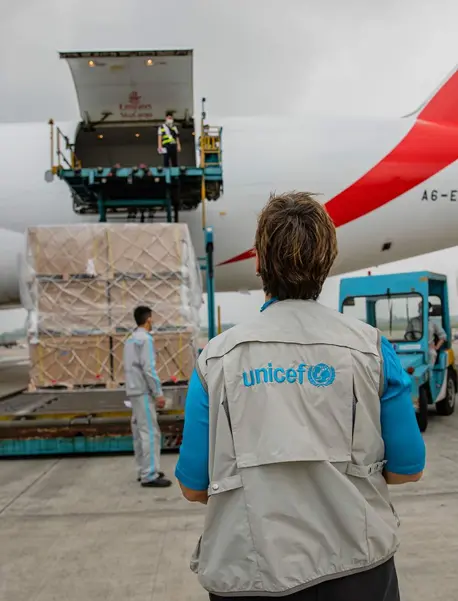
UNICEF works in over 190 countries and territories — more places than any other children's organization. UNICEF has the world's largest humanitarian warehouse and, when disaster strikes, can get supplies almost anywhere within 72 hours. Constantly innovating, always advocating for a better world for children, UNICEF works to ensure that every child can grow up healthy, educated, protected and respected.
Would you like to help give all children the opportunity to reach their full potential? There are many ways to get involved.