The School That Never Sleeps
A UNICEF-supported school has become a safe space for learning and living for displaced families in Rokero, Central Darfur, Sudan.
Help UNICEF reach children in need
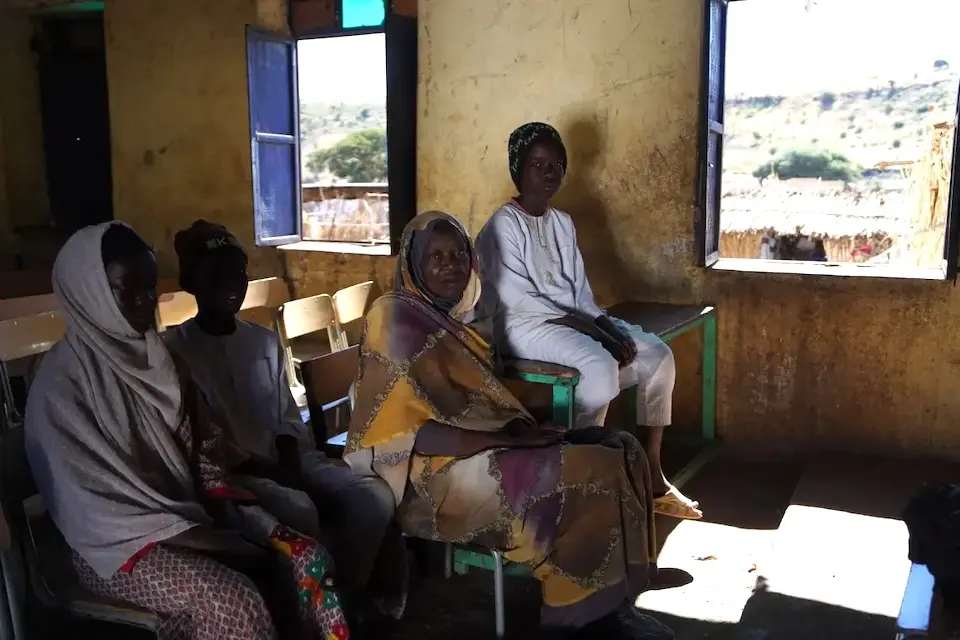
Early every morning, Alawiya wakes up in the school classroom where she lives with her four children and four other families. She steps out for a cup of tea, then changes her clothes and returns to the classroom to teach.
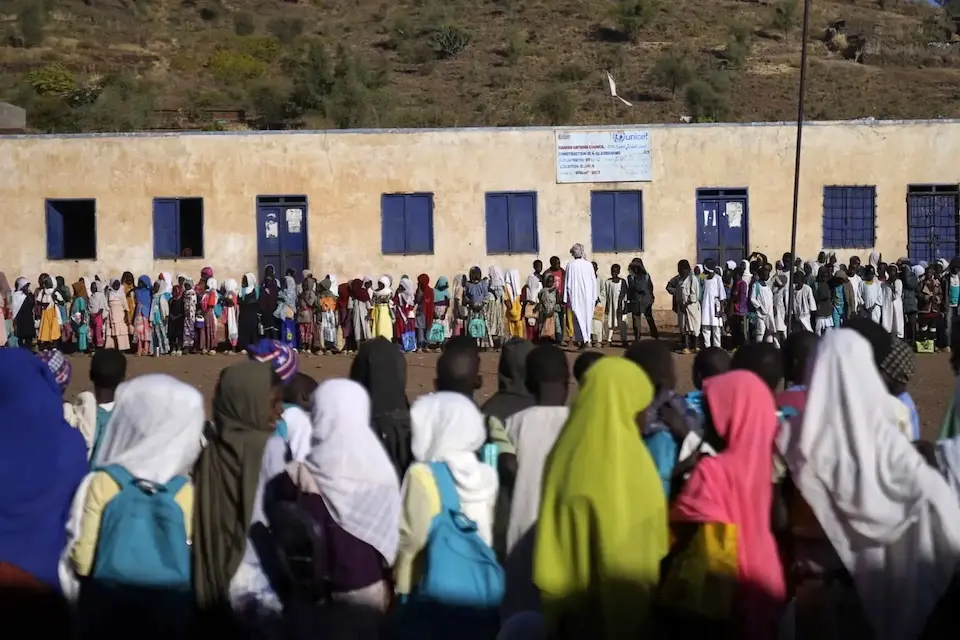
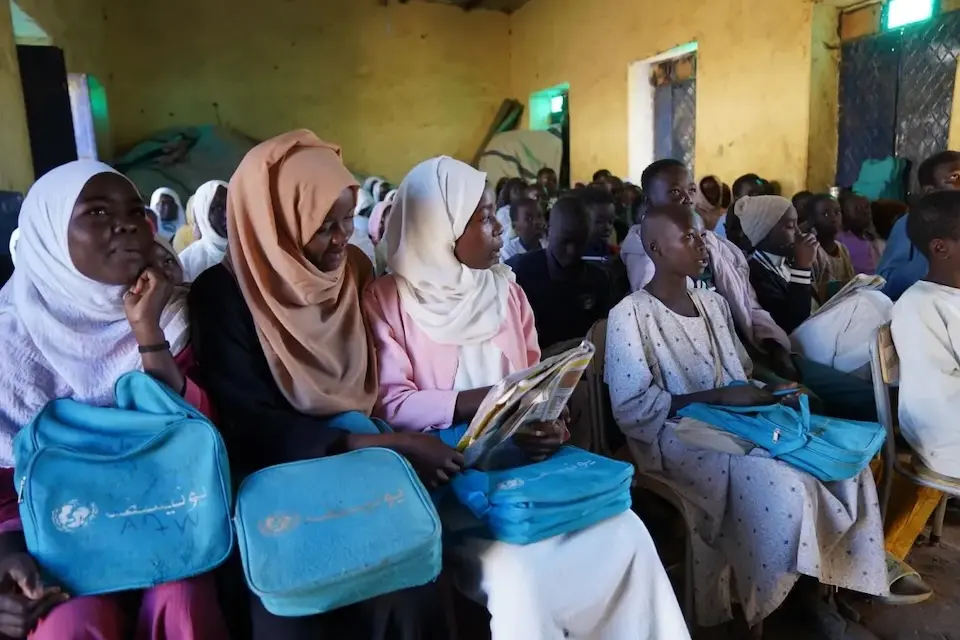
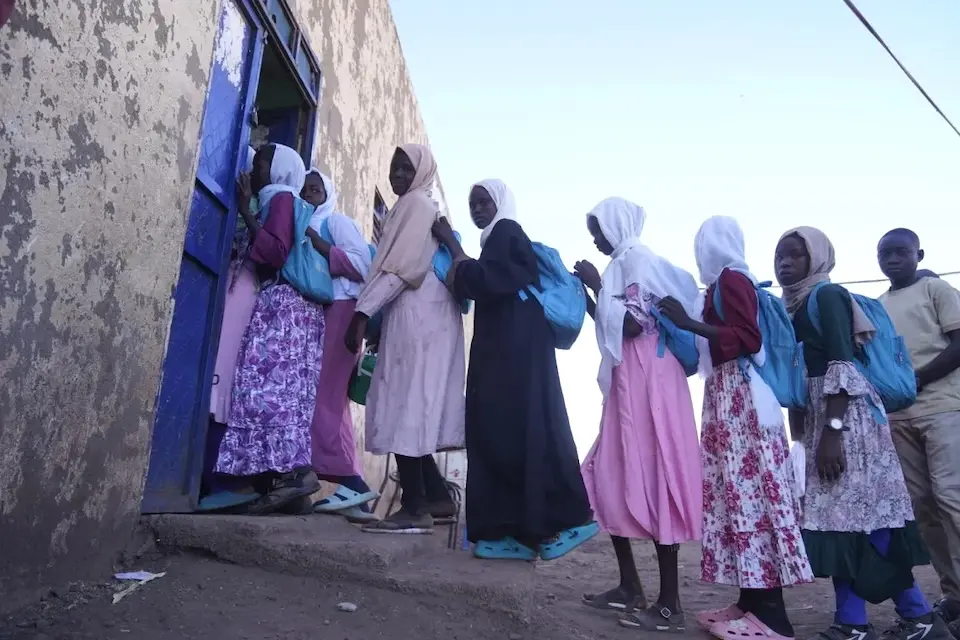
By day, 1,200 students, including 400 internally displaced children from Al Fasher and Tawila, crowd into the school's classrooms. By night, the same rooms become a refuge for families displaced by Sudan's brutal civil war. "When I was living on the street, I was given shelter in a classroom and we thank God for that," Alawiya says.
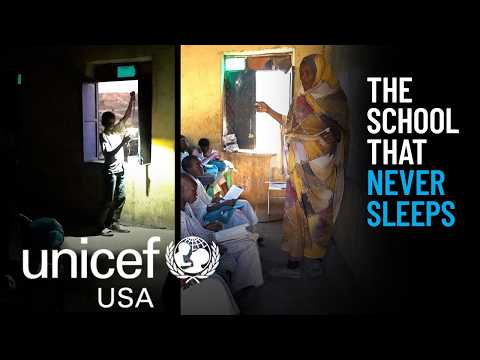
Video: A school under pressure
A school is more than a building
Since fighting erupted in April 2023, Sudan has become one of the world's largest and most devastating humanitarian crises. The war forced Alawiya and her children out of their home. Her husband is still missing.
One of the students in Alawiya's class is her daughter Yaqeen. Her education was disrupted for three years by the war. Now, back in school at last, Yaqeen says she is feeling hopeful again.
"To rise from this tragedy, there is no way forward but through education," Alawiya says. "And through education, peace will prevail."
Rebuilding Childhoods: Three Ways UNICEF Supports Children in Sudan
Support from UNICEF keeps the school running
Support from UNICEF allows the school to continue operating during this crisis. For children and families on the move, the school is more than a building. It is a protected space where children can learn without fear and families can rest with dignity. Learning in a place that is also safe restores a sense of trust, something many children have lost.
With just seven classrooms across six grade levels, some classes hold between 160 and 210 students, guided by 18 teachers and supported by three cleaners. The school has six bathrooms, with a UNICEF-supported water pump supplying water to the latrines and the surrounding displacement settlement.
Each school day begins with a morning assembly to build confidence and encourage children to express themselves. Students recite poems, share Hadiths, sing cultural songs and learn about hygiene, social cohesion and public speaking.
At 8:30 a.m., lessons begin. Students attend three classes before breakfast. Some children go home to eat while others bring food with them. After the break, the fourth, fifth and sixth lessons continue until the school day officially ends at 1:45 p.m.
When the sun sets, the school transforms
After the school day ends, some children stay. They wait for their families to settle in for the night. As the cold sets in, displaced families begin arriving quietly, carrying what little they have. Classrooms become sleeping spaces. The yard where the children play during the day is filled with families seeking warmth and safety. By 7:00 a.m. every morning, they leave so the school can reopen for learning.
This dual life began after the Al Fasher crisis in July 2023. The school was closed for the summer holidays when displaced families approached parents, who then approached the teachers’ council. The decision to open the school as a shelter was welcomed. They simply had no place else to go, and the children had to keep learning.
Learn more: Easing the Water Burden in Sudan
Healing through learning and play
After the siege of Al Fasher, many children arrived on foot, traumatized, exhausted and with nothing. Nine-year-old Mohamed Adam was barefoot and alone. His father had been killed in Al Fasher. During morning assembly, instead of joining the other children, he stayed close to the male teachers because they reminded him of his dad.
Mohamed’s story is one of hundreds. After a long search, his older brother found him and took him to Tawila. But before leaving, Mohamed completed the entire second grade at Al Zahra.
Adjusting to living and learning in the same place has taken time for many children as well. The host community and its children made a difference. Students helped displaced children recover, integrate and feel welcome. Teachers organized pre-learning sessions before formal learning resumed, focusing on helping children and providing the needed psychosocial support.
Play became a powerful tool for healing. Simple games with balls from UNICEF Recreation-in-a-Box kits, sharing laughter and spending time together helped children regain a sense of normalcy.
The change in children has been profound. Belonging to a school has given the children what they were missing: a sense of safety and identity. Here, they feel at peace. There is no violence, only learning, belonging and care.
The difference UNICEF support makes
UNICEF support has made it possible for the school to keep running during this crisis. Teacher incentives, training, school supplies, learning materials and recreational kits for early childhood development have helped address urgent needs.
“When UNICEF comes, we know that help is here,” the principal says.
For children and families on the move, this school is more than a building. It is a protected space where children can learn without fear and families can rest with dignity. Learning in a place that is also safe restores a sense of trust, something many children have lost.
The school principal's message to the world is clear: ‘’Humanity must put children first. They are innocent. They do not understand the violence surrounding them. Any support helps them rise out of poverty and become part of the peace they deserve. Right now, these children need basic supplies, school uniforms and nutrition to keep learning and dreaming. And in this school, we will continue to push for hope until help arrives."
This story was previously published by UNICEF Sudan
HOW TO HELP
There are many ways to make a difference
War, famine, poverty, natural disasters — threats to the world's children keep coming. But UNICEF won't stop working to keep children healthy and safe.
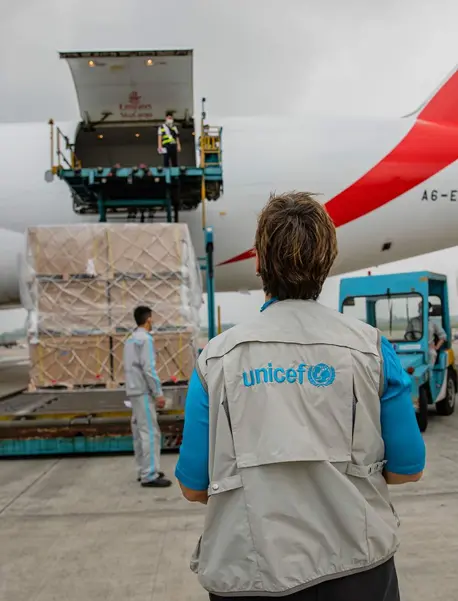
UNICEF works in over 190 countries and territories — more places than any other children's organization. UNICEF has the world's largest humanitarian warehouse and, when disaster strikes, can get supplies almost anywhere within 72 hours. Constantly innovating, always advocating for a better world for children, UNICEF works to ensure that every child can grow up healthy, educated, protected and respected.
Would you like to help give all children the opportunity to reach their full potential? There are many ways to get involved.