Ramadan Donations Help Save Children's Lives in Gaza and Sudan
This year, the holy month of Ramadan is particularly difficult for children caught in conflicts and crises around the world. Wherever there are children in need, UNICEF is there to help. Learn more about UNICEF's lifesaving work for children in Gaza and Sudan — and how you can help.
Your Ramadan donation will help UNICEF reach more children in need.
Ramadan donations support UNICEF's work for children growing up in some of the world's most dangerous places
As families around the world come together to celebrate the holy month of Ramadan, children caught in conflict zones need help more than ever. In Sudan, the ongoing civil war has taken a staggering toll on children since a wave of armed conflict spread across Khartoum, the capital city, in April 2023.
More than 15.6 million children are affected by the crisis, facing violence, abuse, exploitation, malnutrition and recurring disease outbreaks. Millions have fled their homes and are displaced in the country and across the borders in what has become the world’s largest child displacement crisis.
For children forced out of their homes by violence, memories of more peaceful times can seem a very long way away. Some children who can still remember Ramadans past use modeling clay to create pretend versions of the favorite foods they ate before the war.
Rebuilding Childhoods: Three Ways UNICEF Supports Children in Sudan
In Sudan, lifesaving malnutrition treatment for a baby boy named Ramadan
An estimated 21 million people across Sudan are expected to face acute food insecurity in 2026. As of January 2026, famine has already been confirmed in Al Fasher, North Darfur State, and Kadugli, Kordofan State, with nearly 20 other areas at risk as conflict restricts the delivery of critical humanitarian supplies.
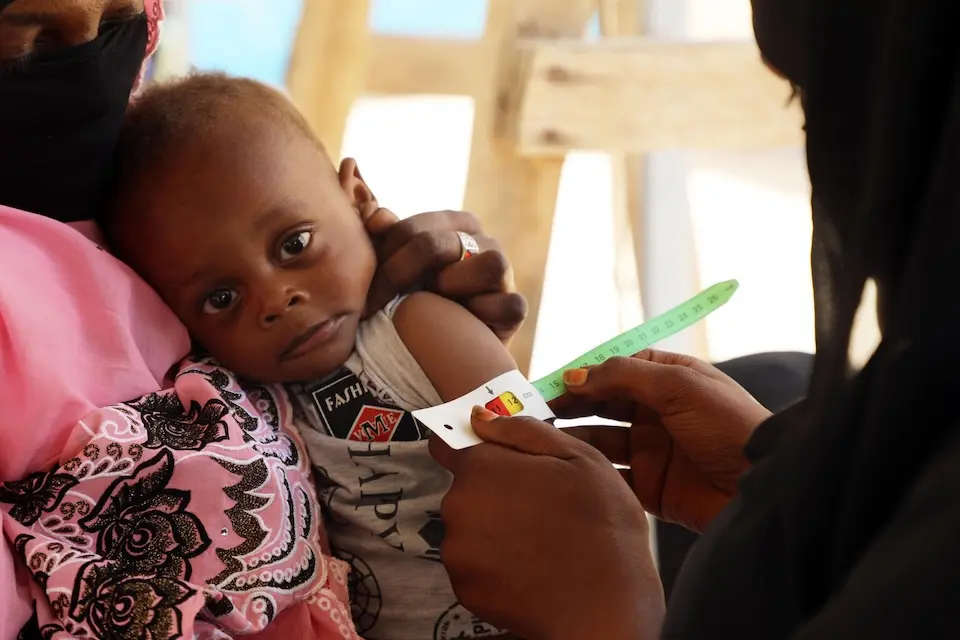
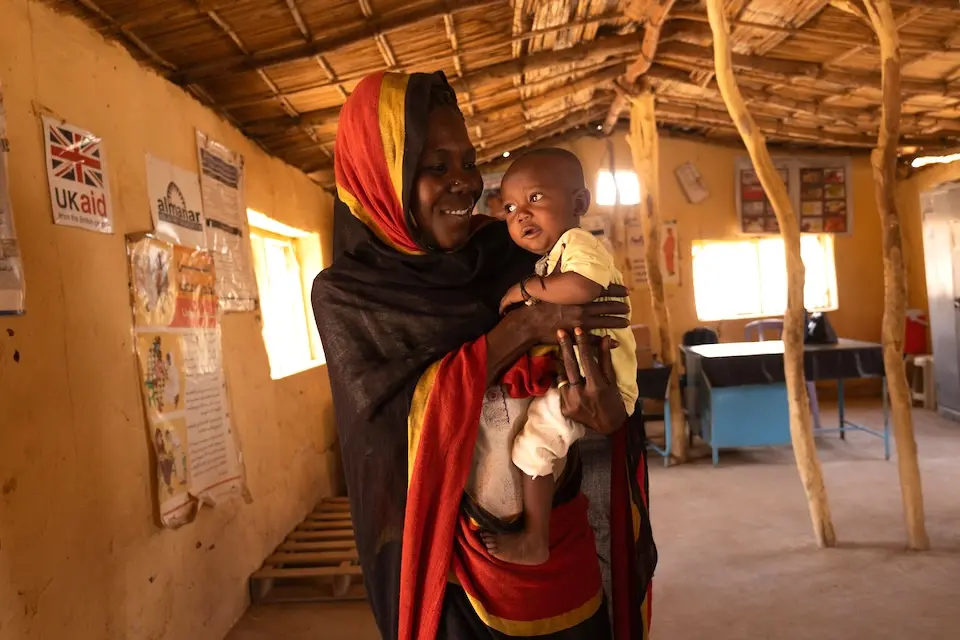
At Mandela Health Center, a UNICEF-supported health facility in Jebel Aulia, Khartoum State, worried mothers bring their babies to be screened for malnutrition. Severely malnourished children are immediately enrolled for treatment with lifesaving therapeutic food.
“My son was healthy when he was born, but fell ill when he was 2 months old," says Laili, the mother of a baby boy named Ramadan. "His health deteriorated very fast, and I was afraid he would die." At the health facility, Ramadan was screened for malnutrition, then treated with lifesaving ready-to-use therapeutic food (RUTF). "Now his condition is better, and his weight is increasing,” his mother says.
Nine out of ten malnourished children treated with RUTF recover within a matter of weeks. In 2026, UNICEF plans to provide lifesaving treatment for more than 630,000 children in Sudan suffering from severe wasting, the most deadly form of malnutrition.
Helping children in Gaza get back to learning, with an emphasis on mental health and well-being
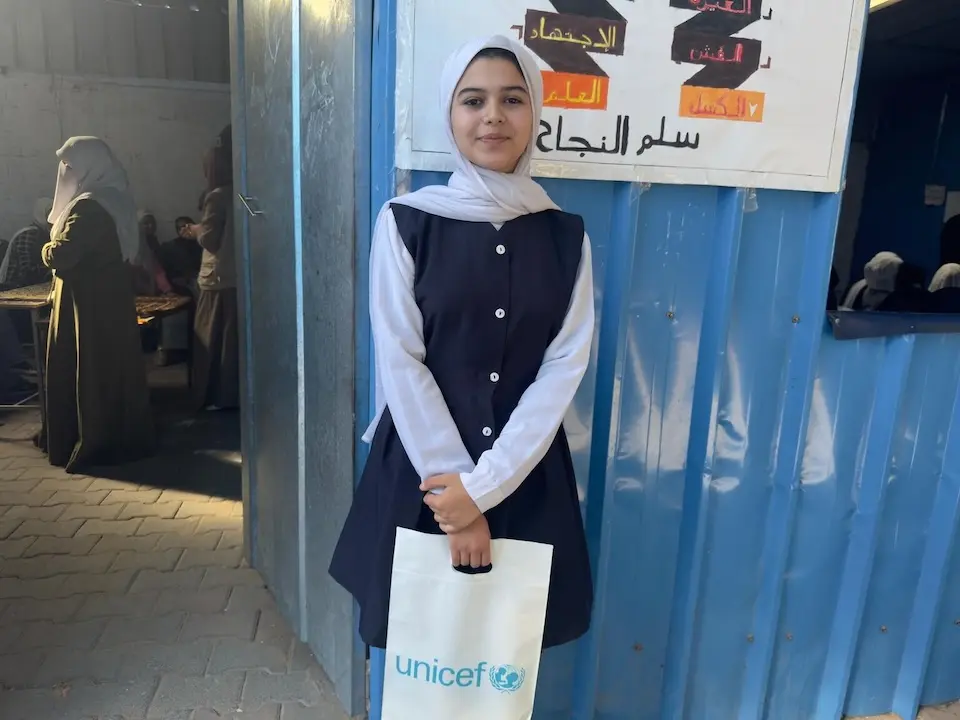
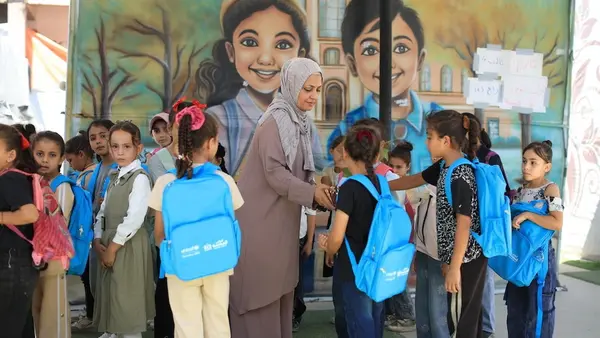
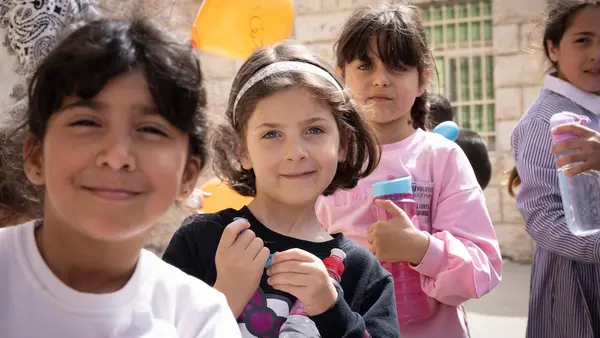
“These supplies really help me study," Masa says. “When I grow up, I want to be an engineer.” © UNICEF/UNI939026/Crickx
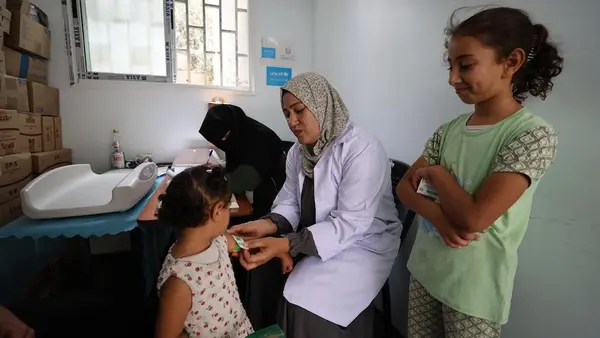
Two years of war have left children in Gaza reeling, creating an urgent need for Gaza humanitarian aid to help children survive, recover and return to learning. Between Oct. 7, 2023 and Feb. 3, 2026, 71,803 Palestinians were reported killed in the Gaza Strip, including at least 21,289 children. Another 171,230 Palestinians have been reported injured, including 44,500 children. Approximately 90 percent of the population has been displaced, many repeatedly. More than 58,000 children have lost one or both parents.
A fragile ceasefire has provided some improvements, but the situation remains extremely precarious and deadly for children.
UNICEF is working with partners to deliver the essential supplies and services Gaza's children rely on: water, sanitation, health care, nutrition, child protection. To help Palestinian children resume their childhoods and begin to recover from the chronic stress they've experienced, UNICEF has launched an ambitious plan to get all 700,000 school-age children in Gaza back to learning — 336,000 by the end of 2026 and the remainder in 2027.
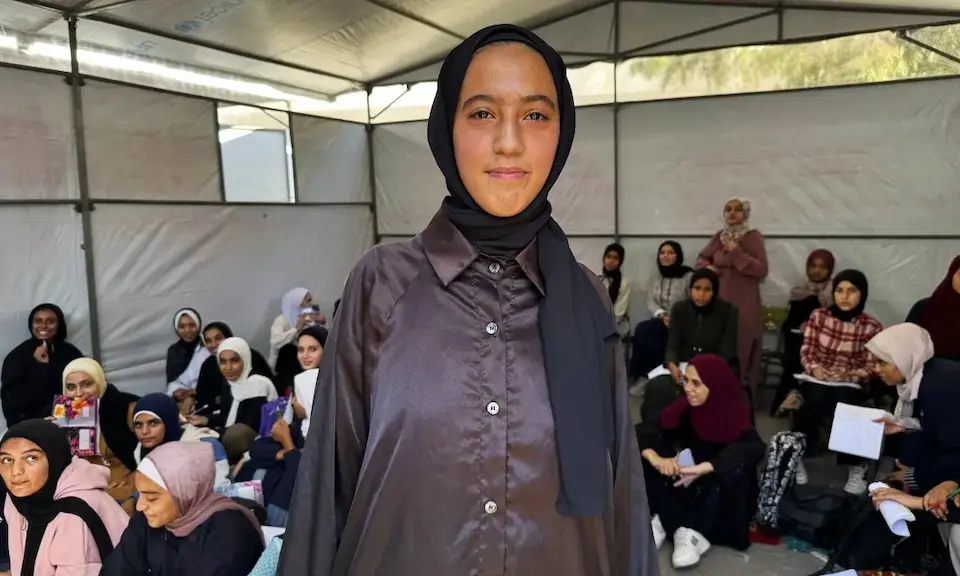
For Gaza's children, access to learning is the bridge to a better future
UNICEF-supported temporary learning spaces already offer more than 135,000 children a place to read, write and build basic math skills, along with a place to play and a sense of normalcy. Getting one child into a temporary learning space costs just $280 for a year, including mental health support.
Before the war, Palestinians in Gaza had some of the highest literacy rates in the world. In Gaza, "learning is lifesaving," says UNICEF Global Spokesperson James Elder. "These centers provide safe spaces in a territory that is often inaccessible and dangerous. They deliver vital information. They restore routine. They connect children to health, nutrition and protection services. These UNICEF learning spaces also have proper toilets and places to wash hands — something too many children in shelters simply don’t have."
I still dream of being a doctor who can code — someone special who can make a difference. — Lama, 13, Deir al-Balah, Gaza Strip
Lama, 13, is happy to be back in a temporary learning space with other students. “I’m originally from Beit Hanoun, but now I’m displaced in Deir al-Balah,” she says. “This school makes me feel normal again. Studying face-to-face is so much better. It helps me connect with my teachers.”
Lama’s brother was killed at the beginning of the war. She says that’s why she wants to be a doctor, to help others. “Before the war, I loved coding, but now we don’t have internet,” she says. “I still dream of being a doctor who can code — someone special who can make a difference.”
How to help: There are many ways to make a difference this Ramadan
War, famine, poverty, natural disasters — threats to the world's children keep coming. But UNICEF won't stop working to ensure that every child can grow up healthy, educated, protected and respected.
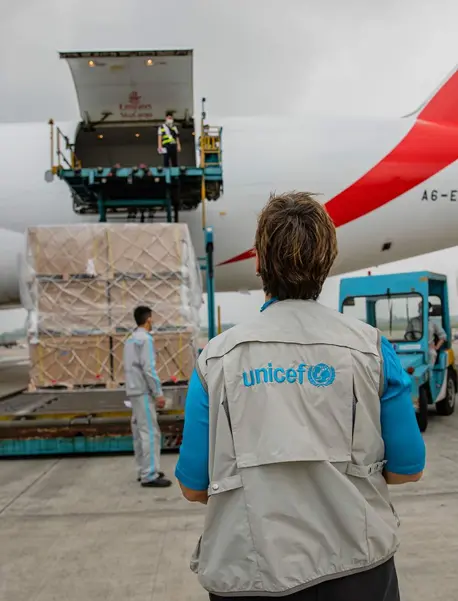
UNICEF works in over 190 countries and territories — more places than any other children's organization — constantly innovating and advocating for a better world for children. When disaster strikes, UNICEF's global humanitarian warehouse can get supplies almost anywhere in the world within 72 hours.
Your Ramadan donation will help UNICEF reach more children with the urgent support and services they need to reach their full potential. Please donate today.
Ramadan FAQs
What is Ramadan and how long does it last?
Ramadan is the holiest month in Islam, observed by Muslims around the world. It is a time of fasting from dawn to sunset, prayer, reflection and generosity. Ramadan lasts approximately 29 or 30 days and ends with the celebration of Eid al-Fitr.
When does Ramadan start and when does it end in 2026?
Ramadan starts around Wednesday, February 18, 2026 (depending on the lunar cycle) and lasts 29 or 30 days. The holy month ends around Thursday, March 19, 2026, followed by the celebration of Eid al-Fitr.
Can I give Sadaqah online?
Yes, you can give Sadaqah online through UNICEF USA to help children around the world.
Make a Ramadan donation today to help save children’s lives.
How do Ramadan donations help children?
Ramadan donations help UNICEF deliver food, clean water, health care, education and protection services to children affected by conflict, poverty and emergencies worldwide. Your Ramadan donation can help reach children with lifesaving support.
HOW TO HELP
There are many ways to make a difference
War, famine, poverty, natural disasters — threats to the world's children keep coming. But UNICEF won't stop working to keep children healthy and safe.
UNICEF works in over 190 countries and territories — more places than any other children's organization. UNICEF has the world's largest humanitarian warehouse and, when disaster strikes, can get supplies almost anywhere within 72 hours. Constantly innovating, always advocating for a better world for children, UNICEF works to ensure that every child can grow up healthy, educated, protected and respected.
Would you like to help give all children the opportunity to reach their full potential? There are many ways to get involved.