Getting Children in Gaza Back to Learning
After more than two years of war disrupted the education of 700,000 students, UNICEF is working with partners to get every school-age child in Gaza back into the classroom.
UNICEF's learning scale-up in Gaza is one of the largest emergency education efforts anywhere in the world
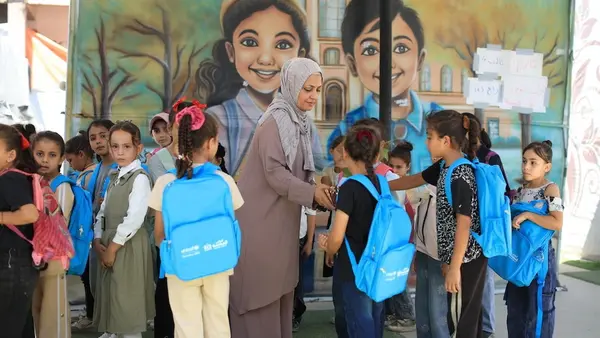
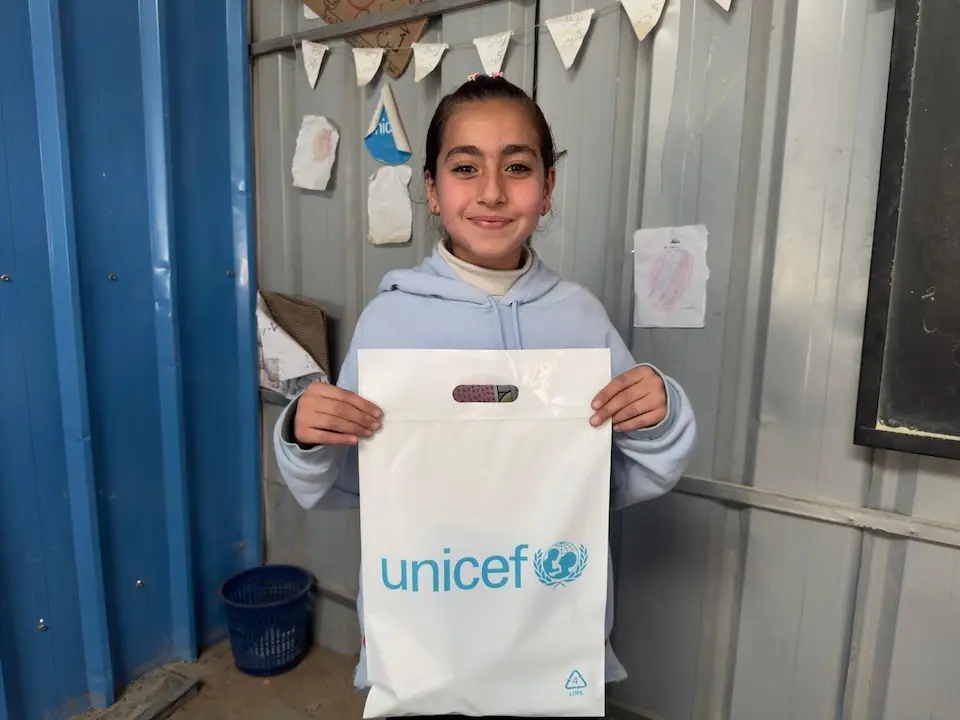
In a temporary learning space in Deir al-Balah, about 9 miles south of Gaza City, 13-year-old Masa fills a small bag with something she's been wanting for a very long time: school supplies. She's one of 700,000 students in Gaza whose education was disrupted by the war, and she's excited to be a student again.
For two years, all education materials have been blocked from entry into Gaza. If students could find any for sale in markets, they were prohibitively expensive. “I received a notebook, pen, eraser, ruler, geometry set, pencils and coloring pens,” Masa says. “These supplies will really help me study. I feel relieved because I won’t have to buy them at such high prices. When I grow up, I want to be an engineer.”
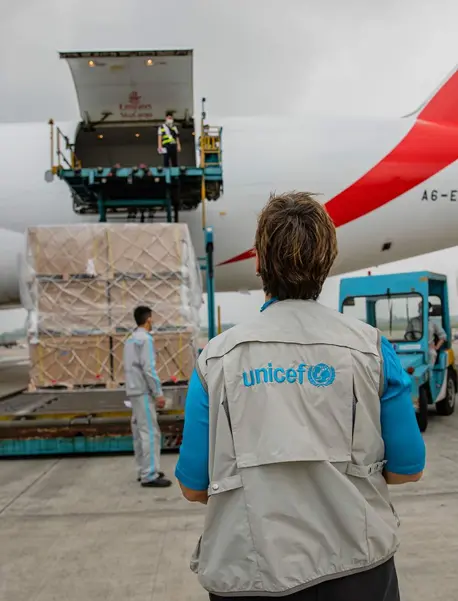
After months of waiting, UNICEF was finally allowed to bring in hundreds of School-in-a-Box kits containing education supplies, along with thousands of recreational kits filled with toys, balls and other playthings to help children get back to the business of being kids. More are expected to arrive in the coming weeks.
These supplies are an integral part of UNICEF's plan to restore access to education for every child in Gaza. UNICEF's Back to Learning program aims to get 336,000 children back into the classroom by the end of 2026, and provide in-person learning for all of Gaza's 700,000 school-age children in 2027.
Learn more: UNICEF Provides Critical Support for Children in Gaza
Video: What's inside a UNICEF School-in-a-Box kit?

Restoring access to education, with a laser focus on children's mental well-being
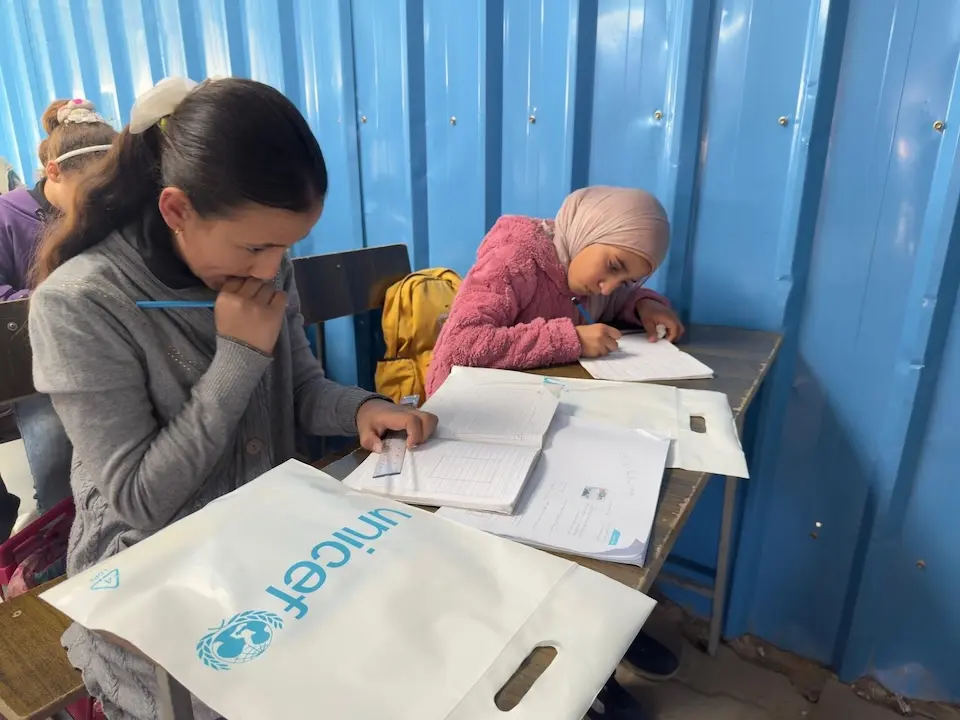
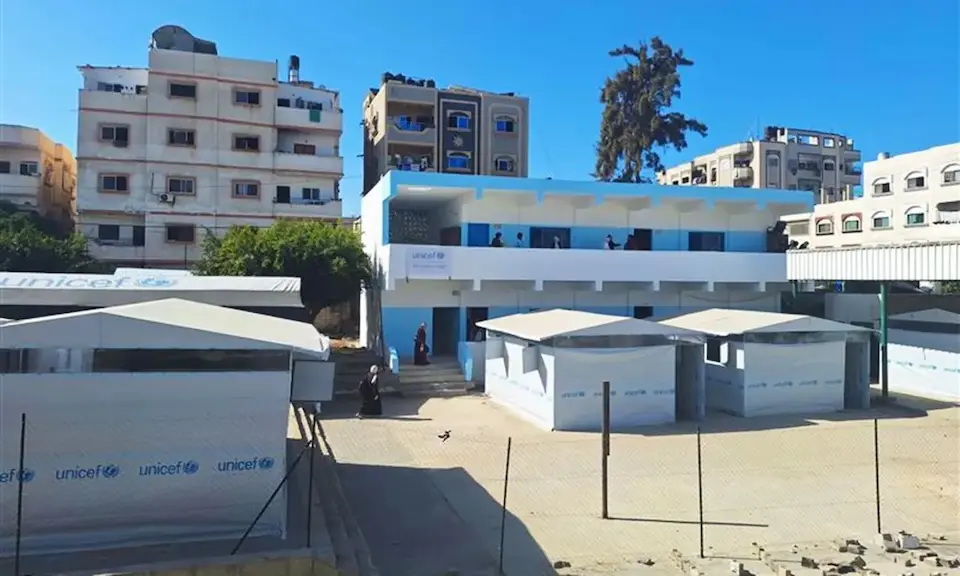
More than 90 percent of Gaza's schools were destroyed or sustained damage over the past two and a half years. Until they can be rebuilt or repaired, most education must take place in tents.
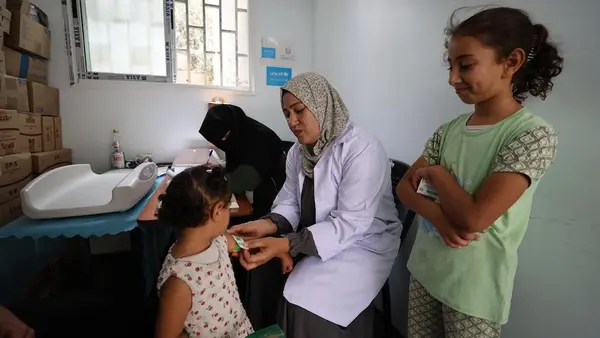
UNICEF currently supports 135,400 children at more than 100 multi-service learning spaces across Gaza. The centers "give children a place to read, write and build basic maths skills — but just as importantly, a place to play, breathe and feel human again, with activities and mental health support woven in," says UNICEF Global Spokesperson James Elder, who has traveled to Gaza six times since the start of the war in October 2023.
Learn more: Mental Health Crisis for Children in Gaza
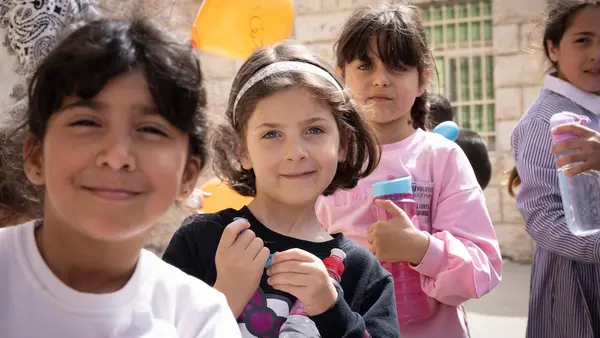
Children in Gaza are eager to get back to learning, playing and just being kids
Every existing learning space has a long wait list. Communities are creating their own makeshift classrooms in tents and damaged buildings. Debris needs to be cleared and the land deemed safe from unexploded ordinance, so that more learning sites can be built, especially in the north of Gaza.
Getting one child into a UNICEF learning center costs about $280 for a year, including mental health support. To reach 336,000 school-age children for the rest of this year, UNICEF urgently needs $86 million.
Almost two and a half years of attacks on Gaza's schooling have left an entire generation at risk
Nearly half of Gaza’s population is under 18. As the world talks about how Gaza will recover and rebuild, UNICEF is clear: children have to be at the heart of every plan.
For Gaza's children, education is "not a 'nice to have.' It is an emergency," Elder says. "Almost two and a half years of attacks on Gaza’s schooling have left an entire generation at risk. Sixty percent of school-aged children in Gaza currently have no access to in-person learning ... And more than 335,000 children under 5 are now at risk of severe developmental delays because early childhood services have collapsed."
Rebuilding schools and universities must be at the top of Gaza's recovery agenda
Before the war, Palestinians in Gaza had some of the highest literacy rates in the world. "Education was a source of pride, resilience and progress for generations," Elder says. "Today, that legacy is under attack: schools, universities and libraries have been destroyed, and years of progress erased.
"This is not just physical destruction — it’s an assault on the future itself, because every child denied learning is a future engineer, doctor, teacher or thinker taken from us before they’ve had a chance to shape their world. In the aftermath of this brutal war, rebuilding Gaza’s schools, educational facilities and universities must sit at the top of Gaza’s recovery agenda. Restoring education restores possibility."

Right now, the lives of the most vulnerable children hang in the balance as conflicts and crises jeopardize the care and protection that they deserve. Dependable, uninterrupted and effective foreign aid is critical to the well-being of millions of children. Please contact your members of Congress and urge them to support ongoing U.S. investments in foreign assistance.
HOW TO HELP
There are many ways to make a difference
War, famine, poverty, natural disasters — threats to the world's children keep coming. But UNICEF won't stop working to keep children healthy and safe.
UNICEF works in over 190 countries and territories — more places than any other children's organization. UNICEF has the world's largest humanitarian warehouse and, when disaster strikes, can get supplies almost anywhere within 72 hours. Constantly innovating, always advocating for a better world for children, UNICEF works to ensure that every child can grow up healthy, educated, protected and respected.
Would you like to help give all children the opportunity to reach their full potential? There are many ways to get involved.