Managing Menstruation With Dignity in Gaza
Highlights
- Unsanitary conditions and a lack of privacy make it hard for girls and women in Gaza to manage their menstrual health with dignity
- UNICEF learning sessions give girls a safe space to discuss the challenges they face
- In the first two weeks of April 2026, UNICEF distributed 6,000 personal care and protection kits for adolescent girls in Gaza
Girls and women struggle to manage their periods in the Gaza Strip, where privacy and access to essential supplies and services are limited. UNICEF and partners are there to help.
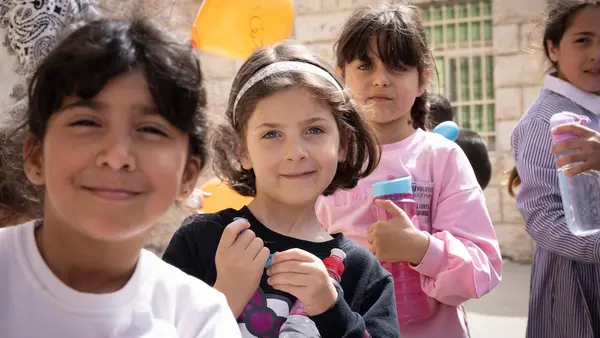
Approximately 800,000 children – the vast majority – remain displaced in the Gaza Strip, living in unsanitary and overcrowded conditions marked by insects, pests and rodents as well as a severe lack of privacy.
Girls and women face challenges managing their menstrual cycles safely and with dignity; the destruction of infrastructure has left more than 1.8 million people in need of some form of water, sanitation and hygiene (WASH) humanitarian assistance. Menstrual pads have all but disappeared in stores; when they can be found, the cost is out of reach for many.
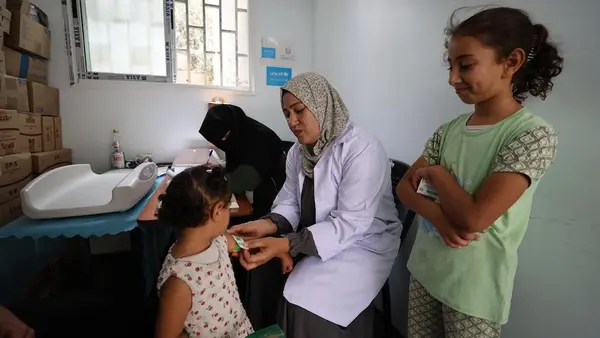
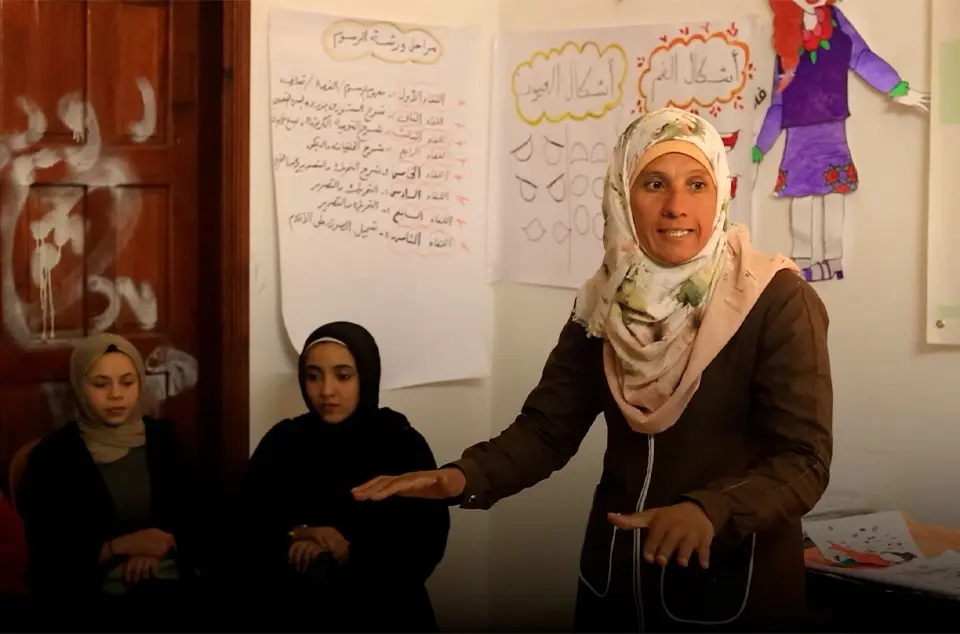
To give girls a safe space to share their concerns, UNICEF conducts learning sessions where girls come together to discuss menstrual hygiene and the challenges they face.
"The hardest thing I face in the tent as a girl is my menstrual cycle," said 14-year-old Lama. "Things like sanitary pads and toilet paper are difficult to access."
Learn more about how UNICEF supports resilience in Gaza
Video:
UNICEF dignity kits help adolescent girls manage menstrual health and hygiene
In the first two weeks of April, UNICEF and partners in Gaza distributed 6,000 adolescent girls’ personal care and protection packages containing sanitary pads, underwear, a scarf and a whistle.
A total of 880 adolescent girls, including 23 girls with disabilities, participated in awareness-raising sessions covering protection, well-being, menstrual health and hygiene management and the prevention of sexual exploitation and abuse.
"I love this project. It helped me learn, and it meets my needs as a girl," Lama said. "This project has given me hope for the future."
Learn more about UNICEF's work for Palestinian children and their families
Help UNICEF reach more children in need
HOW TO HELP
There are many ways to make a difference
War, famine, poverty, natural disasters — threats to the world's children keep coming. But UNICEF won't stop working to keep children healthy and safe.
UNICEF works in over 190 countries and territories — more places than any other children's organization. UNICEF has the world's largest humanitarian warehouse and, when disaster strikes, can get supplies almost anywhere within 72 hours. Constantly innovating, always advocating for a better world for children, UNICEF works to ensure that every child can grow up healthy, educated, protected and respected.
Would you like to help give all children the opportunity to reach their full potential? There are many ways to get involved.