Ukraine's Children Face the Most Dangerous Winter Yet
Ongoing, escalating attacks in Ukraine are interrupting children's schooling and threatening their lives. UNICEF continues to work with the Government of Ukraine to support safe learning and the systems children rely on.
Children in Ukraine must be protected from attacks — every child has the right to learn in safety
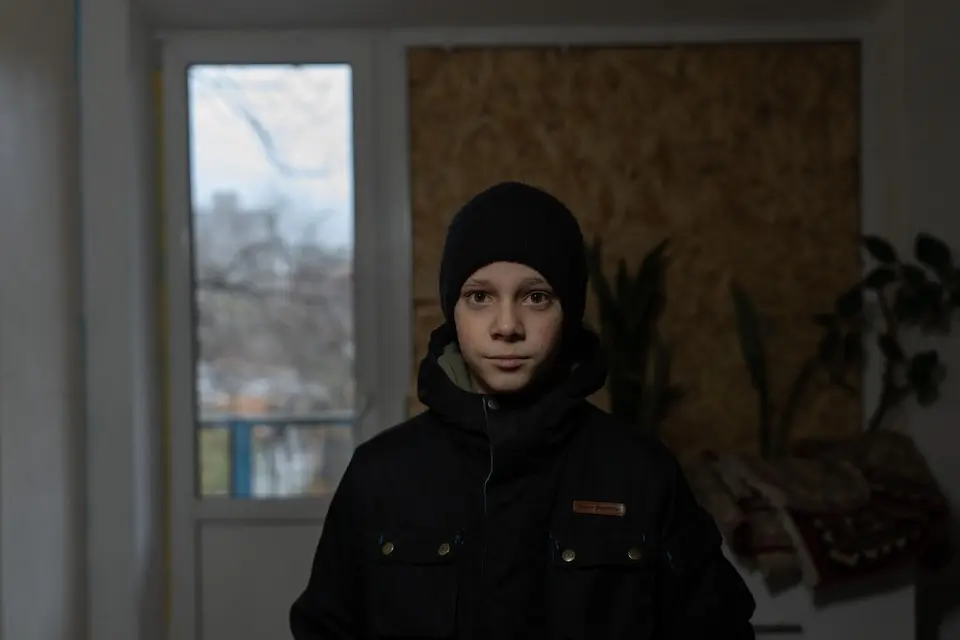
There are 24 students in 12-year-old Kostya's class at his school in Kyiv's Solomianskyi district, but he can't remember the last time he saw them all together. Some of the children have moved out of the city with their families, driven away by constant shelling, while others are regularly sick from the cold.
A typical school day begins in the classroom, but before long, students feel the impacts of war. "The lesson just starts, we sit at our desks, and then the siren sounds, and we go down to the shelter," Kostya says. "Then the all-clear sounds, and we go back up to the classroom. As soon as we sit back down, the siren sounds again. This can happen up to four times in just a few hours."
Nearly two-thirds of school days in Ukraine are interrupted by air-raid alarms
Since the start of the 2026–2027 academic year, children in Ukraine have experienced an average of 34 hours of air-raid alarms during school time, equivalent to more than 13 percent of scheduled learning hours, according to data covering the period up to Oct. 20.
Air-raid alarms occurred on nearly two-thirds of school days during September and October 2026, compared with around one-third in the same period in 2025. The average length of alarms during school hours has almost doubled from September 2025 to September 2026.
In Kyiv, school-time alarms rose from 12 in September 2025 to 71 in September 2026.
Helping Children and Families Recover in Ukraine
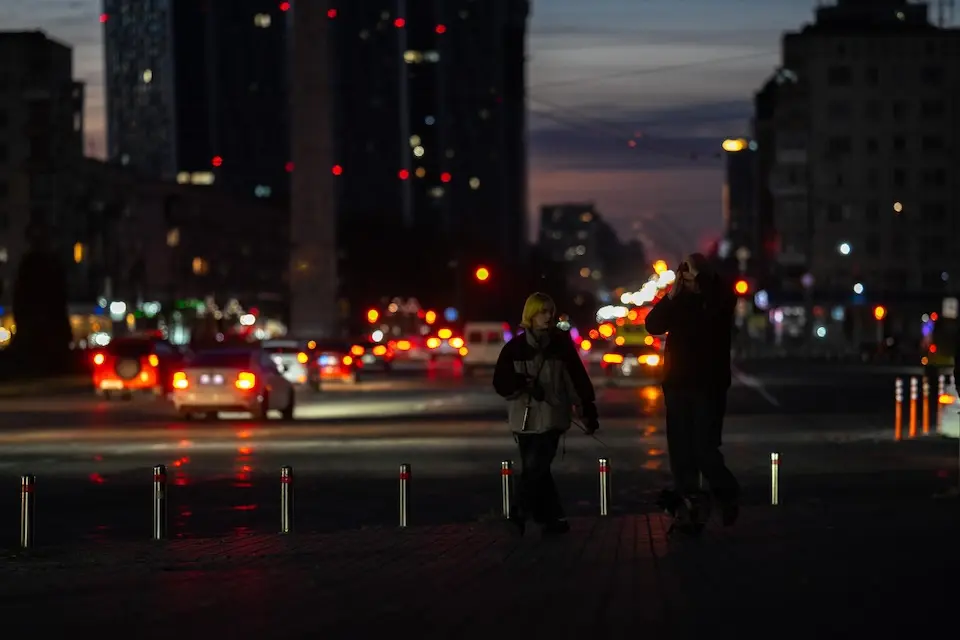
The UN has verified almost 2,000 attacks on educational facilities since the start of full-scale war in 2022
Meanwhile, children in Dnipropetrovsk, Kirovohrad and Kharkiv regions have experienced more than 60 hours of school-time alarms — equivalent to approximately one-quarter of scheduled learning hours, affecting more than 560,000 children.
Since the start of the full-scale war, the UN has verified almost 2,000 attacks on educational facilities, including some 270 in 2026 alone.
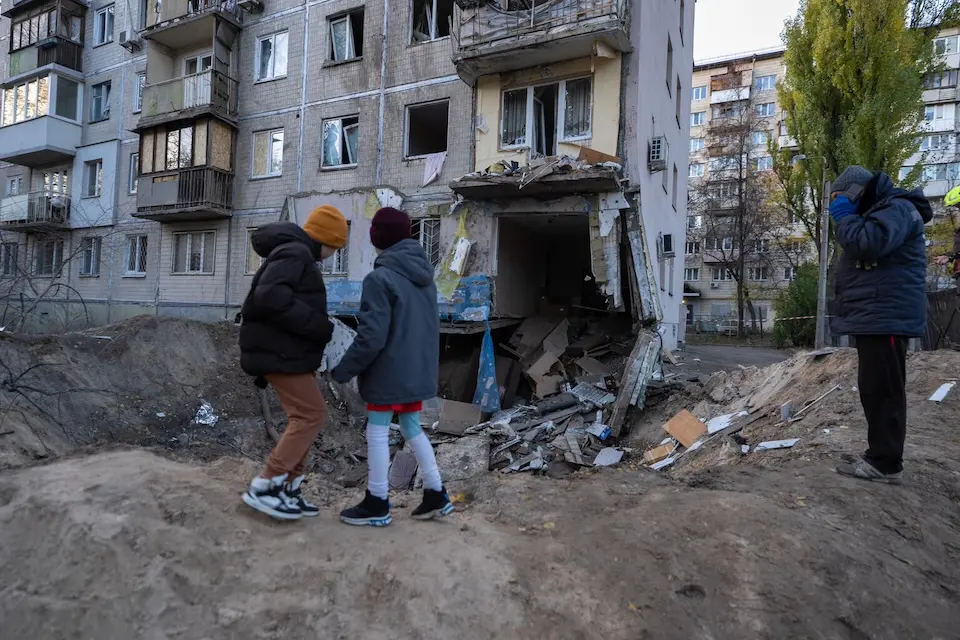
Kostya's school was damaged during a large-scale attack in August. But while the school was repaired before the start of the academic year, his apartment building was not so fortunate. His family is currently renting another apartment, but it is a long way from his school. So after classes, he returns to his damaged home to do his homework and wait for his father to finish work so they can travel to the temporary rented apartment together.
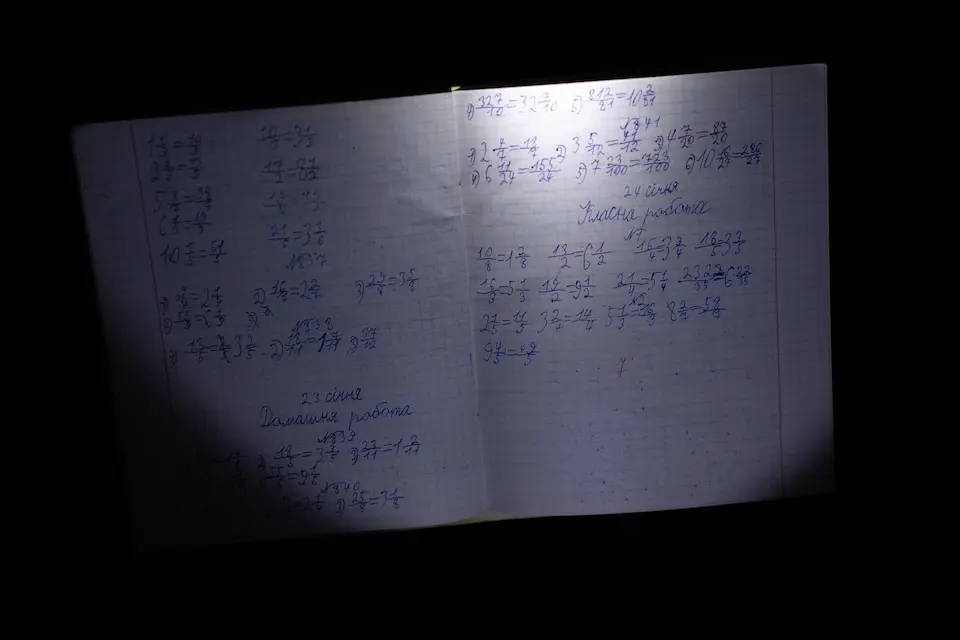
Kostya sits on the sofa in his old apartment without taking off his jacket, a flashlight tucked under his chin, doing his homework while trying to keep warm. His desk is warped from the shelling and the water firefighters used to extinguish the blaze in the building. Since the attack in August, when Kostya had to rescue his beloved dog, Irene, and bandage his grandmother's injured leg, his home has lost the safety, comfort and warmth it once had.
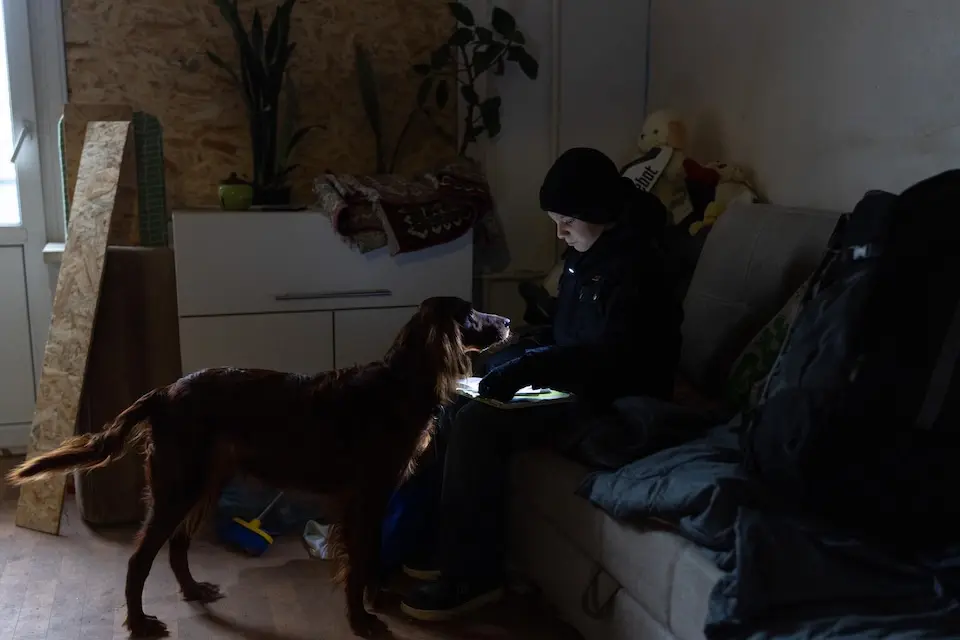
"A missile hit our building, and my neighbors were killed," Kostya says. "We were told we wouldn't be able to live here for several years because the roof was damaged and caught fire. In our apartment, a section of the wall collapsed onto my dad's head," he adds, gesturing to the ruins around him.
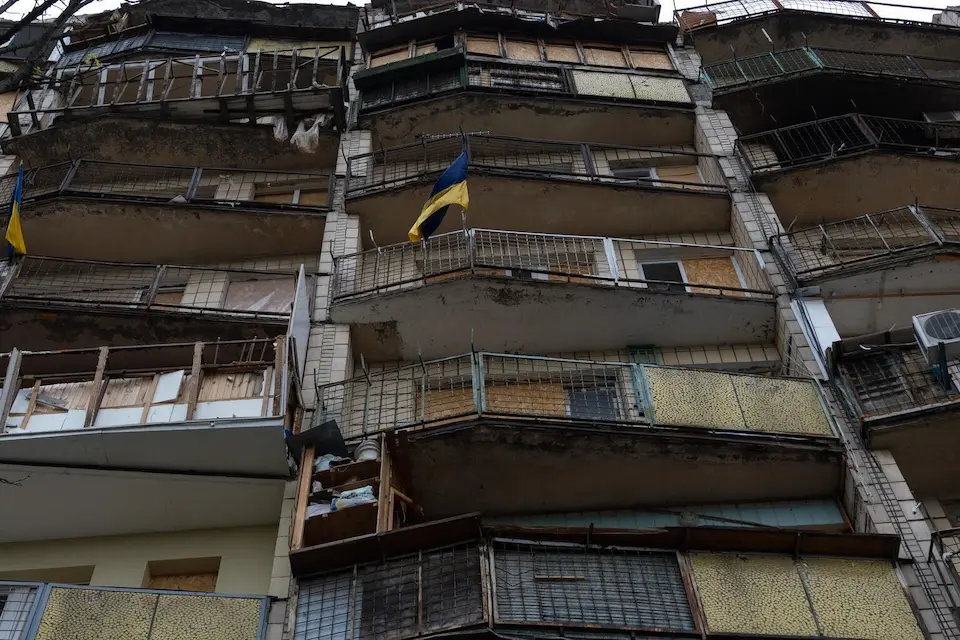
All the windows of the apartment building are covered with plywood sheets. "We won't get heating this year because the pipes were shattered by the explosion," says Kostya, helping his father, Dmytro, gather more of their belongings to move to the new apartment.
Emotional exhaustion is widespread; school offers a much-needed sense of normalcy
In an August UNICEF survey, nearly half of respondents (46 percent) reported feeling emotionally exhausted almost every single day. To help children and their parents cope with the stresses and shocks of life in a war zone, UNICEF and partners have reached more than 375,000 people with mental health and psychosocial support this year, including over 219,000 children.
After almost five years of war, school is one of the few places where a child can find some sense of normality — friends, teachers, routine, a place to feel safe.
“After almost five years of war, school is one of the few places where a child can find some sense of normality – friends, teachers, routine, a place to feel safe," said Ricardo Pires, UNICEF Global Deputy Spokesperson. "That matters, because this war is taking an enormous psychological toll on them."
UNICEF is outfitting shelters and underground education facilities and repairing schools damaged in attacks
UNICEF has invested in furnishing and equipping protected learning spaces, including shelters and underground educational facilities, so they can function as safe and child-friendly learning environments. UNICEF is also putting shatterproof film on classroom windows to protect students from broken glass, and repairing schools damaged by attacks.
To help children who have missed out of school, UNICEF runs catch-up programs; in the first nine months of 2026, almost 125,000 children participated. During the summer break, more than 45,000 children took part in intensive learning programs to maintain learning continuity.
Learn more: A Safe Space to Learn and Play in Ukraine
UNICEF has accelerated winter preparations to support families and the systems they rely on
UNICEF is working with the Government of Ukraine to help children and families endure the challenges of another winter with extreme sub-zero temperatures and disrupted services due to heating, power and water cuts. UNICEF's support includes:
- providing $45 million to the Ministry of Social Policy and Family Unity’s Humanitarian and Resilience Account to cover 104,000 households with a one-time winter cash transfer to help families meet their most urgent needs
- strengthening district heating systems for 3.2 million people
- installing back-up water and heat systems in 22 health facilities benefitting 200,000 people
Further urgent support to water and heating systems, health facilities, schools and families will be rolled out by the end of the year.
Learn more about how UNICEF is helping children in Ukraine this winter
This story is adapted from unicef.org
The story doesn't end here. Help change what happens next.
HOW TO HELP
There are many ways to make a difference
War, famine, poverty, natural disasters — threats to the world's children keep coming. But UNICEF won't stop working to keep children healthy and safe.
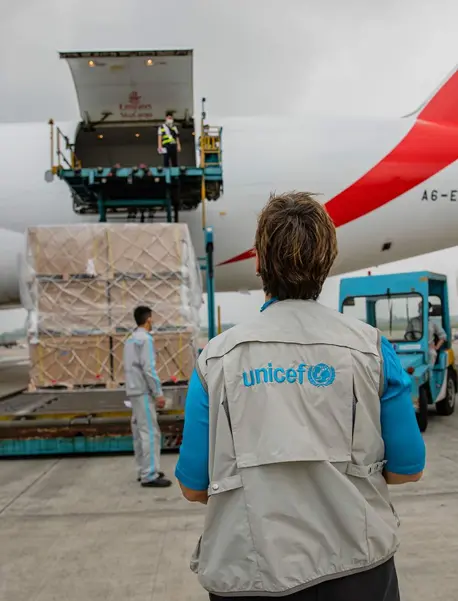
UNICEF works in over 190 countries and territories — more places than any other children's organization. UNICEF has the world's largest humanitarian warehouse and, when disaster strikes, can get supplies almost anywhere within 72 hours. Constantly innovating, always advocating for a better world for children, UNICEF works to ensure that every child can grow up healthy, educated, protected and respected.
Would you like to help give all children the opportunity to reach their full potential? There are many ways to get involved.