Famine Takes Hold in Sudan
In the western regions of Sudan — notably North Darfur, South Darfur, West Kordofan and South Kordofan — active conflict and severely restricted humanitarian access are driving a sharp deterioration in hunger and malnutrition. UNICEF is working with partners to provide urgently needed support for children and families.
Donate today. Your tax-deductible contribution can make a difference.
Violent conflict has shattered Sudan's economy and vital services
Now in its third year, the war in Sudan continues to devastate communities, leaving 30 million people — half of them children — in urgent need of assistance. The country is currently grappling with one of the most severe humanitarian crises globally, marked by the world’s largest displacement emergency. Ten million people continue to be displaced due to persistent conflict and systemic collapse.
The latest analysis of food insecurity and malnutrition in Sudan shows stark contrasts along conflict lines, the Food and Agriculture Organization of the United Nations (FAO), the World Food Program (WFP) and UNICEF warned today.
In areas where violence has subsided — allowing humanitarian access and market recovery — food security has begun to improve. But in conflict-hit locations that have been largely cut off from humanitarian assistance or under siege, famine has now taken hold.
The agencies are calling for an end to hostilities and safe, unimpeded and sustained humanitarian access, which is urgently needed to prevent further loss of life and protect livelihoods.

In areas where fighting has eased, improvements are tangible — but gains are limited
The latest Integrated Food Security Phase Classification (IPC) Special Snapshot confirms that by September 2025, acute food insecurity had slightly improved with an estimated 21.2 million — 45 percent of the population — facing high levels of acute food insecurity (IPC3+). An estimated 3.4 million people are no longer facing crisis levels of hunger (IPC3+) compared to the previous analysis (December 2024 to May 2025). The IPC and its Famine Review Committee are independent, evidence-based technical processes supported by multiple organizations, including FAO, WFP and UNICEF. No single agency issues or declares a famine.
These improvements follow a gradual stabilization since May 2025 in Khartoum, Al Jazirah and Sennar states, where conflict has eased. Families are returning home, markets are reopening and there is more consistent access for commercial and humanitarian supplies. But these gains are limited; the wider crisis has shattered the economy and vital services, and much of the infrastructure people rely on has been damaged or destroyed.
Good conditions for agriculture are also expected after the harvest and into 2026, with crisis levels of hunger improving to 19.3 million (October 2025 to January 2026). However, these fragile improvements are highly localized. Many families returning to Khartoum and Al Jazirah have lost everything and will struggle to benefit fully from the harvest.
Related: 5 Ways UNICEF Is Supporting Sudan's Children
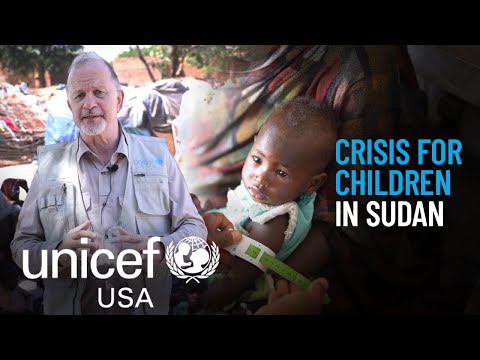
Hunger, disease and displacement are putting millions of children at risk
“The deadly combination of hunger, disease and displacement is placing millions of children at risk,” said Lucia Elmi, UNICEF Director of Emergency Operations. “Among them, girls often bear the brunt facing increased risks of malnutrition, gender-based violence and being pulled out of school. Therapeutic food, safe water and essential medicines and health services can save lives, but only if we can reach children in time. We urgently need parties to abide by their obligations under international law and to provide humanitarian actors with safe, timely and unhindered access to children.”
Therapeutic food, safe water and essential medicines and health services can save lives, but only if we can reach children in time. — Lucia Elmi, UNICEF Director of Emergency Operations
Across all critically affected regions, the drivers of hunger are clear: conflict, displacement and blocked humanitarian access. In Al Fasher and Kadugli, people have endured months without reliable access to food or medical care. Markets have collapsed and prices of staple goods have soared.
UNICEF, WFP and FAO are prioritizing the hardest-hit areas with integrated food, nutrition, health, WASH, protection and agricultural and livestock health support. But access remains inconsistent, and humanitarian workers and supplies are frequently targeted, while aid convoys face delays, denials and security threats.

Over half of UNICEF’s humanitarian funding requirement in Sudan remains unmet — 53 percent — threatening access to lifesaving nutrition, health, protection and education services as well as safe water. Without safe, sustained access, adequate funding and an end to violence, famine will continue to claim lives in Sudan.
Right now, the lives of the most vulnerable children hang in the balance as conflicts and crises jeopardize the care and protection that they deserve. Dependable, uninterrupted and effective foreign aid is critical to the well-being of millions of children. Please contact your members of Congress and urge them to support ongoing U.S. investments in foreign assistance.
HOW TO HELP
There are many ways to make a difference
War, famine, poverty, natural disasters — threats to the world's children keep coming. But UNICEF won't stop working to keep children healthy and safe.
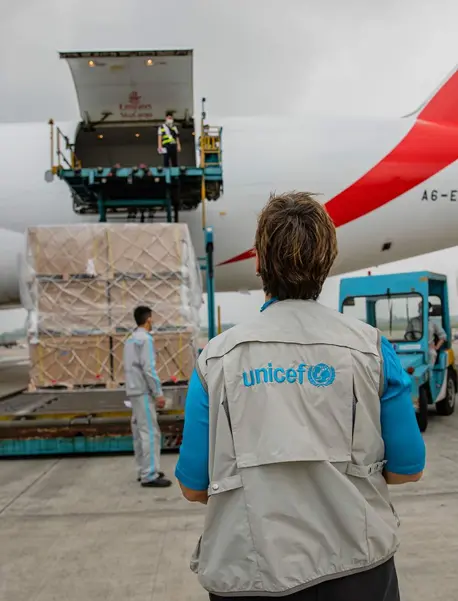
UNICEF works in over 190 countries and territories — more places than any other children's organization. UNICEF has the world's largest humanitarian warehouse and, when disaster strikes, can get supplies almost anywhere within 72 hours. Constantly innovating, always advocating for a better world for children, UNICEF works to ensure that every child can grow up healthy, educated, protected and respected.
Would you like to help give all children the opportunity to reach their full potential? There are many ways to get involved.