Crisis Deepens for Haiti's Children
A new UNICEF Child Alert highlights an unprecedented displacement crisis in Haiti as violence and collapsing services push children to the brink. Without an immediate injection of resources, UNICEF warns, critical programs will be severely constrained, depriving children of the protection and care they desperately need. Learn more, including how to help support the UNICEF Haiti response.
UNICEF Child Alert: Haiti's unprecedented displacement crisis
The number of children displaced by violence in Haiti has almost doubled in the past year, with 680,000 now uprooted from their homes, according to a new UNICEF Child Alert released on Oct. 9, 2025.
More than 1.3 million people are now displaced across the country as spiraling violence, collapsing services and lack of humanitarian access push Haiti deeper into crisis.
Armed groups control more than 85 percent of Port-au-Prince and key roads, cutting families off from food, health care and protection, while humanitarian actors risk grave danger to reach those most in need, UNICEF reported.

More than 3.3 million children in Haiti require humanitarian assistance, including over 1 million children who face critical levels of food insecurity. The number of displacement sites has soared to 246 nationwide. Many children have been forced to flee multiple times.
At least 276,000 children under 5 face acute malnutrition. Cholera remains a significant public health concern, with over 90,000 cases reported since 2022.
“Children in Haiti are experiencing violence and displacement at a terrifying scale,” said Catherine Russell, UNICEF Executive Director. “Each time they are forced to flee, they lose not only their homes but also their chance to go to school, and simply to be children.”
Children in Haiti are experiencing violence and displacement at a terrifying scale. Each time they are forced to flee, they lose not only their homes but also their chance to go to school, and simply to be children. — Catherine Russell, UNICEF Executive Director
As the Child Alert highlights, displacement is compounding other overlapping crises in the country. Over one-third of sites sheltering displaced families lack basic protection, leaving children and women at heightened risk of violence, exploitation and abuse. Many schools are doubling as shelters, further disrupting education for nearly half a million students.
Read the full report: The Polycrisis for Children in Haiti: UNICEF Child Alert October 2025

UNICEF is on the ground responding to Haiti's humanitarian crisis
So far this year, together with partners, UNICEF has treated more than 86,000 children suffering from wasting, including 21,000 suffering from severe acute malnutrition. UNICEF has also provided health care to 117,000 people and reached 140,000 people with clean, safe water.
Since 2024, 178 children who had been associated with armed groups have been demobilized and reintegrated into society, with help from UNICEF and the government of Haiti. UNICEF continues to support children's education through temporary learning centers and vocational training programs, by supporting the rehabilitation of school infrastructure and distributing learning materials.
Learn more about UNICEF's response to the Haiti Crisis
Supporting children's mental health and education
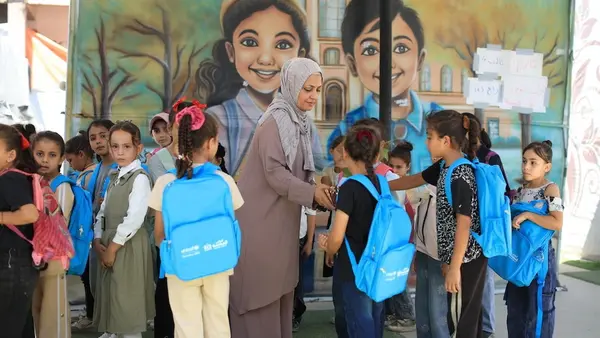
A large-scale program focused on the mental health and psychosocial well-being of young people in schools has benefitted more than 10,000 students across 19 schools in Centre department and around the Port-au-Prince metropolitan area.
Since January 2025, education teams have provided mental health and psychosocial support services (MHPSS) and structured recreational activities to help children recover from trauma caused by the ongoing crisis. Nearly 5,600 teachers have received MHPSS training, and tens of thousands of displaced children have been reintegrated into schools.
These results, however, represent only a fraction of the needs on the ground.

Urgent call for international support
UNICEF is calling for urgent international support to help scale up lifesaving assistance and protection for displaced children, including safe shelter, family tracing and reunification, psychosocial support and access to health, nutrition, education and clean water and sanitation. Without an immediate injection of resources, UNICEF warns, critical programs will be severely constrained, depriving children of the protection and care they desperately need.
The Child Alert asks governments, donors and all actors to step up to ensure humanitarian action plans are fully funded and to invest in Haiti's recovery to break the cycle. Safe and secure humanitarian access for humanitarian workers and families must also be ensured to protect children from violence, hunger and disease.
“The children of Haiti cannot wait,” Russell said. “Like every child, they deserve a chance to be safe, healthy and to live in peace. It is up to us to take action for Haiti’s children now.”
Without an immediate injection of resources, UNICEF warns, critical programs will be severely constrained, depriving children of the protection and care they desperately need.
The Child Alert is the latest report from UNICEF about the ongoing crisis in Haiti. UNICEF has been on the ground in Haiti since 1983, staying and delivering for children in need, and consistently calling on all parties to conflict to take action to ensure the protection of children and respect for their fundamental rights.
In 2024 there were 2,269 grave violations against children verified by the UN — nearly five times more than the year before. Grave violations include killing, maiming, sexual violence, abduction, recruitment by armed groups, attacks on schools and hospitals and the denial of access to humanitarian assistance.
"Every child in Haiti has the right to safety, dignity and protection," Geeta Narayan, UNICEF Representative in Haiti, said in a statement following reports that at least six children and several adults had been killed during a drone strike in the capital city's Simon Pelé neighborhood.
"UNICEF stands with the children of Haiti and will continue working with its partners to ensure their rights are upheld and safeguarded at all times.”
Right now, the lives of the most vulnerable children hang in the balance as conflicts and crises jeopardize the care and protection that they deserve. Dependable, uninterrupted and effective foreign aid is critical to the well-being of millions of children. Please contact your members of Congress and urge them to support ongoing U.S. investments in foreign assistance.
Frequently Asked Questions (FAQ)
What is causing the crisis for children in Haiti?
Escalating violence, collapsing services and rising food insecurity have intensified humanitarian needs among children in Haiti. Over 680,000 children are displaced.
How is UNICEF responding?
UNICEF is providing nutrition, clean water, health care, psychosocial support and education for displaced children.
How can I help?
Donate to UNICEF USA to support UNICEF's lifesaving programs for children in Haiti and around the world.
HOW TO HELP
There are many ways to make a difference
War, famine, poverty, natural disasters — threats to the world's children keep coming. But UNICEF won't stop working to keep children healthy and safe.
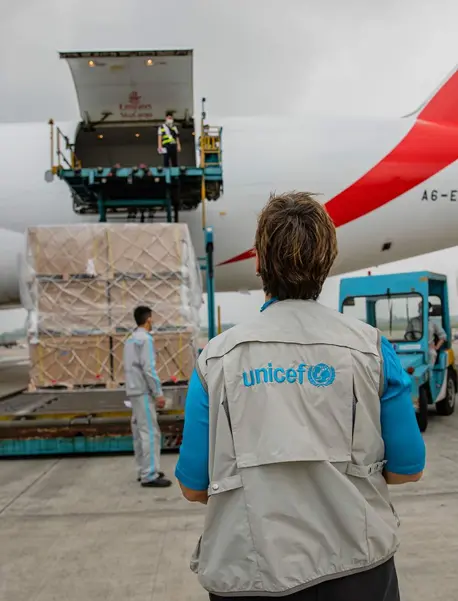
UNICEF works in over 190 countries and territories — more places than any other children's organization. UNICEF has the world's largest humanitarian warehouse and, when disaster strikes, can get supplies almost anywhere within 72 hours. Constantly innovating, always advocating for a better world for children, UNICEF works to ensure that every child can grow up healthy, educated, protected and respected.
Would you like to help give all children the opportunity to reach their full potential? There are many ways to get involved.