6 Ways UNICEF Supports Youth Mental Health
Children exposed to conflict and other traumatic events face severe emotional stress that can result in lifelong mental health and psychosocial issues. A look at how UNICEF works with partners to provide the support and protection they need to survive a crisis and go on to thrive.
Help protect children globally by supporting UNICEF programs
Mental health support: a child protection priority for UNICEF
Supporting the mental health and well-being of vulnerable children and adolescents — and their caregivers — is mission critical for UNICEF.
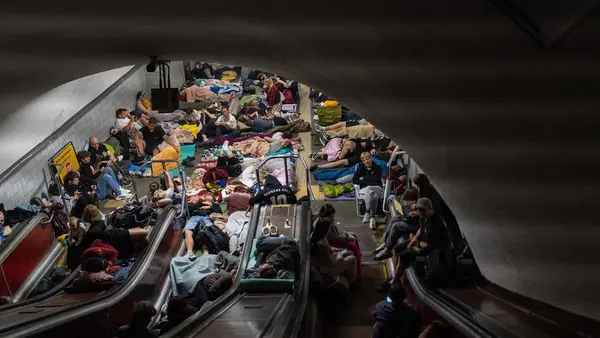
In a war or natural disaster such as an earthquake or flood, children are often subjected to unspeakable horrors: violence, displacement, separation from loved ones, their schools and communities. They lose access to essential services like clean, safe water and health care.
Living somewhere unsafe or uncertain brings fear, sadness, anger and a sense of hopelessness. This takes its toll on a child's mental health, and the effects can last a lifetime.
For these reasons and more, UNICEF integrates mental health and psychosocial support (MHPSS) into every emergency response to protect children and families from further suffering and strengthen their resilience, during a crisis and beyond.
Here's a closer look at six ways UNICEF delivers MHPSS to children and adolescents in need.
Learn more about how war trauma affects children's brains

1. Child-friendly spaces
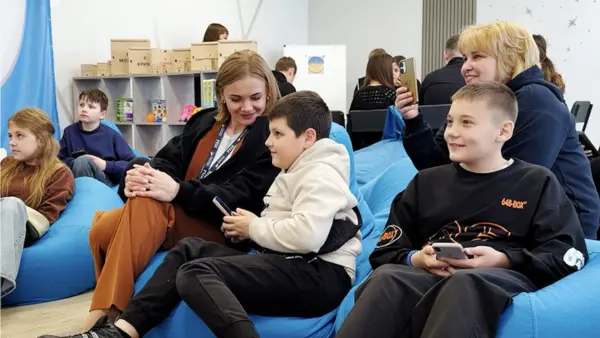
Where children are affected by conflict and in other humanitarian settings, UNICEF works with partners to set up child-friendly spaces — safe places where children and adolescents can participate in a number of structured or creative activities, from playing sports to making art to stacking blocks on a play mat. Group sessions are designed to teach problem solving and other skills and to help kids learn to manages stress and other emotions.
UNICEF-trained counselors share strategies to help kids cope with feelings like grief and despair. Recreational kits provided by UNICEF contain supplies for stress-relieving games. Individual support or referrals to specialized care may also be provided as needed.
In 2024, UNICEF provided MHPSS to over 2.6 million children and 168,000 caregivers through child-friendly spaces and similar community-based mechanisms.
Learn more about UNICEF's child-friendly spaces and the healing power of interacting with peers
2. Temporary classrooms
When a natural disaster or other emergency forces schools to shut, UNICEF works with partners to set up temporary classrooms so kids can not only continue their education and avoid learning loss, but also get back into a regular routine in a safe, nurturing environment. UNICEF has found that providing opportunities for children who've experienced conflict or disaster to reclaim some normalcy goes a long way toward supporting their mental health and well-being.
3. Psychological first aid
UNICEF's emergency response personnel are trained to provide immediate emotional and practical support to children and their family members who may be experiencing acute distress during an emergency. In collaboration with the World Health Organization (WHO) and other partners, UNICEF develops and disseminates guidelines, tool kits, teacher's guides and other resources to equip frontline workers with knowledge and skills to provide similar support.

4. Supporting caregivers and teachers
Adults often need support themselves. UNICEF works with partners to ensure that parents, caregivers, teachers and other service providers have access to MHPSS through counseling, peer support groups and other initiatives. Education programs help train parents and caregivers to recognize a child in distress and provide them with the tools they need to better support them.
In countries such as Ethiopia, Haiti, Lebanon, Mali and Sudan, UNICEF-backed initiatives train teachers in psychosocially responsive teaching practices, so they can better help kids who have experienced trauma recover and continue learning.
Learn more about where UNICEF works
5. Storytelling and digital media
Insecurity and access constraints often make MHPSS difficult or even impossible to deliver in person. In the face of this reality, UNICEF has invested in digital and remote solutions to reach those in need with coping strategies and to promote self-care.
One example is the audiobook, My Hero Is You: Supporting Each Other When Wars Come. Originally released in 2020 and more recently adapted for use in Gaza and the Democratic Republic of Congo, the story incorporates the voices and ideas of 1,500 children, parents and caregivers who were asked how they managed their feelings and supported each other's well-being during times of war and about their future hopes and dreams.
6. Sports
UNICEF's global Sports for Development (S4D) program, implemented in some 50 countries in partnership with their governments and local organizations, provide vulnerable children and adolescents with opportunities to thrive through physical activity and team play.
Focused on reaching at-risk youth, including those living in marginalized, impoverished communities — not just active crisis zones, S4D programs introduce girls and boys ages 6-18 to all kinds of sports — football, badminton, kabaddi, cricket, skateboarding, surfing — in service to its primary objective: promoting physical as well as mental health and psychosocial well-being.
Related: The Power of Sports and Play

In Bangladesh, three-quarters of S4D participants are girls. Through self-defense training, girls learn practical safety skills while also building strength, confidence and independence. Community mobilizers and facilitators, employed by the government and supported by UNICEF, play a key role in teaching participants about the risks of child marriage and child labor and encouraging families to prioritize girls' education and protection.
Since launching in Bangladesh in April 2022, S4D has reached over 13 million children, parents and other community members in 37 different locations, helping to advance equality for girls at a grassroots level.
Integrating mental health support across other program areas
UNICEF's MHPSS work is guided by a number of key objectives and strategies to optimize impact, including adapting services to local contexts, listening to what communities identify as their priorities, creating nurturing environments that provide the conditions for a child’s optimal development and offering a range of interventions to meet complex needs.
UNICEF recognizes that the mental and psychosocial well-being of children is deeply interconnected with that of their caregivers, communities and broader social systems. As such, UNICEF takes a whole-of-society approach — one that reflects the importance of strengthening family and community support networks, helping to build capacities within health, education, social and other sectors to provide child and family-friendly MHPSS services and to foster cross-sector collaboration.
In 2024, the integration of MHPSS into multiple entry points in humanitarian settings helped UNICEF-supported services reach an estimated 58.4 million children, adolescents and caregivers in more than 76 countries. Direct community-based MHPSS services reached 22.6 million children last year.
Read more about UNICEF's impact through humanitarian action in 2024
Advocacy and leadership are also central to UNICEF’s MHPSS efforts. UNICEF backed a landmark resolution, adopted at the World Health Assembly in May 2024, that commits countries to prioritize MHPSS before, during and after armed conflicts, natural and human-caused disasters and health and other emergencies.
Later in the year, at a convening of 60 global leaders co-hosted by UNICEF, an acceleration plan was set to scale up proven tools, pioneer innovations and strengthen platforms for understanding MHPSS needs in emergency settings.

Case study: Scaled national programs support child and caregiver mental health in Syria
In Syria, UNICEF has helped scale a program called Sawa ("Together" in Arabic) and another called Sanadi ("My Rock") for children and caregivers affected by displacement, poverty and other fallout from Syria's ongoing crisis.
Sawa's age-specific group interventions for children focus on emotional literacy, self-regulation, empathy, social skills and agency. Sanadi sessions for caregivers focus on building knowledge and skills to improve emotional connection, reduce stress and foster nurturing home environments through enhanced understanding of children’s developmental and emotional needs, better family communication and responsive parenting practices.
In 2024, these services, delivered in both fixed centers and through mobile outreach teams, reached more than 134,000 children in 553 communities in 14 Syria governorates and over 39,000 caregivers.
Assessments conducted by trained frontline workers found several positive reported outcomes among program participants, including greater self-confidence, reduced peer violence, improved parent-child relationships and enhanced school engagement.
"Together, Sawa and Sanadi represent a comprehensive, scalable and community-rooted approach to addressing MHPSS needs in humanitarian settings," UNICEF noted in its global annual results report. "By strengthening both child and caregiver capacities, these programs are helping to rebuild the social fabric..., contributing to long-term resilience."
Learn more about UNICEF's mental health and psychosocial support programs
HOW TO HELP
There are many ways to make a difference
War, famine, poverty, natural disasters — threats to the world's children keep coming. But UNICEF won't stop working to keep children healthy and safe.
UNICEF works in over 190 countries and territories — more places than any other children's organization. UNICEF has the world's largest humanitarian warehouse and, when disaster strikes, can get supplies almost anywhere within 72 hours. Constantly innovating, always advocating for a better world for children, UNICEF works to ensure that every child can grow up healthy, educated, protected and respected.
Would you like to help give all children the opportunity to reach their full potential? There are many ways to get involved.