Rana's Recovery With RUTF: a Story of Hope in Yemen
In Yemen, community health volunteers like Hajar Mohammed are a lifeline for families displaced by conflict, connecting children to essential health and nutrition services — including treatment for severe acute malnutrition.
A timely intervention
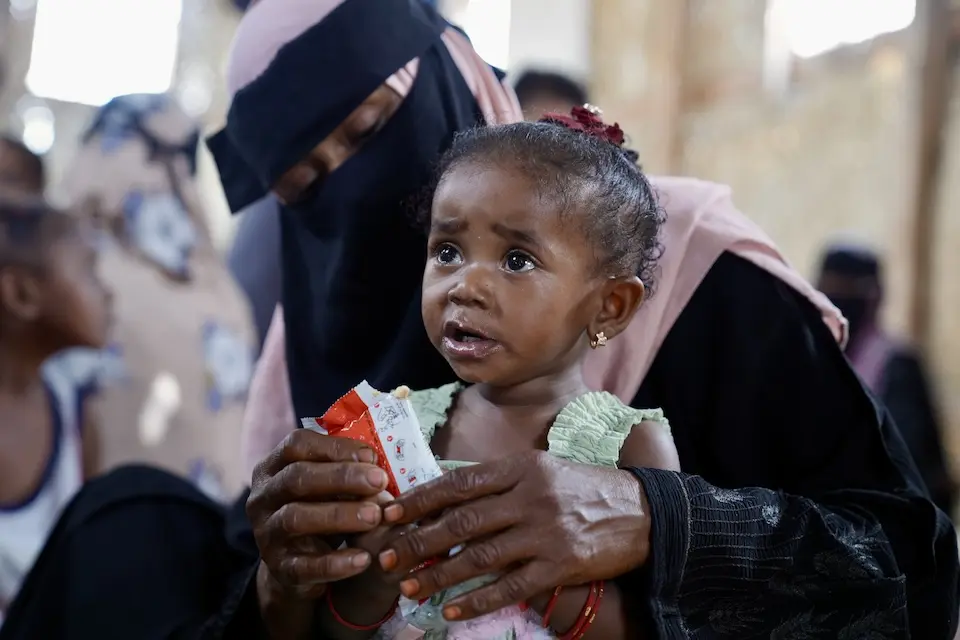
Rana was 12 months old when her symptoms started. "The child suffered from constant diarrhea and became very weak," her mother Amna explains. "She wasn't eating properly."
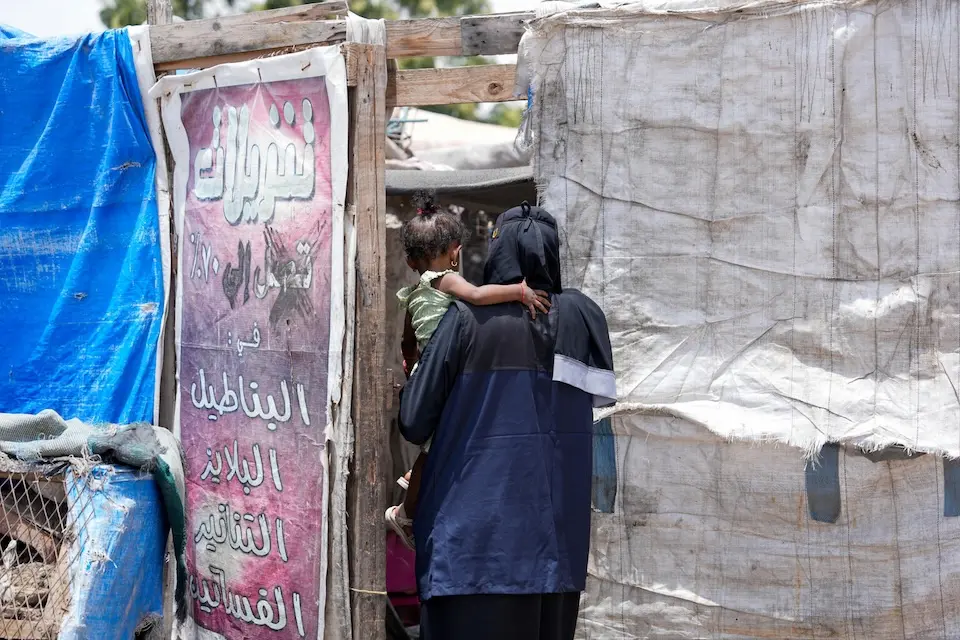
The family had fled conflict in Al-Hudaydah, a port city on Yemen's western coast, for Lahj eight years ago. They were living in a displacement camp where the harsh conditions left young children like Rana at high risk of malnutrition.
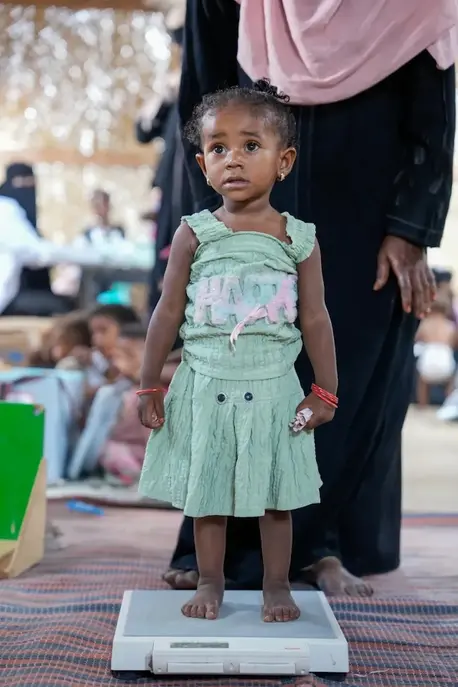
When her daughter fell ill, Amna said she felt helpless. The camp lacked both the medical facilities and trained staff needed for treatment, and the family could not afford to travel to a distant health center.
That's when Hajar Mohammed, a community health and nutrition volunteer, stepped in. During a routine home visit, Hajar noticed Rana’s frail condition, recognized the severity of the situation and immediately referred the child to a UNICEF-supported mobile clinic.
"My primary mission is to eliminate malnutrition among children through early detection and community awareness," Hajar says. "I help mothers reach the medical teams so their children can receive the urgent assistance they need."
At the mobile clinic, the team conducted a thorough examination and diagnosed Rana with severe acute malnutrition (SAM), also known as severe wasting. Children with SAM are dangerously thin for their height, with weakened immune systems that can make ordinary childhood illnesses turn fatal.
Rana was immediately started a course of ready-to-use therapeutic food (RUTF). The team had reached her in time.
Learn all about RUTF — the therapeutic food saving children's lives
Mobile health teams and the pivotal role of community volunteers
In a country facing one of the world's most severe nutrition crises — roughly half a million children in Yemen suffer from SAM — mobile health teams serve as a vital lifeline, providing essential services and support to families displaced by conflict and those living in Yemen’s most isolated rural areas.
In addition to treating children with malnutrition, mobile teams also administer lifesaving vaccinations and offer maternal care. They provide antibiotics, deworming medicines and nutritional supplements such as micronutrient powders and folic acid to prevent anemia. Services are provided free of charge.
UNICEF supports these interventions with funding from the UK's Foreign, Commonwealth & Development Office (FCDO). This support enables community health workers and volunteers like Hajar to reach into the heart of displaced communities. Their ability to identify children who are malnourished and refer them for treatment helps ensure that essential care reaches those who need it most.
Following Rana’s initial treatment, Hajar continued to visit the family for two months to support Rana's recovery. "This follow-up is the most important part of my work," Hajar explains.
"I am so grateful to the medical team," Amna says. "They took care of my daughter and monitored her health until she was strong again."
Learn more about UNICEF's ongoing emergency response for children in Yemen
UNICEF's call to action to address child malnutrition worldwide
Child wasting continues to threaten the lives of millions of children around the world in both development and humanitarian contexts. Today, an estimated 43 million children worldwide face wasting at any point in time.
Tackling this crisis requires a comprehensive strategy. UNICEF advocates for:
- investing in prevention, by supporting maternal nutrition, breastfeeding and complementary feeding during a child's first 1,000 days
- strengthening local production of RUTF to reduce dependence on imports, cut costs and ensure faster delivery during crises
-
increasing and coordinating financing from both donors and national governments to strengthen prevention and treatment programs
-
building stronger, integrated systems that ensure children have access to nutritious, affordable and safe food; quality water, sanitation and health services; and social safety nets that shield families from economic shocks
Read more about how UNICEF fights child hunger
This story is based in part on an article previously published by UNICEF Yemen
HOW TO HELP
There are many ways to make a difference
War, famine, poverty, natural disasters — threats to the world's children keep coming. But UNICEF won't stop working to keep children healthy and safe.
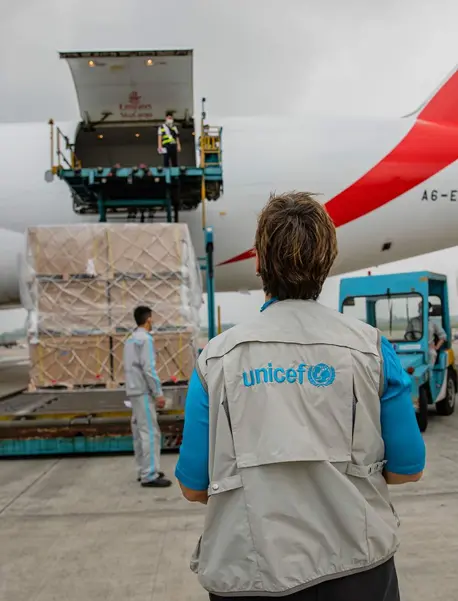
UNICEF works in over 190 countries and territories — more places than any other children's organization. UNICEF has the world's largest humanitarian warehouse and, when disaster strikes, can get supplies almost anywhere within 72 hours. Constantly innovating, always advocating for a better world for children, UNICEF works to ensure that every child can grow up healthy, educated, protected and respected.
Would you like to help give all children the opportunity to reach their full potential? There are many ways to get involved.