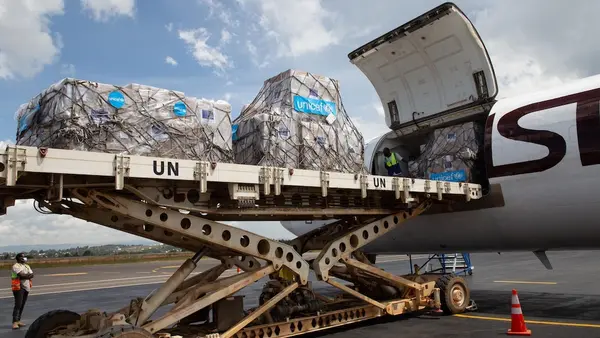
Child Malnutrition Surges Across Afghanistan
Highlights
- 3.7 million children across Afghanistan are acutely malnourished
- With ready-to-use therapeutic food (RUTF), severely malnourished children can make a full recovery
- Poor diets and food insecurity are driving malnutrition; younger children and girls are disproportionately affected
- UNICEF is working with partners to improve nutritional outcomes for children in Afghanistan; more help is needed
Very young children are the hardest hit by Afghanistan's growing malnutrition crisis. UNICEF is working to improve nutritional outcomes but global humanitarian aid cuts are making a bad situation worse. Here's how to help.
Four out of five children suffering from severe acute malnutrition in Afghanistan are under age 2
Across Afghanistan, 3.7 million children are currently suffering from wasting — they are acutely malnourished, including around 1 million with life-threatening severe acute malnutrition.
“It’s a crisis which disproportionally affects the youngest and most vulnerable," says Dr. Tajudeen Oyewale, UNICEF Representative in Afghanistan. “We are already seeing immense pressure on hospitals: since the beginning of the year more than half a million children were admitted for high-risk moderate wasting and severe wasting."
Nearly 40 percent of children admitted to hospitals with severe wasting and medical complications in Afghanistan are babies under 6 months old. Children under 2 account for 83 percent of all severe acute malnutrition cases. In parts of southern Afghanistan, some hospitals are seeing three or four severely malnourished children for every available bed.
Video:
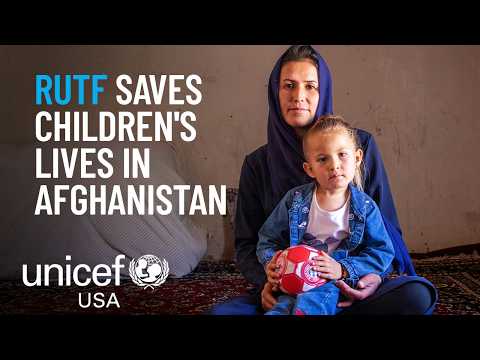
Severely malnourished children can make a full recovery with ready-to-use therapeutic food (RUTF)
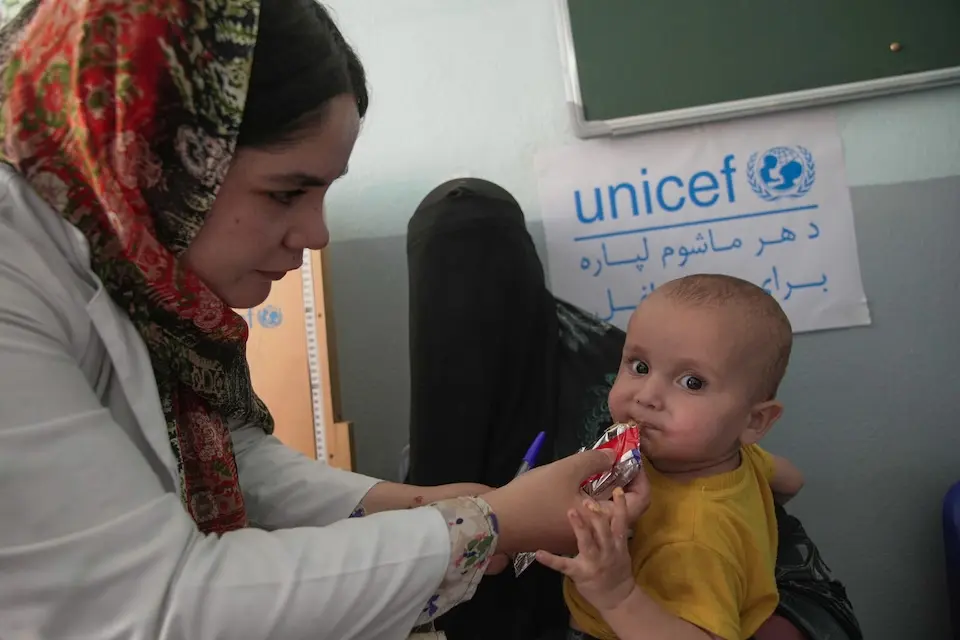
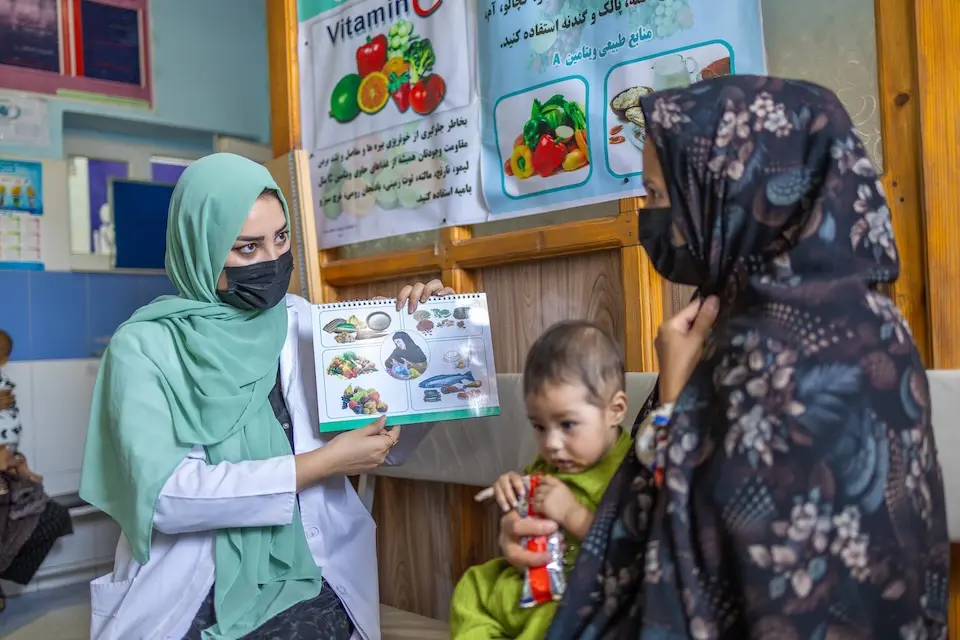
Midwife Sharifa Amiri runs the nutrition section at a UNICEF-supported health center in Daikundi Province in central Afghanistan, providing malnutrition screenings and treatment for children between the ages of 6 months and 5 years.
"It is very hard for a mother when her child becomes malnourished, when they do not gain weight, have no appetite and are restless," Amiri says. "It is usually because the mothers are malnourished that their children also become malnourished. Out of every four children, two or three are born underweight, and this leads to malnutrition."
I felt as if God had given me a healthy, well child again. — mother and midwife Sharifa Amiri, Daikundi Province
Amiri knows firsthand the despair mothers feel when their children don't get the nourishment they need: her own daughter, Armina, was diagnosed with severe acute malnutrition when she was 7 months old. She recovered after starting a regimen of ready-to-use therapeutic food (RUTF), a shelf-stable, nutritious peanut-based paste that can restore a malnourished child to health, typically in four to eight weeks.
Seeing her daughter regain her strength, "I was so happy," Amiri says. "I felt as if God had given me a healthy, well child again."
Learn more about ready-to-use therapeutic food (RUTF)
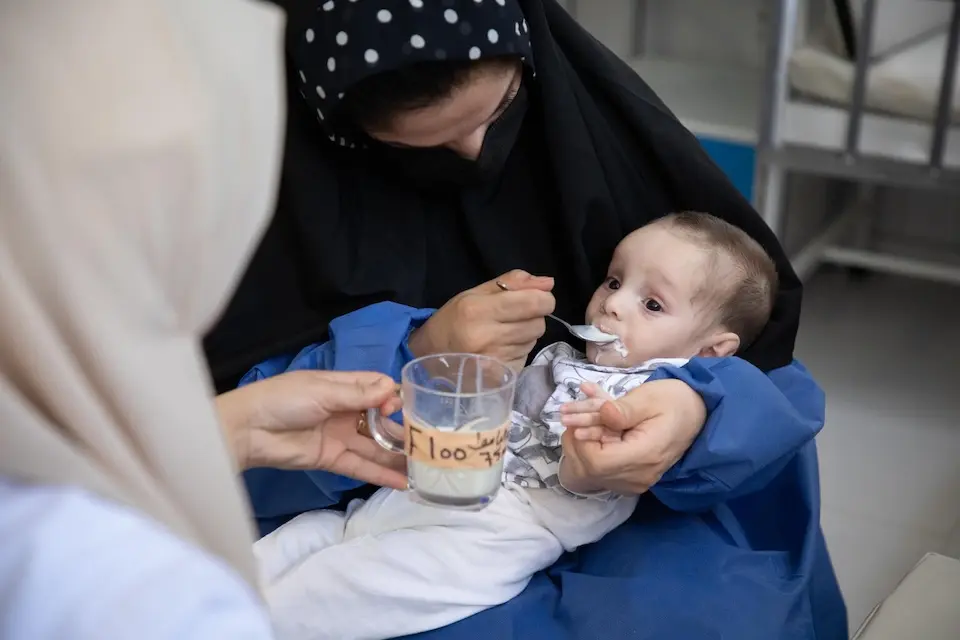
Nearly half of Afghanistan's children experience food insecurity
In July, UNICEF released a report: Too Little, Too Late: The Diet Crisis Facing Children in Afghanistan, examining how poor diets and food insecurity are driving malnutrition among young children across the country.
Drawing on data from more than 37,000 children from all 34 provinces, the report shows that nearly half of the country's children experience moderate or severe food insecurity. It also found that children facing severe food insecurity are up to six times more likely to be wasted during peak malnutrition periods, with younger children and girls disproportionately affected.
"The findings are deeply concerning," says Dr. Oyewale. "Families begin cutting back on nutritious foods. Children eat fewer different types of food. Meals become smaller. Meals are skipped. And, eventually, some children go hungry."
Half of Afghanistan's children are living in severe child food poverty, eating foods from just two or fewer food groups a day. When children reach 6 months of age and should begin receiving nutritious complementary foods alongside breast milk, the reality for many families is very different. A child's first foods may consist of little more than bread with tea or watered-down yogurt.
For a growing child, that is simply not enough.
A child who is already poorly nourished and then develops severe diarrhea or a respiratory infection can deteriorate very quickly. And a child who repeatedly becomes sick is, in turn, much more likely to become malnourished.
Learn more about Child Hunger, Malnutrition and Global Food Crises
Climate-related shocks, regional instability and limited opportunities
These longstanding problems are being compounded by several factors. Afghanistan has endured successive years of drought, followed by destructive heavy rainfall and flash floods. With this year’s super El Niño, climate-related shocks are projected to intensify. Meanwhile, regional instability is disrupting cross-border trade and livelihoods.
Six million people, more than half of them children, who have returned to Afghanistan since 2023 are putting additional pressure on jobs and household resources, as well as essential health and nutrition services which are already stretched to the limits.
Learn more about UNICEF's work for children in Afghanistan
How UNICEF helps to prevent malnutrition in Afghanistan
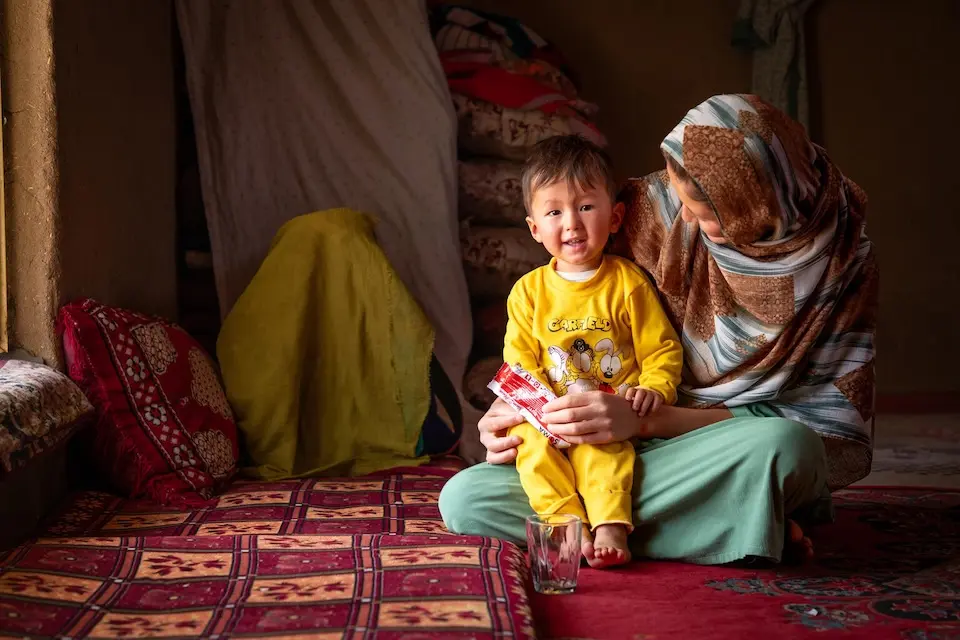
Treatment saves lives, but treatment alone is not enough. When surviving children are sent back into households that still cannot afford nutritious food, lack clean water, or cannot access basic health services, frequently relapses occur.
UNICEF is working with partners in Afghanistan to shore up the systems and services children rely on. Through its First Foods initiative, UNICEF is helping to improve nutritional outcomes by:
- protecting the health of pregnant women
- promoting breastfeeding
- identifying the early warning signs of malnutrition and providing nutrition support before a child becomes severely malnourished
- helping families provide the diverse and nutritious foods babies over 6 months need to grow
Early action is far more cost-effective than waiting until a child is severely malnourished and needs lifesaving treatment
Just as needs are increasing, funding cuts are reducing the services available to children. Resource constraints have forced the closure of more than 100 sites treating children with severe wasting in 2026. Hundreds of other centers providing nutrition support to children and to malnourished pregnant and breastfeeding women have also lost funding. The nutrition sector response in Afghanistan currently faces a 57 percent funding gap.
“We can see this crisis coming. We can see it in what children are eating. We can see it in the increasing numbers of very young children becoming malnourished," says Dr. Oyewale. “Seeing a crisis coming also means we have an opportunity to prevent it from becoming much worse. We should not wait until a child is dangerously thin and lying in a hospital bed before we intervene. For that, UNICEF and our partners urgently need significantly more flexible and sustained funding."
HOW TO HELP
There are many ways to make a difference
War, famine, poverty, natural disasters — threats to the world's children keep coming. But UNICEF won't stop working to keep children healthy and safe.
UNICEF works in over 190 countries and territories — more places than any other children's organization. UNICEF has the world's largest humanitarian warehouse and, when disaster strikes, can get supplies almost anywhere within 72 hours. Constantly innovating, always advocating for a better world for children, UNICEF works to ensure that every child can grow up healthy, educated, protected and respected.
Would you like to help give all children the opportunity to reach their full potential? There are many ways to get involved.