How War in the Middle East Impacts Supply Delivery for Children Worldwide
Highlights
- The escalation of war in the Middle East is increasing transport costs at all levels and slowing aid delivery to children globally
- Disruptions to key shipping routes including the Strait of Hormuz could delay delivery of critical supplies by up to four to six months
- UNICEF is activating alternative air, land and sea routes and localizing production to reduce dependence on international shipping
War in the Middle East is disrupting global supply chains, driving transportation and logistics costs skyward. Here's what UNICEF and partners are doing to maintain the flow of lifesaving supplies for children.
Increased transport and logistics costs mean less money for lifesaving supplies for children
The escalation of war in the Middle East is causing continued congestion in global supply routes and pushing transport costs higher at all levels, slowing aid delivery to children in need around the world, UNICEF Supply Division reports.
What begins as a disruption to shipping lanes can spiral into a humanitarian crisis. — Jean-Cedric Meeus, UNICEF Chief of Global Transport and Logistics
“What begins as a disruption to shipping lanes can spiral into a humanitarian crisis," Jean-Cedric Meeus, UNICEF Chief of Global Transport and Logistics, said at a press briefing in Geneva on June 2, 2026. "For UNICEF, persistent delays and higher operational costs, when they come in the context of a global funding crisis, are already forcing impossible choices: which children do we reach first?"
What is the operational impact of disruptions to key shipping routes, including the Strait of Hormuz?
Before the escalation began on Feb. 28, roughly 20 percent of global oil shipments passed through the Strait of Hormuz.
Since then, disruptions have driven up crude oil prices and increased costs across transport networks and supply chains. Hundreds of vessels and tens of thousands of seafarers remain stranded.
Maritime diversions around the Cape of Good Hope in South Africa now add two to four weeks to shipping times. Air freight capacity has tightened across Middle East routes, while port congestion is spreading across Africa and beyond. Behind this cascading disruption is a simple, brutal equation: every additional dollar UNICEF spends on transport is one less dollar spent on supplies for children.
The operational impact over the past few months is already severe:
- Air freight costs for vaccines from India to Ethiopia, Nigeria and the Democratic Republic of the Congo have jumped 50 to 70 percent.
- Trucking costs for ready-to-use therapeutic food (RUTF) from Kenya manufacturers to Somalia, South Sudan and the DRC have climbed 30 percent.
- Sea freight for education materials from China to Yemen and Mozambique has surged 100 to 150 percent.

How costly are the transport increases?
In Mali, the international freight budget jumped 36 percent in the first quarter, forcing the country office to choose between reducing the number of RUTF cartons ordered and the number of children who could be treated, or absorbing these unforeseen transport costs at the expense of other critical UNICEF interventions in Mali, including health, education, WASH (water, sanitation and hygiene) and child protection programs.
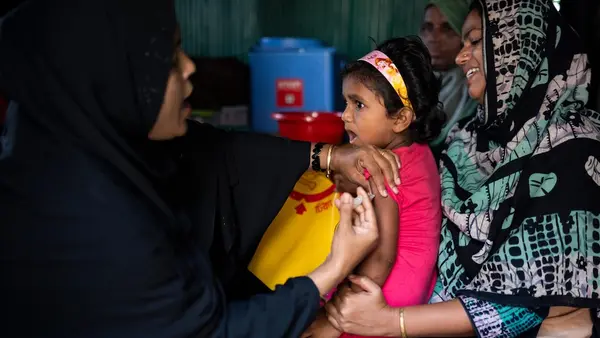
In Nigeria, rerouting syringes for a polio vaccination campaign targeting 12 million children cost an additional $200,000, a 56 percent transport increase. In Afghanistan, successive route closures are forcing UNICEF to move nutrition supplies through Georgia and across the Caspian Sea, adding roughly two months to delivery timelines.
How long are the delays in supply delivery?
African ports in Beira, Conakry, Abidjan, Dar es Salaam and Mombasa are all experiencing significant delays. Landlocked countries that depend on these corridors continue to face cascading effects. Ethiopia's Djibouti corridor, the country's primary humanitarian gateway, is under growing pressure.
Meanwhile, millions of children are at the sharp end of these changes.
"UNICEF has nearly exhausted annual transport contributions from logistics partners — this is unprecedented for us," Meeus reported.
Cumulatively, these disruptions could delay critical supplies by up to four to six months. For a child in a crisis zone, delays in arrival of vaccines or nutrition interventions can mean the difference between life and death.

What is UNICEF doing to keep supplies moving?
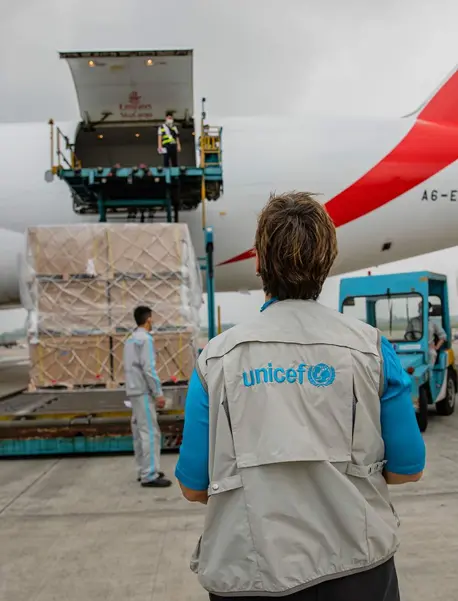
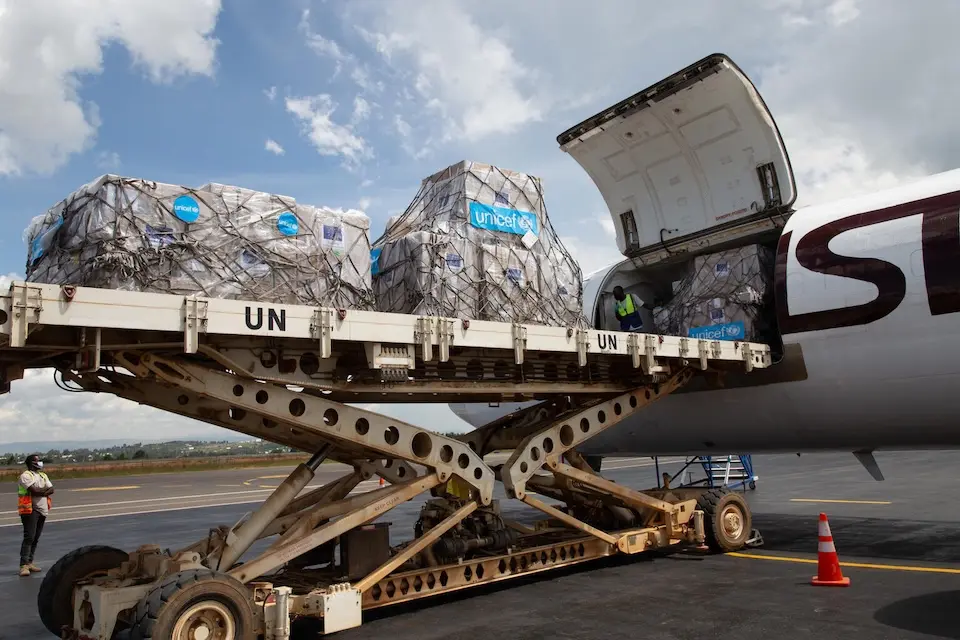
Despite these challenges, UNICEF is maintaining the flow of critical supplies: activating alternative air, land and sea routes, front-loading procurement and diversifying its supplier base. UNICEF's global network, which includes hubs in Copenhagen and Dubai and more than 300 warehouses worldwide, is being deployed strategically.
UNICEF is also localizing production. UNICEF now works with more than 20 RUTF manufacturers globally, including in Ethiopia, Kenya, Haiti and Egypt. This reduces dependence on long international shipping routes. Additionally, UNICEF’s procurement strategies and market-shaping work strengthen the resilience of supply chains and supply security, and support price stability, reducing the risk of shortages and price increases.
When supply chains are hampered, children pay the price first. Despite all these challenges, UNICEF and our partners are continuing to deliver.
“Together with WFP [World Food Program] and other UN partners, we have secured commitments from major carriers to suspend surcharges on humanitarian shipments temporarily, saving an estimated $2 million across UN operations," Meeus reported. "But let us be clear: there are limits to what humanitarian agencies can absorb.
“When supply chains are hampered, children pay the price first. Despite all these challenges, UNICEF and our partners are continuing to deliver. We will not allow these challenges to compromise the lives and well-being of children.”
Learn more about UNICEF's work for children in the Middle East
HOW TO HELP
There are many ways to make a difference
War, famine, poverty, natural disasters — threats to the world's children keep coming. But UNICEF won't stop working to keep children healthy and safe.
UNICEF works in over 190 countries and territories — more places than any other children's organization. UNICEF has the world's largest humanitarian warehouse and, when disaster strikes, can get supplies almost anywhere within 72 hours. Constantly innovating, always advocating for a better world for children, UNICEF works to ensure that every child can grow up healthy, educated, protected and respected.
Would you like to help give all children the opportunity to reach their full potential? There are many ways to get involved.