Back to School: How The K.I.N.D. Fund Is Transforming Education in Malawi
UNICEF USA President and CEO Michael J. Nyenhuis and Lawrence O'Donnell, host of MS NOW's "The Last Word," discuss the origins and impact of The Kids in Need of Desks (K.I.N.D.) Fund.
My granddaughter Harper recently experienced the joy and excitement of walking into her first day of pre-K. She is one of millions of children in the U.S. heading back to school this fall. Each year, the season seems to arrive earlier, with store aisles filled with pencils, crayons, notebooks, backpacks, lunch boxes. The list goes on. These are the essentials we often take for granted — alongside safe classrooms, dedicated teachers, books and, of course, desks.
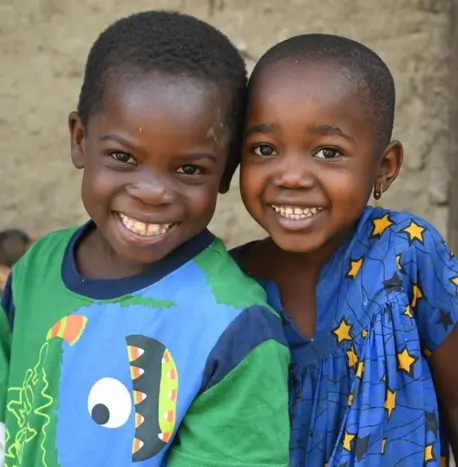
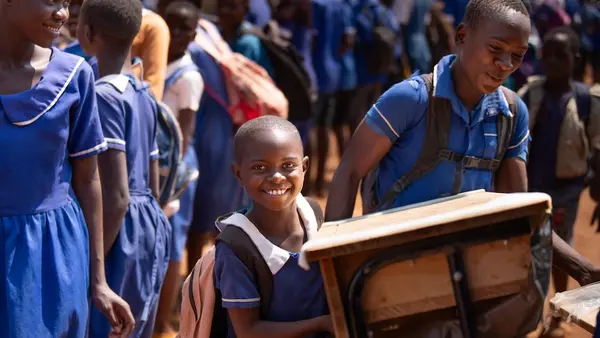
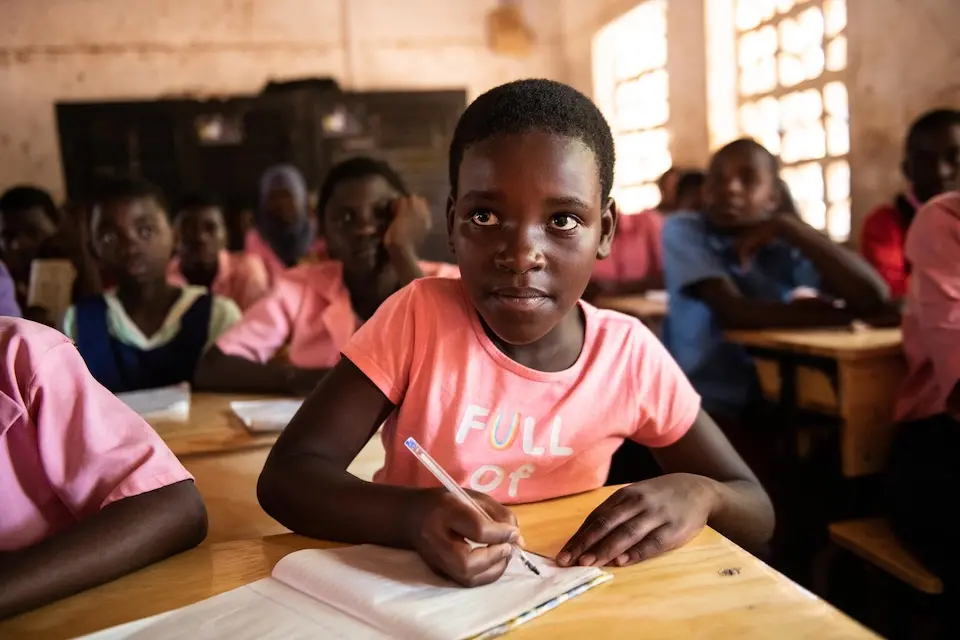
For many children around the world, those learning supplies are luxuries. In Malawi, for example, students often navigate their school days without desks, sitting on the floor and balancing notebooks on their knees, which makes it harder to focus and easier to fall behind.
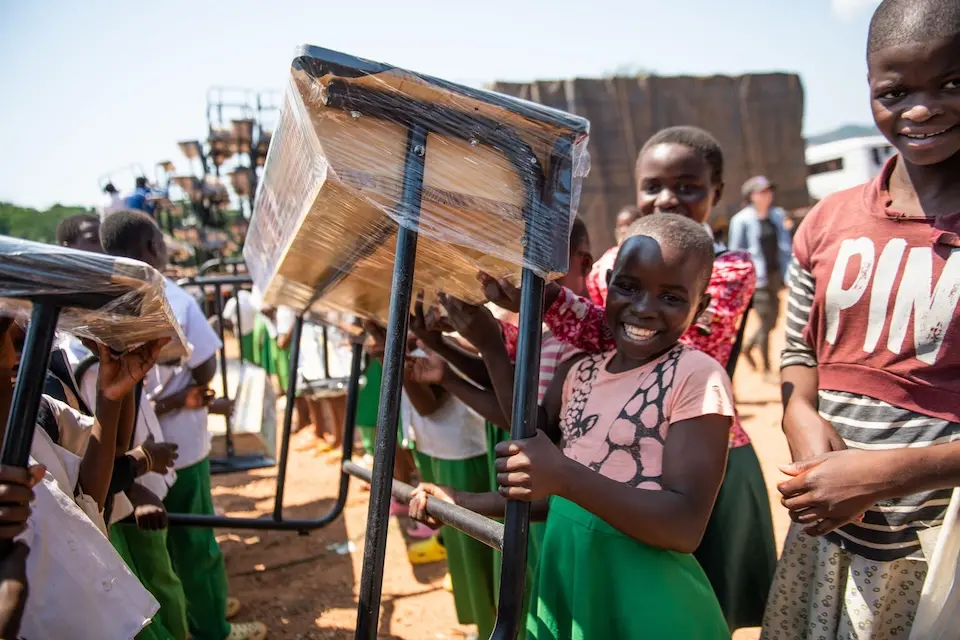
Since 2010, UNICEF USA and UNICEF in Malawi have partnered with Lawrence O'Donnell, host of MS NOW's "The Last Word," to change that reality through the The Kids In Need of Desks (K.I.N.D.) Fund. To date, the initiative has provided more than 405,000 desks and raised over $45 million for classrooms in Malawi. It has also supported nearly 38,000 scholarships for girls, helping them complete their secondary education.
I recently sat down with Lawrence to discuss the origins of The K.I.N.D. Fund, why something as simple as a desk matters so much and what lessons we can carry into this new school year.
Let's start at the beginning. What sparked the idea for The K.I.N.D. Fund?
LAWRENCE O'DONNELL: I was in Massachusetts, driving on a college tour with my daughter. We met up with a friend, Meg, a public school teacher who had just returned from Malawi, where she was visiting her niece, a doctor. During her extra time there, Meg visited schools around Malawi’s capital and asked teachers what they needed most. Of course, your mind goes to paper, pencils, books. But she said, ‘They all said chairs.’ That wasn’t anywhere on my list of what to expect. They weren’t even thinking about desks. They just wanted something to get kids off the floor.
Within moments of hearing that, I found myself saying: ‘Well, we could get them chairs, couldn’t we?’ It just hit me. The deprivation was so extreme that even I felt like I could do something about it.
So, you learned from a friend that students in Malawi don't have classroom desks and chairs — and you decided to take action. What happened next?
LAWRENCE O'DONNELL: There was a short window on my schedule when I could go anywhere in the world for about 10 days. I decided I’d go to Malawi to see the situation myself and figure out what I could do.
In the first few days there, I was convinced it was impossible. I thought I would return home and explain to my audience why Malawi’s classrooms didn’t have desks and why they probably never would. Malawi doesn’t have furniture stores or supply chains like we do. You might see roadside makers building couches or tables by hand — but nothing designed for classrooms.
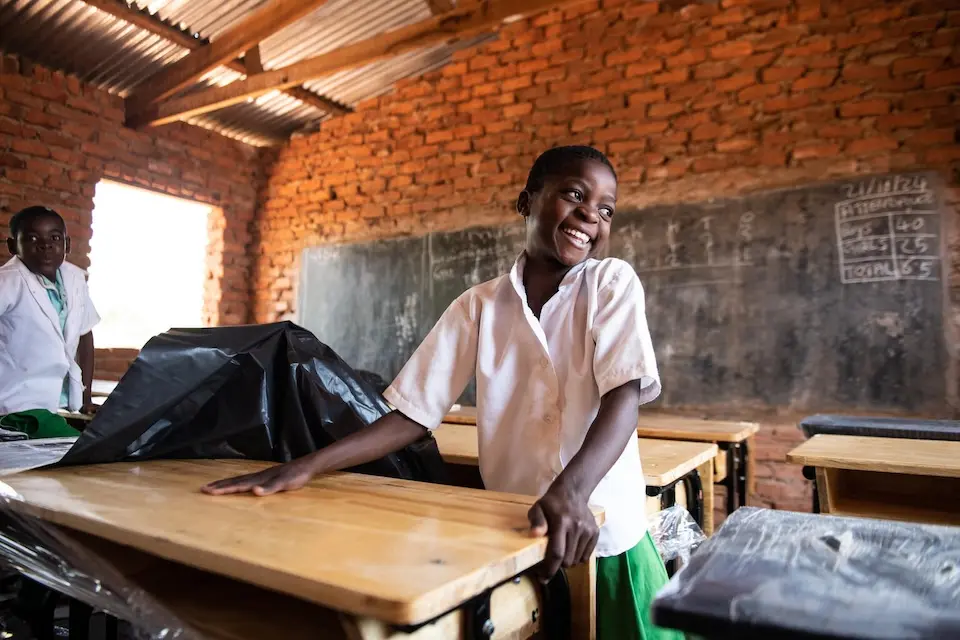
Then I met with UNICEF Malawi, arranged by MSNBC. UNICEF's team introduced me to a small shopkeeper who had built a sample school desk and teacher's desk, hoping the Ministry of Education might someday place an order. I asked if he could make 30 desks by the end of the week. He said yes. He hired trained carpenters, painters and metal workers who were unemployed, ran three shifts around the clock and delivered all 30 desks on time.
That was the beginning. We delivered them to a school, I shared the story on my show with the hope that a few people would contribute — and donations began to pour in. And the K.I.N.D. Fund was born.
Some might say, "It's just a desk." Why focus on this one thing?
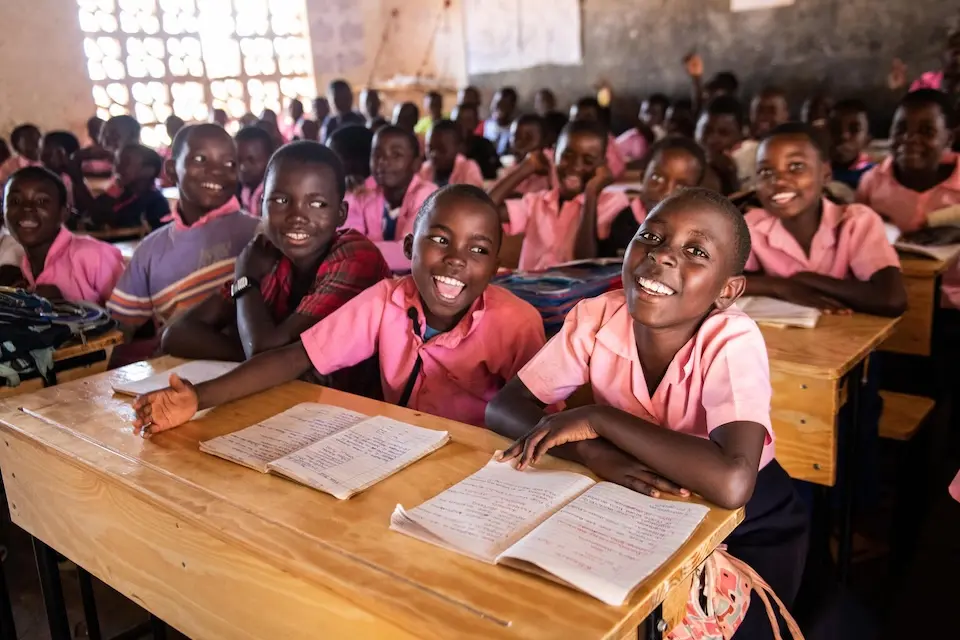
LAWRENCE O'DONNELL Getting a desk into a classroom doesn't guarantee us anything. Every student in the United States has a desk, and learning outcomes vary widely. But in a place like Malawi, the difference between sitting uncomfortably on a hard floor and sitting at a desk can be profound. The likelihood of students succeeding academically skyrockets — not the guarantee, but the likelihood. And when you're talking about hundreds of thousands of students, that likelihood turns into real kids going to high school, even college, who never would have had that chance before.
A desk changes the whole dynamic of the classroom. Kids aren't struggling to hold themselves upright all day or writing on the back of the student in front of them. They suddenly have their own space, a surface to write on and a clear line of sight to the teacher. It changes their posture, their focus, their dignity. And it changes their relationship with learning. For the first time, it feels like their desk. That sense of ownership, of 'my desk,' is powerful. The desk becomes a stage where they can perform, raise their hand and engage. Teachers will tell you the energy in the room shifts completely when desks arrive.
We've already seen it happen. Kids who grew up on K.I.N.D. Fund desks are now in college. Girls who received K.I.N.D. scholarships are breaking barriers and pursuing higher education. That's life-changing — not just for them, but for their families and communities.
The K.I.N.D. Fund began with desks but later expanded to include scholarships for girls. Why was that addition so important?
LAWRENCE O'DONNELL: That was actually Victor Chinyama’s idea. He was with UNICEF Malawi at the time. He explained that the graduation rate for girls in Malawi was much lower than for boys, largely due to economic and societal pressures.
At first, I resisted. I thought the strength of The K.I.N.D. Fund was in its simplicity — desks are easy to understand and instantly relatable. I worried that expanding the program might dilute that clarity. But Victor made a strong case, and my daughter — who accompanied me on that trip — was firmly in favor. It took about 48 hours, but they convinced me. And I’ve been grateful ever since.
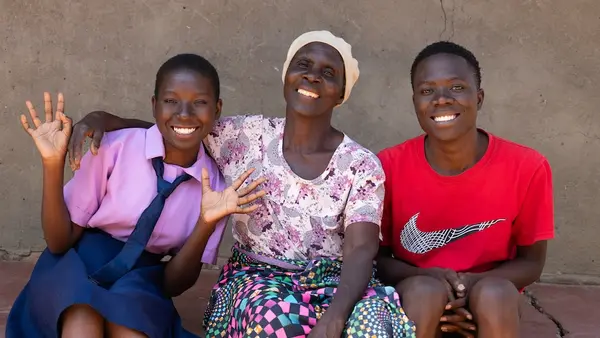
Providing scholarships to girls has become the perfect companion to the desk initiative. It addresses one of the most critical barriers in education globally: girls’ access to secondary school. And I’ve since learned just how transformative girls' education can be. Now, nearly 38,000 girls in Malawi have received K.I.N.D. scholarships. I’ve met many of them. Some are now in college. Meeting them is profoundly moving. They are heroes to me. Despite the enormous challenges they face, they persist. And they are reshaping what’s possible for their families and their communities.
The K.I.N.D. Fund started with one classroom of desks in Malawi. Today, it has transformed lives and created opportunities for thousands of girls. As Lawrence said, a desk alone doesn’t guarantee success — but it creates dignity, focus and opportunity. It’s a multiplier that strengthens everything else in the classroom, and when combined with scholarships, it creates real pathways to higher education, careers and brighter futures.
This back-to-school season, I think of my granddaughter Harper walking into her classroom, carrying the excitement and hope that every child deserves to feel on their first day of school. Thanks to The K.I.N.D. Fund, more students in Malawi are experiencing that same joy — learning, writing and imagining futures that may have once felt out of reach, and all from their very own desks.
The work continues. Together with Lawrence O'Donnell and MS NOW, UNICEF USA and UNICEF Malawi remain committed to ensuring more children have the tools they need to thrive.
Learn more, including how you can support children in Malawi through The K.I.N.D. Fund
HOW TO HELP
There are many ways to make a difference
War, famine, poverty, natural disasters — threats to the world's children keep coming. But UNICEF won't stop working to keep children healthy and safe.
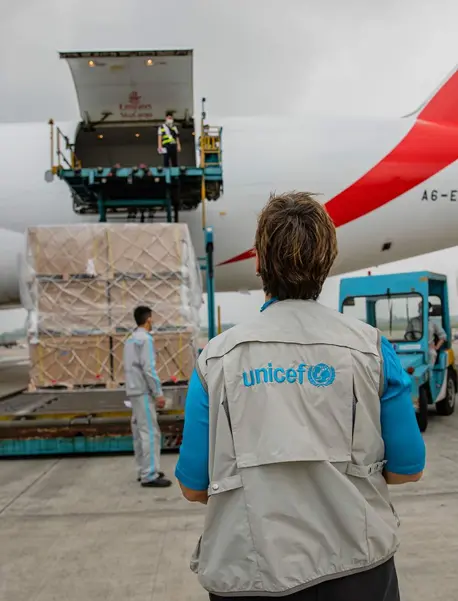
UNICEF works in over 190 countries and territories — more places than any other children's organization. UNICEF has the world's largest humanitarian warehouse and, when disaster strikes, can get supplies almost anywhere within 72 hours. Constantly innovating, always advocating for a better world for children, UNICEF works to ensure that every child can grow up healthy, educated, protected and respected.
Would you like to help give all children the opportunity to reach their full potential? There are many ways to get involved.