30 Years of RUTF: Meet the People Behind a Lifesaving Innovation
This month marks the 30th anniversary of ready-to-use therapeutic food — RUTF for short. For severely malnourished kids, it can mean the difference between life and death. The story of RUTF includes its inventor, French pediatrician André Briend. It includes frontline health workers who screen children and start treatment that brings them back from the brink. And it includes people like James Holt of Mana Nutrition, who has spent 13 years loading RUTF onto trucks bound for children in crisis around the world.
One of the greatest public health innovations of our time
Thirty years ago, a pediatrician and a food-processing engineer had a simple idea to help malnourished children. Today, that idea—ready-to-use therapeutic Food, or RUTF — is one of the greatest public health innovations of our time.
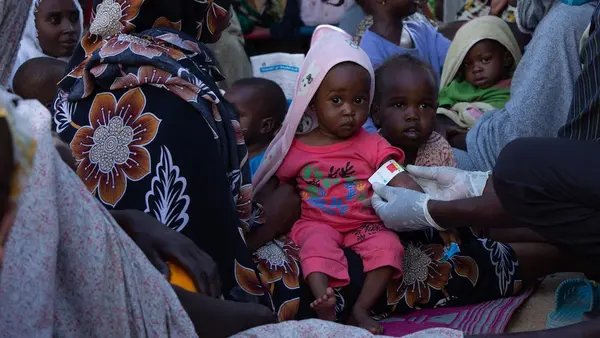
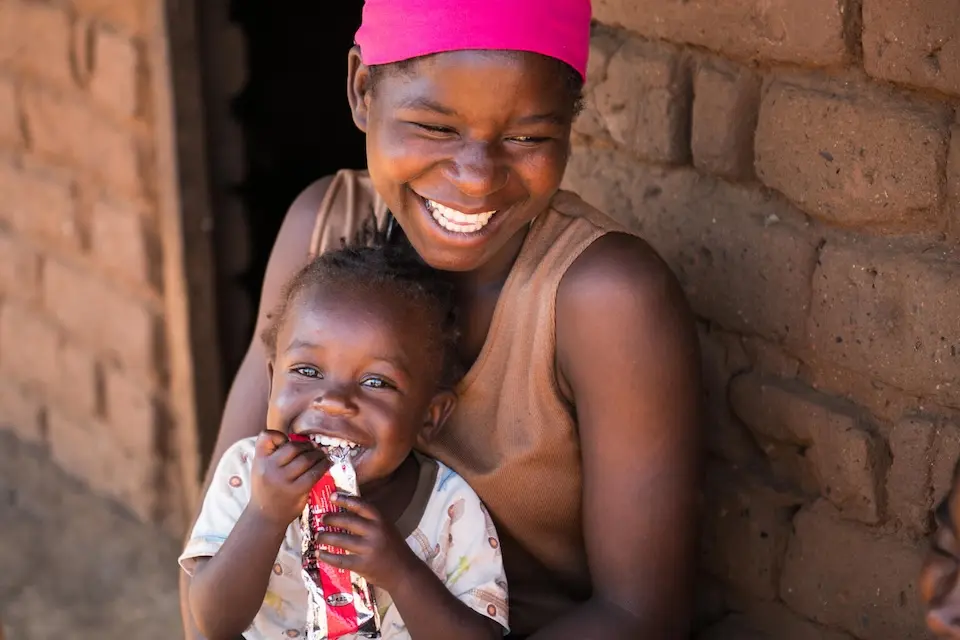
More than 12 million children worldwide suffer from severe wasting, the deadliest form of malnutrition. RUTF treats them with a nearly 90 percent recovery rate — no preparation required, no refrigeration needed and a two-year shelf life that makes it possible to reach children wherever they are, whenever they need it most.
More than 12 million children worldwide suffer from severe wasting, the deadliest form of malnutrition. RUTF treats them with a nearly 90 percent recovery rate.
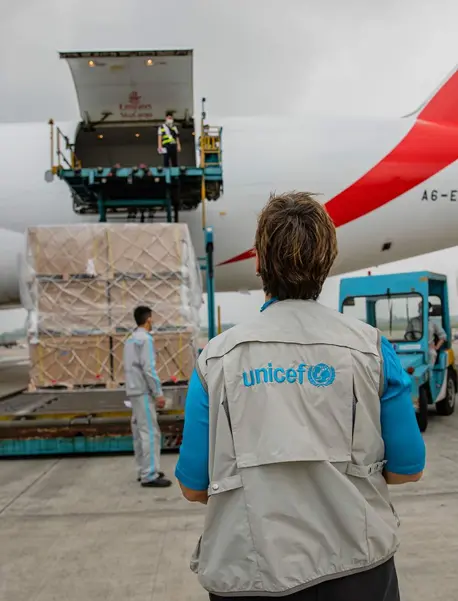
Behind every pack of RUTF are countless stories: the farmers who grow the ingredients, the workers who produce and package it, the logistics teams who ensure it travels safely across the world and into the hands of a child. Every link in that chain is a person who chose this work.
James Holt grew up on a peanut farm in rural Georgia. Today, he works for Mana Nutrition, a Georgia-based nonprofit that produces RUTF for children around the world. For 13 years, he has helped manage warehousing and logistics. His CEO, Mark Moore, jokes that James has probably "loaded more RUTF than anyone on earth."
On the surface, it is ordinary work. Forklifts move. Pallets get stacked. Trucks are loaded. But for James, it is anything but ordinary.
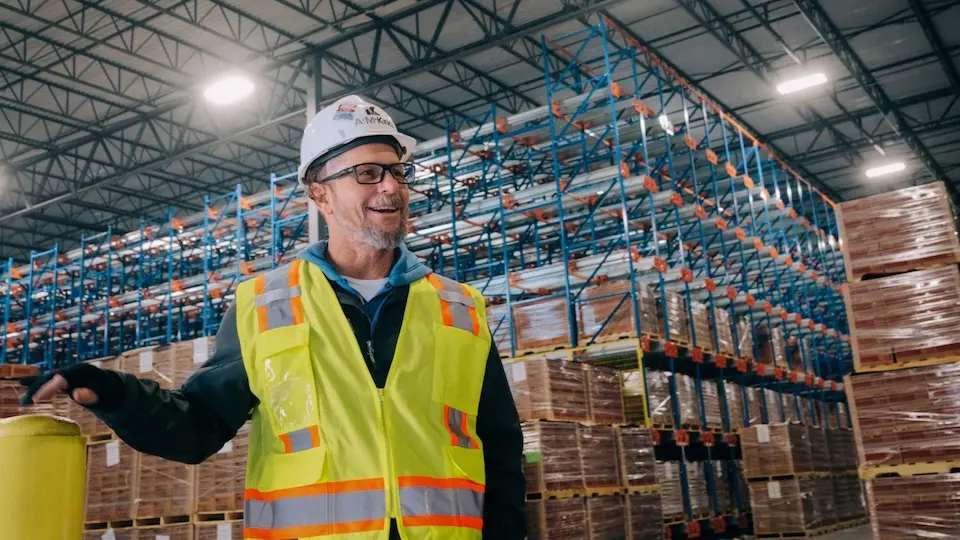
James recalls a moment early in his time at Mana when a colleague sent photos from a refugee camp in a distant country showing shipments arriving, boxes being unloaded and RUTF moving from a truck toward children and families in crisis.
"That’s when it really, really began to hit home for me," James said. "Something that these guys produced, that I made sure was safely and securely and accurately loaded on this trailer, made it there… delivering it to these camps to save kids. It profoundly changed the way I viewed what we do."
Needs are staggering: globally, more than 12 million children suffer from severe wasting
In 2022, James saw it for himself. He visited clinics in Africa treating severely malnourished children. At one stop in Chad, he saw the stages of care: children arriving desperately ill, mothers terrified, IVs, then the introduction of RUTF, then food, then recovery. By the end, he saw children running and playing.
"This kid that’s running around probably a month ago was one of those kids that was all but dead, carried in by their mom," he said. "That, more than any picture I ever got sent, really brought home the mission."
This kid that’s running around probably a month ago was one of those kids that was all but dead, carried in by their mom. That, more than any picture I ever got sent, really brought home the mission.
The need is staggering. At any given time, more than 12 million children suffer from severe wasting, the deadliest form of malnutrition linked to 1 in 5 deaths among children under five. With RUTF treatment, however, the recovery rate is nearly 90 percent.
It’s why many call it miracle food. "It is a miracle," James said. "Not only do we want these kids to live, but we want them to develop properly and reach their full potential."
Local producers help meet demand
While in Uganda, James also visited a small local producer making RUTF from peanuts grown nearby. "They were tiny, but there they were grinding the peanuts, adding the oils, adding the vitamin mixtures," James said. "It blew my mind that what we were doing on a bigger scale over here they were doing right there."
Local production of RUTF is an increasingly important part of the global supply needed to meet the demand for this critical product.
But whether in a small plant in Uganda or a large facility in Georgia, the mission is the same. "We operate to feed kids. Nobody’s getting rich here. We’re just trying to help save lives, and we’re trying to help these kids develop properly. That’s it."
As we mark 30 years of RUTF, we should celebrate the science and the scale. But we should also remember the people who make, ship and deliver it. Each box becomes a lifesaving treatment. Each treatment becomes a child running again.
"I think it’s rare that you get to work in a field that you feel some true passion and motivation for," James said. "And when you can go and just see the fruits of not just your labor, but everybody in this team that you’re part of… that’s just wonderful to me."
Learn more about RUTF, the therapeutic food saving children's lives
UNICEF is committed to creating a world where every child is nourished
Michael J. Nyenhuis is the President & CEO of UNICEF USA
HOW TO HELP
There are many ways to make a difference
War, famine, poverty, natural disasters — threats to the world's children keep coming. But UNICEF won't stop working to keep children healthy and safe.
UNICEF works in over 190 countries and territories — more places than any other children's organization. UNICEF has the world's largest humanitarian warehouse and, when disaster strikes, can get supplies almost anywhere within 72 hours. Constantly innovating, always advocating for a better world for children, UNICEF works to ensure that every child can grow up healthy, educated, protected and respected.
Would you like to help give all children the opportunity to reach their full potential? There are many ways to get involved.