World Food Day 2026: How UNICEF Helps Children Get the Nutrition They Need
World Food Day is observed on Oct. 16 — an annual reminder that every child has the right to adequate nutrition for healthy growth and development. UNICEF works with partners around the world to improve child nutrition and to prevent, detect and treat malnutrition. UNICEF USA helps mobilize support for UNICEF's global nutrition work including financing efforts through the Child Nutrition Fund. Learn more.
What is World Food Day?
In 1979, the UN's Food and Agriculture Organization established World Food Day to commemorate the date of the FAO's founding in 1945. The first World Food Day was observed on Oct. 16, 1981.
The theme for World Food Day 2026 is "innovate today, nourish tomorrow" — a rallying cry for more effective solutions to address malnutrition and undernutrition. The FAO's campaign emphasizes how scientific, data-driven, inclusive approaches can build resilient food systems that preserve the environment while ending world hunger.
Why good nutrition is critical for every child
Healthy food for children supports more than just survival. It supports physical growth, including brain development, and strengthens the immune system.
Malnutrition can take many forms. Children who have access to food can still become malnourished if their diet lacks essential vitamins and minerals or is otherwise poorly balanced — negatively impacting their growth and development.
Wasting, or severe acute malnutrition, is the most extreme form, and is life-threatening. Children who are chronically malnourished can become stunted, or significantly below normal height for their age.
Good nutrition during a child's earliest years is especially important. The first 1,000 days is considered the critical window that determines a child's lifelong cognitive and physical development.
And yet: globally, fewer than one-third of all children aged 6 to 23 months are fed a diet that meets minimum nutritional standards. And 1 in 4 children under the age of 5 — 181 million globally — experience severe child food poverty, meaning they consume two or fewer food groups a day.
Learn more: Read The State of Food Security and Nutrition in the World 2026, a joint report by FAO, UNICEF and other UN partner agencies
Why children still face malnutrition
There are many factors that can contribute to malnutrition in children or increase their risks of becoming malnourished: poverty, conflict and displacement, food insecurity, climate-related shocks, disease outbreaks and limited access to health and nutrition services.
Limited access to safe drinking water and sufficient sanitation are compounding factors. A child living in these conditions is more likely to get sick. Infection and illness only worsens a child's nutritional status.
How UNICEF prevents child malnutrition
UNICEF works with partners to deliver humanitarian assistance to those impacted by food crises through a range of interventions, including:
- screening children for malnutrition
- providing safe water, sanitation and hygiene services to communities where these basic resources are in short supply
- providing cash assistance to families along with nutrition counseling
UNICEF is a world leader in nutrition emergency preparedness and response, coordinating with partners to reach the most vulnerable children and families in the hardest-to-reach areas. UNICEF also works with governments to strengthen local health and nutrition systems to reduce risks of malnutrition before, during and after a crisis.
Learn more about UNICEF global child nutrition work
How UNICEF treats severe child malnutrition
For a child suffering from severe acute malnutrition, timely treatment is critical. UNICEF is the world's leading supplier of ready-to-use therapeutic food (RUTF) a nutrient-rich peanut paste used to effectively treat these serious cases.
In 2025 alone, UNICEF and partner efforts delivered over 76,000 metric tons of RUTF across 68 countries, with 63 percent sourced directly from local manufacturers in recipient countries across Africa and worldwide. With the Child Nutrition Fund, UNICEF is helping to make RUTF more widely available in countries like Sudan, Ethiopia and Nigeria.
UNICEF works to strengthen local health systems and works with community health workers and caregivers to make sure RUTF is readily accessible, including in hard-to-reach and emergency settings.
RUTF: An innovation helping children recover from severe wasting
First introduced in 1996, RUTF revolutionized treatment for severe wasting and helped drive one of the greatest public health achievements in human history. Nine in 10 children treated with RUTF make a full recovery, often within weeks.
Since 2000, the number of children who die from preventable causes before age 5 has dropped by half, with RUTF an important contributor.
Learn more: The History of RUTF and How It Transformed Malnutrition Treatment
How UNICEF supports children during food and nutrition crises
Conflict and climate disasters often fuel food and nutrition crises, heightening risks of child malnutrition. UNICEF responds to these crises with a combination of emergency interventions to address urgent needs and longer-term system strengthening efforts to help with recovery, reducing future risks.
In Sudan, for example, UNICEF remains on the ground working alongside partners to blunt the impacts of the war-torn nation's critical and growing food and nutrition crisis. In April 2026, UNICEF estimated that 4.2 million children faced acute malnutrition in 2026, including more than 825,000 severe cases that could turn deadly if left untreated. can be deadly if left untreated.
UNICEF and partner supported interventions include:
- a cash grant program helping pregnant and breastfeeding women afford food and other essentials for their children
- training community health workers and caregivers in early detection using MUAC tapes
- provision of RUTF packets: At UNICEF-supported health facilities, mothers can enroll children suffering from malnutrition in a treatment program where they are provided with RUTF.
How to support UNICEF's child nutrition work
UNICEF works nonstop worldwide to deliver support and protection children need to survive and thrive. Unrestricted donations allow UNICEF to direct resources to the children with the greatest needs, wherever they are.
HOW TO HELP
There are many ways to make a difference
War, famine, poverty, natural disasters — threats to the world's children keep coming. But UNICEF won't stop working to keep children healthy and safe.
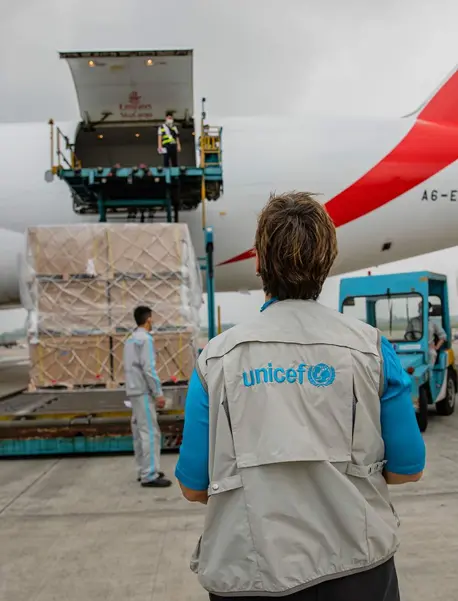
UNICEF works in over 190 countries and territories — more places than any other children's organization. UNICEF has the world's largest humanitarian warehouse and, when disaster strikes, can get supplies almost anywhere within 72 hours. Constantly innovating, always advocating for a better world for children, UNICEF works to ensure that every child can grow up healthy, educated, protected and respected.
Would you like to help give all children the opportunity to reach their full potential? There are many ways to get involved.