Protecting Children During Mass Displacement in Gaza
Intense shelling and new evacuation orders are forcing families in Gaza City to flee yet again. But nowhere is safe for children in Gaza. UNICEF is working to protect children and keep families together. What they need most is a sustainable ceasefire.
Children in Gaza are being forced out of their homes
As a military offensive continues in the north of Gaza, yet another round of evacuation orders has been issued in Gaza City. Palestinian families are being instructed to move to a so-called "safe zone," a sea of makeshift tents without adequate access to drinkable water, food or shelter.
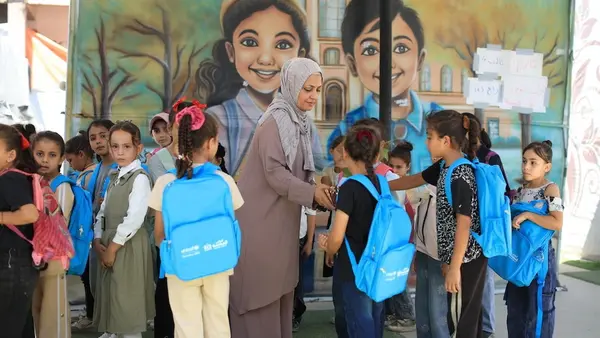
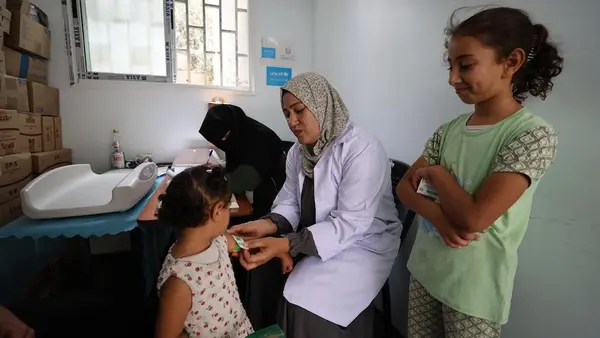
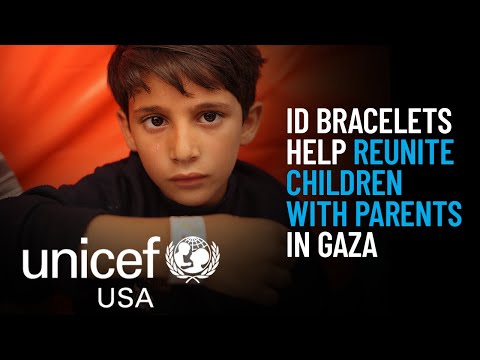
During mass displacement crises, children under 10 are particularly vulnerable. UNICEF child protection teams are distributing ID bracelets and running activities to prevent family separation and speed up reunification. Primary caregivers write their child's name and date of birth on a bracelet, along with a family member's phone number; this information can be used to reunite lost children with their loved ones.

The bracelets are mainly for children ages 6 and under who might have difficulty saying or remembering a name or number, but parents may use them for older children as necessary. Caregivers are encouraged to help older children memorize the needed information.
Because children in Gaza have already been through so much, with nearly all of them — an estimated 1 million — in need of mental health and psychosocial services to help them cope with the trauma they've experienced, UNICEF and partner staff take care not to raise the fear of separation among these families while distributing the bracelets.
Instead, children are taught that wearing a bracelet is a means of protection and self-reliance.
Watch the video: 'We wrote our names so we can remember them'
Gaza today: Families are facing unimaginable hardships
After almost two years of war, an estimated 90 percent of Gaza's population — 1.9 million people — have been pushed out of their homes, scattering family networks and leaving children increasingly vulnerable.
By June 2025, at least 17,000 children in Gaza were estimated to be unaccompanied or separated from their families. During another wave of mass displacement earlier this year, as families fled north to escape bombing in the south, UNICEF was able to reunite 250 lost Palestinian children with their caregivers.
More than 19,000 children have been killed and another 42,000 wounded in the conflict. Thousands of critically injured Palestinian children are waiting for permission to be medically evacuated so they can access lifesaving care.

Every child has the right to protection from violence
UNICEF remains on the ground in the Gaza Strip, working to meet the urgent needs of children trapped in a conflict they did not start, but for which they are paying the highest price. UNICEF is pressing for humanitarian aid to be allowed into Gaza at scale and for humanitarians to have access to families wherever they are. UNICEF also continues to call for a ceasefire and the safe release of all hostages.
Right now, the lives of the most vulnerable children hang in the balance as conflicts and crises jeopardize the care and protection that they deserve. Dependable, uninterrupted and effective foreign aid is critical to the well-being of millions of children. Please contact your members of Congress and urge them to support ongoing U.S. investments in foreign assistance.
HOW TO HELP
There are many ways to make a difference
War, famine, poverty, natural disasters — threats to the world's children keep coming. But UNICEF won't stop working to keep children healthy and safe.
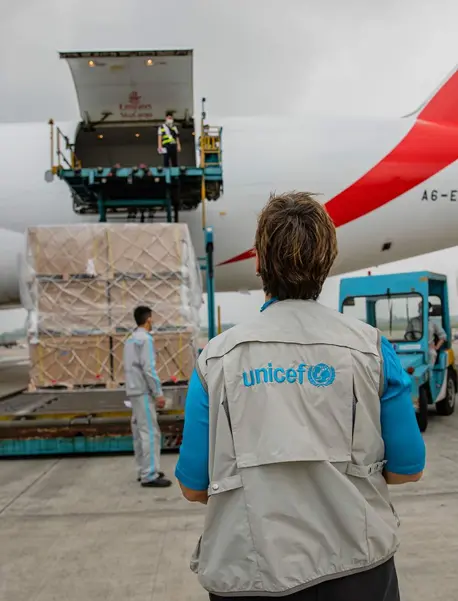
UNICEF works in over 190 countries and territories — more places than any other children's organization. UNICEF has the world's largest humanitarian warehouse and, when disaster strikes, can get supplies almost anywhere within 72 hours. Constantly innovating, always advocating for a better world for children, UNICEF works to ensure that every child can grow up healthy, educated, protected and respected.
Would you like to help give all children the opportunity to reach their full potential? There are many ways to get involved.