Supporting Children in Jamaica After Hurricane Melissa
In the wake of the most powerful hurricane to hit Jamaica since 1988, UNICEF is working with partners and local authorities to conduct rapid needs assessment and coordinate emergency response for children and families.
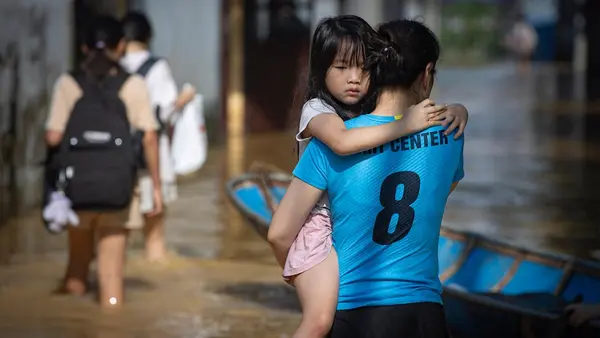
Hurricane Melissa, a catastrophic Category 5 storm with sustained winds of 185 mph, made landfall in southwestern Jamaica on Oct. 28, 2025, destroying homes, severely damaging critical infrastructure and knocking out power for most of the island.
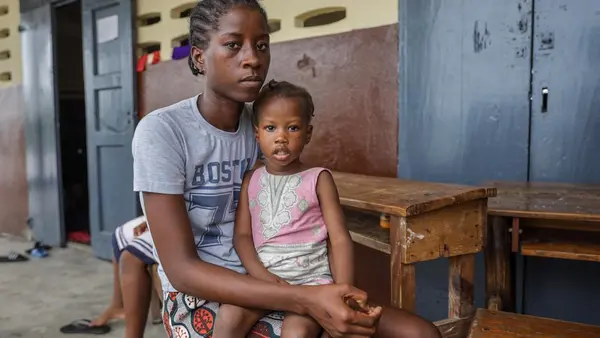
More than 13,000 people are sheltering in government facilities in Jamaica, and over 500,000 residents remain without electricity. Internet connectivity has fallen to roughly 30 percent of normal levels. UNICEF estimates more than 284,000 children are now in urgent need of humanitarian assistance — access to safe water, health care, education and protection have been disrupted, putting children and families at serious risk.
Access remains a challenge. “Yesterday, we were on our way to Black River in St Elizabeth, one of the hardest hit areas, but the roads were blocked with fallen trees and power lines and this prevented us from reaching the most affected communities,” Olga Isaza, UNICEF Jamaica Representative, said on Oct. 30.
Learn more about how UNICEF works to protect and support children affected by hurricanes

UNICEF Jamaica's emergency response plan supports essential services for children
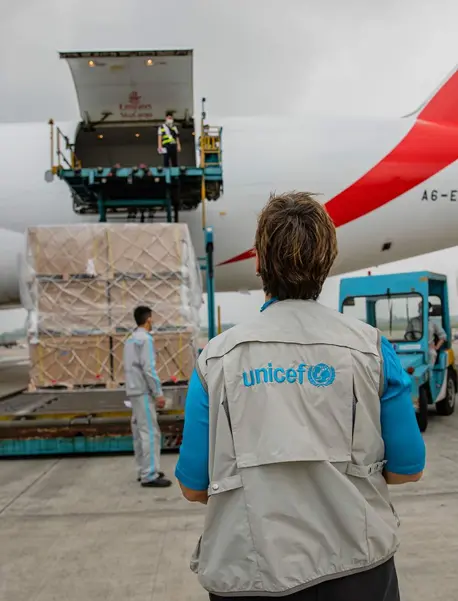
UNICEF is responding swiftly to support the government and other partners to assess the needs and deliver pre-positioned supplies including nutrition, water, medicines and emergency hygiene kits. Additional humanitarian aid is ready to be airlifted.
Moving forward, UNICEF's emergency response plan will be adjusted as roads are cleared and rapid needs assessments and multi-sectoral assessments are completed. Some priorities:
Children's health
Disease outbreaks are a threat in the aftermath of a disaster. UNICEF is ensuring access to quality health services and distributing essential supplies to prevent the spread of disease, including generators, repellents, water drum covers and mosquito nets for children and caregivers.

Children's nutrition
UNICEF is working with the Ministry of Health and Wellness to conduct rapid nutrition assessments, distribute essential nutrition supplies, including micronutrient powders, high-energy biscuits and supplements for children and pregnant/lactating women, and provide tools and therapeutic food to health facilities for the identification and treatment of severe acute malnutrition in children under 5.
Water, sanitation and hygiene (WASH)
To help families without access to safe water, sanitation and hygiene, UNICEF is distributing dignity kits, water containers and cleaning supplies to shelters, child care institutions and other state facilities. UNICEF is also working to restore water infrastructure and providing emergency water through community water points, tanks and trucking, along with installing handwashing stations in key locations like child-friendly spaces.

Child protection
To provide children with a safe place to play, UNICEF is establishing child-friendly spaces in temporary shelters, equipped with recreational materials and staffed to provide psychosocial support. UNICEF is also raising community awareness and engagement to prevent and respond to gender-based violence, sexual exploitation and abuse, and supporting the identification, documentation and reunification of unaccompanied and separated children through the national child protection system and partners.
Education
To help children safely return to learning, UNICEF is delivering School-in-a-Box and early childhood development kits, equipping affected schools through partner agreements for computers, whiteboards and furniture, and providing $500 per school for essential supplies where needed.

Social protection
To help families recover and meet their most urgent needs, UNICEF provides humanitarian cash transfers for essentials like food and housing repair, along with targeted in-kind support — such as special food, hygiene packs and vouchers — for households with children with disabilities, in coordination with partners.
Community engagement and social behavioral change
UNICEF empowers communities and ensuring accountability by sharing lifesaving messages through shelters, youth networks, social media and platforms like U-Report, UNICEF's innovative mobile digital platform for young people. UNICEF is also using U-Report to gather data on youth mental health post-hurricane, focusing on PTSD, anxiety and depression.
Your support can be a lifeline for children facing catastrophic natural disaster
UNICEF estimates the overall funding needs for children and adolescents impacted by Hurricane Melissa in Jamaica at approximately $17 million; that figure is likely to increase as assessments progress.
UNICEF is calling on individual donors, the private sector and philanthropic partners to help meet the urgent needs of children. The most effective way to help is through flexible funding, which enables rapid and targeted support where it is needed most.
Donor support will ensure that children not only survive this crisis but have the chance to recover quickly from this traumatic natural disaster.
Right now, the lives of the most vulnerable children hang in the balance as conflicts and crises jeopardize the care and protection that they deserve. Dependable, uninterrupted and effective foreign aid is critical to the well-being of millions of children. Please contact your members of Congress and urge them to support ongoing U.S. investments in foreign assistance.
HOW TO HELP
There are many ways to make a difference
War, famine, poverty, natural disasters — threats to the world's children keep coming. But UNICEF won't stop working to keep children healthy and safe.
UNICEF works in over 190 countries and territories — more places than any other children's organization. UNICEF has the world's largest humanitarian warehouse and, when disaster strikes, can get supplies almost anywhere within 72 hours. Constantly innovating, always advocating for a better world for children, UNICEF works to ensure that every child can grow up healthy, educated, protected and respected.
Would you like to help give all children the opportunity to reach their full potential? There are many ways to get involved.