A Ray of Hope for Young Learners in Lebanon
Highlights
- Ongoing conflict in Lebanon has caused mass displacement, disrupting children's access to education
- Lebanon was already facing a deep learning crisis
- With support from UNICEF's Learning Passport, an estimated 400,000 students and 50,000 teachers are able to access education through Madristi, the national digital learning platform
- UNICEF continues to call for an immediate cessation of all hostilities and safe, unimpeded humanitarian access
As conflict disrupts education across Lebanon, UNICEF is working with partners to drive learning continuity.
Every child has the right to a quality education
After more than 100 days of increased hostilities, children in Lebanon continue to pay a terrible price. Since early March, 247 children have been killed and 992 injured — an average of 12 children killed or maimed every day. More than 770,000 children are experiencing heightened distress from repeated exposure to violence, loss and displacement. Many remain unable to return home because of ongoing fighting and the threat of unexploded ordnance.
During a visit to a Beirut displacement site in March, UNICEF Deputy Executive Director Ted Chaiban met 15-year-old Fatima, who escaped with her family from the South to the same school shelter where they had taken refuge just 18 months earlier.
"She told me that the night before I met her, she had laid awake listening to the bombing hitting the southern suburb of Beirut, worried about her family, her friends, her future," Chaiban said in a press briefing. "All she wants is to be able to go home and get back to school.”
But Fatima’s hope of a return to the classroom is on hold — a dream disrupted by the latest outbreak of violence.
Learn more about how UNICEF is supporting children displaced by war in Lebanon
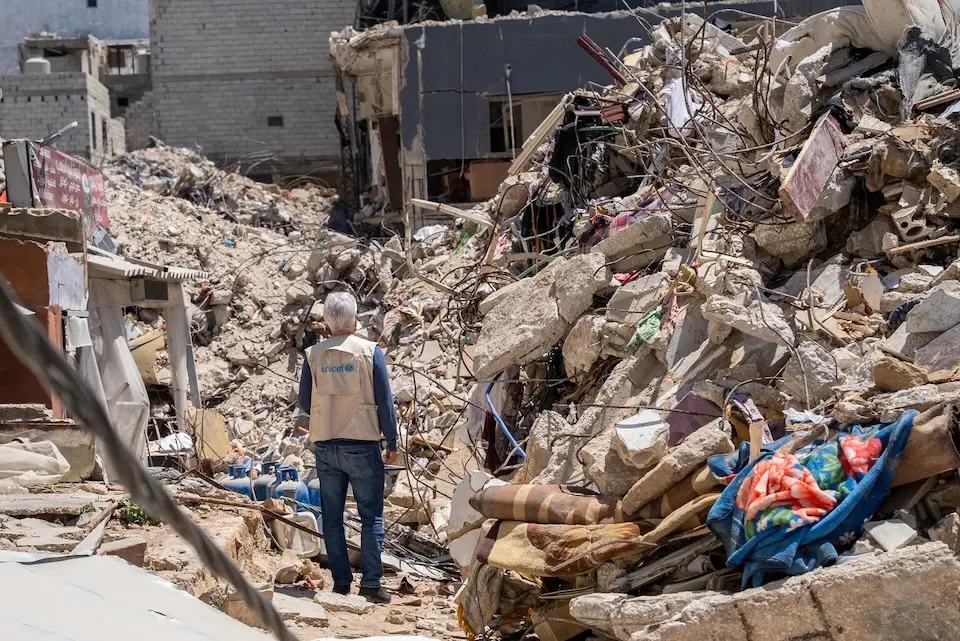
Though some schools have gradually managed to reopen for in-person learning, hundreds more are being used as collective shelters, bear severe structural damage from air strikes, or are located in areas that continue to be directly affected by the conflict.
The current situation is exacerbating ongoing learning losses in Lebanon; the country was already facing a deep education crisis. An estimated 1.1 million students enrolled in formal education have experienced disruptions to learning since 2019, with around 400,000 children remaining out of school altogether.
Learn more about what UNICEF is doing to protect children's health and well-being in Lebanon
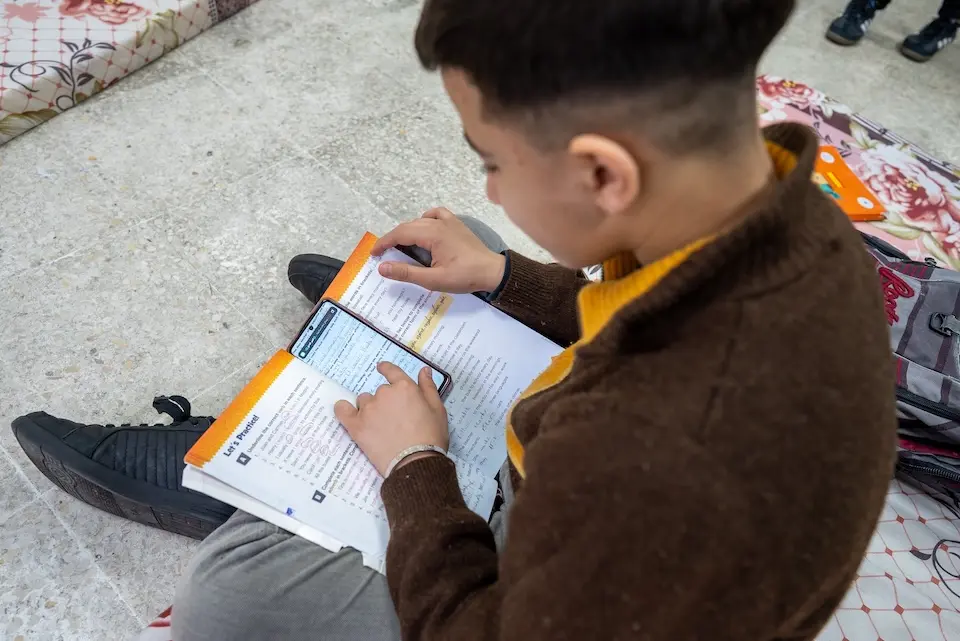
A digital lifeline
To address these challenges, UNICEF has been working closely with the Ministry of Education and Higher Education (MEHE) to expand remote learning through the national digital learning platform known as Madristi.
With support from UNICEF’s Learning Passport — in collaboration with the United Nations International Computing Center (UNICC) — an estimated 400,000 students enrolled within the public education system and 50,000 teachers are now able to access education through Madristi.
The Learning Passport is UNICEF’s online, mobile and offline tech platform in 51 countries, providing localized, curriculum‑aligned instruction for children and young people. The adaptable and portable digital learning program enables children and young people to continue learning anywhere, at any time, including in crisis-affected settings. Through offline functionality and multiple delivery approaches, the program is able to meet learners wherever they are. By the end of 2025, the Learning Passport had 12.5 million registered users, comprising both learners and educators.
Madristi currently hosts over 540 courses aligned to Lebanon's national curriculum, including more than 9,000 lessons for all grades and subjects that can help keep learning alive for students. Government officials, UNICEF and partners are working closely to meet the moment and to ensure learners have continuous and reliable access to the platform. This includes a drive to engage and prepare teachers — sharing teacher credentials via SMS and WhatsApp, creating online classrooms to connect them with learners and establishing call centers to provide efficient troubleshooting support when technical issues arise.
Learn more about how UNICEF helps children learn
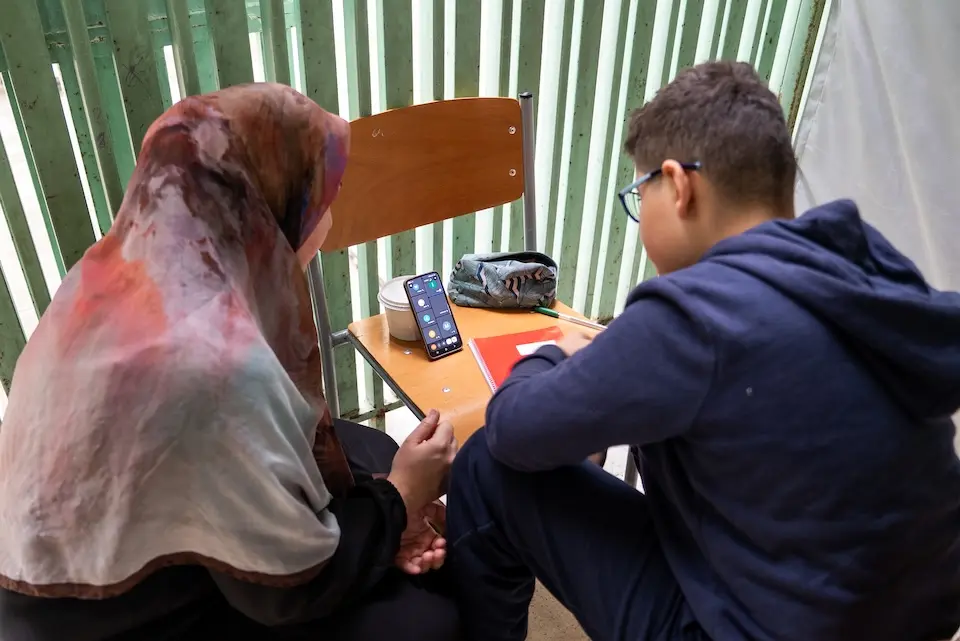
Blended learning solutions designed to reach every student
To provide continuity of learning for all children affected by the crisis, a set of complementary learning modalities has been deployed, combining online and low-tech solutions.
Madristi has been ‘zero-rated’ thanks to support from the Ministry of Telecommunications. This enables students to access the platform without incurring data charges, helping ensure access is equitable and inclusive.
A 'call and learn' tutoring hotline provides remote and free-of-charge academic support through qualified teachers. The service operates through both direct student outreach via WhatsApp and referrals from MEHE through UNICEF.
The distribution of printed learning materials helps ensure no child is left behind, regardless of access to connectivity and devices, supporting both self-paced and guided learning at home, in shelters or community spaces, with low-tech tutoring support available through the hotline.
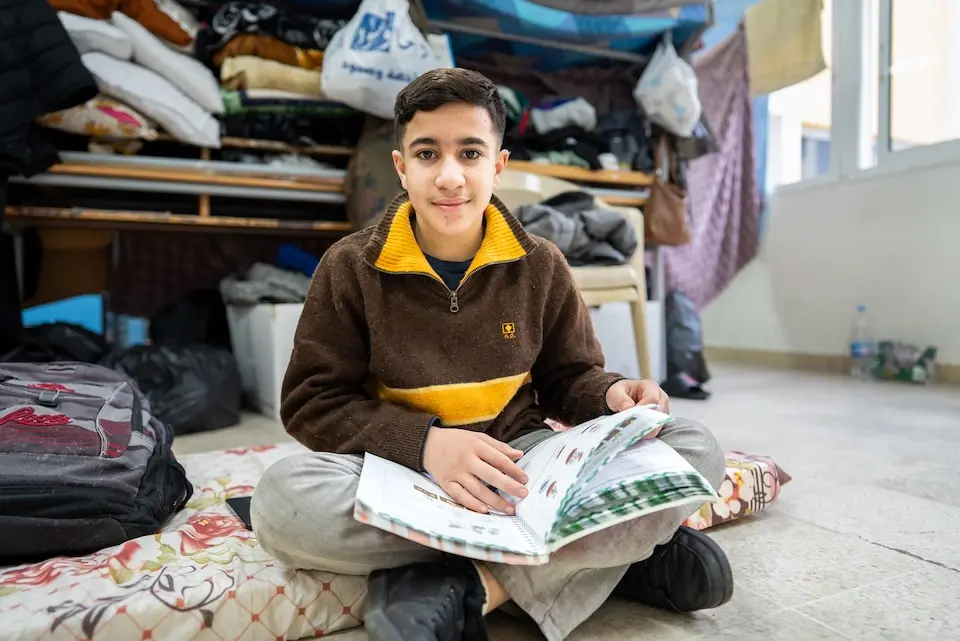
Human-centered, equity-driven approaches to digital learning
The Madristi story highlights the value of human-centered, equity-driven approaches to digital learning to go beyond digital as usual, transforming the delivery of digital education in the 21st century.
Initially piloted during the 2023–2024 school year in 14 public schools, Madristi demonstrated strong teacher buy-in and high student engagement, particularly in Grades 6 and 7 across math, science and languages. Implementation research found that teachers valued the curriculum-aligned content and students loved the videos and other interactive exercises.
Despite operational challenges, the pilot confirmed that digital learning is most impactful when supported by training, mentoring and aligned content, and developed with equity in mind.
Building on this foundation, Madristi was rapidly scaled in response to the escalation of conflict in the first quarter of the 2024–2025 school year. In coordination with Government partners and the Center for Educational Research and Development (CERD), UNICEF supported a national capacity-building effort, including virtual classrooms, flipped learning, safe learning in emergencies and platform navigation, reaching and supporting around 10,000 teachers.
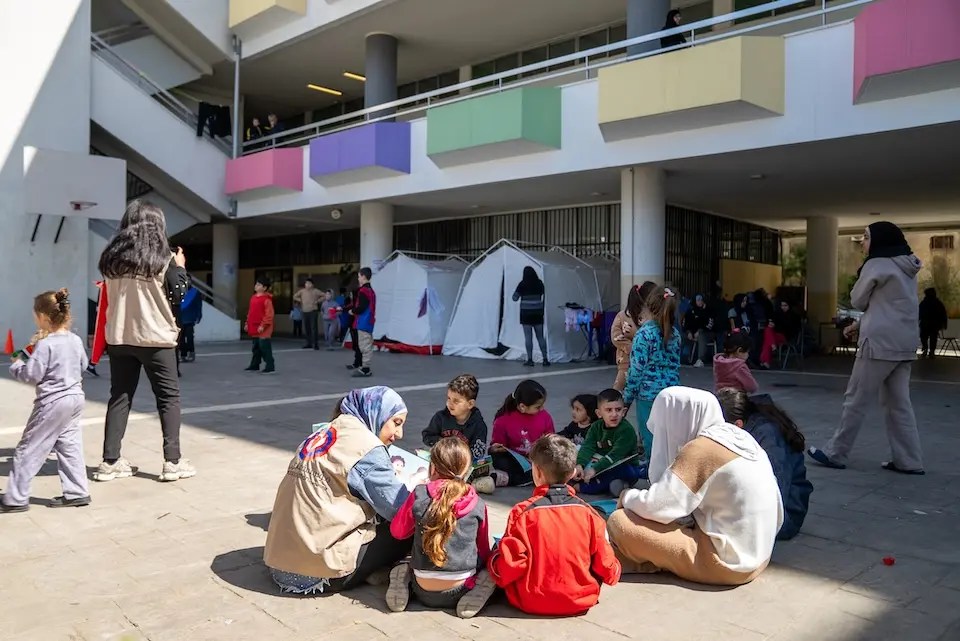
Madristi is a cornerstone of Lebanon’s national learning recovery and system strengthening efforts. To expand access, Madristi offline servers will be deployed in around 200 public schools with no or low internet bandwidth, enabling access to interactive, curriculum-aligned digital content without the need for connectivity.
As part of its digital transformation program for Lebanon, UNICEF in coordination with the MEHE also equipped 544 public schools with a solid connectivity network and digital equipment. Together with Madristi, this will enable the integration of blended learning during in-person teaching and learning, providing public school students with enhanced digital skills and engaging learning opportunities. This is a critical step toward bridging the significant digital divide at the national level.
Education for every child
While remote learning offers the hope of continuous learning, sustained and immediate support is needed. UNICEF continues to join UN appeals calling for an immediate cessation of hostilities; safe, rapid and unimpeded humanitarian access; and urgent financial support in Lebanon and across the region.
UNICEF’s Learning Passport and other initiatives are helping reach children with life-changing access to education. Whether they are learning online, in school or in a remote village, donor support is critical to ensure every child, everywhere, is guaranteed their right to a quality education.
UNICEF USA complies with U.S. sanctions restrictions, and, as such, we do not accept funds specifically designated for programs in Iran. We do, however, raise funds for UNICEF programming in the Middle East and North Africa region.
For parents and caregivers: How to Talk to Your Children About Conflict and War
This story was adapted from unicef.org
HOW TO HELP
There are many ways to make a difference
War, famine, poverty, natural disasters — threats to the world's children keep coming. But UNICEF won't stop working to keep children healthy and safe.
UNICEF works in over 190 countries and territories — more places than any other children's organization. UNICEF has the world's largest humanitarian warehouse and, when disaster strikes, can get supplies almost anywhere within 72 hours. Constantly innovating, always advocating for a better world for children, UNICEF works to ensure that every child can grow up healthy, educated, protected and respected.
Would you like to help give all children the opportunity to reach their full potential? There are many ways to get involved.