Protected from Child Labor After Giving Birth at 16: One Girl's Story
How a UNICEF-supported Integrated Social Services approach in Ghana is helping to protect children's right to go to school — instead of work — in cocoa-growing communities where child labor is still an issue.
Helping pregnant girls and young mothers return to school
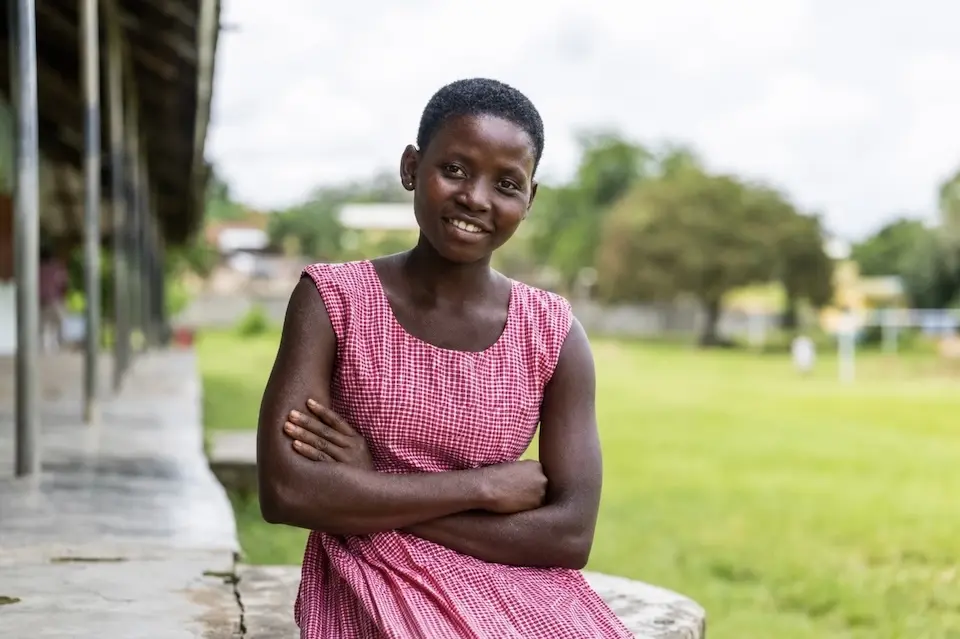
At 16, Elizabeth had just written her Basic Education Certificate Examination, an important academic milestone for junior secondary school students in Ghana seeking to advance to higher education. But instead of feeling relieved and excited, Elizabeth was worried it marked an end to her studies — because she was pregnant.
In Ayensuano, a district in Ghana’s eastern region where she lives with her father and four siblings, hope seemed distant.
Ghana is the world’s second largest producer of cocoa with about 770,000 children working in cocoa-growing communities — including Elizabeth's. She could have easily become engaged in work too difficult for her age and dangerous for her health and development, making her one of the statistics.
Fortunately, Ghana has a re-entry policy in place to help ensure pregnant girls and young mothers are given opportunities to resume their studies.
Elizabeth’s father learned about the policy and how his daughter would be able to go back to school after delivery while attending a community durbar, or traditional public gathering, in Kraboa Coaltar, a suburb in the district. During these meetings, social welfare officers actively raise awareness about child protection and the right of teenage mothers to continue their education.
The community engagement is an essential part of Ghana's Integrated Social Services (ISS) approach, which is supported by the industry association Swiss Platform for Sustainable Cocoa, through UNICEF, in technical collaboration with the International Cocoa Initiative, a Geneva-based nonprofit foundation dedicated to improving child protection and eliminating child and forced labor in cocoa-growing communities. Through ISS, families are linked to health, education and social support, helping to protect children who are vulnerable to child labor and prevent them from dropping out of school.
At the durbar, Elizabeth’s father realized that his daughter’s dreams were still possible. After baby Josephine was born, Elizabeth returned to school. “When I wore the school uniform, I was so happy,” she said.
With determination, a young mother follows her dreams
The reintegration process began while Elizabeth was still pregnant with her daughter. Social welfare authorities activated a case management process under ISS, which included:
- assessment — identifying Elizabeth’s health, education and psychosocial needs and documenting the case in the Social Welfare Information Management System
- case planning — bringing together education and health services, the two families involved (Elizabeth's and the baby's father) and agreeing on baby care arrangements
- referral and coordination — linking Elizabeth to prenatal care and negotiating financial support among the two families for the baby’s upkeep
- monitoring — ensuring commitments were honored and adjusting plans as needed
A plan was put into place: Elizabeth would be home with her baby until she stopped breastfeeding — optimally, not before the baby was six months old — and then return to school. Her own family and the baby's father's family would both pitch in to help care for Josephine while Elizabeth attending classes.
Now a student at Kraboa Coaltar Presbyterian Senior High Technical School, Elizabeth is studying home economics in the Food and Nutrition department. Though more than a year behind her peers, she says it feels good to be back — if a little surreal.
Future full of possibilities
Going back to school after becoming a mother is not without its challenges.
Each school day, Elizabeth wakes up at 4 a.m., bathes Josephine, prepares breakfast, feeds her and leaves the baby with her grandmother before heading to school by 7:30 a.m. When her grandmother isn’t available, Josephine’s paternal grandmother steps in — though this means extra transport costs and longer trips home.
Weekends are for bonding, playing with Josephine and letting her sit beside her as she does chores.
Going back to school has opened a new world of possibilities. Elizabeth no longer fears being a dropout, and thinks about becoming a policewoman — a dream inspired by her uncle’s smart uniform. She hopes her daughter will also enjoy her right to education.
“When Josephine turns two," Elizabeth says, "I’ll enroll her in school."
Millions of children are engaged in child labor worldwide, including nearly 54 million performing hazardous work that threatens their health, safety, education and future. Driven by poverty, displacement, limited access to quality education and other factors, child labor is most prevalent in agriculture and disproportionately affects children in the world’s poorest regions.
Learn more about how UNICEF works with partners to protect children from child labor
A version of this story was previously published by UNICEF Ghana
HOW TO HELP
There are many ways to make a difference
War, famine, poverty, natural disasters — threats to the world's children keep coming. But UNICEF won't stop working to keep children healthy and safe.
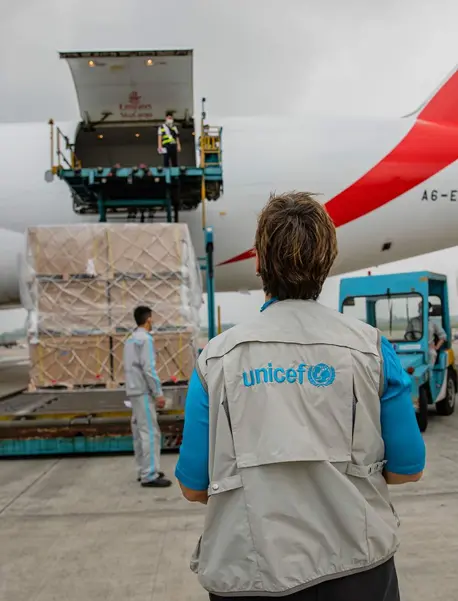
UNICEF works in over 190 countries and territories — more places than any other children's organization. UNICEF has the world's largest humanitarian warehouse and, when disaster strikes, can get supplies almost anywhere within 72 hours. Constantly innovating, always advocating for a better world for children, UNICEF works to ensure that every child can grow up healthy, educated, protected and respected.
Would you like to help give all children the opportunity to reach their full potential? There are many ways to get involved.