'I Almost Lost My Daughter to Cholera' — Mother in Haiti Turns Pain Into Action
Faced with a cholera outbreak and lack of sanitation infrastructure, Oriata sparked a community movement to improve hygiene practices — and public health. A look at UNICEF's role in supporting local initiatives in Haiti that are driving change and transforming lives.
Grand-Goâve, Haiti — When her 11-year-old daughter, Noel-Dina, was struck by fever and unbearable abdominal pain, Oriata didn't hesitate. She immediately took her child into her arms and, with no means of transportation, walked to the nearest hospital.
“She couldn't walk anymore because she was so weak,” Oriata recalls tearfully. “I had to carry her on my back. I was terribly worried and thought I was going to lose her.”
Noel-Dina was diagnosed with cholera that day. She survived thanks to timely medical care. But the experience was a turning point for both mother and daughter — and their community, where insufficient water, sanitation and hygiene (WASH) infrastructure had opened the door to the disease.
Related: How UNICEF is working to ease the water burden on girls globally
Cholera emergency raises awareness
Like many children in their rural neighborhood of Grand-Goâve, Noel-Dina and her mother lived without access to basic sanitation facilities.
“We had no choice but to use the outdoors as our toilet,” Noel-Dina explains. “That's how the disease entered our lives.”
Learn more about UNICEF's programs supporting children's health
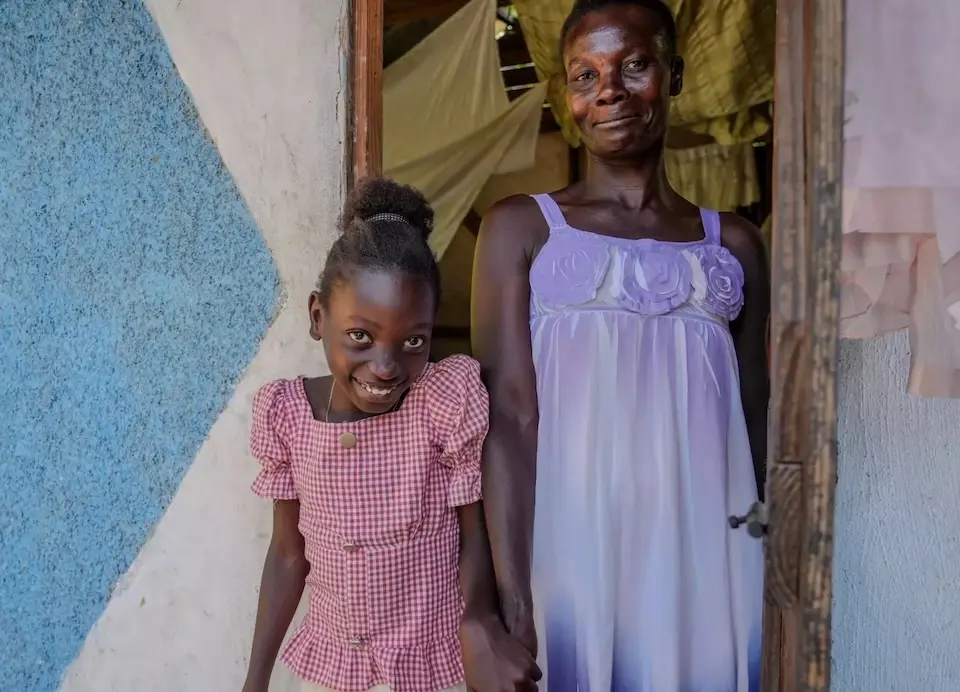
Thanks to awareness campaigns in their area, Oriata learned that the lack of latrines is one of the main reasons for the spread of cholera and other waterborne diseases. Without waiting for outside help, she began digging a pit in her yard.
I didn't have many resources, but I knew I had to do something, not just for my daughter, but for all the children in the neighborhood.
“I didn't have many resources, but I knew I had to do something, not just for my daughter, but for all the children in the neighborhood,” she explains.
Community mobilization inspired by personal experience
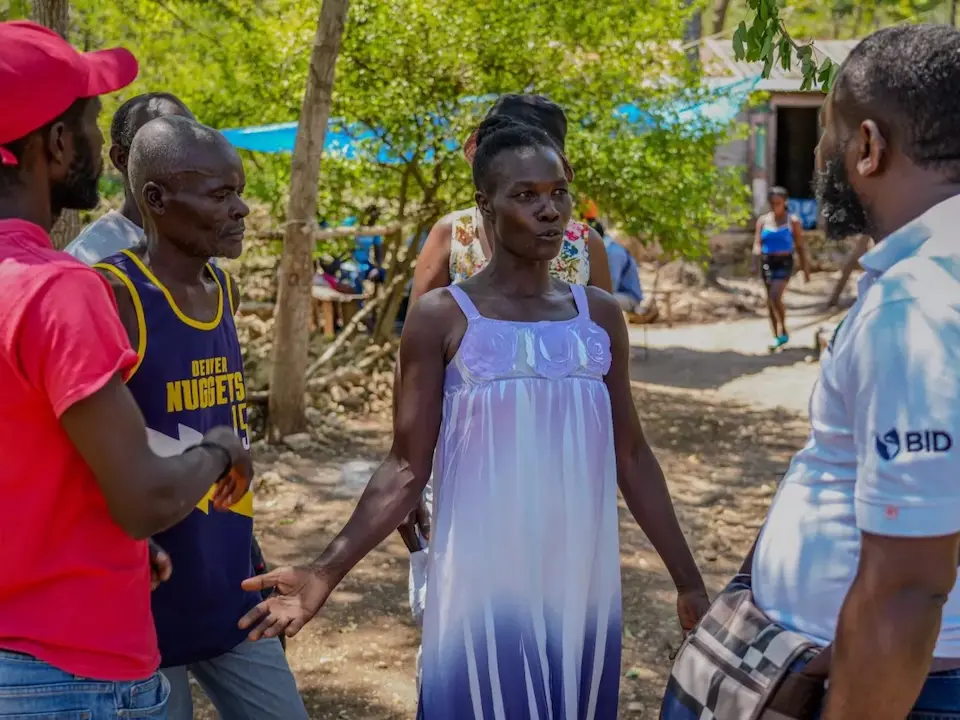
Oriata didn't stop there. As her daughter gradually regain her strength, Oriata became involved in awareness-raising activities in her community. She told her story, going from house to house to encourage other families to take action.
Her commitment sparked a wave of solidarity. “When someone started digging a pit and couldn't continue, we would get together to help them. We did this house by house until it became a movement,” she recalls.
The mutual support network transformed the neighborhood. Latrines became the norm. Hygiene practices such as systematic handwashing were adopted by everyone.
“Today, when you walk through here, you no longer smell any bad odors because no one relieves themselves outside anymore,” Oriata says. “We collectively and successfully educated ourselves.”
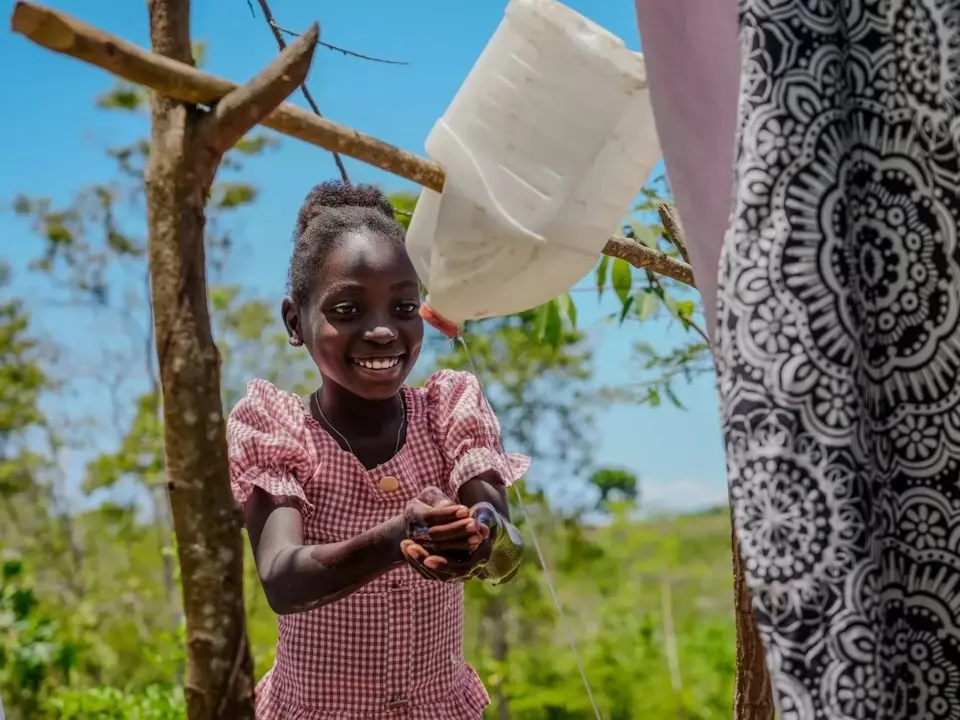
The effort inspired neighboring communities to follow suit. “They come to us and ask for help to do the same in their communities, and we gladly show them how to do it,” Oriata says. “It is a source of great pride for me.”
Sitting on her bed, math notebooks splayed open in front of her, Noel-Dina smiles shyly. She dreams of becoming a nurse. “I want to take care of people in my neighborhood, give them IV fluids, like they gave me,” she says.
Every day, she helps her mother at home and washes her hands thoroughly after using the toilet, actions that have become automatic. "Now we have a latrine at home," she says. "I'm glad my mom built it. She did it for me and for everyone."
Simple actions, lasting impact — and a testament to the power of community engagement
While supporting community-driven campaigns like Oriata’s, UNICEF also works with partners in across rural Haiti to directly improve sanitation and hygiene in homes and at schools. With funding from the Inter-American Development Bank (IDB), nearly 3,000 households now have access to safe and hygienic latrines through UNICEF's partnership with Haiti's government water and sanitation agency, Direction Nationale de l'Eau Potable et de l'Assainissement (DINEPA) and the Fondation Voix des Communautés de Base (FVCB).
UNICEF also helps organize awareness-raising sessions at schools and in health facilities; some 30 hygiene clubs have been created to encourage good practices among children and grownups alike.
WASH install transforms school environment
At Gros Marin National School, UNICEF and partners supported the construction of modern sanitary facilities including functional toilets and handwashing stations in the school’s courtyard, transforming the school environment and improving student health and well-being.
“Before, our children were getting sick too often. This lack of hygiene was putting their health and education at risk,” explains Ms. Yolette, the school principal. “But today, we have regained peace of mind. This new infrastructure has made our school a healthier and safer place for our children.”
Thanks to funding from IDB, and implementation support from DINEPA and UNICEF in partnership with GIRADEL — short for Group for Inclusion, Research and Development Support Haiti, a local humanitarian organization — more than 200 students at the Gros Marin National School now have access to safe WASH facilities.
Awareness-raising sessions include demonstrations to convey the importance of hygiene practices as concrete protection against disease and messages that aim to empower kids to take action for their own health.
"Each handwashing session is a moment of joy and learning,” says Olguy, a facilitator at GIRADEL. “The children understand that they can protect themselves and others.”
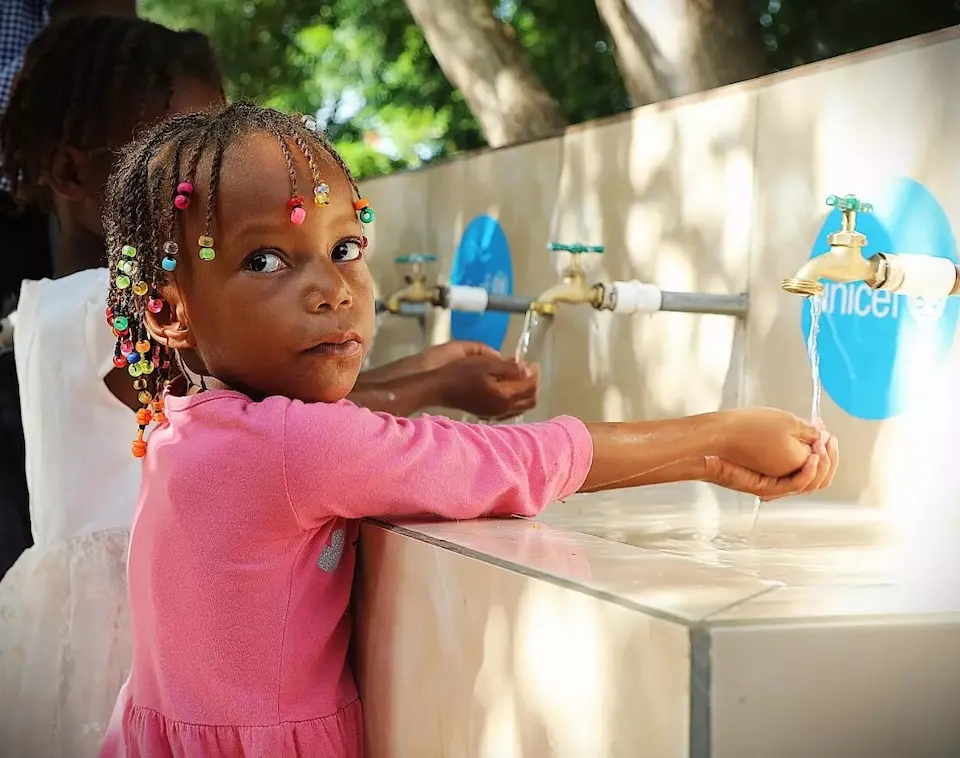
Simple actions, lasting impact
It is the behaviors, habits and mindsets that are changing the daily lives of children, teachers and families, GIRADEL WASH officer Tintin notes. “What makes this project so powerful is the ripple effect it creates," he says. "Children don't just learn at school, they take these vital actions home with them and become true ambassadors for hygiene within their communities.”
In a context where the challenges are immense, each infrastructure, each training — each drop of clean, safe water — is a step towards a healthier, fairer and more humane future.
UNICEF has WASH programs reaching children in need in 110 countries. Support this lifesaving, life-changing work.
This story is based on two articles previously published by UNICEF Haiti: 'I almost lost my daughter to cholera': in Grand-Goâve, a mother turns her pain into action and Clean water and smiles: a life-changing difference for children
HOW TO HELP
There are many ways to make a difference
War, famine, poverty, natural disasters — threats to the world's children keep coming. But UNICEF won't stop working to keep children healthy and safe.
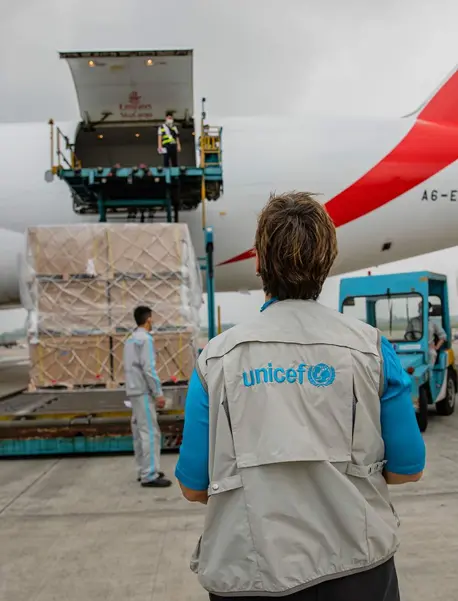
UNICEF works in over 190 countries and territories — more places than any other children's organization. UNICEF has the world's largest humanitarian warehouse and, when disaster strikes, can get supplies almost anywhere within 72 hours. Constantly innovating, always advocating for a better world for children, UNICEF works to ensure that every child can grow up healthy, educated, protected and respected.
Would you like to help give all children the opportunity to reach their full potential? There are many ways to get involved.