Defeating Polio Means Vaccinating Hard-to-Reach Children
Polio is on the brink of eradication. Yet outbreaks keep happening, often when primary health services are disrupted or inaccessible, causing children to miss out on routine immunizations. Countries that previously eliminated the disease risk resurgence in times of conflict and crisis. That doesn't stop UNICEF.
In the Democratic Republic of the Congo, door-to-door vaccination campaigns are reaching children at risk
In Kisangani, a city of 1.6 million people in the tropical woodlands of DR Congo's east-central region, every vaccination campaign changes the rhythm of daily life. The streets grow lively as families prepare to receive the teams of vaccinators committed to keeping children safe.
Marguerite Simba, a community health worker who has been on the job for the last 25 years, is up before 6 a.m. to walk through her neighborhood, megaphone in hand, calling out to parents: "Polio threatens the lives of children. To protect them, they must be vaccinated.”

Simba helps the vaccination teams by identifying the local children who are in need of their services, so that no child is left behind. She knows every one of her neighborhood’s 66 streets by heart.
By her side is Antoine Otende Urudi. Together, they go door to door. Simba explains to families the importance of immunization and what it entails while Antoine marks each doorway in chalk, indicating how many children under 5 live inside and need to be vaccinated.
The pre-marking ensures the vaccinators know exactly where to go — and that no child is overlooked. "It ... makes the teams’ work easier,” Urudi explains.

In the run-up to the August 2025 vaccination campaign, the pair's mission carried special weight: for the first time, two vaccines would be given simultaneously to strengthen protection against the poliovirus strains still present in Kisangani and other areas of Tshopo province.
The DRC was declared free of wild poliovirus in 2015. But the struggle is not over: since 2017, cases of variant polioviruses have emerged. In Tshopo province alone, more than 28 cases were recorded between 2022 and 2024.
These figures remind Simba that her work is as vital as ever.
Learn more about what UNICEF is doing to protect children and end polio

Simba also recalls a time when, faced with children paralyzed by polio, many families sought mystical explanations. "In the past, when children contracted polio, many believed it was a curse," Simba says. "Today, we know it is a disease that can be prevented by a vaccine.”
Across the nation, there are more than 90,000 community health workers raising awareness and doing community outreach to support vaccination efforts. UNICEF and partners supply the vaccines and equipment needed to strengthen the cold chain, which is essential for safe storage and transport. UNICEF also supports the social mobilization teams who directly engage with people and help overcome any hesitancy.
Rotary International, a partner in these efforts since 1988, helps fund critical elements of UNICEF’s polio eradication programs, such as national immunization days, polio vaccine delivery and health worker training.
Learn more about UNICEF's immunization programs and Rotary partnership

Polio survivors play an important role in these efforts as well. Adosy Nseyi, 51, suffered paralysis after contracting polio at age 8. After being excluded at school and isolated from her family, she found her way back, earning a degree in administration. She has dedicated her life to supporting young girls with disabilities, helping them stand tall.
Everywhere I go, I tell parents to vaccinate their children. When they see me and hear my story, they understand why it's important. — Adosy Nseyi, polio survivor
Nseyi also visits families to raise awareness about the importance of vaccination and good hygiene for staying healthy. For her, every conversation, every small action, has the power to save a life. "Everywhere I go, I tell parents to vaccinate their children," she says. "When they see me and hear my story, they understand why it's important."

The challenges in reaching every child amid conflict and crisis
It is far too easy to miss children who are on the move. In eastern DRC, ongoing violence and instability has displaced millions of people — many of them multiple times — and collapsing health systems are leaving children even more vulnerable.
And yet: UNICEF and partners are reaching displaced children with the vaccinations they need to stay safe and protected, with help from community health workers and mobile health sites. With support from the Global Polio Eradication Initiative (GPEI), UNICEF has delivered over 4.7 million vaccines doses to North Kivu and South Kivu provinces as part of a broader national vaccination campaign focused on children under 5.
So far this year, that campaign — carried out by UNICEF with support from the government, the World Health Organization (WHO) and other UNICEF partner agencies — has reached more than 28 million children all across the country.
Related: UNICEF delivers support as Ebola outbreak hits DRC's Kasai province

UNICEF-supported health teams and community outreach workers continue to mobilize to reach children in high risk areas and strengthen disease prevention.
Matthieu Munganga is a UNICEF-supported vaccinator in South Kivu province. “When we go from house to house, it’s not just about giving a vaccine; it’s about reassuring parents, protecting children and showing that even in the most challenging contexts, every life matters," he says. "The work requires courage, patience and a lot of love for our community.”

Support Children in Crisis in the Democratic Republic of the Congo
Portions of this article were adapted from two stories originally published by unicef.org: A Standout Voice Against Polio and Survive, Inspire and Take Action
HOW TO HELP
There are many ways to make a difference
War, famine, poverty, natural disasters — threats to the world's children keep coming. But UNICEF won't stop working to keep children healthy and safe.
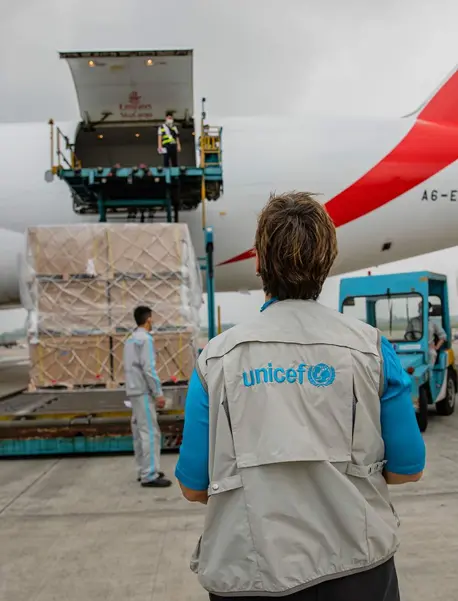
UNICEF works in over 190 countries and territories — more places than any other children's organization. UNICEF has the world's largest humanitarian warehouse and, when disaster strikes, can get supplies almost anywhere within 72 hours. Constantly innovating, always advocating for a better world for children, UNICEF works to ensure that every child can grow up healthy, educated, protected and respected.
Would you like to help give all children the opportunity to reach their full potential? There are many ways to get involved.