How Affection Impacts Early Childhood Development in Guatemala
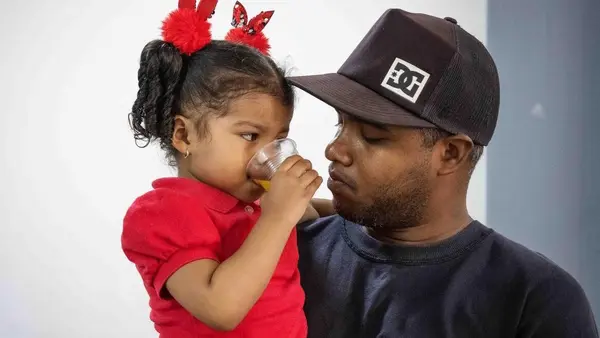
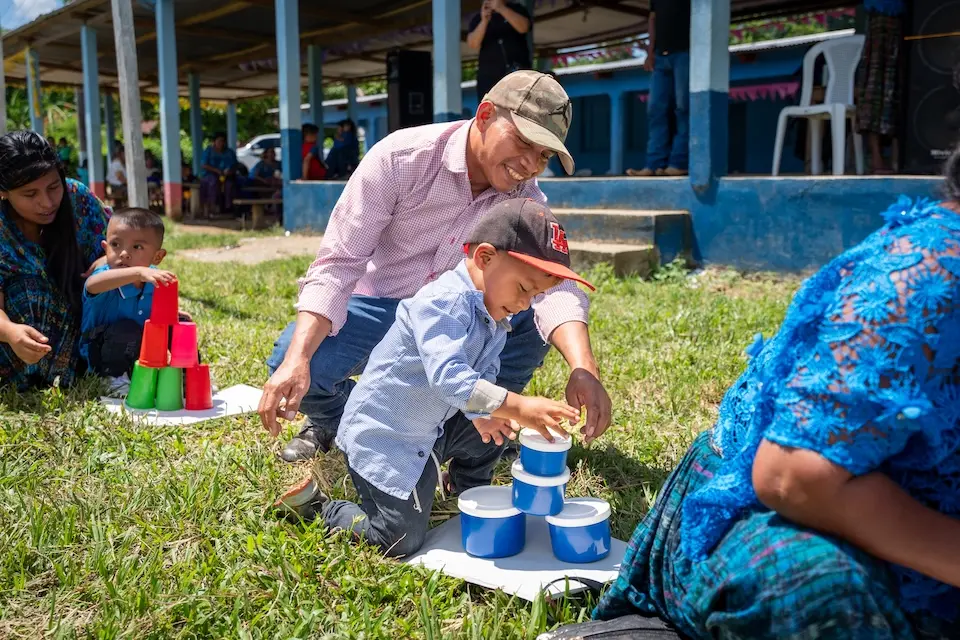
On a bright summer day in Chisec, high in the mountains of Alta Verapaz, a seven-hour drive from Guatemala City, Guatemala, Adolfo Chen and his son Leicher are stacking containers. Around him, dozens of other parents are doing the same, smiling, playing and laughing with their children. It may just look like playtime, but what is happening here is powerful. Every smile, every touch, every warm word helps shape a child’s brain for life.
Early childhood offers a critical window of opportunity to shape the trajectory of a child’s development and build a foundation for their future. For children to achieve their full potential, they need health care and nutrition, protection from harm and a sense of security, opportunities for early learning, and responsive caregiving with parents and caregivers who love them.
To nourish developing brains and fuel growing bodies, backed by evidence from neuroscience, the Nurturing Care Framework was developed to describe these five interrelated and indivisible components of nurturing care that children need to thrive. This blend of affection, play and emotional connection lays the foundation for optimal Early Childhood Development (ECD).
In fact, during the first few years of life, a child’s brain forms more than a million neural connections every second, more than any other time in life. This provides the foundation for lifelong physical, cognitive, emotional and social functioning. Those connections are strengthened not only by nutrition and health care — equally important are the loving, everyday interactions that tell a child, “You are safe and you belong.”
Learn more: UNICEF’s Early Childhood Development model
Teaching parents that acts of affection can change their children's lives
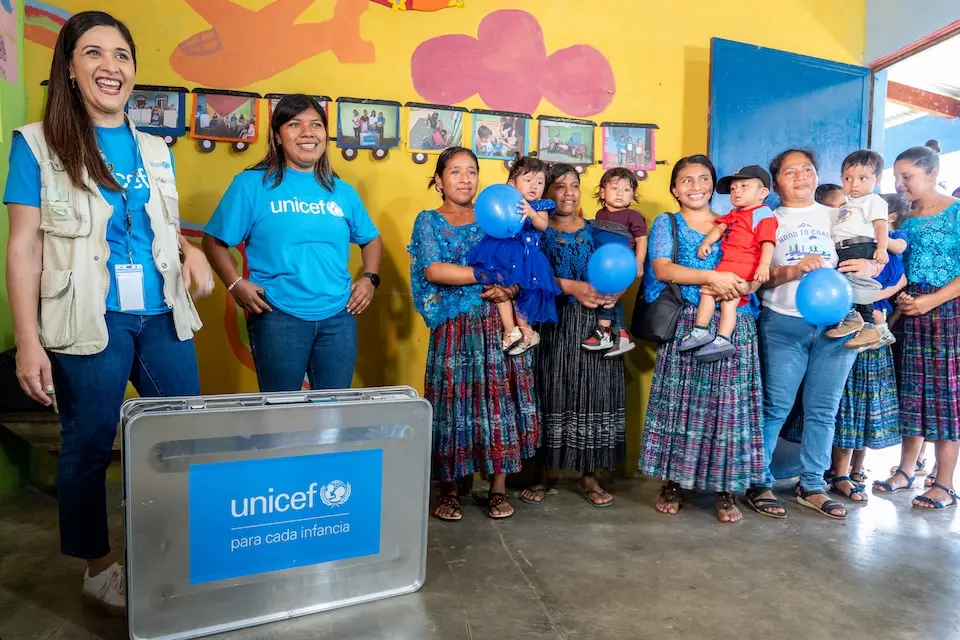
Across Guatemala, UNICEF works with local partners to teach parents how simple acts of affection can transform a child’s future. Thanks to UNICEF, a total of 276 new Comprehensive Child Development Community Centers (CECODIIs) were established in the departments of Alta Verapaz and Chiquimula in 2024 alone, benefitting nearly 20,000 families in more than 180 communities.
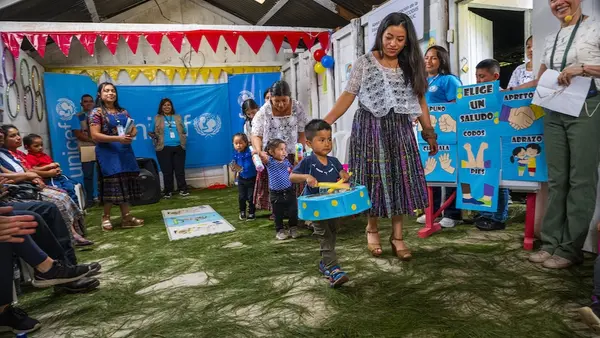
At these early childhood centers and through community workshops, parents learn that talking, hugging and playing together aren’t just moments of bonding — they’re tools for growth. These activities stimulate cognitive development, reduce stress and build the emotional security that children need to thrive.
But for many families, showing affection isn’t always easy. Poverty, long work hours and social pressures can make it difficult for caregivers to spend meaningful time with their children. In rural areas especially, mothers and fathers often balance farming or market work with childcare, leaving little room for much else. Because parents and caregivers are the most important providers of nurturing care in early childhood, UNICEF programs support caregivers with the tools and skills they need to give their children the best start in life, alongside dedicated interventions for young children.
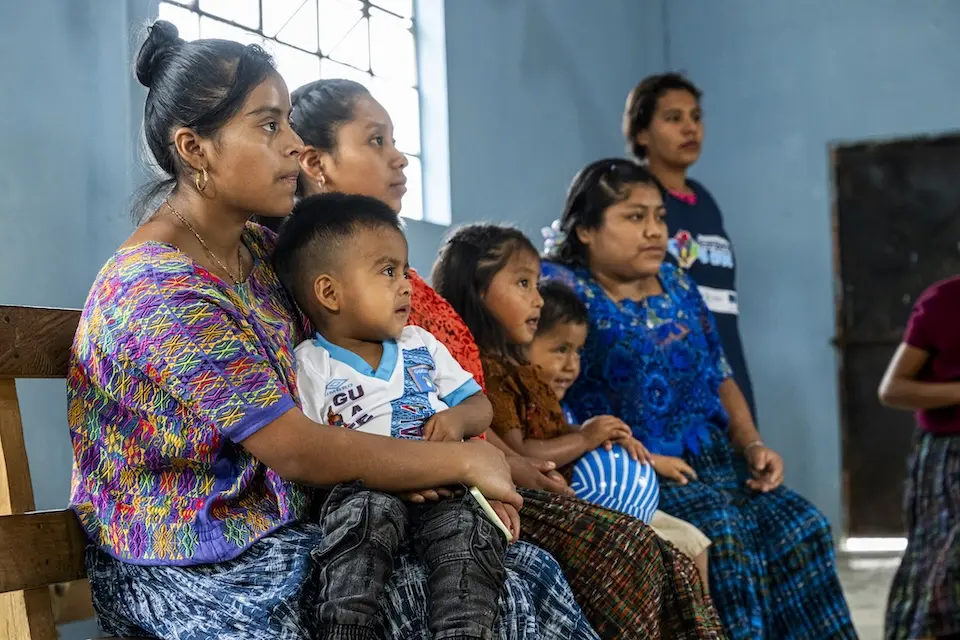
These lessons can also mean rethinking long-held traditions. In parts of Guatemala’s Mayan Highlands, affection has often been expressed quietly through care and provisions rather than words or touch. But as families learn more about the power of nurturing care, many are finding new ways to show love openly.
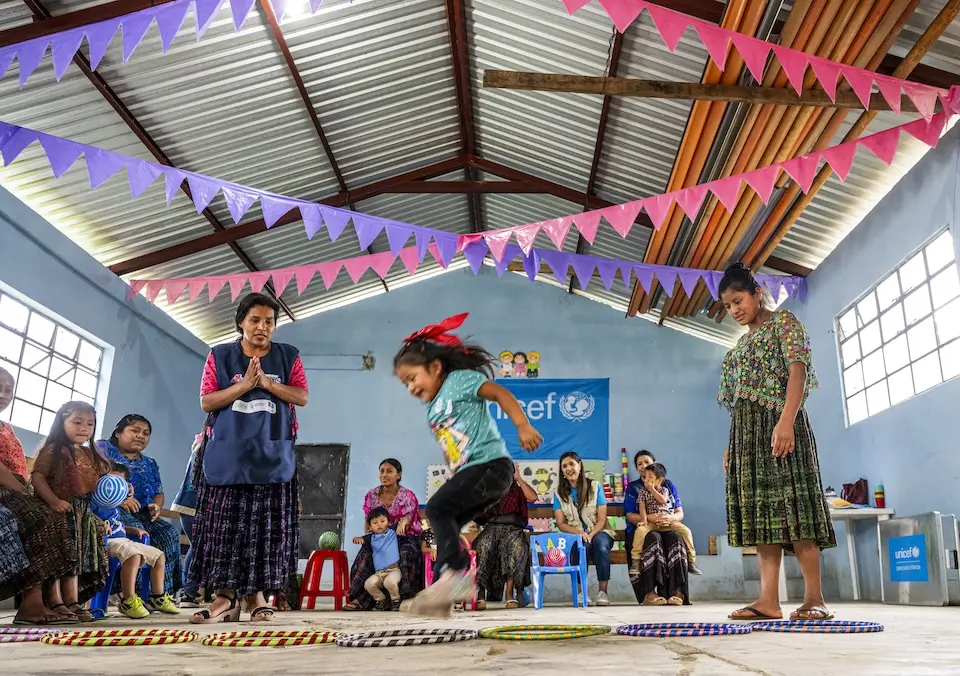
“That’s how my dad was. He didn’t play, he didn’t hug or kiss me,” said Edna, whose child attends the ECD center in Carchá. “It is good to teach our children to [show affection], hug and kiss.” In the rural highlands, families gather at Community Centers for Comprehensive Child Development, community-led spaces designed for parents and caregivers of children under 4. Here, they learn simple, loving ways to support their children’s growth through play, movement and music.
Empowering volunteers to educate other parents and caregivers
Each center is staffed by volunteer educators trained through UNICEF’s "Acompáñame a Crecer" (“Come Grow with Me”) program. The initiative equips parents and caregivers with the skills they need to support their children’s learning from the very start. The sessions are flexible, designed around the rhythm of each community, and filled with small, joyful lessons that parents can easily bring home. As of 2024, the wider initiative has reached 1,500 CECODIIs, directly impacting the lives of more than 61,100 children and over 52,500 families nationwide.
Neuroscience backs up what parents here are discovering: consistent love and attention during the earliest years lead to long-term benefits in health, learning and social development. Children who feel secure are more resilient, more curious and better able to manage stress. They grow up not only ready for school, but ready for life.
In fact, a growing body of research shows that investing in policies, programs and parenting practices that improve child survival, growth and development in the early years can improve school readiness and learning outcomes during the school-age years, as well as productivity and earnings through adulthood.
In addition, such investments have been shown to reduce the financial strain on health, education and child protection systems. Importantly, ECD investments can break cycles of inequality and injustice, make individuals and societies more resilient to stress, build social cohesion and pave the way towards sustainable peace.
Scaling up sustainable parent and caregiver resources
The success of these centers is inspiring broader change. Guatemala’s Ministry of Education is increasingly taking ownership of scaling the "Acompáñame a Crecer" model nationwide so that every community can give their children the strongest start in life. In fact, in 2023, 500 of the existing 529 CECODIIs, along with trained personnel, were successfully transferred to the Ministry of Education, thereby ensuring that over 13,000 children would continue to sustainably benefit from the initiative via national institutions.
With the Guatemalan government declaring early childhood a national priority, efforts are now accelerating. Further, the adoption of a new, comprehensive ECD policy is expected to significantly enhance the lives of young children and their families by ensuring more children in Guatemala than ever before have access to high-quality early childhood development services, fostering better health, education and overall well-being.
HOW TO HELP
There are many ways to make a difference
War, famine, poverty, natural disasters — threats to the world's children keep coming. But UNICEF won't stop working to keep children healthy and safe.
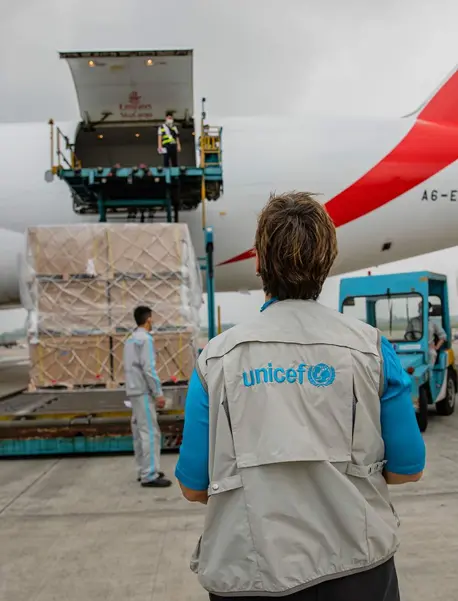
UNICEF works in over 190 countries and territories — more places than any other children's organization. UNICEF has the world's largest humanitarian warehouse and, when disaster strikes, can get supplies almost anywhere within 72 hours. Constantly innovating, always advocating for a better world for children, UNICEF works to ensure that every child can grow up healthy, educated, protected and respected.
Would you like to help give all children the opportunity to reach their full potential? There are many ways to get involved.