Investing in Education Works: How UNICEF Helps Drive Progress
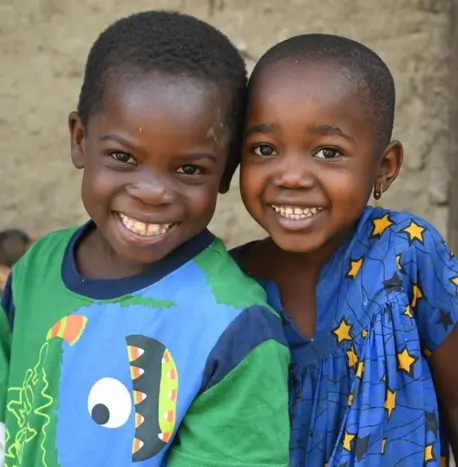
More children than ever before are enrolled in school and the number of out-of-school children has declined substantially thanks to decades of sustained commitment and investment in education, with UNICEF playing a central role. But more must be done so that no child is left behind.
More children worldwide are enrolled in school than ever before
In the early 1950s, some 50 percent of the world's primary school-aged children were not in school. Today, that figure stands at just 11 percent.
How did this happen? Through sustained investment in proven, cost-effective strategies, including those championed by UNICEF and its partners.
Supporting children's right to education is a big part of UNICEF's mission. Here is a look at UNICEF's role in advancing progress toward universal primary education — and the need for continued support for the solutions that work.
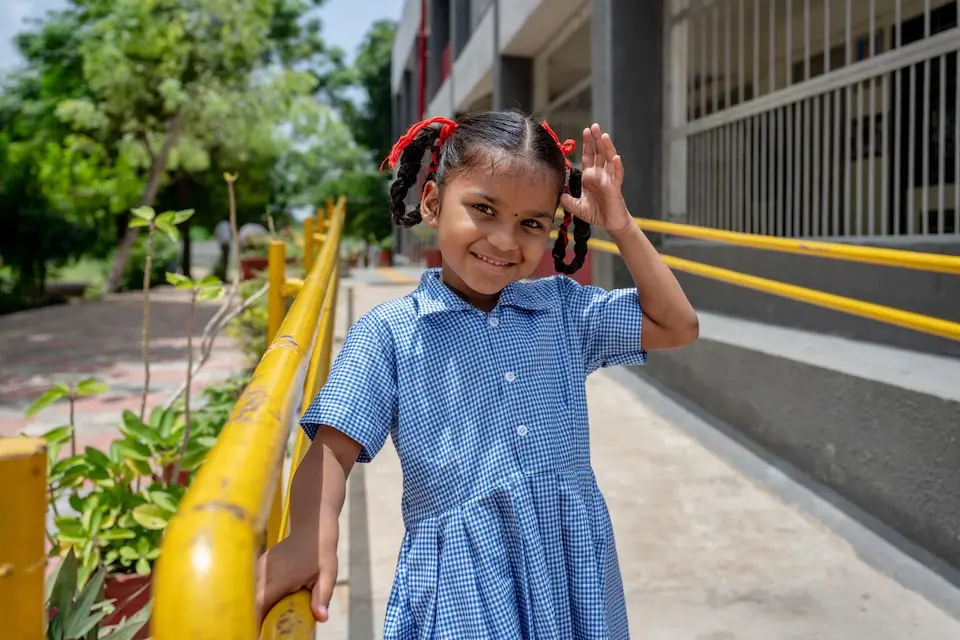
One of the great global achievements of past decades: the near universalization of primary schooling
Education forms the bedrock of development. In primary school, children learn the foundational skills that they need to thrive, preparing them for life, work and active citizenship. Quality education empowers children and young people, safeguards their health and well-being, and breaks cycles of poverty. Investments in education also empowers countries, ushering in economic prosperity and social cohesion.
Seventy-five years ago, hundreds of millions of children were excluded from formal schooling, not only depriving them of their right to education but also standing in the way of global development.
Efforts to tackle the problem over the decades have been enormously successful, resulting in one of the most transformative social advances of modern history. Even as the global child population continued to grow, year after year, educational access expanded, literacy rates improved and more and more children completed primary school. By 2000, global primary school enrollment had risen dramatically, with many countries nearing universal access for the first time.
These gains have since stalled, however. Since 2015, the global out-of-school population has declined by just 1 percent. COVID-19 was a major factor; the pandemic had a huge impact on education, widening pre-existing disparities and deepening inequities.
Further progress is still possible. The solutions exist. The means for closing education gaps and reaching the most marginalized learners are available. But it will take renewed commitment and investment by stakeholders from across sectors, public and private.
Here are three important ways UNICEF and partners drive progress for children in education.
What works to advance progress in education access and quality
1. Advocating for government action to unlock access
UNICEF has long advocated with governments to invest more in education systems and to remove school fees and other barriers to equitable access.
In Uganda, after the government introduced free primary education for all, enrollment soared 332 percent, from 2.5 million learners in 1996 to 10.8 million in 2019. Children are also staying in school longer.
2. Supporting gender equity in education
Educating girls has far-reaching impacts, improving health outcomes, economic opportunities and intergenerational well-being, and yet in many places around the world, girls are still more likely than boys to be out of school.
UNICEF's support for girls' education has helped narrow this gender gap. Engaging communities to mitigate the risks of early marriage is an important aspect of this work.
In Nepal, married girls are 10 times more likely to be out of school than their unmarried peers, and more than a quarter of women with no education were married before the age of 15 compared to only 2 percent of women with higher education. UNICEF works closely with local communities to help girls avoid early marriage while also expanding non-formal learning opportunities for out-of-school girls that can provide a pathway to formal education.
Through these and other community-based interventions, UNICEF has contributed to a decline in the prevalence of child marriage in Nepal, from 60 percent in 2006 to about 35 percent.
3. Working to ensure schools are safe and inclusive
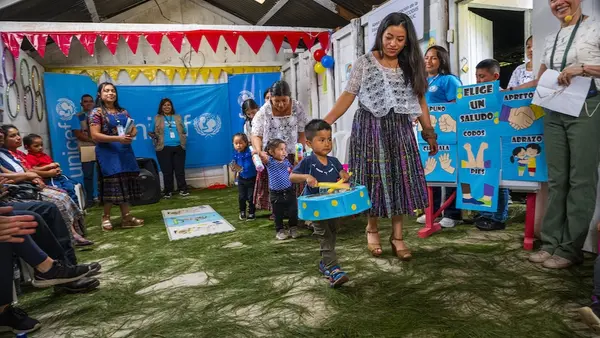
UNICEF works with partners to ensure that schools provide a safe, inclusive and healthy environment for learning, which helps increase enrollment and lower dropout rates.
Efforts in this area include:
- improving access to toilets and hand-washing stations for children with disabilities
- building sanitation and hygiene facilities that support girls' menstrual health and hygiene
- setting up temporary classrooms and distributing learning materials and other essential school supplies so that education can continue even during a conflict or other crisis
- rehabilitating damaged schools and reconstructing schools to be more climate-resilient
- training teachers
- improving student access to mental health and psychosocial support
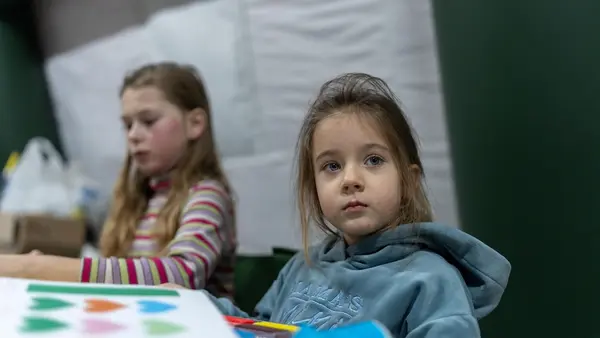
In Ukraine, where at least 2,800 educational facilities have been damaged or destroyed since February 2022, UNICEF has enabled more than half a million children to safely access inclusive formal or non-formal education, including early learning and remedial instruction.
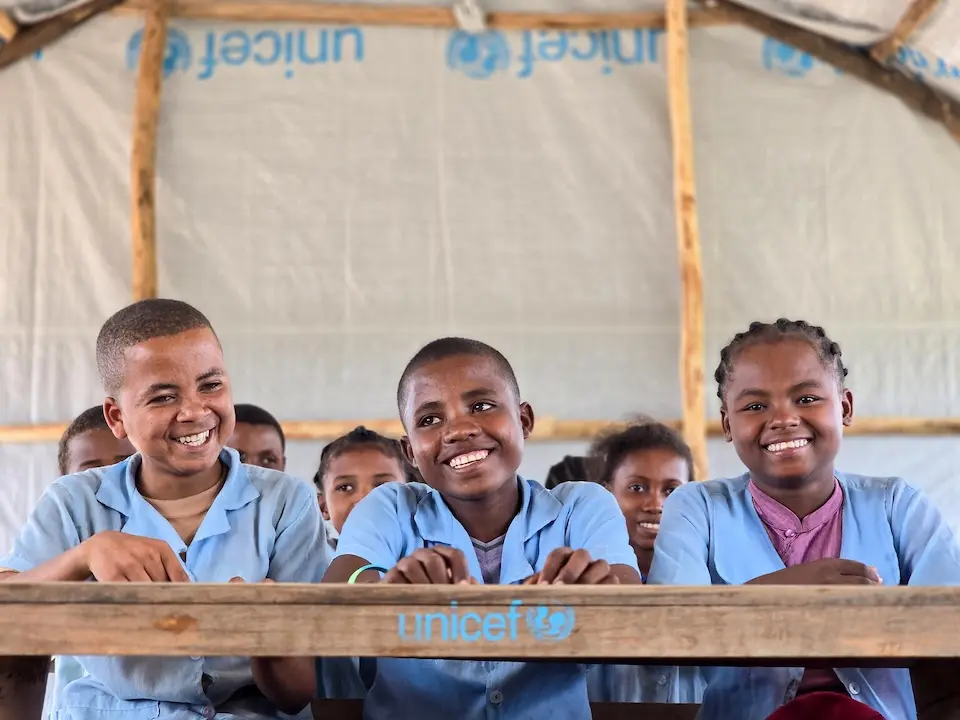
After Tropical Storm Jude caused many schools to close in Madagascar's Grand Sud region in March 2025, UNICEF helped students continue learning by setting up temporary classrooms. UNICEF and partners also helped young people mobilize to kick off reconstruction efforts. UNICEF often plays a leading role in supporting children's education as part of an overall disaster response.
Learn more about UNICEF programs supporting children's education
The push for universal access to quality education continues
Despite these and other successes, the world’s most marginalized children continue to miss out on education. In low-income countries, only two-thirds of children are estimated to complete primary school. Children living in emergency and fragile settings, including children on the move, have fewer chances to complete primary school. Factors like geographical remoteness, gender, poverty and disability continue to restrict access. Child labor, early marriage and displacement due to conflict or climate change continue to undermine educational opportunity.
Instead of being the great equalizer, education is at risk of becoming the great divider.
Compounding this, for far too many children across the globe, access to schooling does not guarantee learning. For the first time in history, there are now more children in school not learning than out-of-school altogether. Over 600 million children worldwide test below minimum proficiency levels in reading and mathematics.
Expanding access to education and improving learning quality will require harnessing innovation and strengthening political will. UNICEF stands committed to ensuring that every child can learn — an achievable goal, and one that must remain a shared and urgent global priority.
HOW TO HELP
There are many ways to make a difference
War, famine, poverty, natural disasters — threats to the world's children keep coming. But UNICEF won't stop working to keep children healthy and safe.
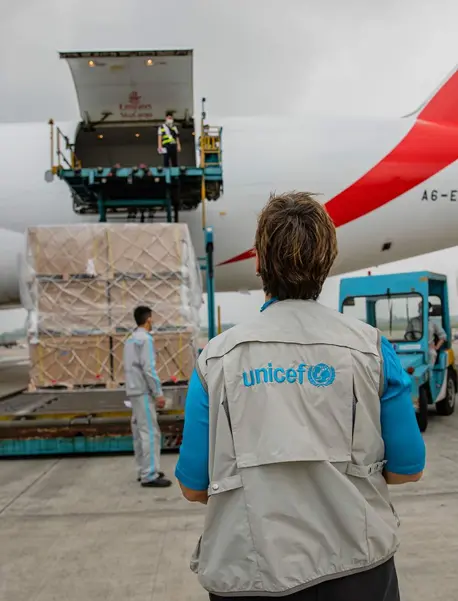
UNICEF works in over 190 countries and territories — more places than any other children's organization. UNICEF has the world's largest humanitarian warehouse and, when disaster strikes, can get supplies almost anywhere within 72 hours. Constantly innovating, always advocating for a better world for children, UNICEF works to ensure that every child can grow up healthy, educated, protected and respected.
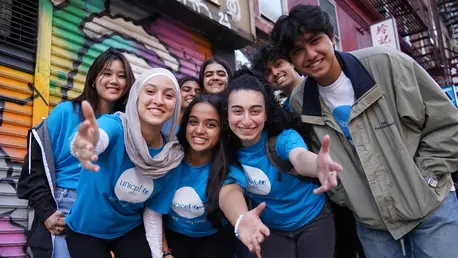
Would you like to help give all children the opportunity to reach their full potential? There are many ways to get involved.