
BOKO HARAM CRISIS
A violent insurgency, a prolonged humanitarian crisis
Boko Haram, a violent Islamist insurgency, and other associated groups have terrorized communities around West Africa's Lake Chad Basin for years — creating new hardships and compounding existing ones for millions of people in northeast Nigeria, Cameroon, Chad and Niger, many of whom are displaced and already struggling to survive.
Children have been abducted, killed and used as suicide bombers. Villages have been attacked, and — if not burned to the ground — left stripped of all resources. Safe water, adequate health care and other basics are difficult to come by. Malnutrition rates among children have soared.
Severe acute malnutrition is life-threatening without treatment
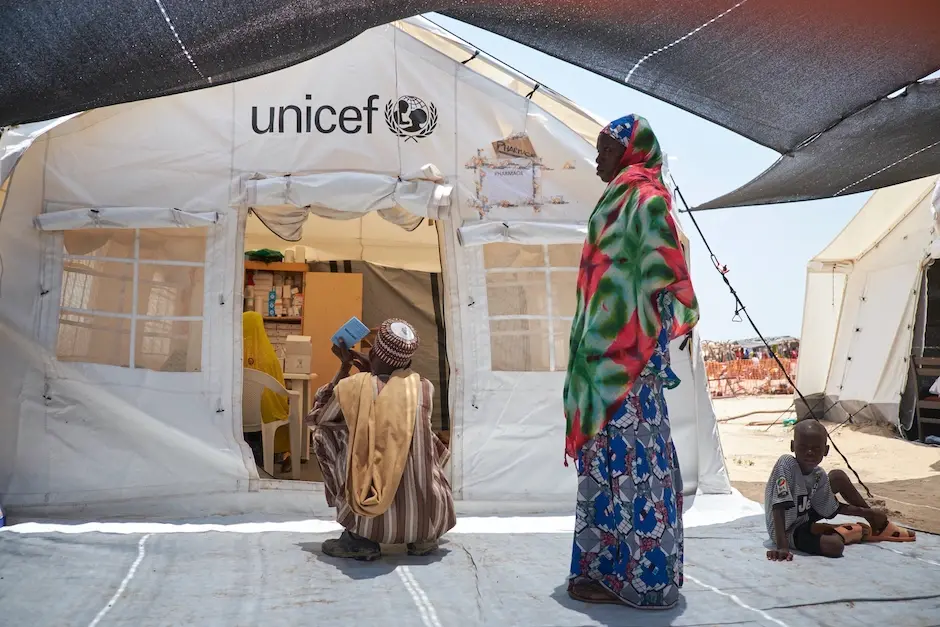
Delivering humanitarian aid to areas affected by conflict is extremely challenging. Displacement camps tend to be overcrowded and host communities have little to offer to newcomers. Food insecurity drives up child malnutrition rates.
UNICEF continues to work with partners across the region to identify and respond to urgent needs, connecting children and families with health care, nutrition support, access to safe water and protection services.
Learn about UNICEF's child protection programs
Learn how to help UNICEF reach more children around the world